Sofa Bed Comfort & Upgrade Advisor
Step 1: Identify Your Sofa Bed Type
Convertible/Futon: The seat cushions themselves form the sleeping surface.
Daybed: Often uses a separate standard-sized mattress on a wooden/metal base.
Step 2: Usage Context
Recommendation:
Pro Tips for this Setup:
You’ve just unboxed your new sofa bed. It looks sleek, it folds up neatly, and you’re ready to host guests this weekend. But then the question hits you: does a sofa bed need a mattress? You stare at the built-in foam or the slatted base, wondering if adding another layer is overkill or essential for a good night’s sleep. Here’s the blunt truth: most modern sofa beds do not require an additional mattress to function, but whether they should have one depends entirely on who is sleeping there and how often.
If you are looking for a quick fix for a rare guest, the factory default is usually fine. If you are hosting family for a week or using it as a daily bed in a studio apartment, that thin factory foam will feel like sleeping on a floorboard by morning. This guide breaks down exactly when to stick with what you have, when to add a topper, and when to buy a full replacement mattress. We’ll look at real-world scenarios, specific material types, and the hidden pitfalls of buying the wrong size.
The Short Answer: Built-In vs. Add-On
Most people confuse two different types of mechanisms here. To give you accurate advice, we need to separate them immediately because the answer changes based on the hardware.
Mechanism A: The Fold-Out Sleeper (a sofa with a pull-out metal frame and a thin, integrated mattress) is the classic "pull-out" style. These come with a mattress attached. It is usually 4-6 inches thick, made of low-density polyurethane foam or basic innersprings. Adding a standard twin or queen mattress on top of these is physically impossible because the frame isn’t designed to hold the extra weight or height, and the folding mechanism will jam. For these, you don't buy a mattress; you buy a mattress topper.
Mechanism B: The Convertible Futon or Daybed (a sofa where the backrest lowers flat to form the sleeping surface) often has no dedicated mattress. The "mattress" is actually the seat cushions themselves, sometimes backed by wooden slats. In these cases, yes, you absolutely need a separate mattress or a heavy-duty futon pad to make it comfortable. Sleeping directly on the wooden slats or thin cushion covers is a recipe for a sore back.
Why Factory Mattresses Often Fail Guests
Let’s be honest about why manufacturers skimp on the mattress. A sofa bed is primarily sold as a sofa. The marketing photos show it folded up, looking chic in a living room. The mattress is an afterthought. To keep the price down and the profile slim enough to fold into the armrests, factories use cheap materials.
Here is what typically happens inside that $800 sofa bed:
- Low-Density Foam: It compresses instantly under body weight. There is zero push-back support.
- Bare Springs: Some cheaper models use open-coil springs without padding layers. You will feel every coil digging into your hips.
- No Edge Support: When you sit on the edge to put on shoes, the foam collapses. When you sleep, you roll off because the edges are soft.
If your guest is staying for one night, they might survive it. If they are staying for three nights, they will start dreaming about their own bed by day two. The lack of pressure relief is the main culprit. Your hips and shoulders need to sink slightly into the material to align your spine. Cheap foam doesn't allow that; it just pushes back hard.
Solution 1: The Mattress Topper (Best for Occasional Use)
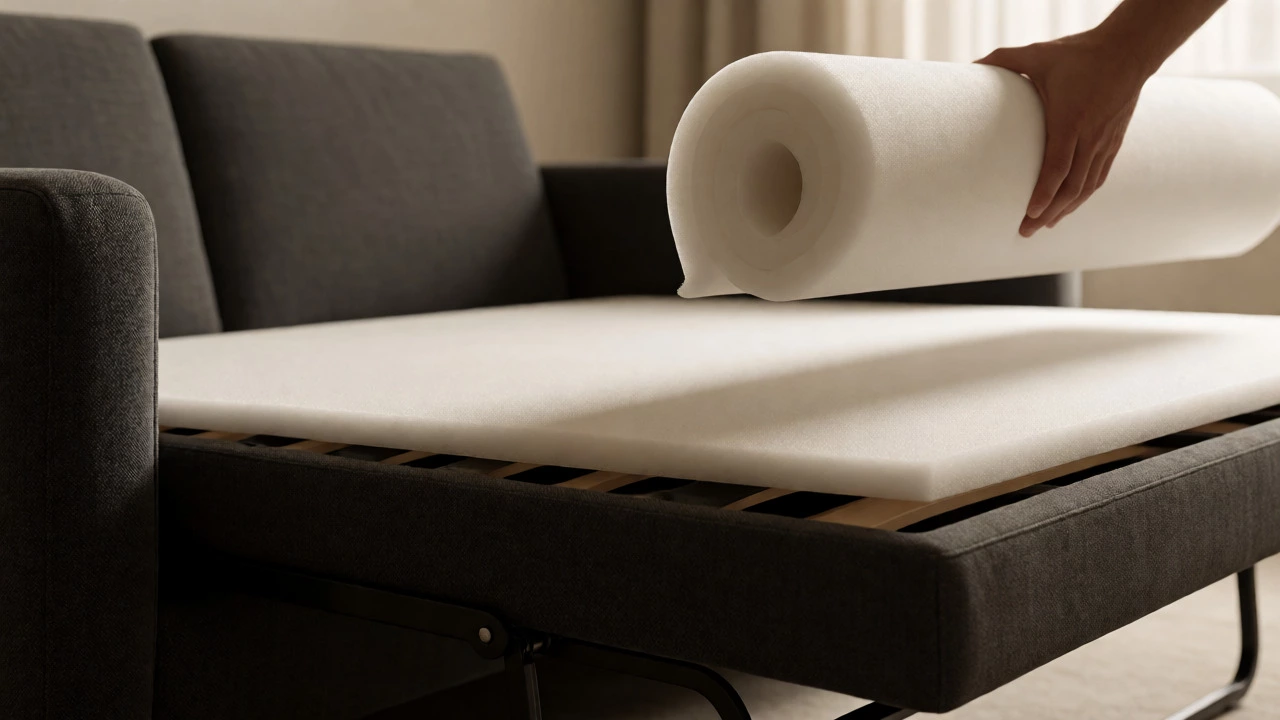
If you have a fold-out sleeper (Mechanism A), you cannot replace the mattress easily without voiding warranties or breaking the hinge. The smartest move is a high-quality topper. This adds 2-3 inches of comfort without interfering with the folding mechanism.
But not all toppers work. Here is what I recommend based on testing various setups in Wellington homes:
| Type | Best For | Pros | Cons |
|---|---|---|---|
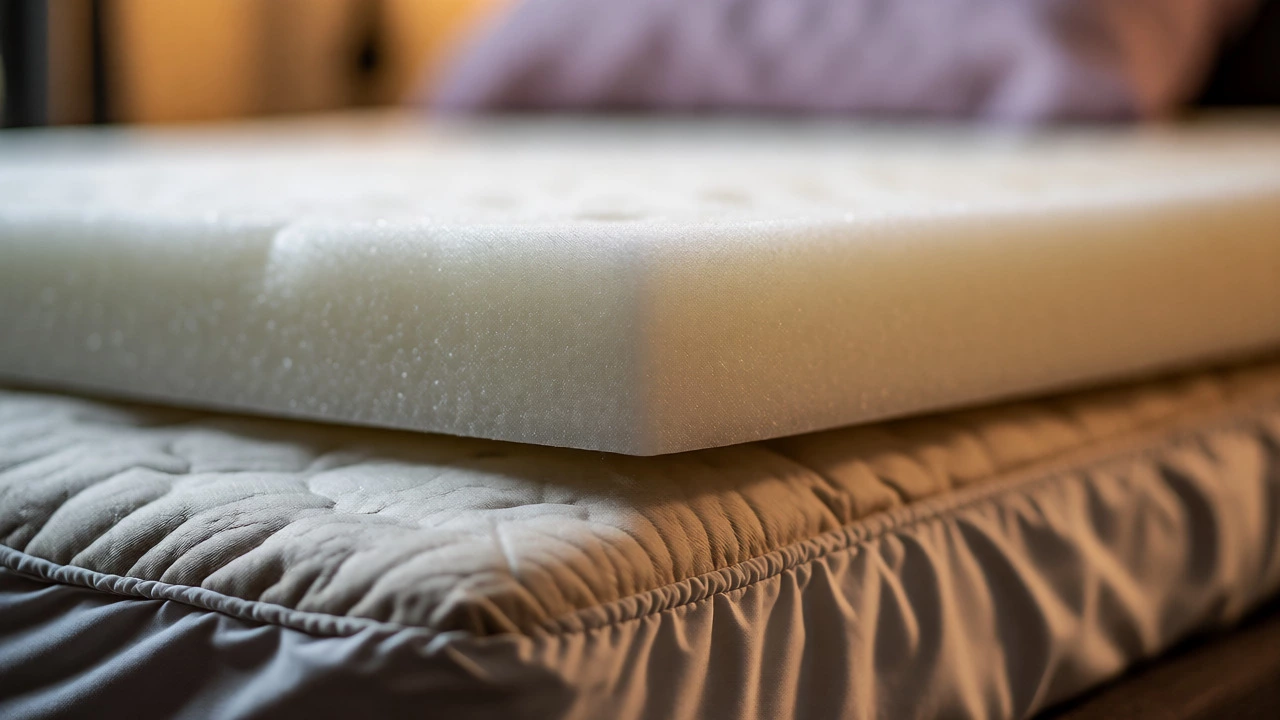
| Memory Foam (3-inch) | Side Sleepers | Contouring support, reduces motion transfer | Can sleep hot, difficult to fold if too thick |
| Latex Foam | Allergies/Hot Sleepers | Bouncy, breathable, durable | Expensive, heavy |
| Wool/Cotton Pad | Cold Nights/Rustic Feel | Natural temperature regulation, washable | Less contouring, can flatten over time |
| Air Inflatable Layer | Adjustability | Customizable firmness | Risk of leaks, bulky when deflated |
Pro Tip: Measure your folded depth before buying. If your sofa bed only has 5 inches of clearance when closed, a 4-inch memory foam topper will prevent it from closing completely. Stick to 2-3 inches max for fold-out frames.
Solution 2: Buying a Separate Mattress (For Futons and Daybeds)
If you have a convertible sofa (Mechanism B) where the back drops down, you are essentially building a bed frame out of wood and cushions. In this scenario, buying a separate mattress is not just recommended; it’s necessary for health reasons.
However, you face a sizing nightmare. Standard mattresses (Twin, Queen, King) rarely fit perfectly. Why? Because sofa widths vary. A "Queen" sofa might be 60 inches wide, but a standard Queen mattress is also 60 inches. That leaves zero wiggle room. If your frame is 58 inches, a Queen mattress won't fit. If it's 62 inches, the mattress slides around.
Here is how to solve the sizing puzzle:
- Measure the Interior Width: Don't measure the outside arms. Measure the space between the inner edges of the frame where the mattress sits.
- Check the Depth: Most sofa beds are shorter than standard beds. A standard Twin is 75 inches long. Many sofa beds are only 72 inches deep. A standard Twin will hang off the end.
- Look for "RV Size" or "Truck Camper": These sizes are narrower and shorter than standard residential mattresses. They often fit sofa beds better than full-size twins.
If you can't find a perfect match, go smaller rather than larger. A mattress that floats slightly above the frame edges is better than one that bunches up against the walls.
The Hygiene Factor: Why You Might Want a Mattress Anyway
Even if your sofa bed comes with a decent built-in mattress, many hosts choose to cover it or replace it for hygiene reasons. Think about it: that mattress lives in your living room. It absorbs dust, pet dander, and spilled wine. Unlike a regular bedroom mattress, you can’t easily flip it or rotate it because it’s locked into a metal frame.
Adding a removable, zippered mattress protector is non-negotiable. But beyond that, some people prefer the psychological separation of a "real" bed. If you are renting out a spare room via Airbnb or hosting parents, providing a standalone mattress on a simple platform frame next to the sofa bed can sometimes be more comfortable than the sofa itself. It signals care and attention to detail.
When to Skip the Extra Mattress Entirely
Don’t spend money if you don’t have to. Here are the scenarios where the factory setup is perfectly adequate:
- Kids' Rooms: Children sleep deeply and are less sensitive to pressure points. A basic foam sofa bed is usually fine for sleepovers.
- Emergency Use Only: If you use the sofa bed once a year for a relative passing through, the initial discomfort wears off after one night.
- High-End Brands: Not all sofa beds are created equal. Brands like La-Z-Boy or Tempur-Pedic integrate higher-grade foams into their sleeper sofas. If you paid premium prices, check the specs. You might already have a 5-inch gel-infused memory foam core that needs no help.
Step-by-Step: How to Upgrade Your Current Setup
Ready to improve your guest experience? Follow this checklist to avoid common mistakes.
Step 1: Identify Your Mechanism
Pull the bed out fully. Is there a metal scissor-like frame underneath? That’s a fold-out. Does the whole thing unfold flat like a mat? That’s a convertible/futon.
Step 2: Assess the Current Comfort
Lie on it yourself. Put on your pajamas and stay there for 10 minutes. Do your hips ache? Do you feel the bars underneath? If yes, upgrade.
Step 3: Choose Your Upgrade Path
- Fold-Out: Buy a 2-3 inch memory foam topper with a non-slip bottom.
- Convertible: Measure width and length. Buy a custom-cut foam slab or an RV-sized innerspring mattress.
Step 4: Test the Fold
This is critical. Put the topper on. Try to fold the sofa back up. Does it close flush? If the topper bulges out, it’s too thick. Trim it or swap it for a thinner wool pad.
Step 5: Protect It
Buy a fitted sheet specifically designed for deep pockets (15+ inches). Standard sheets will pop off during the night because of the added height of the topper.
Common Pitfalls to Avoid
I’ve seen people waste hundreds of dollars on bad upgrades. Here are the traps:
Buying a Full Mattress for a Fold-Out: People see a gap and think, "I'll just shove a twin mattress in there." It doesn't work. The hinges hit the mattress, and the sofa stays open permanently. Don't do it.
Ignoring Ventilation: Sofa beds trap heat. If you add a dense memory foam topper to an already warm fabric sofa, your guest will wake up sweating. Look for toppers with cooling gel or open-cell structures. In New Zealand, where humidity varies, this matters even more.
Forgetting the Headboard Gap: On many sofa beds, there is a gap between the head of the mattress and the wall or the backrest. Small pillows fall behind the bed. Use a rolled-up towel or a specialized gap filler to stop this annoyance.
Final Verdict: What Should You Buy?
So, does a sofa bed need a mattress? No, it doesn't need one to function. But almost every sofa bed wants one to provide actual rest.
If you have a standard pull-out sleeper, invest in a quality 2-inch memory foam topper and a waterproof protector. This costs roughly $150-$250 NZD and transforms a mediocre sleep surface into a decent one. If you have a convertible daybed, buy a properly measured RV-size or custom foam mattress. This costs more ($300-$600 NZD) but turns your living room piece into a legitimate bedroom alternative.
Your guests will remember the comfort of their sleep far longer than the color of your curtains. Spend a little extra on the surface they lie on, and you’ll never hear the phrase "my back hurts" again.
Can I use a regular twin mattress on a sofa bed?
Usually, no. Standard twin mattresses are 75 inches long and 38 inches wide. Most sofa beds are narrower (36-39 inches) and shorter (70-72 inches). A regular twin will likely be too long, hanging off the end, or too wide, preventing the sofa from folding shut. Always measure the interior dimensions of your specific frame before purchasing.
How thick should a sofa bed mattress topper be?
For fold-out sleeper sofas, stick to 2 to 3 inches. Anything thicker than 3 inches often prevents the sofa from closing completely because the frame has limited clearance. For convertible futons or daybeds where the mattress sits on slats, you can go up to 4-6 inches for maximum comfort, provided the frame supports the weight.
Is memory foam or latex better for a sofa bed?
Memory foam is generally better for conforming to the uneven surfaces of older sofa beds and hiding the feel of metal bars. However, it retains heat. Latex is more breathable and durable but is heavier and more expensive. If your guest sleeps hot, choose latex or a gel-infused memory foam. If budget is the priority, standard memory foam is the most cost-effective comfort upgrade.
Do I need a box spring for my sofa bed?
No. Sofa beds are self-supporting units. The mattress sits directly on the metal frame or wooden slats. Adding a box spring would raise the bed too high, making it unstable and difficult to fold. Never add a box spring unless you are building a separate bed frame adjacent to the sofa.
How do I clean a built-in sofa bed mattress?
You cannot remove most built-in mattresses, so cleaning is tricky. Vacuum regularly with an upholstery attachment. For stains, use a mild detergent and cold water blotting technique-never soak the foam, as it takes days to dry and can develop mold. Using a waterproof mattress protector is the best prevention strategy.