
Quick Guide to Quality Markers
- Frame: Look for kiln-dried hardwoods (maple, oak, birch) rather than plywood or particle board.
- Suspension: Eight-way hand-tied springs are the gold standard; sinuous (zigzag) springs are common and acceptable if reinforced.
- Cushions: High-resiliency (HR) foam or down-wrapped foam prevents sagging.
- Fabric: Check the Martindale or Wyzenbeek rub count; 15,000+ for home use, 30,000+ for heavy traffic.
- Joinery: Look for dowels, screws, and corner blocks instead of just glue and staples.
The Skeleton: Evaluating the Frame
You can't see the frame once the fabric is on, but it is the most critical part of your sofa. A high quality couch is only as strong as its bones. If you see a price tag that seems too good to be true, the frame is likely made of Particle Board or thinly layered plywood. These materials warp, crack, and lose their structural integrity quickly.
The best frames are made from Kiln-Dried Hardwood. Drying the wood in a kiln removes moisture, which prevents the frame from warping or shrinking over time. If you can't see the wood, ask the salesperson if the frame is solid hardwood or engineered wood. A pro tip: lift one corner of the couch. If the frame twists or feels like it's flexing, it's poorly constructed. A solid frame should feel like a single, heavy unit.
Check how the pieces are put together. Cheap manufacturers rely on glue and staples. While some staples are normal, high-end furniture uses "joint and peg" construction. Look for corner blocks-triangular pieces of wood screwed into the corners of the frame-which provide the lateral stability needed to stop the sofa from wobbling as you sit down.
Suspension Systems: Why Your Seat Sags
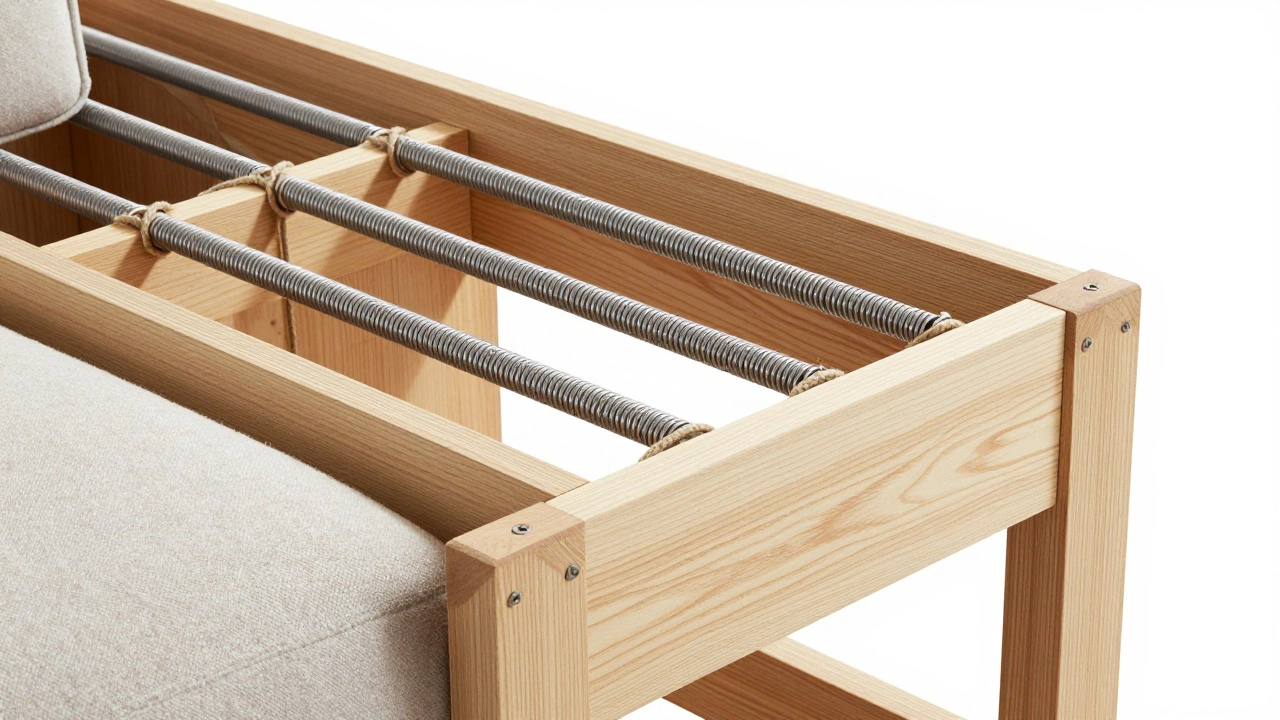
The suspension is what holds you up and determines if the couch will feel "saggy" in two years. Most modern sofas use Sinuous Springs, which are S-shaped wires that stretch from one end of the frame to the other. These are perfectly fine for most people, but only if they are heavy-gauge steel and properly anchored.
If you're looking for heirloom quality, ask for Eight-Way Hand-Tied Springs. In this system, springs are coiled and tied manually in eight different directions. This creates a consistent support system across the entire seat, meaning there are no "dead spots" where your hip sinks deeper than your thigh. It's a labor-intensive process, which is why it's usually only found in premium brands.
Avoid "webbing-only" suspension in high-use areas. While elastic webbing is common in modern, low-profile designs, it lacks the bounce-back capability of steel springs. Over time, webbing stretches out, leaving you feeling the hard frame underneath the cushion.
| Suspension Type | Durability | Feel | Price Point |
|---|---|---|---|
| Webbing | Low to Medium | Soft, can sag | Budget |
| Sinuous Springs | Medium to High | Bouncy, supportive | Mid-range |
| 8-Way Hand-Tied | Very High | Consistent, firm | Premium |
Cushioning: Foam, Down, and the Middle Ground
The cushions are where you actually spend your time. If the foam is cheap, it will lose its "loft" and flatten out. Look for High-Resiliency Foam (HR foam). Unlike standard polyurethane foam, HR foam has a higher density and a more open cell structure, allowing it to snap back to its original shape after you stand up.
Then there is Down Feathers. A 100% down cushion feels incredibly luxurious and plush, but it requires constant "fluffing" to keep its shape. If you hate rearranging your pillows every time you sit down, avoid pure down.
The sweet spot is a foam core wrapped in a layer of down or polyester fiber. This gives you the initial soft feeling of a luxury hotel sofa but the structural support of a high-density foam core. When testing a couch, push your hand deep into the cushion. If you can feel the springs or the frame easily, the foam is too thin. You should feel a firm resistance before you hit the suspension.
Fabric and Upholstery: More Than Just Color
The fabric is the first thing to wear out. To know if a fabric is high quality, you need to look beyond the color. The most important metric is the rub count, often measured by the Martindale Test. This test rubs a piece of fabric against a rough surface until the threads break. For a standard living room, you want a rub count of at least 15,000. If you have kids or pets, look for 30,000 or higher.
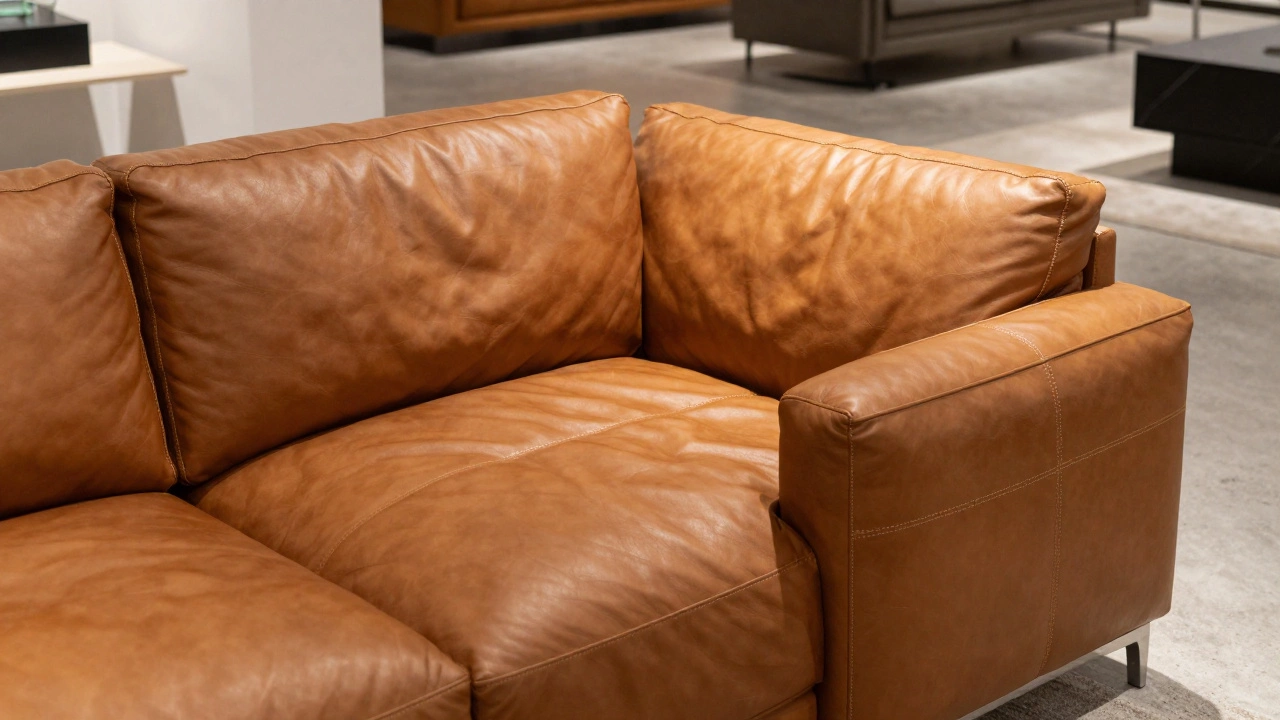
Consider the material: Top-Grain Leather is the gold standard because it uses the strongest part of the hide. Beware of "bonded leather" or "faux leather." Bonded leather is essentially leather scraps glued together with polyurethane; it's notorious for peeling and cracking within a year or two. If a couch is labeled "genuine leather," be cautious-this is often a marketing term for the lowest grade of real leather.
Check the seams. High-quality upholstery has straight, tight stitching with no loose threads. Look for "double-stitched" seams in high-stress areas like the arms and seat edges. If you see puckering or gaps in the fabric where it meets the frame, it's a sign of rushed manufacturing.
The Final "Stress Test" Checklist
Before you swipe your card, put the sofa through these real-world tests. Don't just sit politely; actually live on the couch for five minutes.
- The Shake Test: Grab the back of the sofa and give it a firm shake. Does it creak? Does it sway side-to-side? A quality frame stays rigid.
- The Weight Distribution Test: Sit on the very edge of the cushion, then move to the center. Does the seat dip significantly in the middle? If so, the suspension is weak.
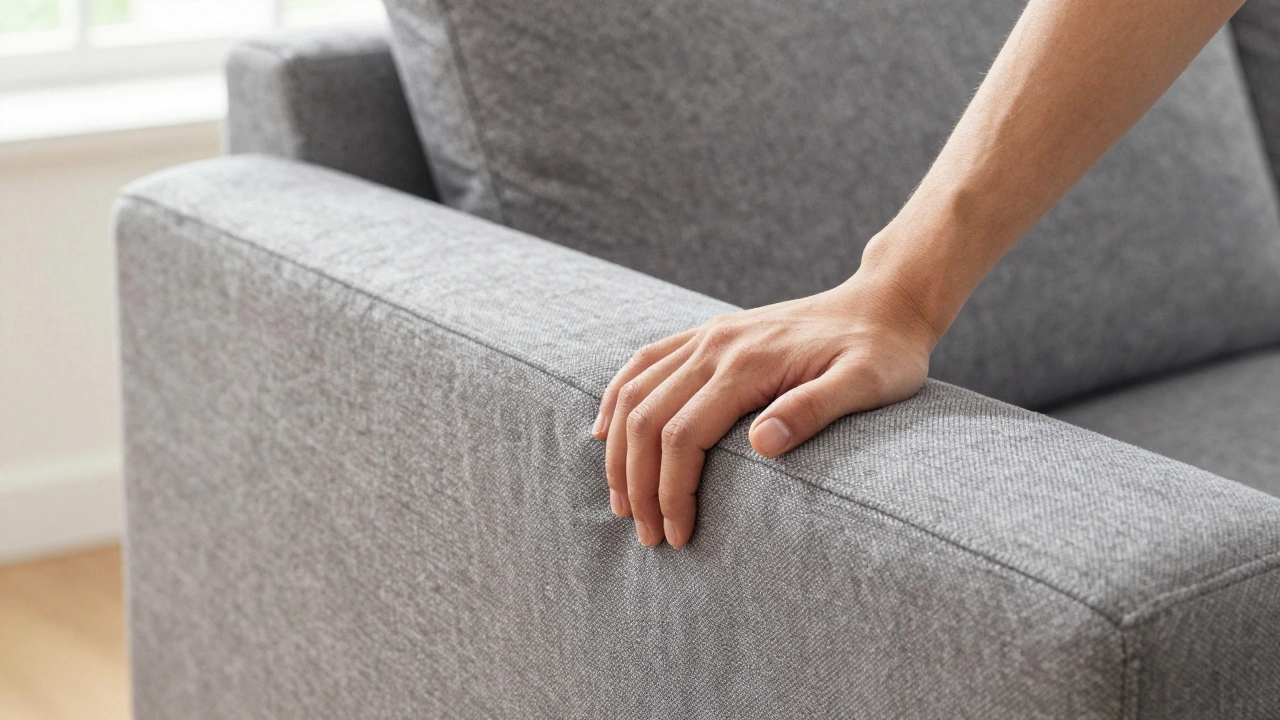
- The Finger Press: Press your thumb firmly into the armrest. Does the padding bounce back instantly, or does it leave a permanent indentation?
- The Zipper Check: Unzip the cushions. If the foam inside is wrapped in a cheap plastic bag or looks like a single, low-density block, it's low quality. High-end cushions often have a separate ticking layer to keep the filling in place.
Is a heavier couch always better?
Generally, yes. Weight usually indicates the use of solid hardwoods and heavy-gauge steel springs rather than hollow plastic or thin plywood. However, weight alone isn't a guarantee of quality; some cheap sofas use heavy, low-grade MDF that adds weight without adding durability.
What is the difference between top-grain and full-grain leather?
Full-grain leather is the most natural and durable, as it includes the entire grain layer. Top-grain leather has had the very top layer sanded off to remove imperfections, making it more uniform and slightly more flexible, though slightly less durable than full-grain.
Can I fix a sagging couch?
If the foam has collapsed, you can replace the foam inserts. If the springs have failed, it's much harder. You can try "sofa straps" or webbing kits to add temporary support, but replacing sinuous springs usually requires a professional upholsterer.
How long should a high-quality sofa last?
A well-made sofa with a kiln-dried hardwood frame and 8-way hand-tied springs should easily last 10 to 15 years, and often longer if the fabric is maintained. Budget sofas typically start failing after 2 to 5 years.
Why is kiln-dried wood so important?
Wood naturally contains moisture. If a manufacturer uses "green" wood, the moisture evaporates over time, causing the wood to shrink, warp, and crack. Kiln-drying removes this moisture in a controlled environment, ensuring the frame remains stable for decades.
What to do if you're unsure
If you're shopping online and can't touch the sofa, look for specific keywords in the descriptions. Avoid terms like "sturdy construction" or "premium feel," which are generic marketing fluff. Instead, look for "kiln-dried maple," "100% top-grain leather," or "high-resiliency foam." If the manufacturer doesn't specify the type of wood or the rub count of the fabric, it's usually because they're using the cheapest options available.
Lastly, consider the warranty. A company that offers a lifetime warranty on the frame is confident in its build. A 1-year limited warranty is a red flag that the manufacturer expects the piece to wear out quickly.