Couch Mold Risk Calculator
Enter the details of your storage situation to estimate the likelihood of mold growth on your upholstered furniture.
Risk Assessment
Recommendations:
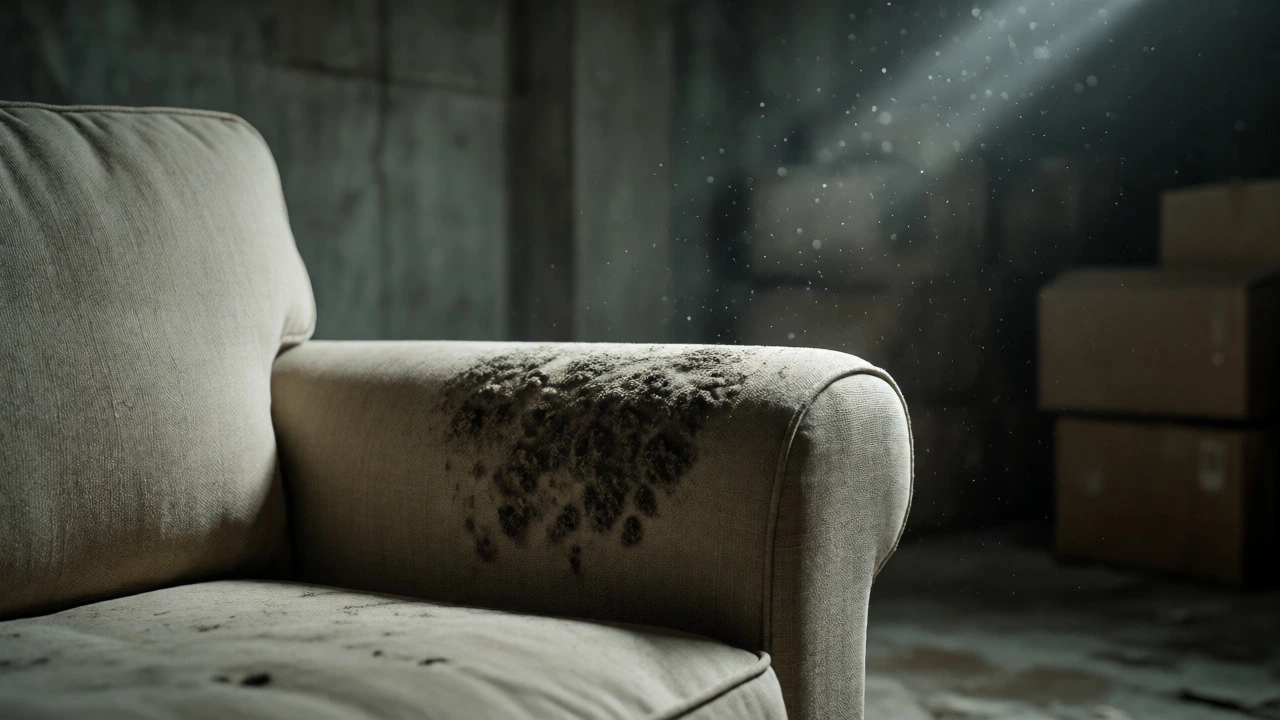
You drop off your beloved sofa at the storage facility, lock the gate, and drive away feeling relieved. Six months later, you return to retrieve it, only to find that your couch smells like damp socks and has strange dark spots blooming on the fabric. It’s a nightmare scenario for anyone moving house or renovating, but it’s entirely preventable if you understand what actually causes couch mold in these environments.
The short answer is yes, a couch can absolutely mold in a storage unit. In fact, upholstered furniture is one of the most vulnerable items you can store because fabric acts like a sponge for moisture and organic particles. But before you panic and decide to sell everything, know this: mold isn’t inevitable. It’s the result of specific conditions-moisture, warmth, and food sources-coming together in a closed space. If you break that chain, your sofa will come out looking as good as it went in.
Why Upholstery Is High-Risk in Storage
Think about what a couch is made of. You’ve got natural fibers like cotton, linen, or wool, and synthetic blends. Underneath, there’s foam padding, wooden frames, and sometimes leather accents. Each of these components interacts with humidity differently. Wood absorbs water and swells; foam traps air and moisture deep inside its structure; fabric provides the surface area where spores land and grow.
Mold is a type of fungus that thrives in damp, stagnant environments. Unlike bacteria, which need direct contact with liquids, mold grows from airborne spores that settle on surfaces. When those surfaces have even slight dampness and organic material (like skin cells, dust, or the fabric itself), the spores germinate. A storage unit is essentially a sealed box. Without airflow, any moisture introduced during the move-rain on the delivery truck, sweat from movers, or just humid outdoor air-gets trapped inside. That trapped humidity becomes the perfect incubator for microscopic fungal growth.
In Wellington, where we deal with persistent dampness and rain, this risk is amplified. Even if the unit is indoors, temperature fluctuations between day and night can cause condensation to form on cooler surfaces like metal springs or dense foam blocks. This phenomenon, known as the dew point effect, means moisture appears out of nowhere, creating wet spots that never dry out because the door stays shut for weeks.
Climate Control vs. Non-Climate Controlled Units
This is the single biggest factor determining whether your couch survives intact. Most people assume all storage units are climate-controlled, but they aren’t. There’s a massive difference between "climate-controlled" and "temperature-controlled," and understanding this distinction saves you money and heartache.
| Unit Type | Temperature Range | Humidity Control | Mold Risk Level | Best For |
|---|---|---|---|---|
| Climate-Controlled | 15°C - 25°C (stable) | Dehumidified & regulated | Low | Wood, electronics, upholstery, art |
| Temperature-Controlled | Avoids extremes (<0°C or >30°C) | None or minimal | Medium-High | Plastics, metals, sturdy tools |
| Outdoor/Drive-Up | Ambient (fluctuates wildly) | None | High | Garden pots, non-porous items |
If you’re storing a fabric sofa, pay the extra cost for a true climate-controlled unit. These facilities use HVAC systems not just to heat or cool, but to actively remove moisture from the air. They keep relative humidity below 50%, which is the threshold where most mold species struggle to reproduce. Temperature-controlled units might keep the room from freezing, but they don’t stop humidity spikes. If it rains heavily outside and the ventilation is poor, the interior humidity can hit 80% or more within hours. At that level, mold can start growing in as little as 24 to 48 hours.
Preparation Steps Before You Move the Couch
You can’t fix a dirty couch after it’s been sitting in a dark box for a year. The state of your furniture when it enters the unit determines how quickly problems arise. Cleaning isn’t just about aesthetics; it’s about removing the food source for mold.
- Deep Clean First: Vacuum every crevice. Dust, pet dander, and dead skin cells are organic matter. If you leave them behind, you’re feeding the mold before it even starts. For fabric sofas, consider steam cleaning, but ensure it is bone-dry before packing. Never store damp fabric.
- Check for Existing Damage: Inspect the legs and underside. Are there water stains? Soft spots in the wood? If the frame already has mildew, putting it in storage will accelerate the rot. Treat small areas with a vinegar solution or professional fungicide, then let them dry completely.
- Elevate It: Concrete floors are cold and often hold moisture, especially in ground-level units. Place pallets or bricks under the feet of the couch. This creates an air gap between the furniture and the floor, preventing wicking action where water travels up from the concrete into the wood or fabric.
- Cover Correctly: Do not wrap your couch in plastic sheeting. Plastic traps moisture against the fabric, creating a greenhouse effect. Instead, use breathable canvas covers or old bedsheets. If you must use plastic for protection against dust, leave the bottom open or poke holes to allow airflow.
Managing Humidity Inside the Unit
Even in a climate-controlled unit, local microclimates can form. If you stack boxes tightly around the couch, you block air circulation. Stagnant air is dangerous. Here’s how to manage the internal environment of your specific storage space.
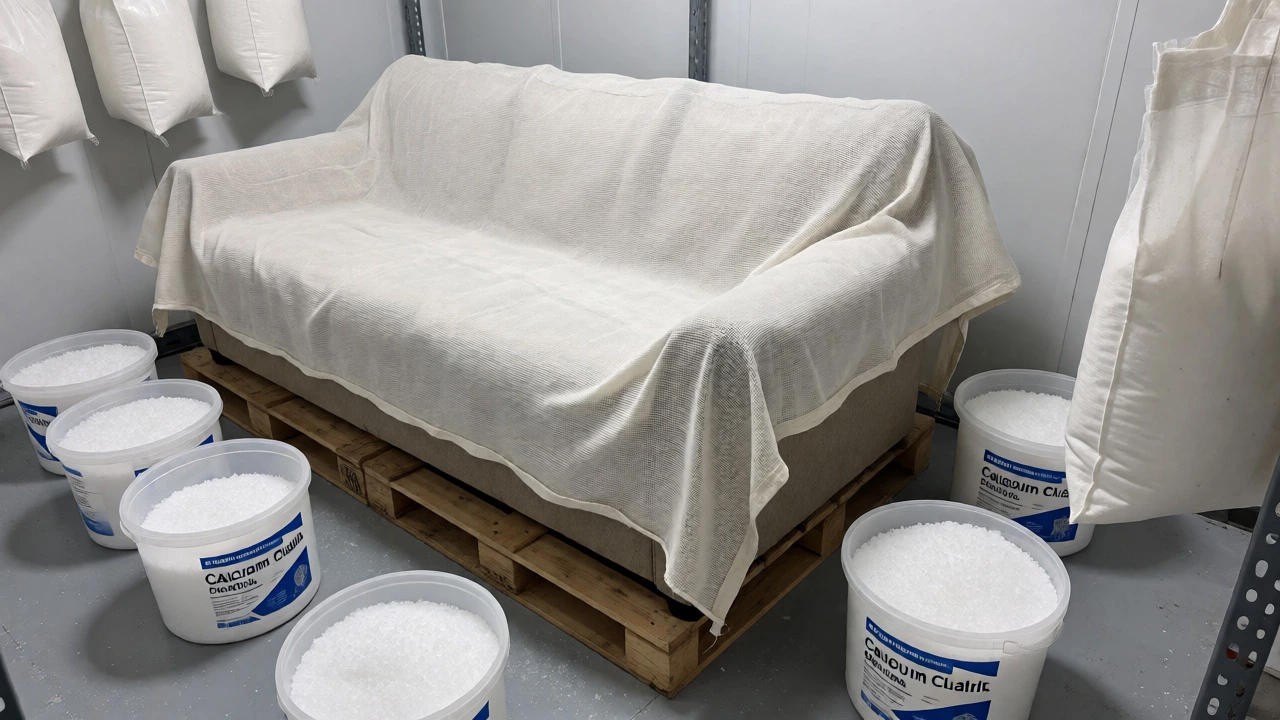
Desiccants are your best friend. These are materials that absorb moisture from the air. Silica gel packets are great for small spaces, but for a full-sized couch, you need something heavier duty. Look for hanging dehumidifier bags or large tubs of calcium chloride crystals. Place them near the top of the unit, as warm moist air rises, and another set near the floor. Replace them every few months if you visit the unit regularly.
Another trick is using activated charcoal. It doesn’t just absorb moisture; it also neutralizes odors. Mold often announces itself with a musty smell before you see visible spots. Charcoal helps mask this while absorbing volatile organic compounds released by decaying organic matter. Just remember, desiccants have a limit. Once they’re saturated, they stop working. Mark the date on the package so you know when to swap them out.
Consider the layout. Don’t push the back of the couch flush against the wall. Leave at least two inches of space on all sides. Walls can be colder than the air, leading to condensation forming on the surface behind the furniture. That hidden condensation is where mold loves to hide because you won’t see it until you pull the couch out.
Signs Your Couch Is Developing Mold
Early detection is key. If you catch it early, you can clean it. If you wait six months, the roots of the mold may have penetrated the foam cushion, meaning the piece is effectively ruined. Here’s what to look for during your occasional check-ins.
- The Smell Test: Walk into the unit and take a deep breath. Does it smell earthy, musky, or sour? Fresh air should smell neutral. Any distinct odor suggests microbial activity.
- Visual Inspection: Use a flashlight to scan the seams and undersides. Look for fuzzy patches in white, green, black, or orange. On light-colored fabrics, mold might look like tiny speckles. On dark fabrics, it might appear as bleached spots.
- Touch Sensation: Run your hand over the fabric. Does it feel clammy or unusually soft? Dry fabric feels crisp. Damp fabric feels heavy and limp.
- Discoloration: Compare different parts of the couch. If one armrest looks darker than the other, moisture likely settled there first.
If you spot mold, don’t just wipe it with a wet cloth. That spreads spores. Vacuum it with a HEPA filter vacuum first to capture the loose spores. Then, mix equal parts white vinegar and water in a spray bottle. Spray lightly-do not soak-and blot with a clean cloth. Vinegar kills most common household mold species without damaging most fabrics. Always test a hidden area first to ensure colorfastness.
Long-Term Storage Considerations
If you plan to store the couch for more than three months, your strategy needs to shift from passive protection to active maintenance. Time is the enemy here. The longer an item sits in a static environment, the higher the chance of failure.
Schedule visits. Aim to check on your storage unit every four to six weeks. Open the door for ten minutes to let fresh air circulate. This simple act resets the humidity levels inside the unit. During these visits, inspect the desiccants. If they’ve turned into liquid or solid sludge, replace them immediately. Also, check for pests. Mice and insects are attracted to the warmth of stored upholstery and can create entry points for moisture and mold by chewing through protective covers.
Be aware of seasonal changes. In many regions, spring brings increased pollen and humidity, while autumn brings falling leaves and damp ground. Adjust your precautions accordingly. If you live in a coastal area like Wellington, salt air can corrode metal parts and degrade fabric faster. Rinsing the exterior of the unit (if accessible) or ensuring seals are tight becomes more important.
Finally, consider insurance. Most standard home insurance policies do not cover items lost to mold in storage unless you have specific riders. Check your policy. Some storage facilities offer basic coverage, but it rarely covers gradual damage like mold growth. Document the condition of your couch with photos before you move it in. If disaster strikes, having proof of its pre-storage condition helps in any potential disputes.
Frequently Asked Questions
Can I put a damp couch directly into storage?
No, never. A damp couch is a guaranteed mold recipe. Moisture trapped inside the foam and fabric cannot escape in a sealed unit. It will sit there, breeding bacteria and fungi. Always ensure the couch is completely dry to the touch, including the underside and inner cushions, before moving it into storage. If you’re worried about residual moisture, let it air out in a sunny, ventilated area for 24 hours prior to the move.
Does leather furniture mold in storage units?
Yes, leather can mold, though it behaves differently than fabric. Leather is porous and organic, making it a food source for mold. However, mold on leather often appears as white or grey powdery spots rather than the fuzzy growth seen on fabric. Leather is also prone to drying out and cracking if the air is too dry, so balance is key. Condition the leather before storage and use breathable covers. Avoid plastic wraps, which trap sweat and oils against the hide, accelerating degradation.
How long does it take for mold to grow on a couch in storage?
Under ideal conditions for mold (high humidity above 60% and temperatures between 20°C and 30°C), visible growth can appear in as little as 48 to 72 hours. Spore colonization begins much earlier, but you won’t see it until the colony expands. If the unit is cool and dry, it might take weeks or months. However, microscopic damage starts immediately once moisture is present. This is why checking for smells and subtle texture changes is vital in the first month.
Is it safe to bring a moldy couch back into my house?
Proceed with caution. Mold spores can trigger allergies and respiratory issues. If the mold is minor, you can treat it outdoors or in a garage before bringing it inside. Vacuum thoroughly with a HEPA filter, then clean with a vinegar or hydrogen peroxide solution. Allow it to dry completely in sunlight if possible. If the mold has penetrated deep into the foam or wooden frame, it might be better to discard the item to avoid contaminating your living space.
What is the best way to cover a couch for storage?
Use breathable materials like cotton sheets, canvas drop cloths, or specialized furniture blankets. These allow air to pass through, preventing moisture buildup. Avoid plastic tarps or shrink-wrap unless you are certain the item is perfectly dry and you intend to use it for short-term protection against dust only. Plastic creates a barrier that traps humidity against the fabric, creating a micro-environment where mold thrives.