

Coffee Table Height Calculator
Enter your sofa's seat height (from floor to top of cushion) to find the perfect matching coffee table height.
Proportion Checklist
Table Length Rule
Aim for ~
Two-thirds of your sofa lengthClearance Space
12 - 18 inches
Distance between table and sofaErgonomic Verdict
Based on standard arm reachPicture this: you sink into your favorite armchair after a long day, ready to relax with a book or a glass of wine. You reach out for the remote on the coffee table, but your hand has to stretch awkwardly high, or worse, you have to lean forward uncomfortably to grab your drink. It’s a small annoyance, but it ruins the whole vibe of your living room. This happens because the relationship between your coffee table is a low table placed in front of a sofa for holding drinks, books, and decorative items and your seating is off. Specifically, the question of whether a coffee table should be higher than the sofa is one that trips up even seasoned decorators.
The short answer? No. In fact, having a coffee table significantly higher than your sofa is usually a design mistake. But the real answer is more nuanced. It’s not just about height; it’s about proportion, comfort, and visual balance. Getting this right transforms your living space from cluttered and awkward to cohesive and inviting. Let’s break down exactly how to measure, choose, and style your coffee table so it works perfectly with your existing sofa.
The Golden Rule of Coffee Table Height
When we talk about furniture proportions, there is a widely accepted standard in interior design. The ideal height for a coffee table is generally equal to the height of the sofa seat cushion, or slightly lower-typically by 1 to 2 inches (2.5 to 5 cm). If your sofa seat is 18 inches high, your coffee table should ideally be between 16 and 18 inches tall.
Why does this matter? Think about ergonomics. When you are sitting comfortably, your legs should rest naturally on the floor, and your arms should rest easily on the table surface without straining your shoulders. If the table is too high, you feel like you’re eating at a desk. If it’s too low, you’re hunching over to see what’s on it. That 1-2 inch difference allows for a natural line of sight and easy access to items without compromising posture.
| Sofa Seat Height | Ideal Coffee Table Height | Visual Effect |
|---|---|---|
| 16 - 17 inches | 14 - 16 inches | Relaxed, casual look |
| 18 - 19 inches | 16 - 18 inches | Standard, balanced proportion |
| 20+ inches | 18 - 20 inches | Elevated, formal aesthetic |
Note that we are measuring the seat height, not the backrest. Many people make the mistake of comparing the table to the top of the sofa back, which leads to buying tables that are far too low. Measure from the floor to the top of the cushion where you sit.
What Happens If Your Coffee Table Is Higher Than the Sofa?
You might wonder if breaking the rule ever works. Can a higher coffee table look good? Sometimes, yes, but it requires specific conditions. A coffee table that is noticeably higher than the sofa seat can create a sense of hierarchy that feels disjointed. Visually, it draws the eye upward in an unnatural way, making the sofa look smaller and less substantial. It can also make the room feel cramped because the vertical space is interrupted abruptly.
However, there are exceptions. If you have a very deep, low-profile modern sofa (often called a "floor sofa" or Japanese-style seating), a slightly higher table might be necessary to provide usable surface area. In these cases, the table acts more like a dining-height accent piece. But for traditional sofas, mid-century modern pieces, or standard contemporary couches, a higher table is almost always a bad idea. It disrupts the flow of movement and makes reaching for items difficult, especially for children or elderly guests.
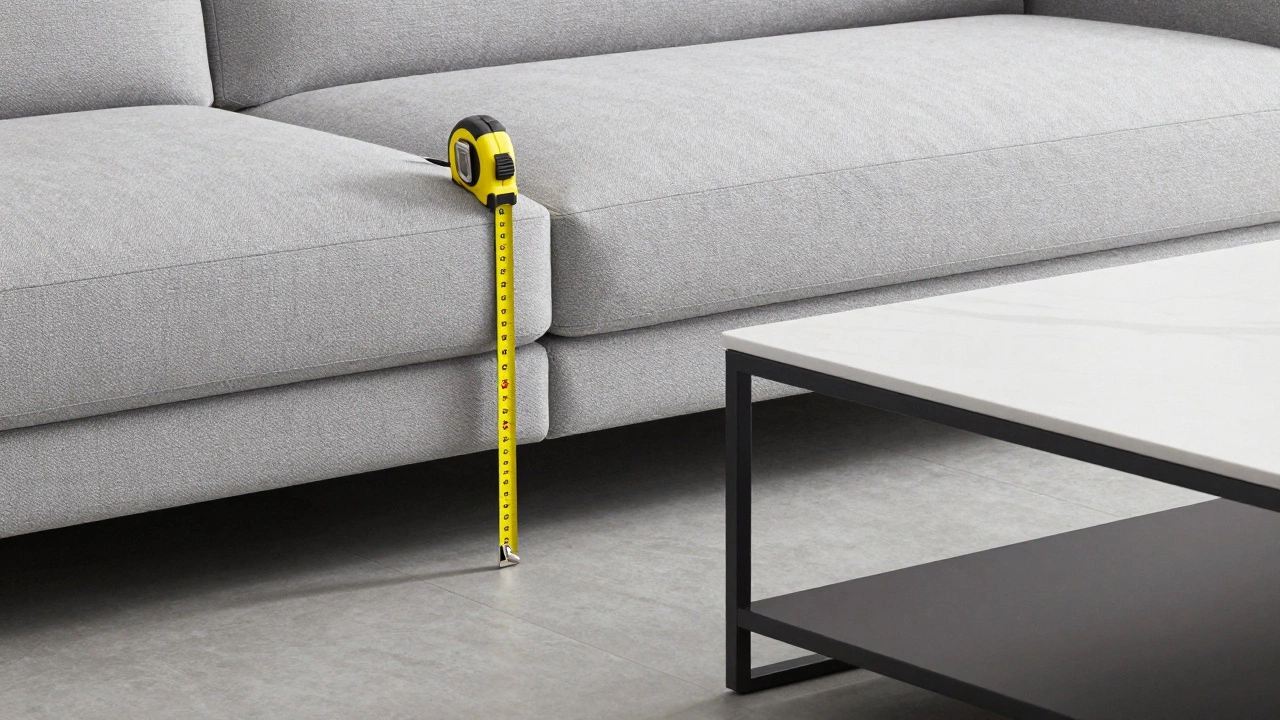
Measuring for Success: A Step-by-Step Guide
Before you buy a new coffee table or rearrange your current setup, take some measurements. It’s easier than you think, and it saves you from returning bulky furniture later.
- Measure the Sofa Seat: Use a tape measure to find the distance from the floor to the top of the seat cushion. Do this while the cushion is uncompressed. If you have thick cushions, press down gently to simulate sitting weight.
- Check the Depth: Measure the depth of your sofa seat. Your coffee table should be about two-thirds the length of the sofa. If your sofa is 84 inches long, aim for a coffee table around 56 inches long.
- Assess the Clearance: There should be 12 to 18 inches of space between the coffee table and the sofa. This allows you to pull up a chair or walk behind the sofa without bumping into anything.
- Consider Legroom: Ensure the table isn’t so wide that it blocks legroom. A narrow profile table can work well under large windows or in tight spaces.
If you already own a coffee table that is too high, don’t panic. You can mitigate the issue by adding a thick rug underneath both pieces. A plush rug raises the effective height of the sofa slightly and creates a visual anchor that ties the two together. Alternatively, use the table as a display stand rather than a functional surface for daily use.
Style Matters: How Shape Influences Perception
Height isn’t the only factor. The shape and material of your coffee table play a huge role in how it interacts with your sofa. A round coffee table, for instance, often feels lower and softer than a square one of the same height. This is because curves guide the eye smoothly, whereas sharp angles create distinct horizontal lines that emphasize height differences.
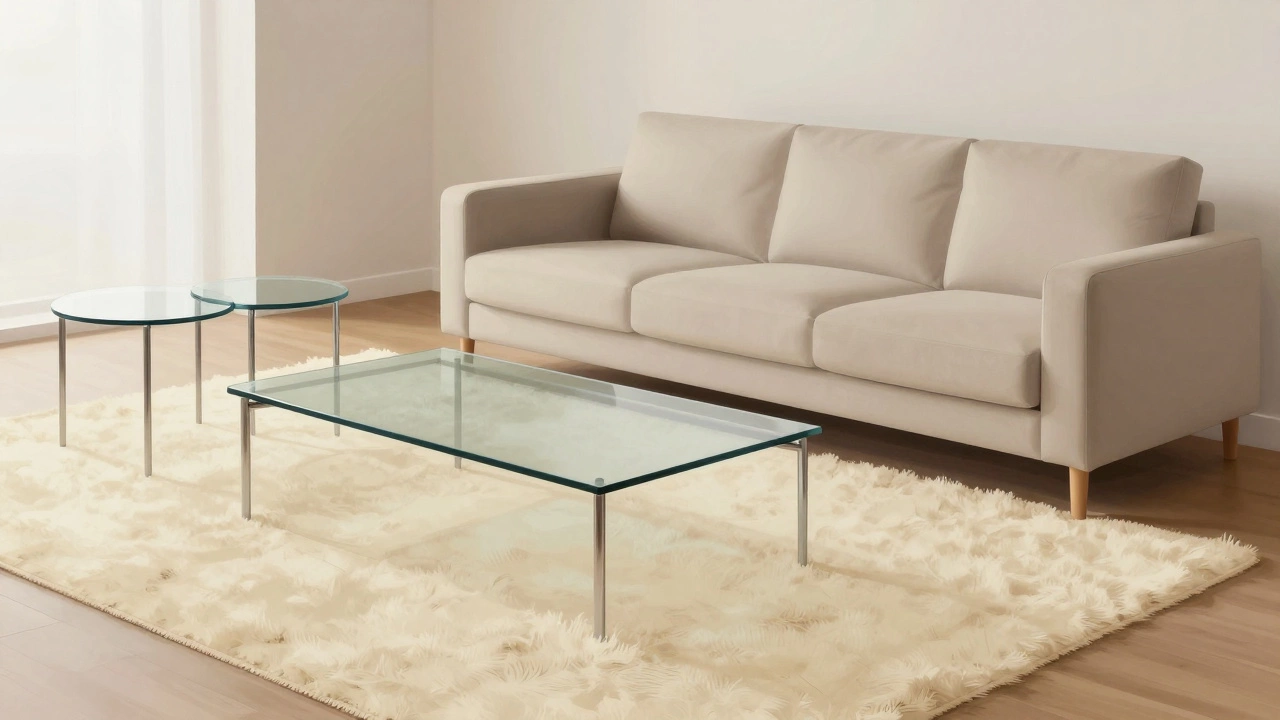
If you have a taller sofa, consider a coffee table with transparent materials, like glass or acrylic. These materials reduce visual bulk, making the table feel lighter and less imposing. Conversely, if your sofa is low, a heavy wooden table with thick legs might overwhelm the space. In such cases, opt for a table with slender metal legs or a floating design to maintain airiness.
Also, think about the silhouette. A nesting set of coffee tables can offer flexibility. You can arrange them to create varying heights, allowing you to adjust the visual balance based on who is using the space. For example, place the larger, lower table closer to the sofa for drinks, and keep the smaller, slightly higher one further away for decor.
Common Mistakes to Avoid
Even with the right measurements, pitfalls exist. One common error is ignoring the scale of the room. A massive coffee table in a small apartment will dominate the space, regardless of its height relative to the sofa. Always prioritize proportion over absolute dimensions. Another mistake is focusing solely on aesthetics and forgetting function. A beautiful marble table might look stunning, but if it’s too low to hold a laptop or too high to reach comfortably, it fails its primary purpose.
Don’t forget about lighting. Floor lamps placed near the sofa can alter perception. A tall lamp next to a low sofa can make the sofa appear even lower, exacerbating any height mismatch with the coffee table. Balance vertical elements carefully to ensure harmony.
FAQ: Coffee Table Height Questions
Should a coffee table be higher than the sofa?
No, a coffee table should generally not be higher than the sofa seat. Ideally, it should be level with or 1-2 inches lower than the seat cushion for ergonomic comfort and visual balance.
How do I measure the correct height for my coffee table?
Measure from the floor to the top of your sofa's seat cushion (not the backrest). Choose a coffee table that matches this height or is 1-2 inches shorter.
Can I use a dining table as a coffee table?
It depends on the height. Standard dining tables are 29-30 inches high, which is much too high for most sofas. However, some drop-leaf tables or convertible designs can be lowered to fit, or used in rooms with floor-level seating.
What if my sofa is very low?
If your sofa is particularly low (under 16 inches), look for ottomans, trunk-style tables, or custom-made low coffee tables. Avoid standard-height tables as they will look disproportionate and be hard to reach.
Does the rug affect the perceived height?
Yes, a thick rug can raise the effective height of both the sofa and the table slightly. More importantly, it visually connects the two pieces, minimizing the impact of minor height discrepancies.