Sofa Comfort Compatibility Calculator
Stop guessing. Enter your physical stats and lifestyle preferences below to find the engineering specs that will keep you comfortable for years, not just minutes.
Recommended Specs
Fill out the form to see your personalized sofa blueprint.
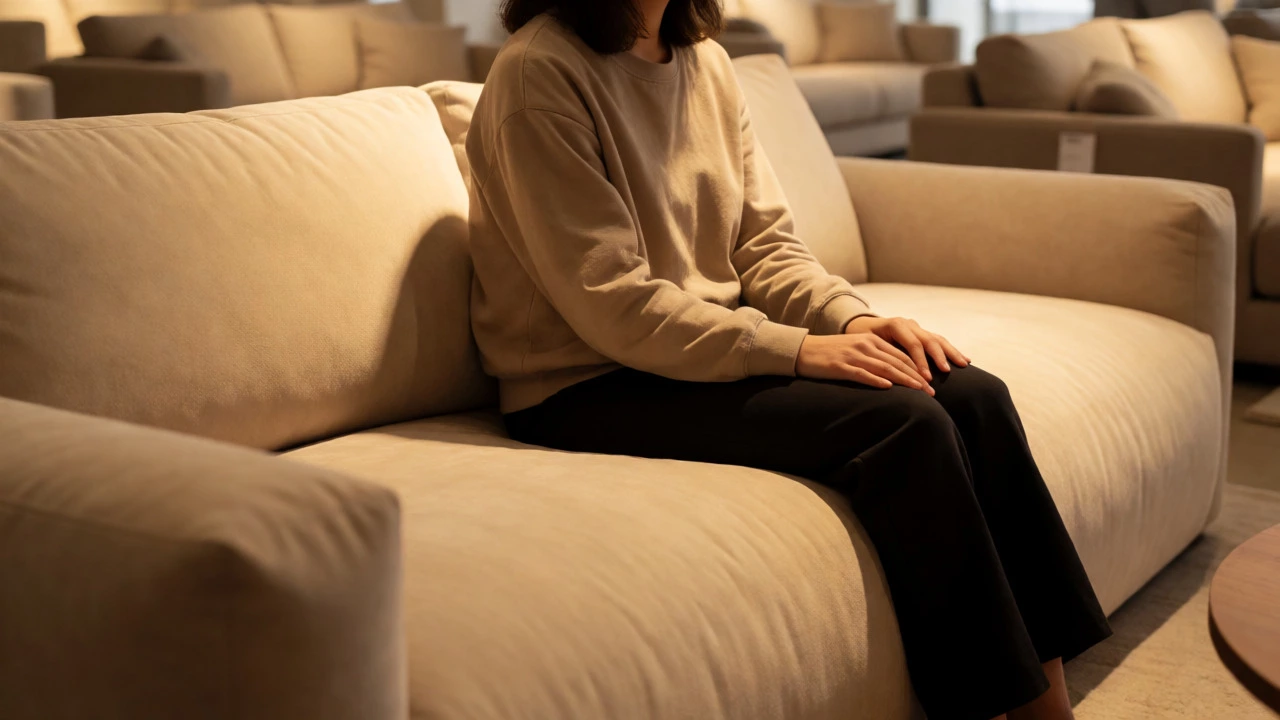
You walk into a showroom. You sit on a plush, cloud-like sofa that sinks you in like a marshmallow. It feels amazing for thirty seconds. Then you stand up. Your back aches slightly. Your legs feel heavy. Was it actually comfortable, or did it just look cozy? This is the biggest trap in furniture shopping: confusing softness with support.
True comfort isn't just about sinking in; it's about how your body aligns while you relax. It’s about whether you can read for two hours without shifting positions every ten minutes. It depends on three specific things most salespeople gloss over: the density of the foam, the depth of the seat, and the firmness of the frame. If you’re trying to figure out what type of sofa is most comfortable for your lifestyle, you need to ignore the marketing fluff and look at the engineering underneath the fabric.
The Myth of "Soft" vs. "Comfortable"
Most people equate comfort with immediate softness. When you test a couch, you want it to feel welcoming instantly. But here is the reality check: low-density foam collapses within two years. You buy a "luxury" sectional, and eighteen months later, you are sitting directly on the wooden slats. That is not comfort; that is poor durability disguised as luxury.
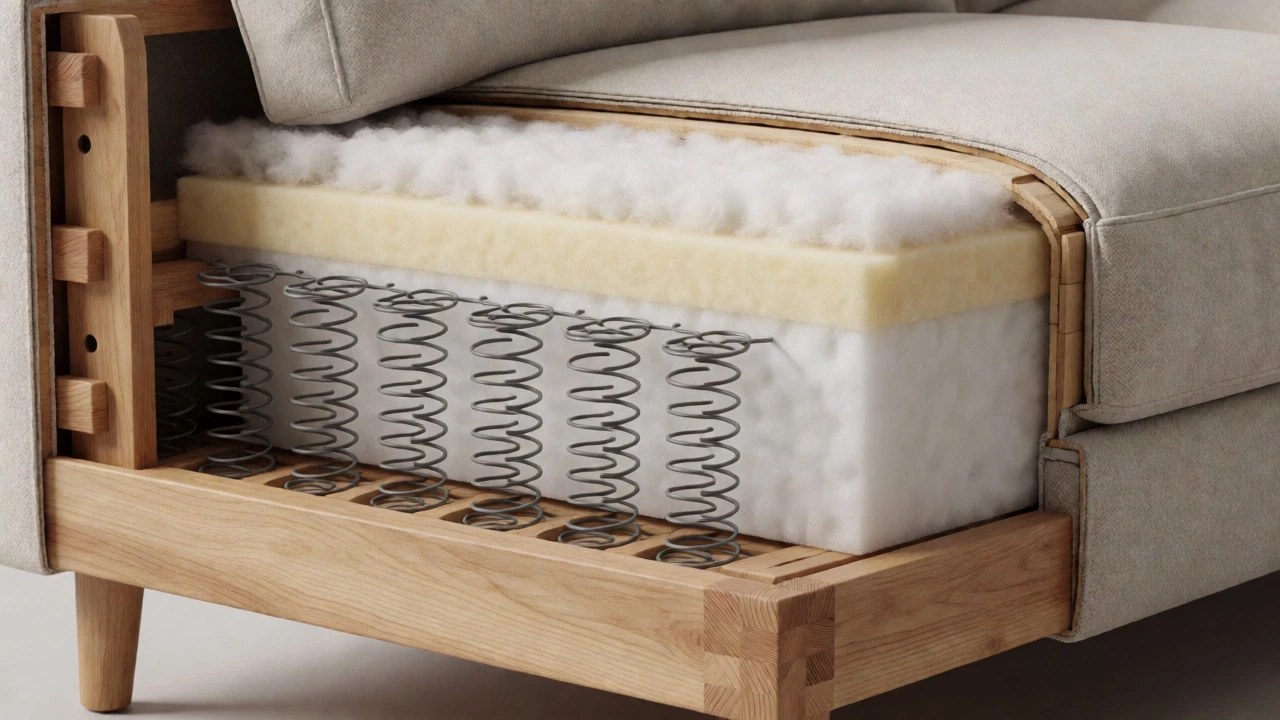
The most comfortable sofas usually use high-resilience (HR) foam or down-wrapped foam. HR foam has a higher density rating, often above 1.8 pounds per cubic foot. It pushes back against your weight. It supports your spine. Down wraps add a layer of softness on top, giving you that initial "sink" feeling without sacrificing long-term structure. If you want a sofa that stays comfortable after five years, prioritize resilience over initial squishiness.
| Fill Type | Initial Feel | Long-Term Durability | Maintenance Needed |
|---|---|---|---|
| High-Density Foam | Firm, supportive | Excellent (5-10+ years) | Minimal |
| Down/Feather Blend | Very soft, luxurious | Poor (collapses quickly) | High (daily fluffing) |
| Polyester Fiberfill | Medium softness | Average (3-5 years) | Moderate |
| Innerspring Coils | Bouncy, traditional | Variable (depends on gauge) | Low |
Seat Depth: The Hidden Comfort Killer
You can have the best foam in the world, but if the seat depth is wrong, you will hate the sofa. Seat depth is measured from the front edge of the cushion to the backrest. Standard depths range from 21 to 24 inches. Deep seats go from 25 to 30+ inches.
Why does this matter? Think about your posture. If you are under 5'6", a 28-inch deep seat means your knees won’t bend properly unless you lean forward, leaving your lower back unsupported. You end up sliding off the edge of the cushion to keep your feet flat. Conversely, if you are tall, a shallow 20-inch seat digs into the backs of your knees, cutting off circulation. The most comfortable sofa matches the depth to the primary user’s height.
- For shorter users (<5'6"): Look for standard depth (21-23 inches). Add lumbar pillows if needed.
- For average height (5'6"-5'10"): Medium depth (23-25 inches) offers versatility.
- For taller users (>5'10"): Deep seating (26+ inches) allows you to stretch out and fully support your thighs.
Frame Construction: The Silent Support System
Comfort isn't just about what you touch; it's about what holds you up. A wobbly frame makes even the best cushions feel unstable. The gold standard for comfort and longevity is a kiln-dried hardwood frame. Why kiln-dried? Because green wood shrinks and warps over time. As the frame shifts, joints loosen, creating squeaks and uneven seating surfaces.
Check for corner blocks glued and screwed into place. Staples alone will fail. If you press down hard on the armrests and they wiggle, walk away. A rigid frame ensures that the energy from your movement goes into the cushion, not into shaking the whole structure. This stability reduces fatigue because your muscles don't have to constantly adjust to micro-movements in the furniture.
Sectionals vs. Traditional Sofas: Which Wins?
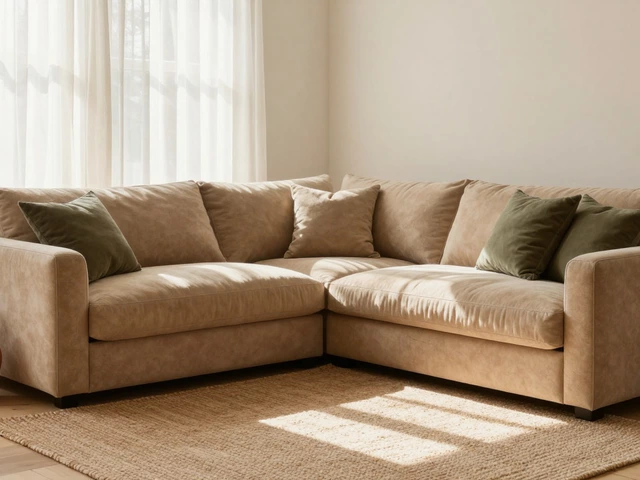
This depends entirely on how you use the space. Sectionals offer modularity. You can configure an L-shape or U-shape to fit corners, maximizing seating capacity. They are great for families or hosts who entertain large groups. However, sectionals often have seams between modules where debris collects, and cushions may shift independently, leading to uneven seating heights.
Traditional three-seater sofas provide uniform support. There are no gaps between seats. If you value consistent comfort across the entire length, a traditional sofa is often superior. However, if you love to lie down completely flat, a chaise sectional wins hands down. Being able to extend your legs fully removes pressure from the lower back, which is a massive comfort booster for evening relaxation.
Cushion Style: Loose vs. Tight Back
Tight-back sofas have cushions attached to the frame. They look sleek and modern. But here is the problem: when the cushion compresses, it compresses permanently. You cannot flip it or rotate it to distribute wear evenly. Over time, you develop a "sink hole" in the middle.
Loose-back sofas allow you to remove, flip, and rotate cushions. This extends the life of the foam significantly. More importantly, it lets you customize the back support. If you prefer firmer back support, you can move a denser cushion to the center. If you want softer lounging, swap them out. For pure adaptability and long-term comfort, loose-back designs are almost always better.

How to Test a Sofa Like a Pro
Don't just sit politely on the edge. Do this instead:
- Sit all the way back. Ensure your lower back touches the backrest without straining.
- Check knee clearance. You should be able to slide two fingers between the front of the seat and the back of your knees.
- Lie down. Can you stretch out fully? Does your head rest naturally on the backrest or arm?
- Stand up quickly. Did the cushion bounce back immediately? If it stayed depressed for more than a few seconds, the foam density is too low.
- Shake the arms. Grab both armrests and shake gently. Any rattle indicates loose joinery.
Related Concepts and Connected Topics
Understanding sofa comfort connects to broader interior design principles. Ergonomics, the science of designing products to fit the human body, dictates these measurements. Material science plays a role too-knowing the difference between memory foam, latex, and polyurethane helps you choose the right feel. Furthermore, room layout affects perceived comfort. A cramped room makes a large sofa feel claustrophobic, reducing its psychological comfort.
If you are interested in extending the life of your new purchase, research upholstery fabrics. Performance fabrics resist stains and wear, maintaining the aesthetic appeal of the sofa. Similarly, understanding cleaning methods prevents damaging delicate down feathers or high-density foams during maintenance.
Is leather or fabric more comfortable?
Fabric is generally considered more comfortable for temperature regulation. Leather can feel sticky in summer and cold in winter. However, high-quality top-grain leather becomes softer over time and develops a patina. Fabric options like velvet or chenille offer immediate softness and warmth. If you run hot, choose breathable natural fibers like cotton or linen blends.
How do I know if foam density is good?
Ask the retailer for the foam density rating, measured in pounds per cubic foot (PCF). For seat cushions, look for at least 1.8 PCF. Anything below 1.5 PCF is low quality and will sag quickly. High-quality sofas often use 2.0 PCF or higher. If the seller doesn't know the number, assume it's low density.
Are recliners more comfortable than regular sofas?
Recliners offer adjustable support, which is great for reading or watching TV. However, the mechanical parts can creak, and the fixed seat depth might not suit everyone. Regular sofas offer more flexibility in positioning. If you have back issues, a high-quality power recliner with lumbar adjustment can be superior, but ensure the mechanism is smooth and silent.
Can I make a firm sofa more comfortable?
Yes. You can add a feather topper or a memory foam pad on top of the existing cushions. This adds a layer of softness without replacing the entire unit. Alternatively, adding throw pillows can change the angle of your back support, making the seating experience more customizable.
What is the most durable sofa type?
A sofa with a kiln-dried hardwood frame, eight-way hand-tied springs, and high-density foam cushions is typically the most durable. These components resist sagging, breaking, and structural failure for decades. Avoid particleboard frames and webbing-only support systems if longevity is your priority.