Living Room Lighting Simulator
Analysis
Adjust the sliders to see how different lighting layers affect your room's ambiance.
Walk into a living room with harsh overhead lights, and you feel like you’re in an office. Step into another where the light is warm, soft, and coming from multiple angles, and suddenly you want to stay there all evening. That difference isn’t magic; it’s strategy. Good lighting transforms a space from merely functional to genuinely inviting.
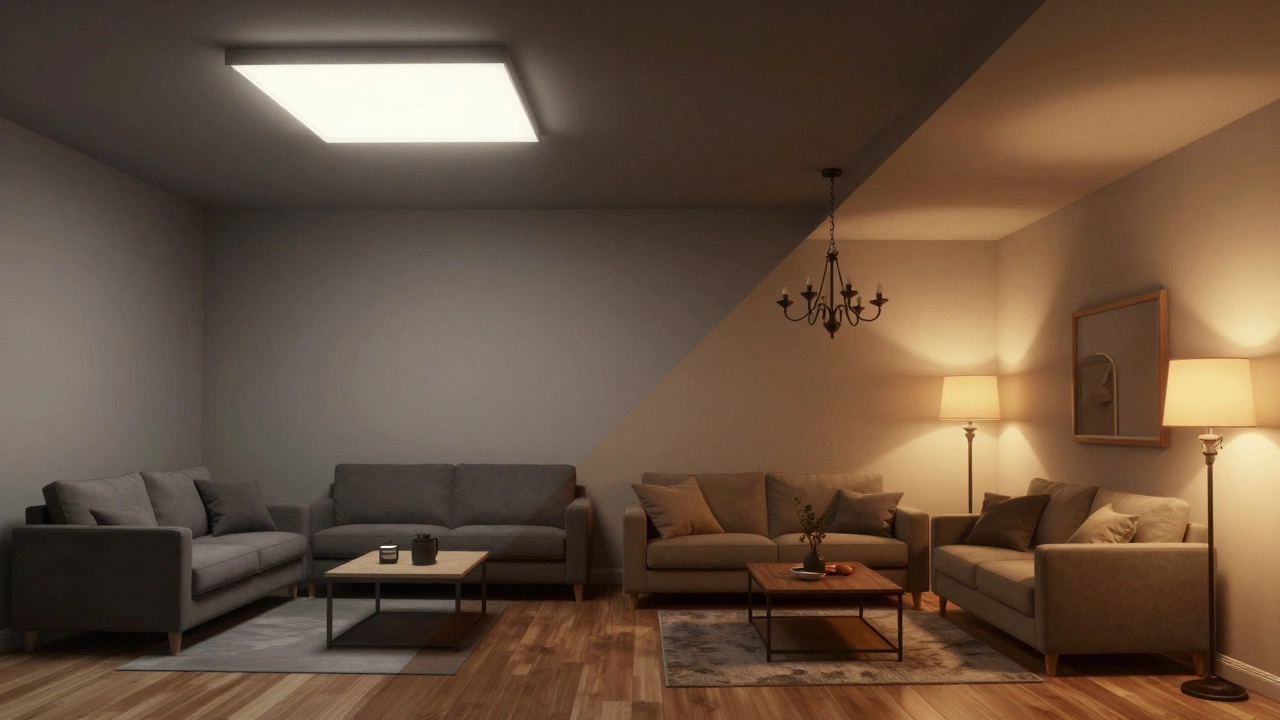
If you’ve ever stared at your ceiling fixture wondering why your room feels flat or tired, you aren’t alone. Most people rely on a single source of light-usually that big central fixture-and wonder why their eyes hurt after an hour. The secret to great living room lighting lies in layers. You need to mix different types of light to create depth, comfort, and functionality.
Why does my living room look flat?
Flat lighting usually happens when you rely on one central light source. Without shadows and highlights created by side lamps or floor lights, walls lose texture and furniture blends into the background.
The Three Layers of Lighting
To get professional-looking results without hiring a designer, you need to understand the three pillars of residential lighting: ambient, task, and accent. Think of these as ingredients in a recipe. If you only use salt (ambient), the meal is edible but boring. Add pepper (task) and herbs (accent), and suddenly it has flavor.
Ambient lighting is the general illumination that fills the room, allowing you to move around safely. This is your base layer. It often comes from recessed ceiling cans, chandeliers, or track lighting. However, relying solely on this creates that dreaded "interrogation room" vibe. The goal here is even distribution, not brightness. Aim for a soft glow that eliminates dark corners but doesn’t glare in your eyes.
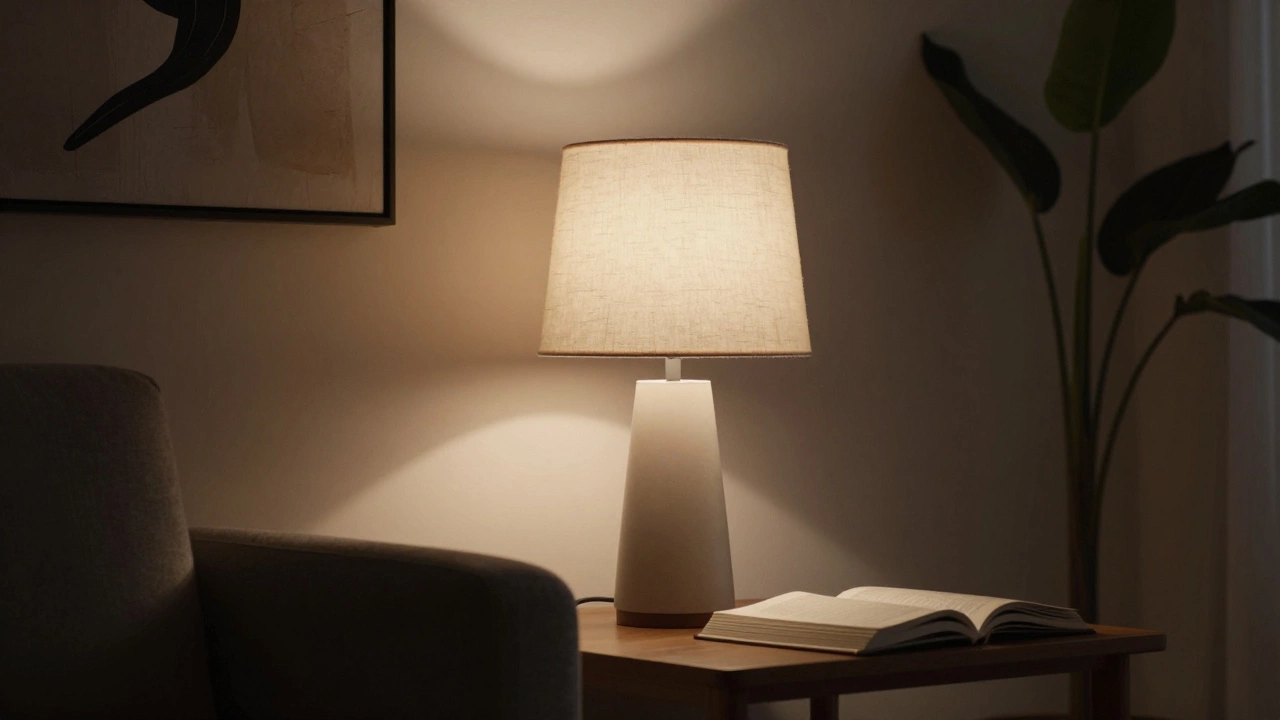
Task lighting is focused light designed for specific activities like reading, knitting, or playing board games. You wouldn’t try to read a book under a dim moonlight, right? Task lighting needs to be brighter and directed exactly where you need it. Floor lamps next to armchairs, table lamps on side tables, or pendant lights over a coffee table fall into this category.
Accent lighting is decorative light used to highlight architectural features, artwork, or plants. This is the fun part. A small LED strip behind a TV, a picture light above a painting, or a spotlight on a sculptural vase adds drama and visual interest. Accent lighting draws the eye and makes the room feel curated rather than just furnished.
Color Temperature Matters More Than You Think
You might have noticed that some bulbs look yellowish while others look bluish. This is called color temperature, measured in Kelvins (K). Getting this wrong can ruin the mood of your entire room, no matter how expensive your fixtures are.
| Temperature Range | Appearance | Best Use Case |
|---|---|---|
| 2700K - 3000K | Warm White / Soft Yellow | Relaxing evenings, cozy atmospheres |
| 3500K - 4000K | Neutral White | Morning activity, detailed tasks |
| 5000K + | Cool Blue / Daylight | Kitchens, bathrooms, offices (avoid in living rooms) |
For a living room, stick to 2700K to 3000K. This range mimics the warmth of sunset or candlelight, signaling to your brain that it’s time to relax. Higher temperatures like 5000K are great for waking up in the morning or focusing in a home office, but they feel clinical and sterile in a space meant for lounging. If you mix bulbs, ensure they are within the same Kelvin range. Mixing a 2700K lamp with a 5000K ceiling fan will create a disjointed, messy look.
Dimming Is Non-Negotiable
Even the best-lit room feels rigid if you can’t adjust the intensity. Dimmers are the cheapest upgrade you can make to your home’s ambiance. They allow you to shift the room’s function instantly. Bright light works for cleaning or hosting a game night. Low light sets the scene for a movie or a quiet conversation.
When installing dimmers, check compatibility. Not all LED bulbs work well with every dimmer switch. Some flicker at low settings, which is incredibly annoying. Look for LEDs labeled "dimmable" and pair them with high-quality electronic low-voltage (ELV) dimmers. Brands like Lutron or Leviton offer reliable options that smooth out the transition as you lower the brightness.
Placement Strategies for Different Room Shapes
Where you place your lights matters just as much as what kind of lights you choose. Poor placement can create shadows where you don’t want them or leave key areas in darkness.
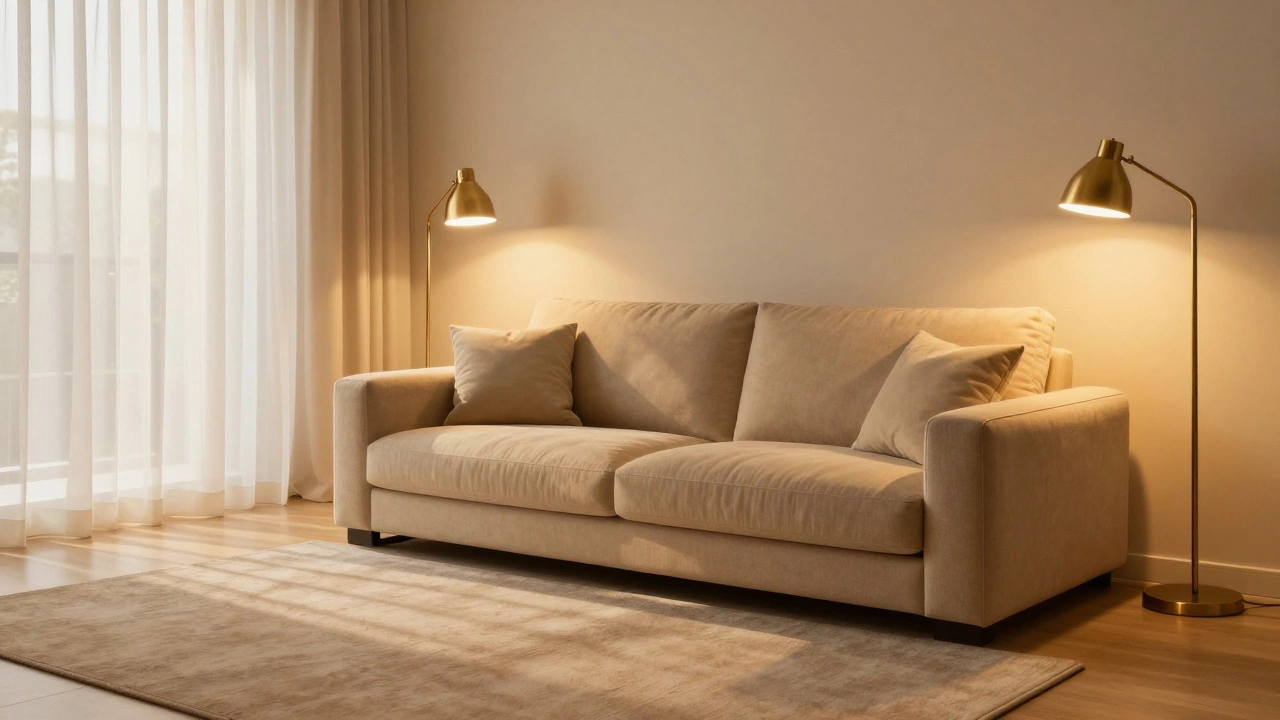
- Corner Placement: Floor lamps in corners help spread light evenly across the room without taking up valuable floor space in the center. They also add vertical height, making low ceilings feel taller.
- Symmetry: Flanking a sofa with two matching table lamps creates balance. It’s a classic interior design trick that makes the space feel organized and intentional.
- Height Variation: Mix heights. Have a tall floor lamp, a medium table lamp, and a low sconce. This variety guides the eye up and down, adding rhythm to the room.
- Avoid Glare: Ensure light sources are positioned so they don’t shine directly into seated eyes. If you watch TV, keep bright lights behind you or to the sides, never in front of the screen.
Natural Light Integration
Don’t forget the sun. Natural light is the best light you have. During the day, your artificial lighting should complement, not compete with, daylight. Sheer curtains allow soft light to filter through, reducing the need for harsh overheads. Blackout blinds are useful for naps or movie watching, but during active hours, let the outside in.
If your living room gets very bright sunlight, consider using smart bulbs that adjust color temperature automatically. In the morning, they can mimic daylight to keep you alert. As the sun sets, they gradually warm up, helping your body prepare for sleep. This circadian-friendly approach improves both comfort and health.
Common Mistakes to Avoid
Many homeowners make simple errors that undermine their lighting efforts. Here’s what to skip:
- Using Only One Fixture: As mentioned, a single ceiling light casts downward shadows, making faces look gaunt and rooms look empty.
- Ignoring Scale: A tiny lamp on a large console table looks lost. A massive chandelier in a small den feels oppressive. Measure your space before buying.
- Skipping Switches: Hardwiring every light to one switch is inconvenient. Install separate switches for each layer or use smart plugs to control groups remotely.
- Choosing Style Over Function: Beautiful fixtures are great, but if they don’t emit enough light or direct it poorly, they’re just decorations. Always check lumens (brightness) and beam angle.
Smart Lighting for Modern Homes
Technology has made lighting more flexible than ever. Smart bulbs and systems like Philips Hue or LIFX allow you to change colors, set schedules, and integrate with voice assistants. While changing light colors to purple might seem gimmicky, setting a "movie mode" that dims all lights to 10% and turns off kitchen spillover is practical.
Smart lighting also offers energy savings. You can program lights to turn off when you leave the house or simulate occupancy while you’re away. For living rooms, the biggest benefit is convenience. No more getting up to find the switch when you’re comfortable on the couch.
Budget-Friendly Upgrades
You don’t need to rewire your house to improve lighting. Start with lamps. Swap out old incandescent bulbs for high-CRI (Color Rendering Index) LEDs. CRI measures how accurately colors appear under light. Aim for a CRI of 90 or higher. Low-CRI bulbs make skin tones look sallow and fabrics dull. High-CRI bulbs make everything look vibrant and true-to-life.
Add plug-in wall sconces if you don’t have wired ones. These clip onto existing outlets and provide instant accent lighting without an electrician. Finally, rearrange your furniture. Moving a sofa away from a window or positioning a chair near a floor lamp can dramatically change how light interacts with your space.
How many lights do I need in a living room?
Aim for at least three sources: one ambient (ceiling), one task (floor/table lamp), and one accent (sconce/picture light). Larger rooms may need five or more to avoid dark spots.
Should I use white or yellow bulbs?
Use warm white (2700K-3000K) for relaxation. Cool white (4000K+) is better for task-oriented spaces like kitchens. Stick to warm tones in living areas for coziness.
Can I mix different types of lighting?
Yes, mixing ambient, task, and accent lighting is recommended. Just ensure consistent color temperature across all bulbs to maintain a cohesive look.
What is CRI and why does it matter?
CRI (Color Rendering Index) rates how well a light source reveals true colors. A CRI of 90+ ensures your decor and skin tones look natural, not washed out or greenish.
Do I need an electrician to add more lights?
Not necessarily. Plug-in sconces, floor lamps, and smart bulbs require no wiring. For hardwired fixtures, consult a licensed electrician to ensure safety and code compliance.