

ADHD Desk Stimming & Chair Compatibility Checker
Identify your primary stimming triggers and get personalized recommendations for chair features or desk modifications to reduce cognitive load.
Select your stimming behavior and intensity above, then click "Analyze My Setup" to see which chair features will help you focus better and which ones might be causing friction.
You know that feeling. You’re trying to listen in a meeting or crunch numbers, but your leg won’t stop bouncing. Your fingers are tapping a rhythm on the armrest. You’re chewing on the end of your pen until it’s shredded. For many people, this looks like distraction. But if you have ADHD (Attention Deficit Hyperactivity Disorder), you know it’s actually a survival mechanism. This behavior is called stimming (self-stimulatory behavior used to regulate sensory input and emotional state). And here’s the thing: suppressing it often makes your brain work harder, not less.
If you spend eight hours a day sitting in an office chair, a piece of furniture designed for static posture rather than dynamic movement, you’re fighting a losing battle against your own neurology. Traditional ergonomic advice says "sit still." Neurodivergent reality says "move to think." This guide breaks down what ADHD stimming actually is, why standard office setups fail neurodivergent brains, and how to choose seating that supports your need for motion instead of punishing it.
The Science Behind Stimming
Stimming isn’t just "fidgeting." It’s a complex neurological process. When your brain is under-stimulated (bored) or over-stimulated (overwhelmed), it seeks balance. Repetitive movements-like rocking, hand-flapping, or leg shaking-provide consistent sensory feedback. This feedback helps regulate dopamine levels, which are often lower in ADHD brains. By engaging in these motions, you’re essentially self-medicating with movement.
Think of it like white noise. Some people need audio silence to focus; others need background hum. Stimming is the physical equivalent of that hum. It occupies the parts of your brain that might otherwise wander off, allowing your executive function to lock onto the task at hand. Research from institutions like the Centers for Disease Control and Prevention (CDC) highlights that while stimming is common in autism, it is also prevalent in ADHD, anxiety, and other neurodevelopmental conditions. The key difference is intent: autistic individuals may stim for sensory joy or distress relief, while those with ADHD often stim to maintain alertness and cognitive load capacity.
| Behavior Type | Physical Action | Typical Office Conflict |
|---|---|---|
| Vestibular | Rocking forward/backward, swaying side-to-side | Standard fixed-base chairs restrict tilt; wheels lock up |
| Proprioceptive | Deep pressure squeezing, leaning heavily on arms | Thin padding lacks resistance; hard plastic edges dig in |
| Tactile | Rubbing fabric, picking at upholstery | Leather squeaks; mesh gets damaged by nails |
| Kinesthetic | Leg bouncing, foot tapping | Floor mats slide; rigid seat pans cut off circulation |
Why Standard Office Chairs Fail Neurodivergent Brains
Most office chairs sold today are built for "ideal" posture: feet flat, back straight, hips at 90 degrees, no movement. This design assumes the human body is a statue. But for someone with ADHD, stillness feels like suffocation. When you force yourself to sit perfectly still, your brain diverts energy away from your work to suppress the urge to move. This is called "cognitive load leakage." You’re spending mental bandwidth on restraint rather than problem-solving.
Consider the Herman Miller Aeron, a popular ergonomic chair known for its mesh construction and adjustable support. While excellent for spinal health, its high-tension mesh can be too restrictive for heavy rockers. The tension resists small movements, making subtle stims feel like a fight. On the other end of the spectrum, cheap task chairs often lack adjustability entirely. If your knees are higher than your hips, or if the seat pan is too deep, your legs will bounce harder just to find comfort. That extra effort translates directly into reduced focus time.
There’s also the social stigma factor. Many adults with ADHD mask their symptoms in professional settings. They stop rocking because they worry about looking unprofessional. They stop tapping their feet because it annoys colleagues. This masking leads to "ADHD burnout," where the exhaustion of constant suppression outweighs the productivity gained. The right chair doesn’t just hold you up; it gives you permission to move without judgment.

Choosing a Chair That Supports Movement
You don’t need a medical-grade device to manage stimming at work. You need a chair that accommodates natural kinetic behavior. Here are the specific features to look for when shopping for ergonomic seating (chairs designed to promote healthy posture through adjustability and dynamic support).
- Dynamic Tilt Mechanisms: Avoid chairs with a single lock position. Look for "synchro-tilt" or "multi-lock" mechanisms that allow your back and seat to move together. This lets you rock gently while maintaining lumbar support. Brands like Steelcase offer models with independent tilt controls, letting you set the resistance level to match your stim intensity.
- Seat Pan Depth and Edge: If you bounce your legs, a waterfall edge (where the front of the seat curves down) prevents pressure behind your knees. Ensure the seat depth allows two to three fingers of space between the back of your knee and the seat edge. Too deep, and you’ll slump; too shallow, and you’ll perch precariously.
- Armrest Adjustability: Fixed armrests are enemies of tactile stimming. You need armrests that raise, lower, pivot, and slide. Why? Because resting your elbows provides proprioceptive feedback. If you like to lean or squeeze your arms into the rests, padded, soft-touch materials reduce friction and skin irritation compared to hard plastic.
- Caster Quality: Cheap casters grab carpet and stick. High-quality dual-wheel casters roll smoothly on both hardwood and low-pile carpet. This allows for micro-movements-sliding slightly left or right-which can satisfy the urge to shift positions without fully standing up.
For those who prefer active sitting, consider alternatives like wobble stools (seats with a rounded base that require constant core engagement to balance) or kneeling chairs. These devices turn every second of sitting into a low-level workout. They eliminate the option of slouching, forcing your muscles to stay engaged. However, use them cautiously. If you have lower back pain, the lack of back support in some wobble designs might exacerbate discomfort after long sessions.
DIY Modifications for Better Sensory Regulation
Not everyone can buy a $1,500 chair. Fortunately, you can hack your current setup to better handle ADHD stimming. Small changes often yield big results.
Start with texture. If you rub your hands on your thighs or the chair, add a textured cover. A fleece throw draped over the backrest offers a soft surface to grip during stressful calls. If you bite pens, switch to silicone-coated grips. These provide oral motor feedback without destroying your dental enamel.
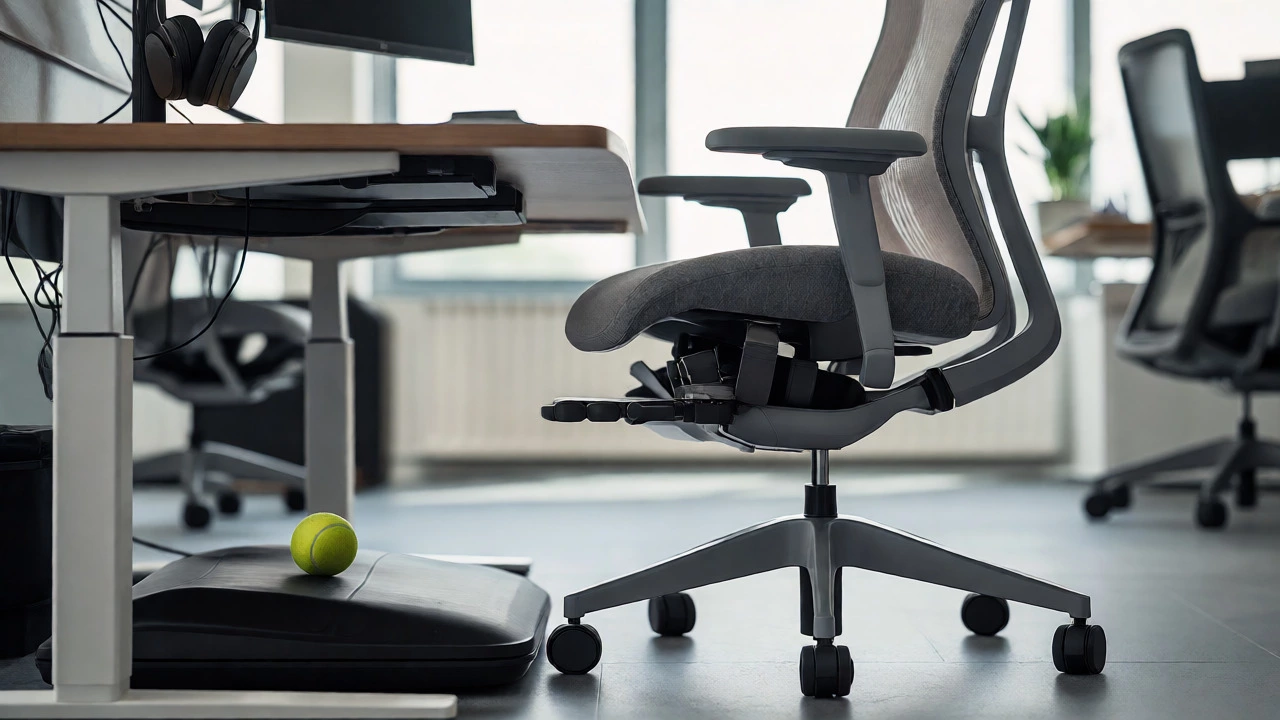
Next, address the floor. If you bounce your legs, place a thick yoga mat or anti-fatigue mat under your desk. The cushion absorbs the impact of foot tapping, reducing noise and preventing your feet from sliding around. Some people even keep a tennis ball under one foot to roll back and forth. This engages the sole of the foot, providing deep pressure stimulation that calms the nervous system.
Finally, consider sound. Stimming can sometimes be auditory. Clicking pens, tapping keys, or humming can distract others-and yourself. Noise-canceling headphones aren’t just for blocking out office chatter; they create a controlled acoustic environment. Pair them with brown noise or rain sounds to mask the irregular rhythms of your own movements, helping you enter a flow state faster.
Workplace Etiquette: To Mask or Not to Mask?
This is the tricky part. Should you tell your boss you need to rock in your chair? Generally, no. Most managers care about output, not method. Unless your stimming disrupts others (like loud clicking or aggressive tapping), you likely don’t need to explain it. You can frame it as a productivity preference: "I focus better when I have a bit of movement."
However, if you’re working in an open-plan office, be mindful of volume. Replace noisy fidget toys with silent ones. Swap metal clickers for rubber bands stretched around your wrist. If you stand up frequently, ensure your chair has smooth-rolling casters so you don’t scrape the floor loudly. The goal is seamless integration. You want your tools to disappear into the background, letting your work speak for itself.
Remember, masking takes energy. If you find yourself exhausted by 3 PM solely because you’ve been holding still, reassess your environment. Perhaps you need a standing desk converter that allows you to pace during phone calls. Or maybe you need a chair with a headrest so you can rest your eyes briefly without losing posture. Experimentation is key. Track your energy levels for a week while using different seating configurations. Data beats assumptions.
Frequently Asked Questions
Is stimming only for people with Autism?
No. While historically associated with autism, stimming is common in people with ADHD, anxiety, PTSD, and even neurotypical individuals under stress. In ADHD, it often serves to increase alertness rather than soothe distress.
Does fidgeting help concentration?
Yes, for many people with ADHD. Studies suggest that mild physical activity increases dopamine and norepinephrine levels, improving attention span and working memory. Suppressing the urge to move often decreases performance.
What is the best chair for ADHD?
There is no single "best" chair, but look for dynamic tilt, adjustable armrests, and breathable materials. Wobble stools and saddle chairs are also good options for those who prefer active sitting over traditional reclining.
How do I stop my chair from squeaking?
Squeaks usually come from dry joints. Apply silicone lubricant to the tilt mechanism and gas lift cylinder. Tighten all bolts. If the mesh is rubbing, apply a tiny amount of talcum powder to reduce friction.
Can stimming damage my office chair?
It can. Constant rocking can wear out tilt mechanisms faster. Heavy gripping can tear fabric. Choosing durable materials like reinforced nylon mesh or leather helps extend the lifespan of your furniture.