Polyptych Installation Calculator
Recommended spacing: 1-3 inches between panels (as per article)
Optimal wall coverage: 60-75% of wall width
Center height: 57-60 inches from floor
Total width: 0 in
Spacing between panels: 0 in
Center height: 58.5 in
Wall coverage: 0%
A polyptych isn’t just another painting on your wall-it’s a piece of history, folded into panels, and designed to tell a story. If you’ve ever seen a set of three or more panels hanging side by side, often with religious scenes or intricate gold details, you’ve seen a polyptych. These aren’t just decorative; they were once the heart of churches, cathedrals, and royal chapels across Europe. Today, they’re making a quiet comeback in modern homes as bold, conversation-starting wall art.
What Exactly Is a Polyptych?
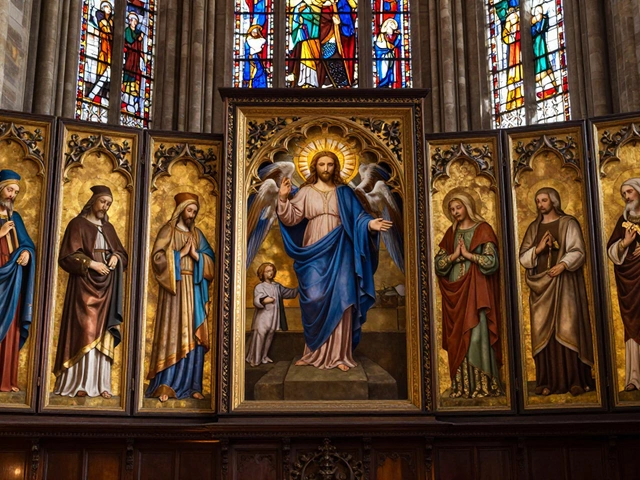
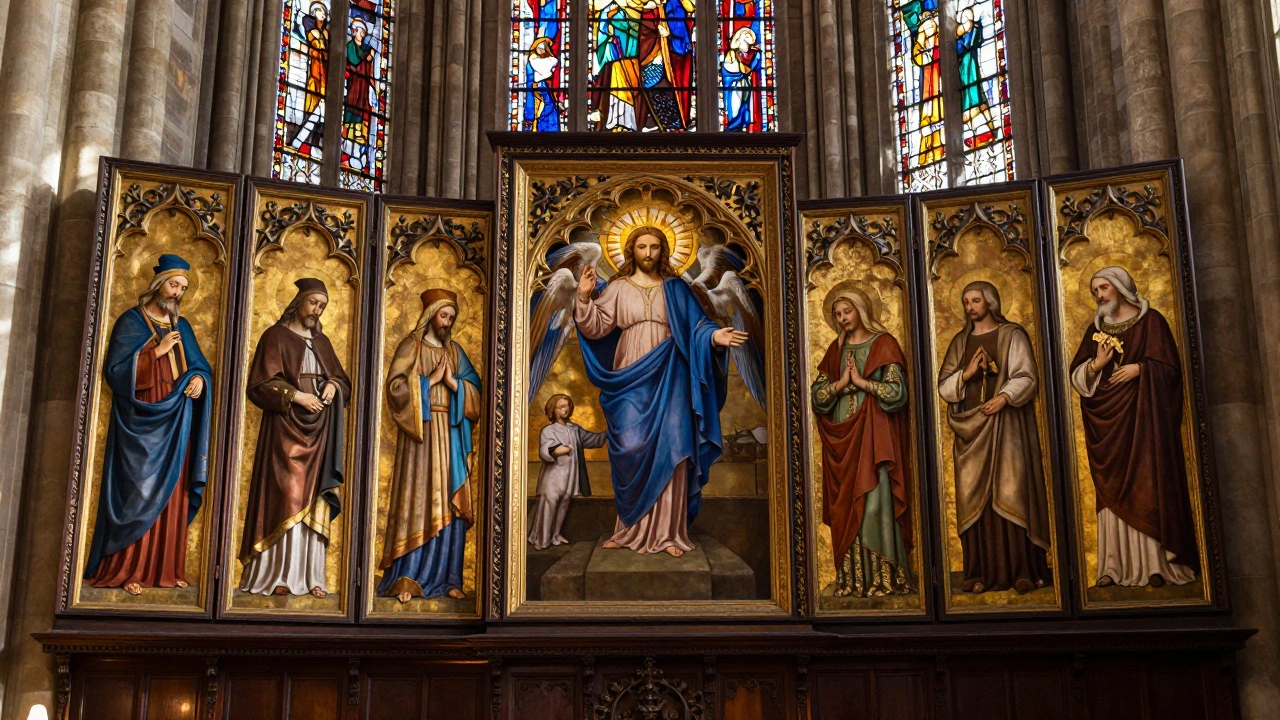
A polyptych is a single artwork made up of multiple hinged or framed panels, usually painted or carved, that are meant to be displayed together. The word comes from Greek: poly (many) and ptych (fold). Think of it like a book with pages-but instead of text, each panel holds a scene, a saint, or a symbolic image.
Most polyptychs have between two and six panels, though some historic examples have as many as 12. The center panel is usually the largest and most detailed, with smaller side panels framing it. When closed, the panels fold inward like a book. When open, they create a wide, dramatic display-perfect for above a fireplace, sofa, or in a hallway.
Where Did Polyptychs Come From?
Polyptychs became popular in Europe between the 12th and 16th centuries, especially during the Gothic and Early Renaissance periods. They were mostly used as altarpieces in churches, positioned behind the altar to focus worshipers’ attention during services. Artists like Jan van Eyck, Rogier van der Weyden, and Duccio di Buoninsegna created some of the most famous examples.
One of the most well-known is the Ghent Altarpiece by Jan van Eyck, completed in 1432. It has 12 panels, each painted with stunning detail. When open, it shows a heavenly scene with God at the center. When closed, it reveals saints and donors on the outer panels. This wasn’t just art-it was a spiritual experience.
These pieces were often commissioned by wealthy families or religious orders. The more panels, the more expensive and prestigious the work. They weren’t just decorative; they were tools for prayer, teaching, and displaying power.
How Are Polyptychs Different From Diptychs and Triptychs?
People often confuse polyptychs with similar formats. Here’s how they differ:
- Diptych: Two panels. Often used for personal devotion, like a portable prayer piece.
- Triptych: Three panels. The most common type today. Think of the classic center panel with two side wings.
- Polyptych: Four or more panels. Less common, more complex, and usually larger in scale.
So if you see three panels, it’s a triptych. If you see five or six, it’s a polyptych. The term “polyptych” is the umbrella category-it includes triptychs, but not all polyptychs are triptychs.
Modern Polyptychs in Home Decor
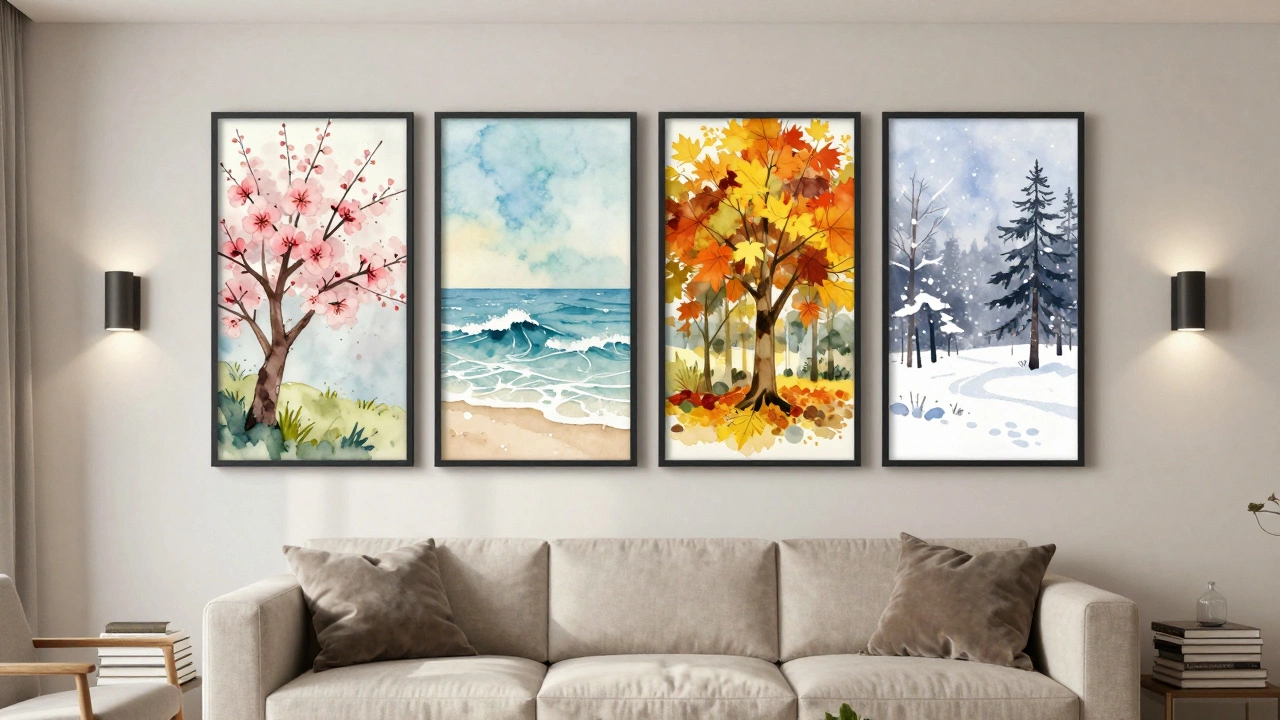
Today, you don’t need a cathedral to display a polyptych. Modern artists and designers have revived the format for homes, offices, and galleries. Contemporary polyptychs often feature abstract designs, landscapes, cityscapes, or even family photos arranged across multiple panels.
Why are they popular now? Because they solve two problems:
- They turn a blank wall into a statement without needing one giant painting.
- They let you mix styles, colors, or themes across panels-something a single large canvas can’t do.
For example, a set of four panels might show different seasons: spring blossoms, summer beach, autumn trees, winter snow. Or four abstract brushstrokes in the same color family, creating rhythm across your wall. The effect is dynamic, layered, and deeply personal.
How to Choose a Modern Polyptych
If you’re thinking about adding one to your space, here’s what to look for:
- Panel count: Start with three or four panels. Too many can feel overwhelming in small rooms.
- Spacing: Leave 1-3 inches between panels. Too close and it looks like a mistake; too far and it breaks the connection.
- Style: Match the mood of your room. A minimalist home works well with monochrome or geometric panels. A boho or traditional space can handle ornate or colorful designs.
- Material: Canvas, wood, metal, or even acrylic. Canvas is lightweight and easy to hang. Wood gives a vintage feel. Metal adds modern edge.
- Size: Measure your wall. The total width of all panels should be about 60-75% of the wall width for balance.
Pro tip: Hang them at eye level. The center of the entire set should be about 57-60 inches from the floor. That’s the standard for most art in homes.
Where to Find Polyptychs Today
You can find modern polyptychs in a few places:
- Online art marketplaces like Etsy, Saatchi Art, or Society6-many independent artists sell custom polyptychs.
- Home decor stores like West Elm, Crate & Barrel, or IKEA (they’ve started carrying multi-panel sets).
- Local galleries or art fairs-supporting artists directly often means unique, one-of-a-kind pieces.
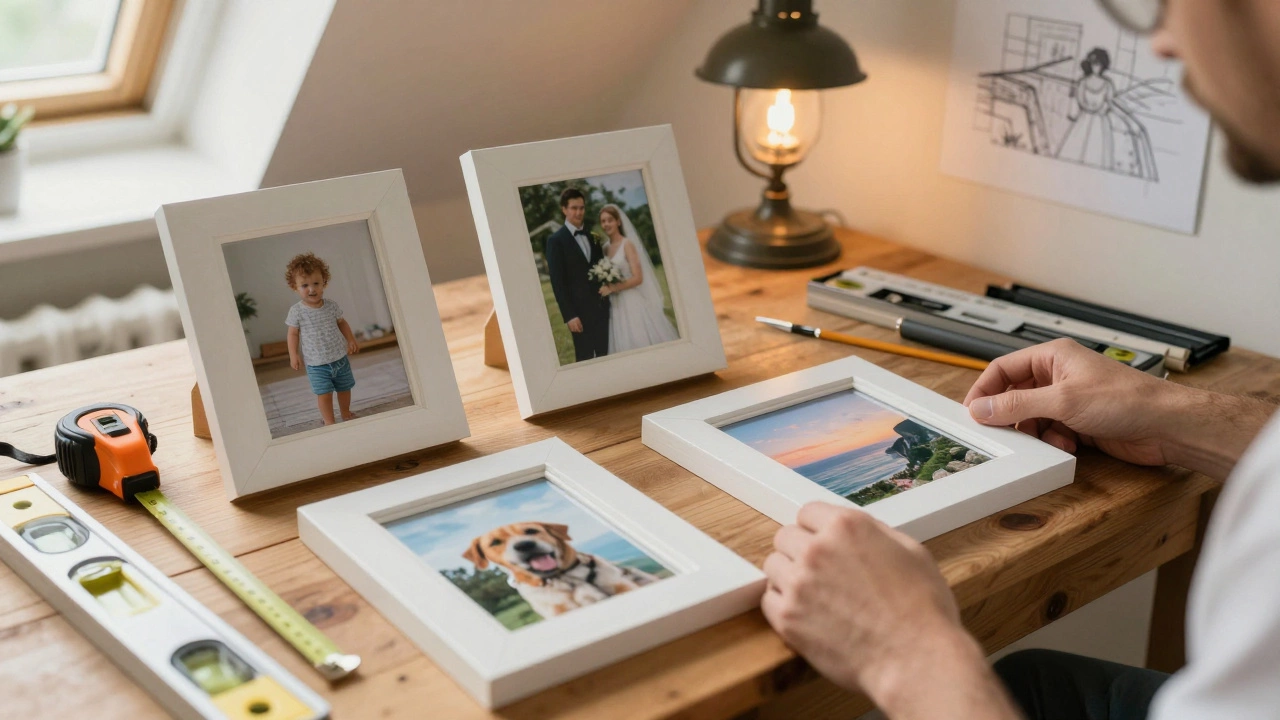
- DIY options: Buy four identical frames and fill them with your own photos, prints, or paintings. It’s affordable and personal.
Prices vary widely. A basic set of four canvas panels might cost $80-$150. A hand-painted original by a known artist can run $500-$3,000.
Why a Polyptych Works Better Than One Large Painting
Here’s the secret: our eyes don’t see one big image the same way they see multiple smaller ones. A single large painting can feel static. A polyptych invites movement. Your gaze travels from left to right, or top to bottom, creating a rhythm. It’s like reading a poem-each panel is a line.
Also, if one panel gets damaged, you don’t have to replace the whole thing. You can swap out a single panel. That’s not possible with one big canvas.
And for renters? Polyptychs are easier to hang and remove. You’re not drilling into a massive frame. Just four smaller ones, spaced neatly. Perfect for apartments.
Common Mistakes to Avoid
- Too many panels: Don’t go over six unless you have a very large wall. It can look cluttered.
- Mismatched frames: If you’re using separate frames, keep them the same color and style. Mixing wood, metal, and plastic looks messy.
- Wrong spacing: Panels touching? Too close. Too far apart? It breaks the story. Use a ruler.
- Ignoring lighting: Hang them where natural or accent light hits them. Shadows can ruin the detail.
One more thing: don’t treat them like a puzzle you have to solve. A polyptych doesn’t need to tell a clear story. It can be abstract. It can be emotional. It can be just color and texture. That’s the beauty of modern polyptychs.
Is a polyptych the same as a triptych?
No. A triptych is a type of polyptych with exactly three panels. All triptychs are polyptychs, but not all polyptychs are triptychs. Polyptych is the broader term for any multi-panel artwork with four or more panels.
Can I make my own polyptych?
Absolutely. Many people create DIY polyptychs using four or more identical frames. Fill them with family photos, travel snapshots, abstract art prints, or even fabric swatches. The key is consistency-same frame style, similar spacing, and a unifying theme like color, subject, or mood.
Do polyptychs have to be vertical?
No. Most traditional polyptychs are horizontal, but modern ones can be arranged vertically or even in a grid. A vertical set of three panels can work beautifully above a bed or in a narrow hallway. The arrangement should match the shape of your wall and the story you want to tell.
Are polyptychs expensive?
It depends. Antique or artist-made polyptychs can cost thousands, but modern prints and DIY versions start as low as $50. You can find affordable sets at home decor stores or online marketplaces. The price usually reflects the number of panels, materials used, and whether it’s mass-produced or handmade.
Where should I hang a polyptych?
Hang it where it has space to breathe. Above a sofa, fireplace, or console table works well. Hallways, stairwells, and dining room walls are also great spots. Avoid narrow corners or areas with too much clutter. The goal is to let each panel be seen clearly.