
Curtain and Sofa Color Harmony Calculator
Design Input
How It Works
Following this rule creates visual balance without matching. Your sofa should be the dominant color (60%), curtains the secondary (30%), and accents the accent (10%).
Colors should complement each other - not match exactly. Textures matter too! A velvet sofa pairs better with sheer curtains than heavy cotton.
Harmony Results
Ever sat down on your sofa, looked at the curtains, and thought, "Do these even belong in the same room?" You’re not alone. The question of whether curtains should match a sofa is one of the most common interior design dilemmas-and it’s also one of the most misunderstood. The truth? You don’t need curtains that match your sofa. Not exactly. Not even close. But you do need them to work together. And that’s where most people get stuck.
Why Matching Isn’t the Goal
A lot of design blogs and Pinterest boards push the idea of "perfect matches"-curtains in the exact same shade as your sofa, or worse, the same fabric. But that’s not interior design. That’s a costume. When curtains and sofa are identical, the room loses depth. It feels flat, like a painting with no shadows. Real spaces have layers. Texture. Contrast. Even in minimalist homes, there’s movement between elements.Think about it: if your sofa is a deep charcoal, and your curtains are the same charcoal, what draws the eye? Where does your gaze rest? The window? The wall? The floor? Nothing stands out. A room needs visual anchors-and sometimes, those anchors are the things that don’t match.
What Actually Works: The 60-30-10 Rule
Interior designers use a simple framework called the 60-30-10 rule to balance color in a space. Applied to curtains and sofas:- 60%: The dominant color (usually walls or large furniture like your sofa)
- 30%: The secondary color (often rugs, armchairs, or curtains)
- 10%: The accent (throw pillows, lamps, artwork)
If your sofa is your 60% (which it usually is), your curtains shouldn’t be the same. They should be the 30%. That means choosing a color that complements, not copies. A navy sofa? Try soft taupe curtains with a subtle weave. A bright emerald green sofa? Go for creamy white linen. You’re not matching-you’re creating rhythm.
Texture Over Tone
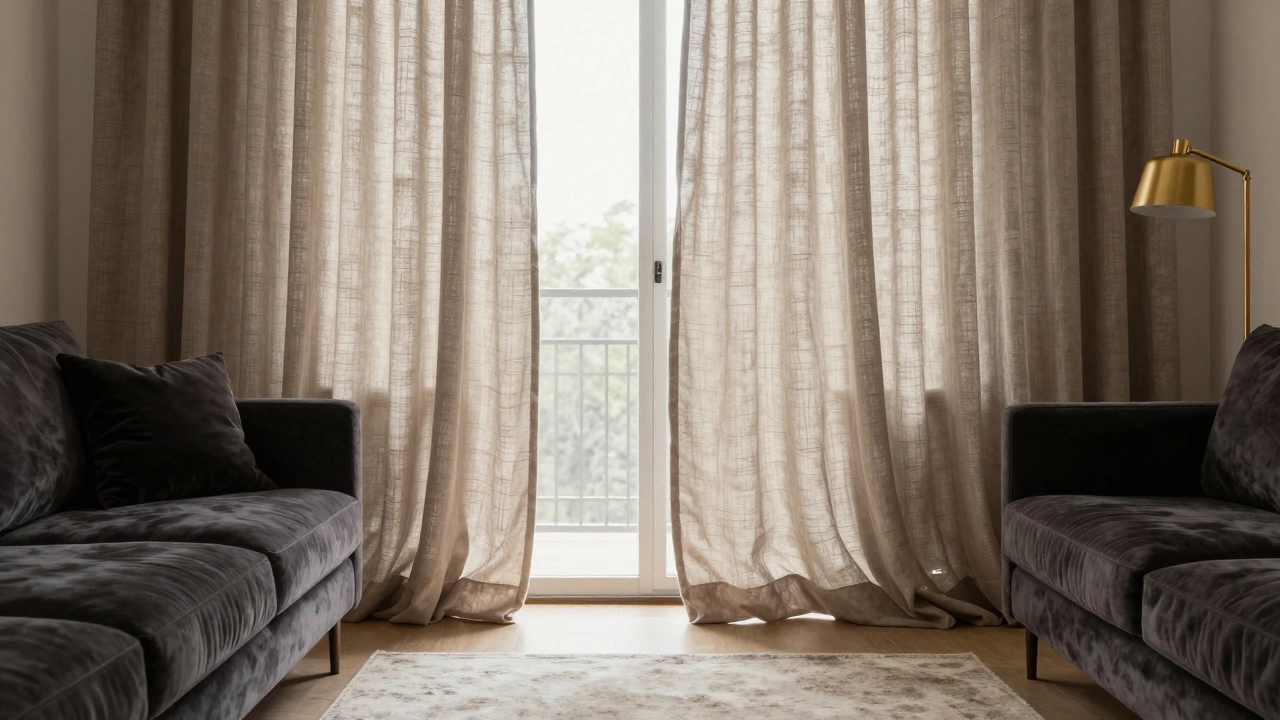
Color isn’t the only player here. Texture matters just as much-if not more. A velvet sofa screams luxury. But pairing it with heavy, blackout cotton curtains? That’s a clash. Instead, try sheer linen curtains. The light filters through, softening the room. The contrast between the plush sofa and airy curtains creates balance.Same goes for a linen sofa. It’s relaxed, casual. Pair it with heavy damask curtains and suddenly you’ve got a formal sitting room. Not the vibe you wanted. Go for lightweight cotton, maybe with a slight pattern like a small stripe or a faded botanical print. The texture tells the story. The color just supports it.
Neutral Isn’t Safe-It’s Strategic
A lot of people think, "I’ll just go with beige curtains. They go with everything." And sure, beige goes with almost anything. But that’s not the same as working with your sofa. Beige curtains on a charcoal sofa? That’s a safe choice. But it’s also boring. It doesn’t add anything.Instead, use neutral as a bridge. A taupe curtain with warm undertones can pull out the gold in a brown leather sofa. A soft gray with a hint of blue can echo the undertones in a navy sectional. The key is to look for the hidden colors in your sofa. Most fabrics aren’t one solid tone. They have depth. Look closely. There’s probably a hint of rust, olive, or even teal hiding in there. That’s your clue.
Patterns? Yes. But Not Chaos
If your sofa is solid, curtains can be patterned. A floral, a geometric, a stripe-anything that adds movement. But if your sofa already has a pattern (like a graphic print or a textured weave), keep curtains simple. One pattern in the room is enough. Two? You’re asking for visual noise.Here’s a real example from a Wellington living room: a mustard-yellow velvet sofa with a subtle herringbone weave. The curtains? A soft, faded gray with a barely-there vertical stripe. The stripe echoes the herringbone, but the color is calm. The result? A room that feels curated, not crowded.
Lighting Changes Everything
Don’t pick curtain colors in daylight. Do it at 5 p.m. with the room lit by your lamps. Natural light changes color dramatically. A curtain that looks perfect in the morning might turn muddy by evening. In Wellington, where overcast skies are common, you need curtains that still feel alive under gray light.Test this: drape a fabric swatch over the back of your sofa. Live with it for a day. Look at it in the morning, afternoon, and evening. Does it still feel right? If not, try a shade lighter or darker. A quarter-tone difference can make all the difference.
What to Avoid
- Matching curtains and sofa exactly-unless you’re going for a 1980s hotel lobby vibe.
- Using black curtains with a dark sofa. It creates a void. The window disappears.
- Choosing curtains based on your rug. Rugs change. Curtains last.
- Ignoring the wall color. Curtains should relate to the wall more than the sofa. They’re window treatments, not sofa accessories.
Real Examples That Work
- Sofa: Light gray linen. Curtains: Warm white with a subtle linen texture. Why it works: The texture adds warmth. The color is neutral but not cold.
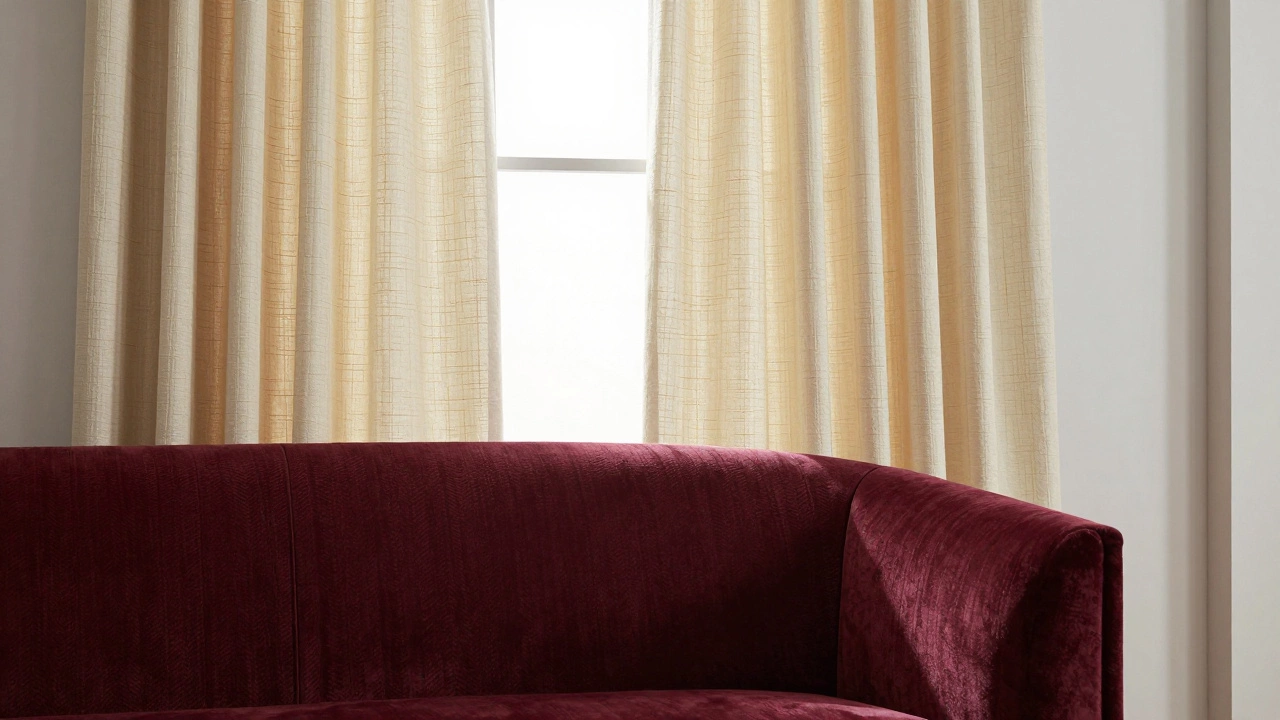
- Sofa: Burgundy velvet. Curtains: Soft cream with a hint of gold thread. Why it works: The gold catches the light and ties into brass accents in the room.
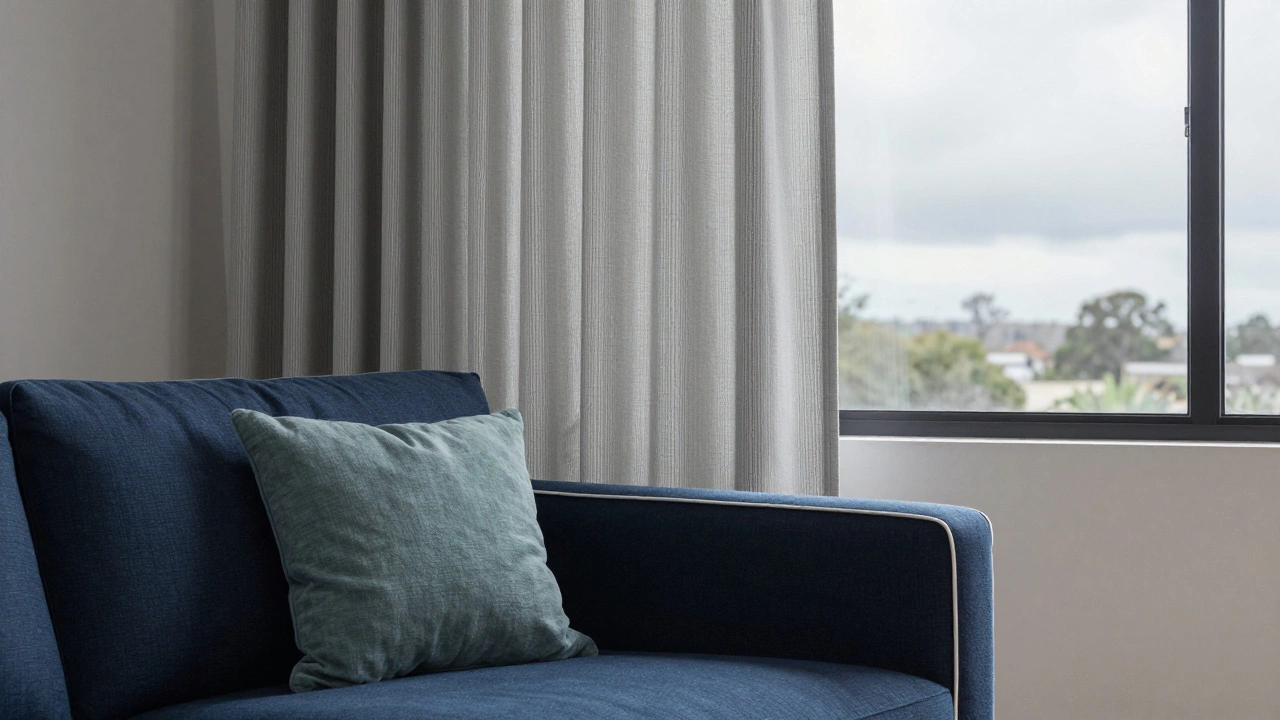
- Sofa: Dark blue with white piping. Curtains: Light gray with a narrow white stripe. Why it works: The stripe echoes the piping. The gray softens the blue.
Final Rule: Think About the Window
Curtains aren’t there to match the sofa. They’re there to frame the window. To let light in. To give privacy. To soften the edge of a room. If your curtains make the window feel like an afterthought, you’ve got the wrong ones.Ask yourself: Do these curtains make the window feel like part of the room? Or do they make it look like a hole in the wall? If it’s the latter, it doesn’t matter how "perfect" the color match is. You’ve lost the point.
So no, your curtains don’t need to match your sofa. But they do need to listen to it. To respect it. To hold space for it. And sometimes, that means choosing something completely different.
Do curtains have to match the walls?
Not at all. Curtains should relate to the walls, but they don’t need to match. In fact, choosing a curtain color that’s one or two shades lighter or darker than the wall adds depth. If your walls are a warm white, try a cream or oatmeal curtain. It creates dimension without clashing.
Can I use patterned curtains with a patterned sofa?
Only if the patterns are very different in scale and style. A large floral sofa with a small geometric stripe curtain can work. But two busy patterns-like a chevron sofa and a damask curtain-will fight for attention. Stick to one pattern per room unless you’re a pro and know how to layer.
What if my sofa is black?
Black sofas are bold. Don’t hide them. Use curtains that contrast but soften the look. White, cream, or light gray linen curtains bring in light and airiness. Avoid dark curtains-they’ll make the room feel closed in. Add a mirror across from the window to bounce light around.
Should I match curtains to my rug?
No. Rugs change more often than curtains. They wear out, fade, or get replaced. Curtains are a long-term element. Base your curtain color on your sofa and walls-not your rug. If your rug has a color you love, use it in throw pillows instead. That’s the safer, more flexible way to tie things together.
Are blackout curtains ever okay with a nice sofa?
Yes-but only if they’re not the main curtain. Use blackout liners behind sheer or light-filtering panels. That way, you get privacy and light control without sacrificing style. The visible curtain stays elegant, and the blackout stays hidden. It’s a pro trick used in bedrooms and media rooms alike.