Room Layout Planner
Visualize your space before buying furniture. Drag furniture into your room, check traffic flow, and avoid common layout mistakes.
Available Furniture
Ever looked at a magazine spread or an Instagram feed and thought, ‘I could do that’? You’re not alone. Millions of people try to design their own spaces every year. But here’s the truth: interior design isn’t just about picking pretty pillows or matching curtains. It’s about flow, function, light, and psychology - and doing it yourself isn’t as simple as it looks. But it’s also not impossible. The real question isn’t whether you can do it - it’s whether you should, and how to do it right without wasting time, money, or your sanity.
What Interior Design Really Means (Beyond Pinterest Boards)
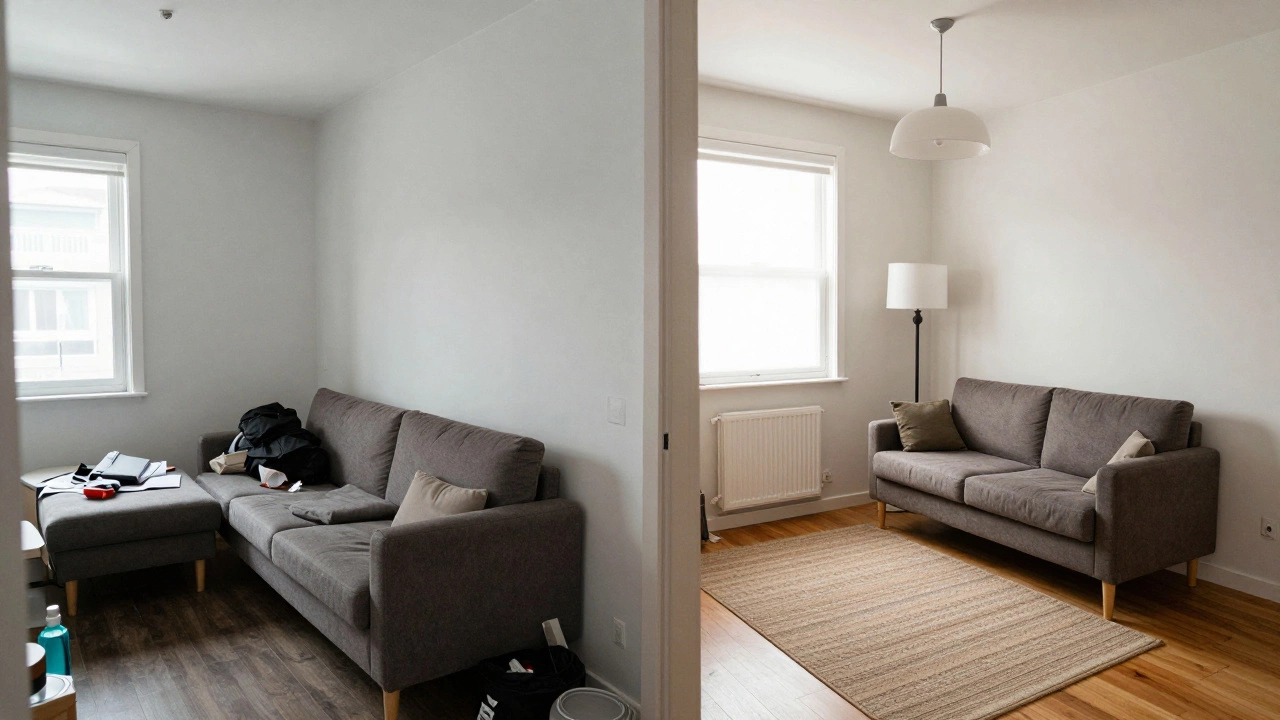
Most people think interior design is about decoration. It’s not. Decoration is the final layer - the art, the rugs, the lamps. Design is what happens before that. It’s how the door swings open, how sunlight hits the sofa at 4 p.m., whether the kitchen counter is too high for your partner, or if the hallway feels like a tunnel. Good design solves problems before they become annoyances.
Think about it: if your living room has no clear path to the kitchen, you’re not going to ‘fix’ that with a new throw blanket. You need to rethink furniture placement. If your bedroom feels cold and clinical, maybe it’s not the color - it’s the lack of layered lighting. These aren’t style choices. They’re spatial decisions.
Real interior design uses principles like the golden ratio for balance, the 60-30-10 rule for color distribution, and the work triangle for kitchens. You don’t need a degree to understand these - but you do need to learn them before you buy your first armchair.
When DIY Interior Design Works (And When It Doesn’t)
You can absolutely design your own space - if you’re honest about your limits.
DIY works well if:
- You’re working with a small space - a studio apartment, a home office, or a single bedroom.
- You already know your habits: Do you read in bed? Do you need 3 charging ports near the couch? Do you hate cleaning dust? These matter more than color palettes.
- You’re on a tight budget and willing to hunt for deals - thrift stores, Facebook Marketplace, or local carpenters who’ll build you a shelf for $80.
- You’re patient. This isn’t a weekend project. It takes months to get right.
DIY fails when:
- You’re trying to redesign a 3,000-square-foot house with five rooms and no clear vision.
- You’re emotionally attached to every piece of furniture - even the 1990s oak cabinet that eats up half the living room.
- You don’t measure anything. Seriously. I’ve seen people buy a sofa that’s 2 inches too wide. It blocked the doorway. No amount of paint could fix that.
- You’re copying a trend you saw online - like all-white everything - without thinking about your lifestyle. White walls? Great. White couch? Not so great if you have kids or a dog.
The 5-Step DIY Interior Design Process That Actually Works
Forget scrolling for inspiration. Start here.
- Define your needs, not your wants. Write down: What do you use this room for? Who uses it? When? A home office needs soundproofing. A kid’s room needs durability. A living room for movie nights needs seating that’s deep enough to sink into. Write it out.
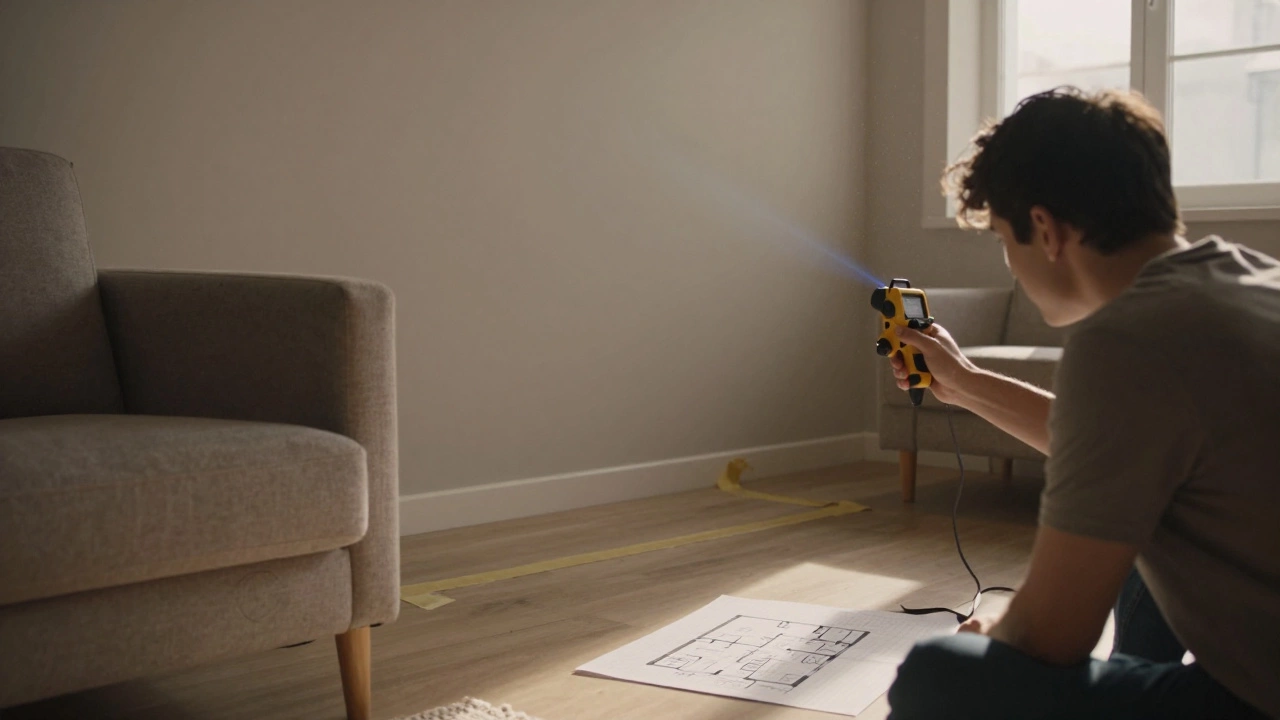
- Measure everything. Get a laser measurer (they’re $30 on Amazon). Measure walls, windows, doors, ceiling height, and the path between key points. Sketch a rough floor plan on graph paper. Don’t trust your memory. You’ll be surprised how much space a fridge takes up.
- Set a realistic budget. Divide your budget into three parts: 50% for big items (sofas, beds, storage), 30% for lighting and finishes, 20% for decor. Stick to it. One expensive lamp shouldn’t blow your whole budget.
- Start with layout. Use free tools like Roomstyler or SketchUp Free to drag and drop furniture. Move things around. Try different configurations. See how traffic flows. This step alone prevents 80% of DIY mistakes.
- Layer your design. Start with architecture (walls, floors, lighting), then furniture, then textiles (curtains, rugs), then decor (art, plants, vases). Don’t buy decor until the rest is done. You’ll end up with a cluttered mess.
Common Mistakes (And How to Avoid Them)
Here’s what most people mess up - and how to fix it:
- Mistake: Buying furniture based on looks, not size. Fix: Use masking tape on the floor to mark the footprint of a sofa or bed before you buy. Walk around it. See if you can open drawers or move freely.
- Mistake: Using one overhead light. Fix: Add at least three light sources: ambient (ceiling), task (lamp by the chair), and accent (wall sconce or under-cabinet). Warm white (2700K-3000K) is your friend.
- Mistake: Ignoring natural light. Fix: Observe how light moves through the room over a full day. If the afternoon sun blinds you on the couch, get blackout curtains or position seating away from it.
- Mistake: Over-decorating. Fix: The rule of three: group decor in threes - one tall, one medium, one low. Leave empty space. A room doesn’t need to be full to feel cozy.
Tools and Resources You Actually Need
You don’t need expensive software. Here’s what works:
- Roomstyler - Free, browser-based 3D room planner. Drag and drop real furniture from brands like IKEA and West Elm.
- Pinterest - Use it wisely. Don’t save 500 pins. Save 5 that match your real needs. Look for photos with multiple angles - not just perfect lighting.
- Home Depot’s Design Services - Free 1-hour consultations. Bring your measurements. They’ll give you layout advice and product suggestions.
- YouTube channels - Try The Interior Edit or Emily Henderson. Watch for how they explain why they chose something, not just what they chose.
When to Call a Pro
There’s nothing wrong with hiring someone. In fact, if you’re spending more than $10,000 on your space, it’s smart. But you don’t need a full-service designer. Here’s what you can do instead:
- One-hour consultation: Pay $150-$300 for a designer to walk through your space, give you a plan, and recommend products. You do the shopping.
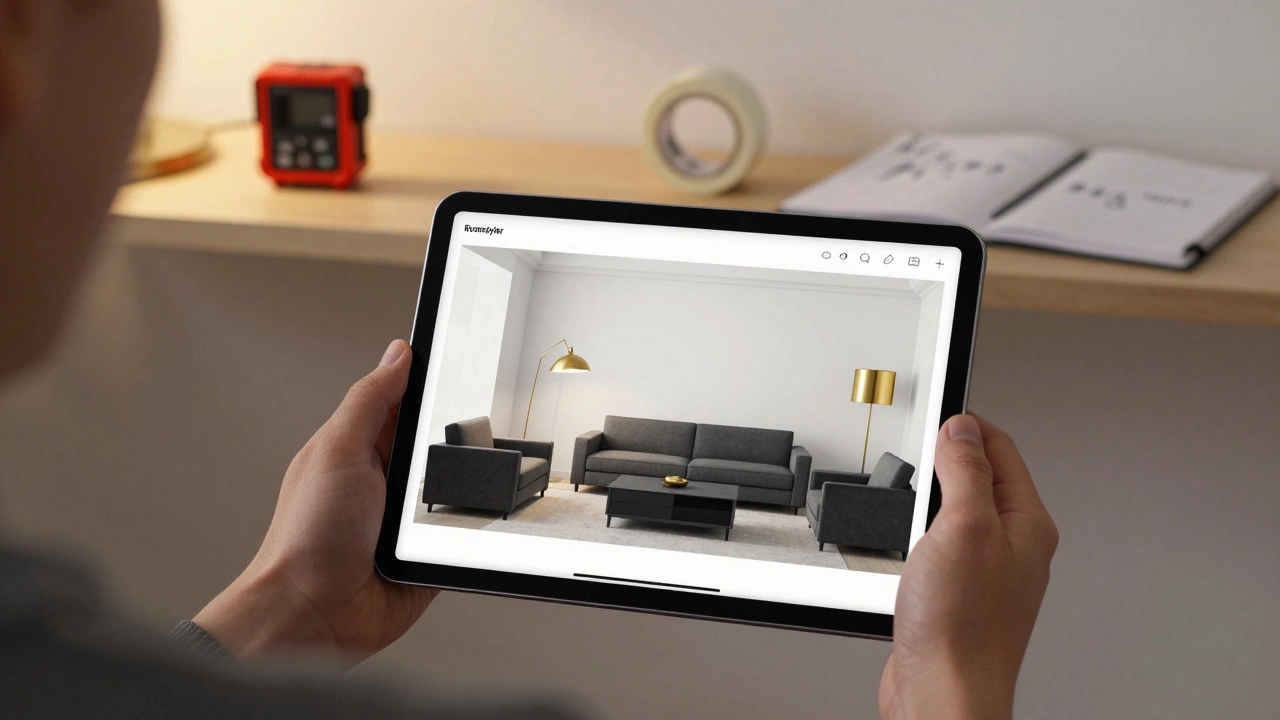
- Online design services: Companies like Modsy or Haven send you 3D renderings based on your photos and measurements. You get a full plan for under $200.
- Staging help: If you’re selling your home, hire a stager for a day. They’ll rearrange what you already own. It’s not design - it’s psychology.
Most people who hire designers end up doing 70% of the work themselves anyway. The pro just saves them from costly mistakes.
Real Results: What Success Looks Like
A friend of mine redesigned her 600-square-foot apartment in Wellington using only these steps:
- She measured every wall.
- She used masking tape to map out a new sofa layout - turning a cramped corner into a cozy reading nook.
- She bought a secondhand oak side table for $25 and painted it matte black.
- She swapped one overhead light for three floor lamps and one pendant.
- She added a rug that matched the color of her curtains - not the walls.
She spent $1,200. Took six weeks. And now her place looks like it was done by a pro. No one believes she did it herself.
That’s the goal. Not perfection. Not Instagram fame. Just a space that works for you - comfortably, quietly, and without regret.
Can you really design your own home without any experience?
Yes - if you start small, measure everything, and focus on function before style. Most people overestimate their ability to pick colors and underestimate how much layout matters. Start with one room. Use free tools like Roomstyler. Learn the basics of lighting and proportion. You don’t need a degree - just patience and a notebook.
What’s the biggest mistake people make when designing their own space?
Buying furniture before measuring. People fall in love with a couch online, order it, and then realize it blocks the door or leaves no walking space. Always use masking tape to mark the footprint on the floor before you buy. If you can’t walk around it comfortably, it’s too big.
Is it cheaper to DIY interior design?
Sometimes - but not always. DIY can save money if you’re willing to hunt for deals, repurpose what you have, and avoid impulse buys. But if you buy things that don’t fit, return them, or end up hiring someone to fix your mistakes, you’ll spend more. The real savings come from planning. A $20 laser measurer and a few hours of research can prevent $2,000 in errors.
Do you need to know color theory to design a room?
Not deeply, but you should know the 60-30-10 rule: 60% of the room should be a dominant color (walls, floors), 30% a secondary color (furniture, curtains), and 10% an accent (pillows, art). Stick to this, and you’ll avoid clashing colors. You don’t need to know warm vs. cool tones - just make sure your main colors feel calm together.
How long does it take to design a room yourself?
A small room - like a bedroom or home office - can be done in 2-4 weeks if you’re focused. A living room or whole house? Plan for 3-6 months. Rushing leads to mistakes. The best results come from living with your space, testing layouts, and adjusting slowly. Don’t try to do it all at once.