Sofa Foam Recommendation Tool
Usage Profile
Additional Factors
Recommended Density
Recommended ILD
Construction Method
Performance Ratings
| Feature | Upholstery Foam | Memory Foam |
|---|---|---|
| Primary Function | Support & Structure | Pressure Relief & Contouring |
| Response Time | Instant rebound | Slow recovery (1-5 seconds) |
| Heat Sensitivity | Low (stays consistent) | High (softens with body heat) |
| Durability (Sofa Use) | High (if high density) | Medium (can bottom out faster) |
| Best For | Sitting, lounging, daily use | Napping, reading, short rests |
Pro Tips
Picture this: you sink into a brand-new sofa, expecting cloud-like comfort. Instead, your hips feel like they’re resting on bricks, or worse, the cushion collapses completely after three months. The culprit is rarely the frame-it’s almost always the foam inside. If you are looking to refoam old cushions or build custom seating, understanding the battle between upholstery foam and memory foam is the single most important decision you will make.
These two materials sound similar because they both start as liquid chemicals that expand into soft solids. But their molecular structures behave in opposite ways when you sit down. One wants to bounce back; the other wants to hold you. Choosing the wrong one turns a comfortable living room centerpiece into an expensive paperweight. Let’s break down exactly how they differ so you can pick the right material for your specific needs.
The Science of Comfort: How They Feel
To understand why these foams feel different, you have to look at how they react to pressure and heat. This is where the user experience diverges sharply.
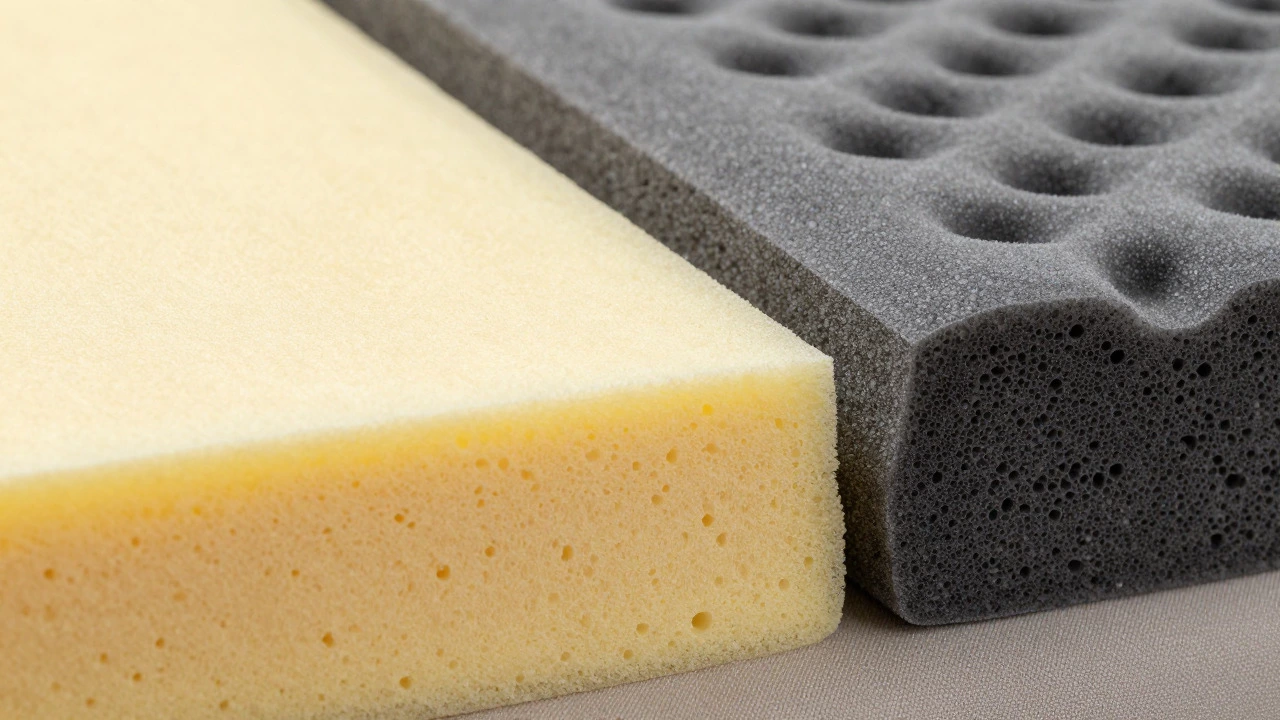
Upholstery foam, typically made from polyurethane, is designed for resilience. When you sit on it, the cells compress, but the polymer chains want to snap back to their original shape immediately. It provides support by pushing back against your body. Think of a high-quality mattress topper or a firm office chair. It keeps you upright. The sensation is supportive and stable. You know exactly where your body ends and the couch begins.
In contrast, Memory foam (viscoelastic polyurethane) reacts to body heat. As your warmth penetrates the material, the cells soften and expand around your contours. It doesn't push back; it yields. This creates that famous "sinking" feeling. For a bed, this pressure relief is a dream. For a sofa, it can be a nightmare if you try to get up quickly. You might find yourself stuck in the cushions for a few seconds while the foam slowly recovers its shape.
| Feature | Upholstery Foam (Polyurethane) | Memory Foam (Viscoelastic) |
|---|---|---|
| Primary Function | Support & Structure | Pressure Relief & Contouring |
| Response Time | Instant rebound | Slow recovery (1-5 seconds) |
| Heat Sensitivity | Low (stays consistent) | High (softens with body heat) |
| Durability (Sofa Use) | High (if high density) | Medium (can bottom out faster) |
| Best For | Sitting, lounging, daily use | Napping, reading, short rests |
Density and ILD: The Hidden Metrics That Matter
When buying foam, marketing terms like "premium" or "luxury" mean nothing. You need to look at two specific numbers: Density and ILD (Indentation Load Deflection). These metrics determine whether your sofa lasts five years or fifty.
Density measures the weight of the foam per cubic foot. For upholstery foam, anything below 1.8 pounds per cubic foot (PCF) is considered low quality and will likely develop permanent dents within a year. A good standard for residential sofas is 2.0 to 2.5 PCF. Commercial-grade furniture often uses 3.0 PCF or higher. Memory foam density works differently; it is usually measured in kg/m³. High-quality memory foam starts at 40 kg/m³ (approx 2.5 PCF). Anything lower tends to crumble or lose its viscoelastic properties quickly.
ILD tells you how hard or soft the foam feels. It measures the amount of force required to compress the foam by 25%. A low ILD number (like 10-15) means the foam is very soft. A high ILD number (30-40+) means it is firm. For sofa seat cushions, an ILD of 20-25 is the sweet spot for most people. It offers enough give to be comfortable but enough resistance to keep you from sliding off. Memory foam generally has a lower effective ILD because it molds to you, which is why it feels softer even if the density is comparable.
Durability and Longevity in Real-World Use
Sofas take a beating. We jump on them, we spill drinks, and we shift our weight constantly. How do these foams handle abuse?
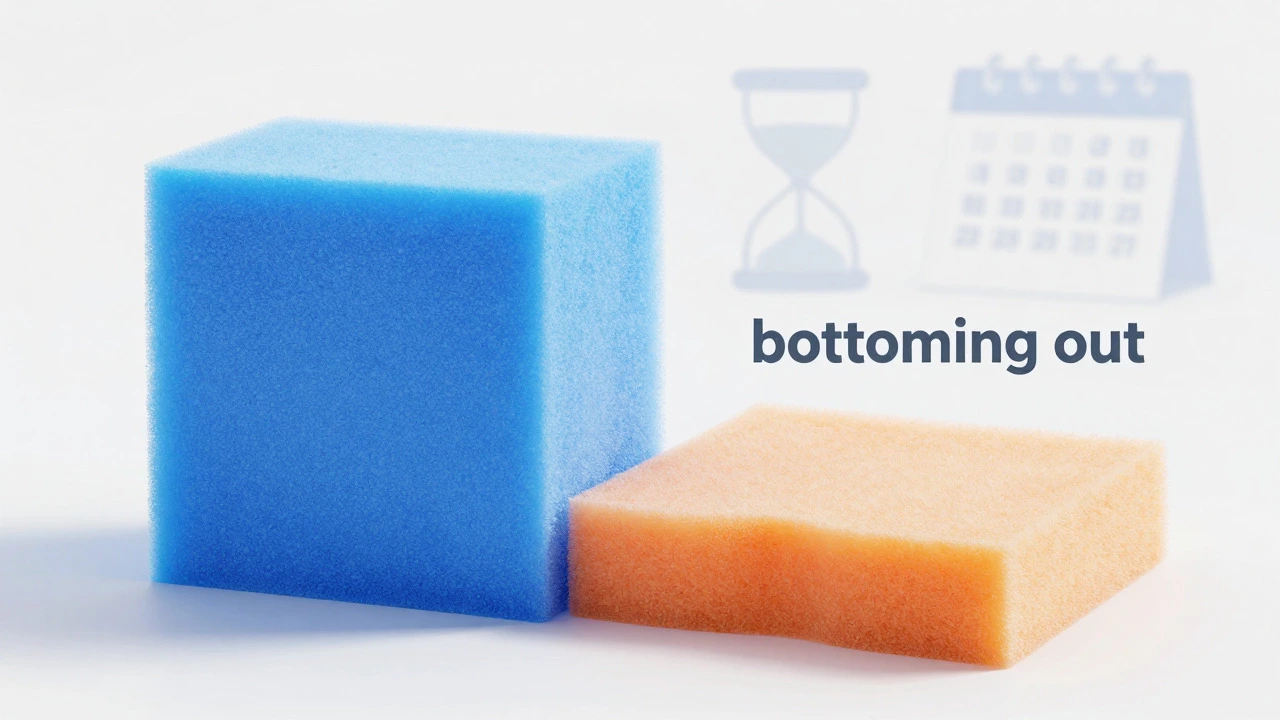
High-density polyurethane foam is incredibly tough. If you buy a 2.5 PCF foam with a medium ILD, it can last a decade or more without significant sagging. It resists indentation well. However, cheap foam (below 1.5 PCF) breaks down rapidly. The air pockets collapse, and the foam turns into a flat, useless slab. This is known as "bottoming out."
Memory foam faces a different challenge. Because it relies on cell structure expansion, it is more susceptible to wear in high-friction areas. In a sofa setting, where you are frequently sitting down and standing up, memory foam can compress permanently faster than traditional upholstery foam. It also retains heat. On a warm summer day in Wellington, a thick layer of memory foam can feel uncomfortably hot because it traps your body heat rather than allowing airflow. Traditional open-cell upholstery foam breathes better, keeping you cooler during long movie marathons.
The Hybrid Approach: Why Not Both?
Here is the secret that top furniture manufacturers know: you don’t always have to choose just one. Many high-end sofas use a layered approach to get the best of both worlds.
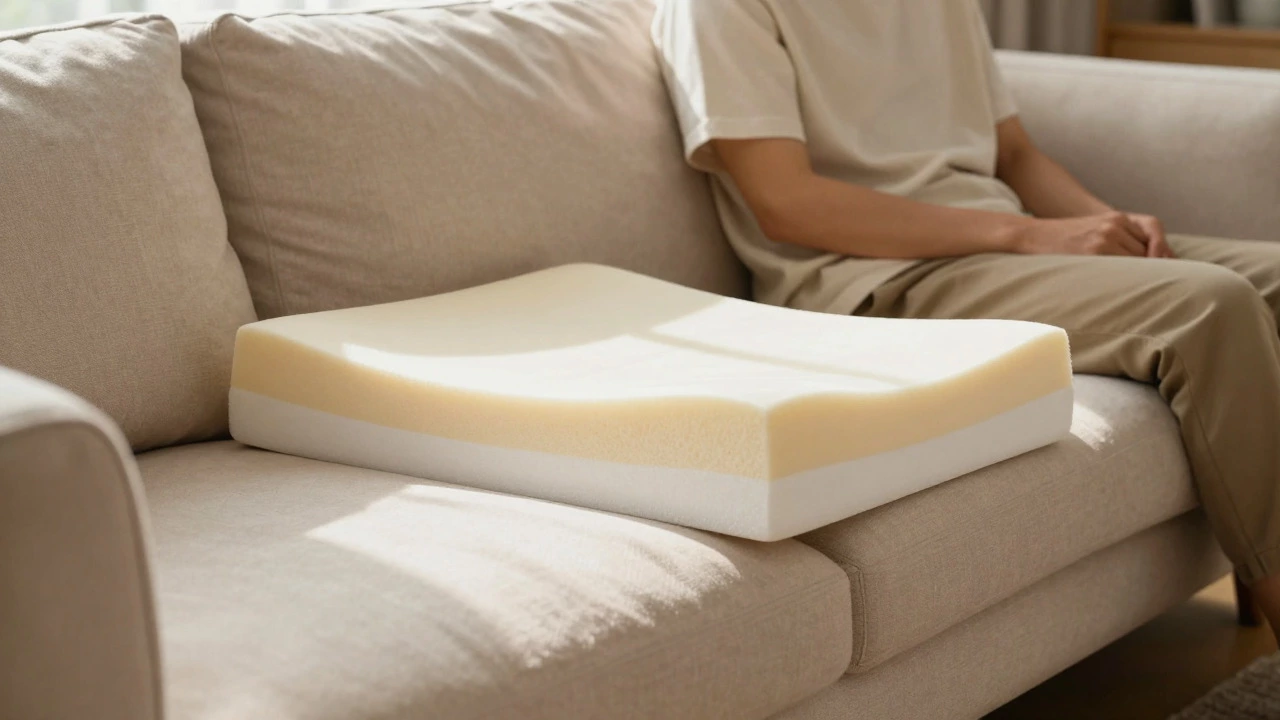
A common construction involves placing a layer of firm high-resilience (HR) foam at the bottom for structural support, topped with a thinner layer of memory foam or soft polyester fiberfill for surface comfort. This setup prevents the "bottoming out" issue of pure memory foam while adding the plush contouring that makes the seat feel luxurious. If you are refoaming old cushions, consider this hybrid method. Use a 2-inch block of dense upholstery foam as the base, and glue a 1-2 inch sheet of memory foam on top. You get support without the sinking trap.
Cost and Accessibility
Budget plays a huge role here. Standard polyurethane upholstery foam is widely available at hardware stores and online retailers. It is relatively inexpensive, especially in basic densities. You can cut it yourself with a serrated knife or a specialized foam cutter.
Memory foam is significantly more expensive per cubic foot. High-quality, non-toxic memory foam costs nearly double that of standard upholstery foam. Additionally, cutting memory foam requires more precision; it tends to tear if you use a dull blade, creating jagged edges that ruin the smooth surface needed under fabric. If you are on a tight budget, stick to high-density polyurethane. It performs better for sitting and costs less.
Maintenance and Cleaning
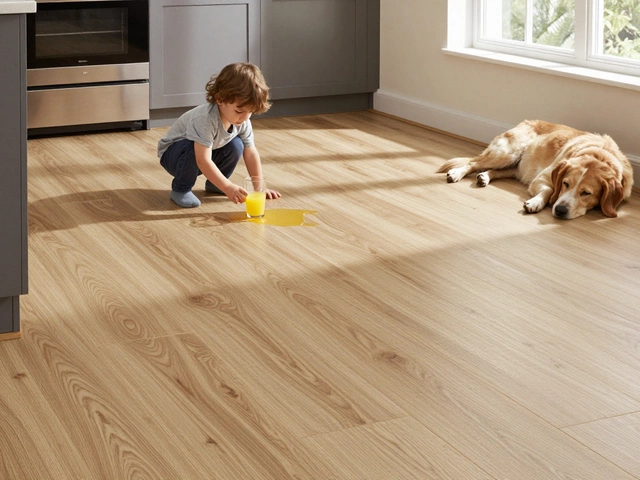
Spills happen. When they do, the type of foam matters. Upholstery foam is generally more resistant to moisture absorption if it is closed-cell. Open-cell foam absorbs water like a sponge, which can lead to mold if not dried thoroughly. Memory foam is notoriously difficult to clean. It absorbs liquids deeply and takes days to dry completely. If you have pets or young children, pure memory foam cushions might be a risky choice unless they are encased in waterproof covers. Upholstery foam dries faster and is easier to replace if damaged.
Environmental Impact
If sustainability is a priority, look for certifications. Traditional petroleum-based foams contribute to landfill waste. Look for CertiPUR-US certified foams, which ensure low VOC emissions and freedom from harmful chemicals like formaldehyde. Some manufacturers now offer soy-based memory foams or recycled content upholstery foams. While "green" foams exist, durability remains the best form of sustainability-a cushion that lasts ten years is better for the planet than a biodegradable one that lasts two.
Can I use memory foam for sofa seat cushions?
Yes, but with caution. Pure memory foam can be too soft and slow-recovering for frequent sitting, making it hard to stand up quickly. It is best used as a thin top layer over a firmer upholstery foam base to provide contouring without sacrificing support.
What density of upholstery foam should I buy for a sofa?
For a durable, comfortable sofa, aim for a density of at least 2.0 to 2.5 pounds per cubic foot (PCF). Lower densities (below 1.8 PCF) will sag and flatten within a year or two of regular use.
Is memory foam hotter than regular foam?
Yes. Memory foam is viscoelastic and reacts to body heat by softening, which also means it traps heat. Traditional open-cell upholstery foam allows for better airflow, keeping you cooler during extended periods of sitting.
How do I fix sagging sofa cushions?
If the foam is compressed beyond recovery, you need to replace it. Remove the fabric cover, measure the old foam, and purchase new high-density upholstery foam. Cut it to size and insert it back into the cover. Adding a layer of batting over the foam can help restore a plump appearance.
What is the difference between HR foam and regular upholstery foam?
High Resilience (HR) foam is a premium type of polyurethane foam with a tighter cell structure. It bounces back faster and lasts longer than standard upholstery foam. It is often used in commercial furniture and high-end residential sofas for superior durability.