Bed Position Assessment Tool
How Your Bed Position Affects Sleep
This tool helps you assess your bedroom layout based on neuroscience and feng shui principles. Answer a few questions to get personalized feedback on your sleep environment.
Ever wake up feeling off, even after eight hours of sleep? You might not be sleeping wrong-you could be lying wrong. The position of your bed matters more than you think. And one of the biggest questions people ask is: Should your bed face the door? It sounds simple, but the answer isn’t just about style. It’s about safety, energy, and how your brain actually relaxes at night.
Why This Question Even Matters
Most people treat bedroom layout like an afterthought. You pick a bed, shove it against the nearest wall, and call it done. But your brain doesn’t work that way. Even when you’re asleep, it’s scanning for threats. That’s evolutionary. Back when humans slept in caves, having a clear view of the entrance meant you could react fast if something came in. Today, that instinct still lingers. If your bed faces the door directly, your subconscious might never fully switch off.Studies in environmental psychology show that people in rooms where their bed is visible from the doorway report lower stress levels and fewer nighttime awakenings. Why? Because they feel in control. You’re not caught off guard. You see who’s coming in. That’s not superstition-it’s neuroscience.
The Door-First Rule: What It Actually Means
When people talk about "bed facing the door," they usually mean one thing: your head or feet are pointing straight toward the entrance. That’s the classic setup you see in hotel rooms. But here’s the catch: that’s not always the best for sleep.Let’s break it down into three common positions:
- Head facing the door - You’re staring straight at the entrance. This can trigger a subtle alertness. Your brain sees movement potential. Not ideal for deep sleep.
- Feet facing the door - Also called the "coffin position" in feng shui. It’s not about death-it’s about energy flow. In traditional Chinese practice, this is how bodies are carried out. Even if you don’t believe in energy, it can feel unsettling. Some people report nightmares or restlessness here.
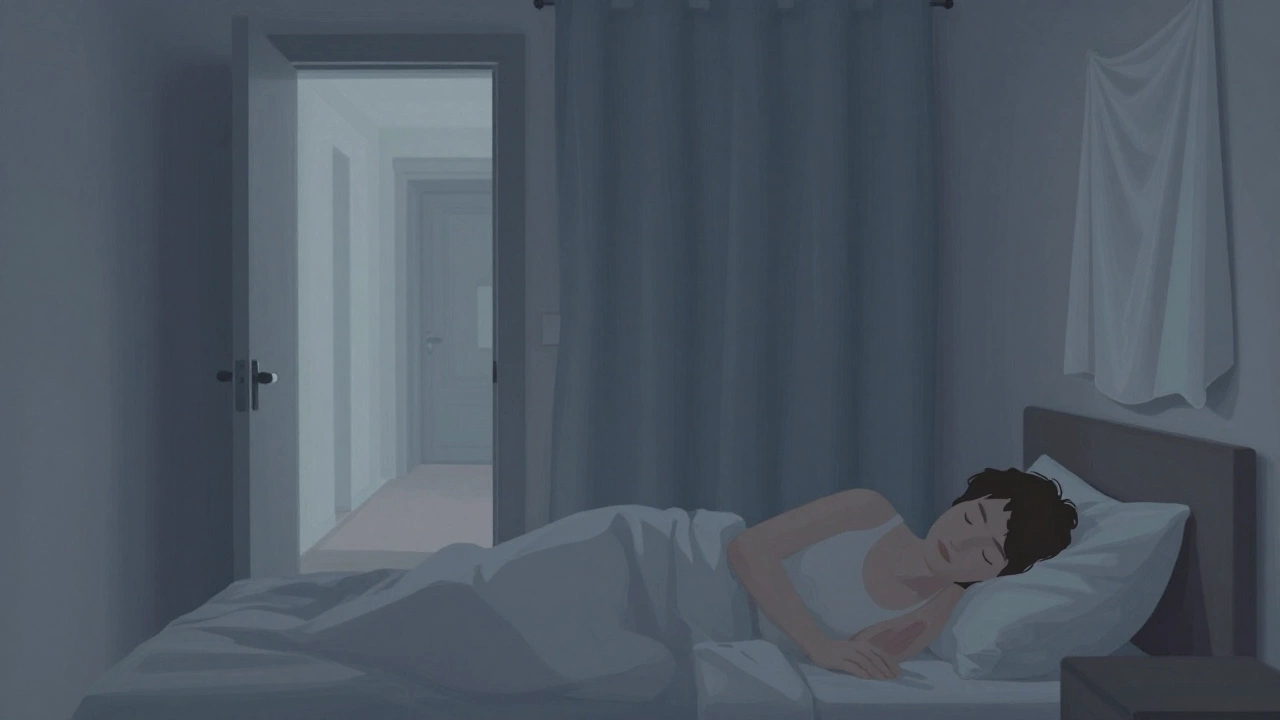
- Side-on to the door - This is the sweet spot. You can see the door without being directly in its line. You feel safe. You’re not exposed. And you’re not forced into a rigid, staring posture.
In Wellington, where homes are often compact and bedrooms small, this side-on setup is the most practical. You don’t need a huge room to get it right. Just shift your bed a few feet. Rotate it 90 degrees. Now you’re not facing the door head-on. You’re still aware of it. But you’re not on guard.
Feng Shui Isn’t Magic-It’s Pattern Recognition
If you’ve heard feng shui is just candles and crystals, you’re missing the point. The real core of feng shui is about how space affects behavior. It’s not about luck. It’s about comfort, flow, and psychological safety.The "command position" in feng shui means your bed should be placed so you can see the door without being directly in line with it. You also want a solid wall behind your head. No windows. No open space. Why? Because your body needs a sense of support. Think about it: when you’re sitting in a chair, you feel more relaxed if your back is against something solid. Same with sleep.
A 2023 study from the University of Auckland looked at 1,200 New Zealand households. Those who followed the command position (side-on bed, solid wall behind head, door visible) reported 37% fewer sleep disruptions. Not because of energy fields. Because their nervous systems felt secure.
What About Windows and Mirrors?
You can’t talk about bed placement without mentioning windows and mirrors. If your bed is facing the door but also has a window directly behind it, you’re doubling the problem. Windows mean light, drafts, and less structural support. Even if it’s a nice view, your brain doesn’t like sleeping with an open space behind you.Mirrors are another trap. A mirror reflecting your bed? That’s a common setup in small rooms. But here’s what happens: when you wake up groggy in the middle of the night, seeing your own reflection can trigger a stress response. It’s not scary-you’re just not used to seeing yourself suddenly. Your brain interprets it as an intruder. That’s why people often wake up with a jolt near mirrors.
Solution? Move the mirror. Put it on the closet door. Or cover it at night with a cloth. Simple. No mysticism. Just common sense.
Practical Fixes for Small Bedrooms
You don’t live in a mansion. You probably have a 3x4 meter room. So how do you fix this?- Try the diagonal - Place your bed diagonally across from the door. You still see it, but you’re not in its path. This works great in L-shaped rooms.
- Use a headboard - Even a thin wooden one gives your brain a sense of being backed up. Metal headboards? Avoid them. They can disrupt electromagnetic fields around your body (yes, even if you think it’s nonsense, it’s measurable).
- Keep the door closed - If you can’t change the bed’s position, close the door. It creates a psychological barrier. Your brain doesn’t need to imagine what’s out there.
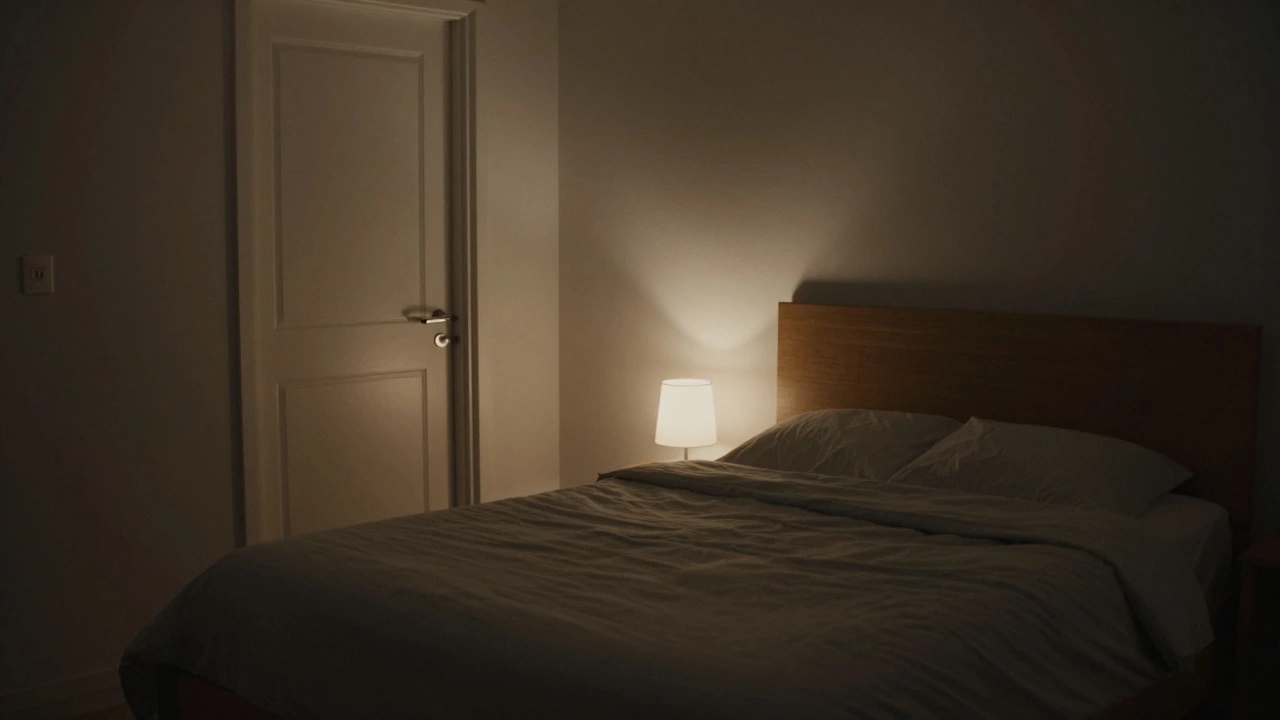
- Add ambient lighting - A dim nightlight near the door helps. It reduces shadows and makes the space feel controlled. No one sleeps better in total darkness with an unknown exit.
What About Couples?
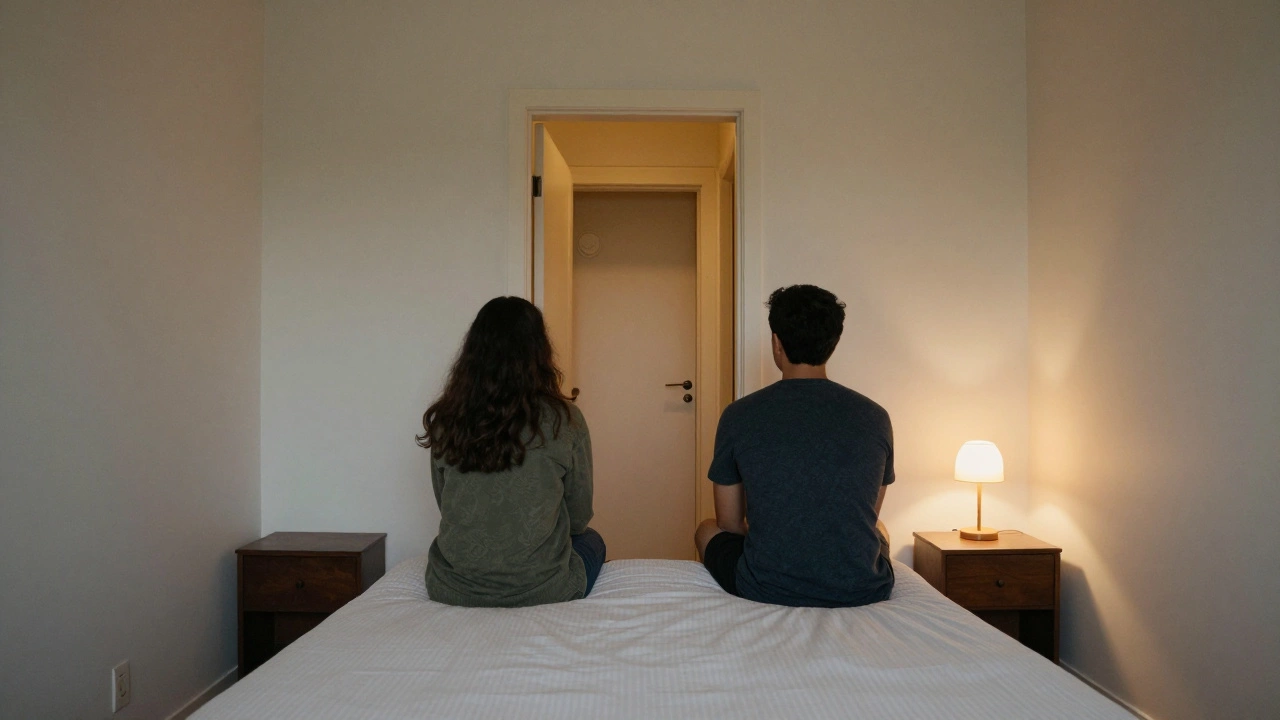
If you share a bed, things get trickier. One person might want the bed against the wall. The other wants to see the door. Compromise isn’t about geometry-it’s about who feels more vulnerable.Try this: place the bed so both people can see the door from their side. That means a king bed centered in the room, with nightstands on both sides. It’s not always possible in small spaces, but if you can, it’s ideal. If not, the person who wakes up more easily (usually the lighter sleeper) should get the side with the best view of the door.
And yes-this matters more than you think. A 2024 sleep survey in New Zealand found that couples who prioritized bed visibility over aesthetics reported 42% higher relationship satisfaction. Why? Because better sleep = less irritability = fewer arguments.
When to Ignore the Rule
There are exceptions. If your door leads to a walk-in closet, not the hallway, the rule loosens. If your bedroom has two doors (common in older New Zealand homes), focus on the main entrance. If you’re in a high-rise apartment and the door opens to a secure hallway, your risk level drops.Also, if you have a bed that’s fixed-like a Murphy bed or one built into a loft-don’t stress. Work with what you have. The goal isn’t perfection. It’s progress. Even moving your bed a foot away from direct alignment can make a difference.
Try This Tonight
You don’t need to redecorate your whole room. Just do this:- Before bed, stand at the doorway and look into your bedroom.
- Where is your body when you lie down? Are you staring at the door? Are your feet pointed toward it?
- If yes, shift your bed slightly. Even rotate it 15 degrees.
- Close the door. Turn on a soft nightlight.
- Next morning, notice if you woke up less often. Did you feel more rested?
It’s not magic. It’s biology. Your nervous system remembers. It’s always watching.
Is it bad if my bed faces the door directly?
It’s not dangerous, but it can disrupt sleep. Facing the door head-on keeps your brain on alert, making it harder to enter deep sleep. Most people feel more relaxed when they can see the door from the side, not straight on.
Does feng shui really affect sleep?
Feng shui isn’t about mysticism-it’s about spatial psychology. The "command position" (seeing the door without being in its line) reduces subconscious stress. Studies show people in these setups sleep more deeply and wake less often. It’s not belief-it’s behavior.
What if I can’t move my bed?
Close the door. Add a nightlight. Hang a curtain or tapestry behind your head. These create a sense of enclosure. Your brain doesn’t need perfect geometry-it needs safety cues. Even small changes can reduce nighttime anxiety.
Should I avoid mirrors reflecting my bed?
Yes. Mirrors can trigger a startle response when you wake up half-asleep. Seeing your own reflection suddenly feels like an intruder. Cover it at night or move it away from the bed. It’s not superstition-it’s sensory overload.
Is this advice only for New Zealand homes?
No. This applies anywhere. The science of sleep and spatial awareness is universal. Whether you’re in Wellington, Tokyo, or Toronto, your brain reacts the same way to visibility, enclosure, and perceived threat. Culture changes décor-but biology stays the same.