Round Coffee Table Size Calculator
Enter your sofa's length and seat height to find the perfect round coffee table specifications.
Enter your sofa dimensions and click calculate to see results.
Why This Matters
- Diameter: Should be roughly half the sofa length for visual balance. Round tables may need to be slightly larger than rectangular ones to avoid looking insignificant.
- Clearance: Keep 14–18 inches between the sofa cushion front and the table edge. Less causes shin bumps; more creates an "island" effect.
- Height: Match the table height to within 1–2 inches of your seat height for ergonomic access.
You just bought a beautiful round coffee table. It looks great in the store, but now it’s sitting in your living room looking... off. Maybe it’s so far from the sofa you have to lean forward to reach your remote. Or maybe it’s right up against your knees, making it impossible to cross your legs. You’re not alone. Getting the round coffee table size right is one of the most common mistakes people make when decorating.
It’s not just about aesthetics; it’s about ergonomics and flow. A table that’s too small makes your space feel cluttered and unbalanced. One that’s too big blocks walkways and makes conversation awkward. So, how do you find that sweet spot? Let’s break down the exact measurements you need, why they matter, and how to avoid the most common sizing errors.
The Golden Rule: Distance vs. Diameter
Here is the most important thing to remember: there are two different measurements at play here, and confusing them causes 90% of sizing issues. First, there’s the diameter of the table itself. Second, there’s the distance between the edge of the table and the front of your sofa cushions.
For the distance, stick to 14-18 inches (35-45 cm). This gap is crucial. If it’s less than 14 inches, you’ll bump your shins every time you try to get up. If it’s more than 18 inches, you’ll feel like you’re on an island, straining to reach your drink or your book. This gap ensures accessibility without sacrificing comfort.
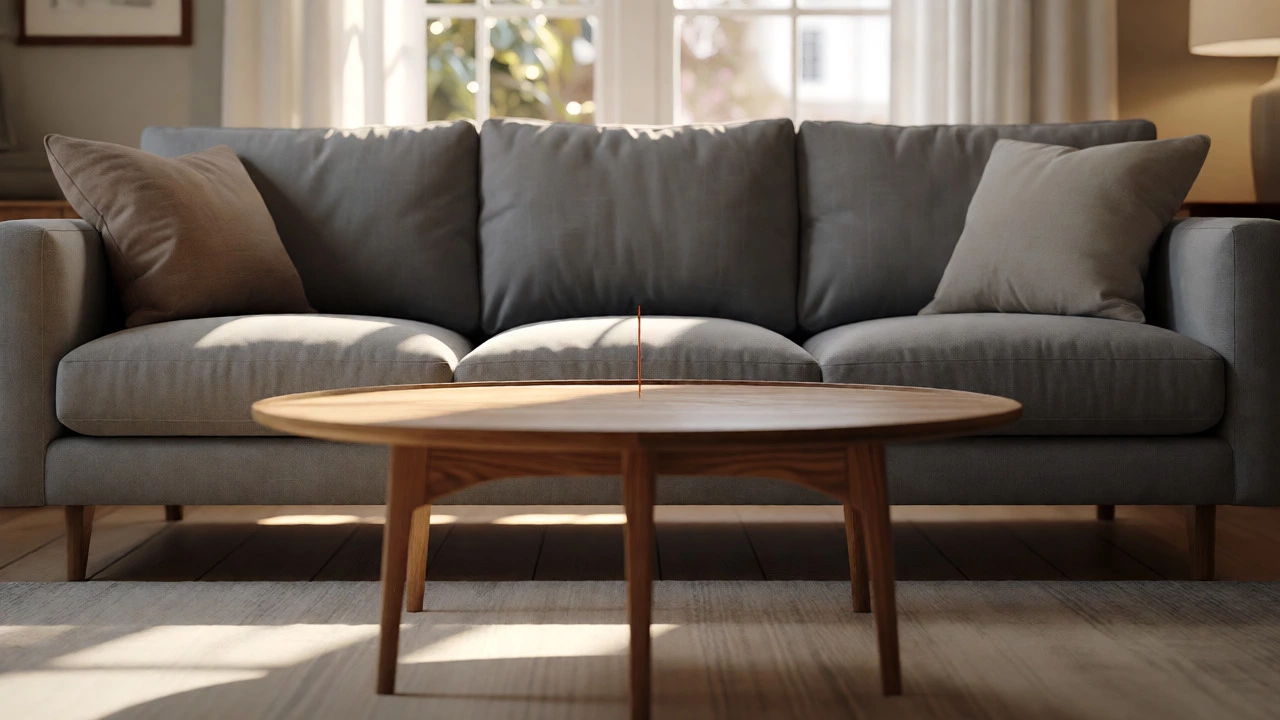
Now, for the diameter of the table relative to the sofa length. The general rule of thumb is that the table should be roughly half the length of the sofa, give or take a few inches. But with round tables, visual weight matters more than strict math because circles don’t have corners to anchor the eye. A round table can often appear smaller than a rectangular one of similar area, so you might need to go slightly larger in diameter to achieve visual balance.
Diameter Guidelines by Sofa Type
Not all sofas are created equal. A compact loveseat needs a different companion than a sprawling sectional. Here’s how to match them up.
| Sofa Type | Sofa Length | Ideal Table Diameter | Why It Works |
|---|---|---|---|
| Loveseat | 48-60 inches | 18-24 inches | Keeps the space open; avoids overwhelming small rooms. |
| Standard 3-Seater | 72-84 inches | 30-36 inches | Provides ample surface area without blocking sightlines. |
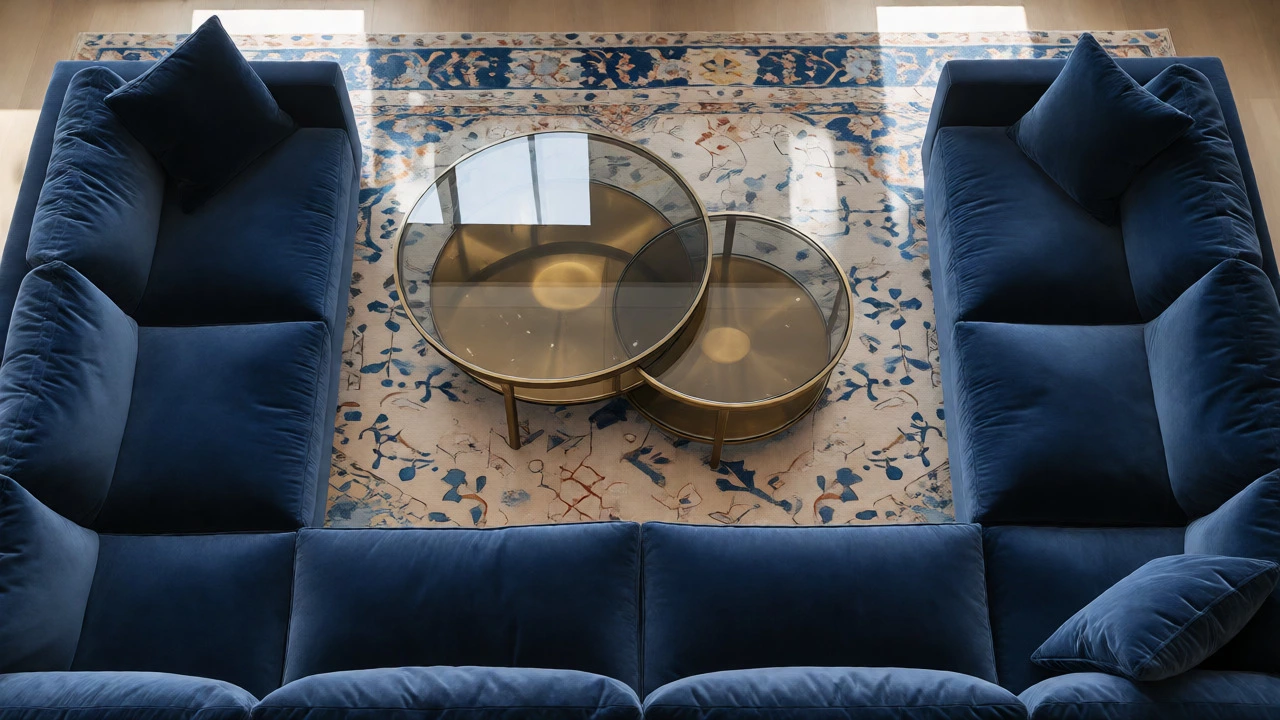
| Large Sectional | 90+ inches | 36-42 inches (or pair) | Anchors the large footprint; consider nested tables for flexibility. |
Notice the jump for sectionals? A single 30-inch round table will look tiny next to a massive L-shaped couch. In these cases, either go big (40+ inches) or use two smaller matching round tables. Two 24-inch tables placed side-by-side often work better than one giant 48-inch table because they allow for easier navigation around the curve.
Height Matters Just as Much as Width
You’ve got the width figured out. Now, look down. Is the table top higher than your seat cushion? Lower? Neither? Height discrepancies cause physical discomfort over time. If you’re reaching up constantly to grab a mug, your shoulder will ache. If you’re digging down into a deep well to find your phone, it’s annoying.
Aim for the table height to be within 1-2 inches of your sofa seat height. Most standard sofas have seats that sit 17-19 inches off the floor. Therefore, a coffee table that is 16-18 inches tall is usually perfect. This slight variance allows for easy access while maintaining a cohesive horizontal line across the room.
There is an exception: if you use your coffee table primarily for storage (like hiding remotes or magazines), a lower profile might be acceptable. But if it’s a functional surface for eating or working, match the seat height closely.
Visual Weight and Room Flow
Size isn’t just about inches; it’s about perception. A solid oak round table feels heavier and more imposing than a glass or acrylic one of the exact same dimensions. Because round shapes lack hard edges, they tend to "flow" around a room rather than stopping movement. This means you can sometimes get away with a slightly larger round table in a tight space compared to a square one, simply because there are no sharp corners to catch on clothing or block pathways.
Consider the traffic patterns in your living room. Do you walk between the sofa and the TV stand? If yes, ensure the table doesn’t encroach on this path. A good test: place the table where you think it should go, then walk through your usual routes. If you have to turn sideways or step over anything, the table is too big or positioned poorly.
Also, think about what you put on it. A 24-inch round table sounds spacious until you add a vase, a stack of books, and two coasters. Suddenly, it’s crowded. If you love displaying decor, err on the side of a larger diameter. You can always leave empty space, but you can’t magically create more surface area.
Common Mistakes to Avoid
Even with the right numbers, people mess up the execution. Here are three pitfalls I see constantly.
- The "Floating Island" Effect: Placing the table too far from the sofa. Remember the 14-18 inch rule. If you have to stretch your arm fully to reach the center of the table, move it closer.
- Ignoring Armrests: Measure from the front of the cushion, not the back of the sofa. Some sofas have deep backs that push the seating position further back. Always measure from the actual sitting plane.
- Overlooking Rug Size: Your coffee table should fit comfortably on the rug. Ideally, the front legs of the sofa and the entire table should rest on the rug. If the table hangs off the edge of the rug, it visually disconnects the furniture grouping, making the room feel disjointed.
How to Test Before You Buy
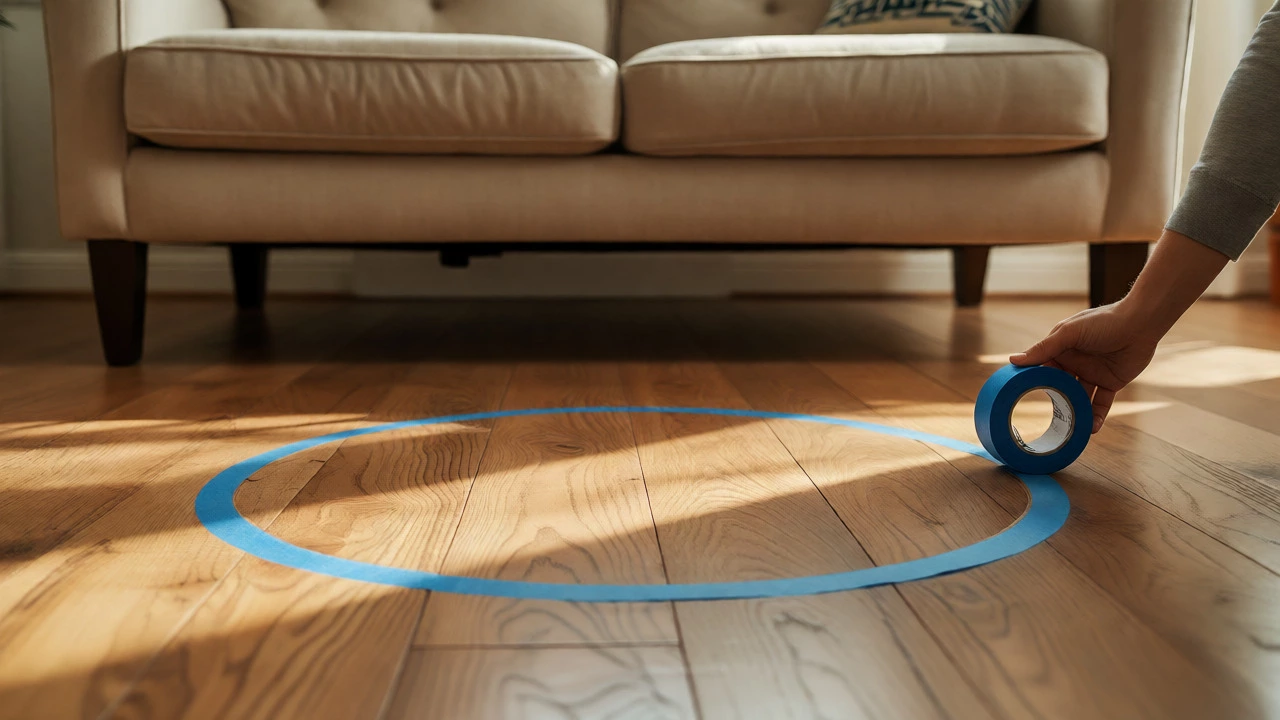
Don’t guess. Use painter’s tape. Before you spend money, mark the proposed diameter of the table on your floor using blue painter’s tape. Create a circle that matches the size you’re considering. Then, mark the 14-18 inch gap from your sofa. Sit on the sofa. Can you reach the taped circle easily? Does it feel cramped? Walk around it. Does it block your path?
This low-tech method saves hundreds of dollars in returns. It lets you experience the spatial relationship in real-time. If the circle feels too dominant, shrink it. If it feels insignificant, expand it. Trust your body’s reaction to the space more than the manufacturer’s description.
Another trick: use cardboard boxes. Find a box that approximates the size of the table and place it in the spot. It gives you a 3D sense of volume that flat tape cannot. If you’re buying online, check the return policy carefully. Furniture returns are expensive, so knowing the exact dimensions before delivery is non-negotiable.
Frequently Asked Questions
Is a round coffee table better than a rectangular one for small rooms?
Generally, yes. Round tables eliminate sharp corners, which reduces the risk of injury in high-traffic areas and allows for smoother circulation paths. Visually, curves soften a space, making small rooms feel less rigid and confined compared to the hard lines of rectangular tables.
What if my sofa has a chaise lounge section?
With a sectional featuring a chaise, a single round table might look unbalanced. Consider using two smaller round tables of the same height placed side-by-side or offset. Alternatively, choose a very large round table (36-42 inches) that centers within the main seating area, ensuring it remains accessible from both the main sofa and the chaise.
Can I use a round coffee table in a formal living room?
Absolutely. To maintain a formal aesthetic, choose materials like marble, polished brass, or dark walnut. Avoid rustic or overly casual finishes. Pairing a sleek round table with structured, tailored upholstery creates a sophisticated contrast between organic shape and formal lines.
How much clearance do I need behind the sofa?
If your sofa floats in the middle of the room, leave at least 18-24 inches behind it for a walkway. If the sofa is against a wall, you don't need clearance behind it, but ensure the table doesn't crowd the front too much. The 14-18 inch rule applies strictly to the front interaction zone.
Does the color of the table affect perceived size?
Yes. Dark colors absorb light and can make a piece look smaller and heavier. Light colors reflect light and can make a table appear larger and airier. Glass or mirrored surfaces virtually disappear visually, allowing you to use a larger diameter without making the room feel crowded.