Small Space Storage Calculator
Your Storage Potential
With smart storage strategies, you could gain more space!
Personalized Recommendations
Living in a small house doesn’t mean you have to live with clutter. It means you need to work smarter-not harder. I’ve seen homes in Wellington under 80 square meters that hold more than most 200-square-meter houses, and it’s not magic. It’s strategy. The key isn’t buying more bins or shelves. It’s using every inch with purpose.
Start by auditing what you actually use
Before you buy a single storage unit, go through every drawer, closet, and cabinet. Take everything out. Put items into three piles: use regularly, use once in a while, and never use. Be honest. That set of china you got as a wedding gift? If it hasn’t seen daylight in five years, it’s not decor-it’s storage waste. Donate it, sell it, or box it up and store it off-site. Most people keep things out of guilt, not need.
A 2023 study by the Australian Institute of Family Studies found that households with under 70 square meters kept 40% fewer unused items than larger homes. Why? They had no choice. You don’t need more space-you need fewer things.
Use vertical space like a pro
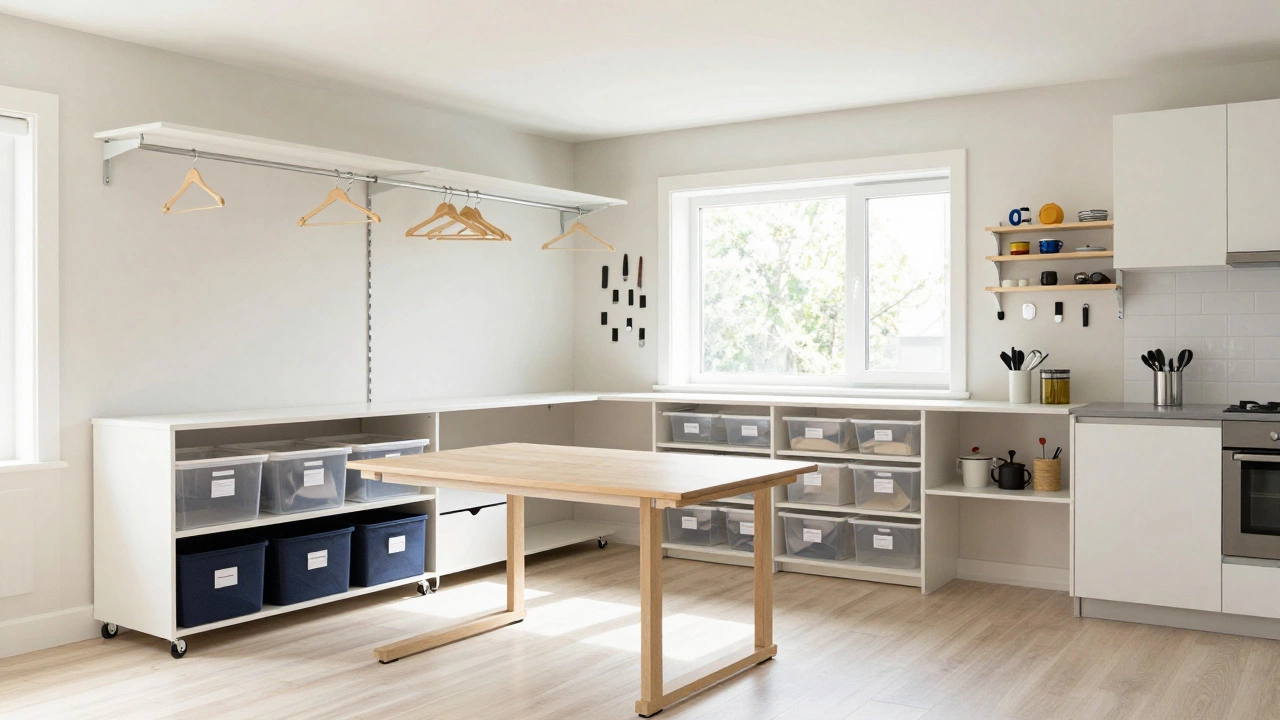
Walls aren’t just for hanging pictures. They’re storage real estate. Install tall, floor-to-ceiling shelves in living areas, hallways, even bathrooms. In a small kitchen, mount magnetic strips for knives, spice racks on the side of cabinets, and hanging pot racks. In the bedroom, use wall-mounted shelves above the bed instead of a bulky nightstand.
Don’t forget the back of doors. Over-the-door organizers work wonders for shoes, cleaning supplies, or kids’ toys. A simple $15 door organizer can add 12 cubic feet of storage without taking up floor space. In a 60-square-meter house, that’s the equivalent of adding a small closet.
Choose furniture that does double duty
Every piece of furniture in a small space should earn its keep. A sofa with hidden storage underneath? That’s a win. A coffee table with drawers? Even better. Ottoman benches that lift to reveal storage? Perfect for storing blankets, board games, or seasonal clothes.
Bed frames with built-in drawers are non-negotiable. I’ve seen people replace bulky dressers with under-bed storage bins on wheels. They slide out easily, hold 50% more than a standard drawer, and cost less than half the price. Look for beds with hydraulic lifts-no more struggling to lift heavy boxes.
Even your dining table can multitask. Fold-down wall tables or extendable ones with hidden compartments keep the space open during the day and turn into a workspace or dining area at night.
Turn empty corners and awkward spaces into storage
Most people ignore the corners of rooms. That’s a mistake. A corner shelf unit or a triangular cabinet can hold books, baskets, or kitchen gadgets without crowding the floor. In narrow hallways, install slim wall cabinets-perfect for toiletries, tools, or pet supplies.
Under-stair storage is gold. If your house has stairs, don’t leave that space empty. Build drawers, pull-out bins, or even a tiny closet underneath. I’ve seen entire laundry rooms built under stairs in New Zealand cottages. It’s not just clever-it’s common.
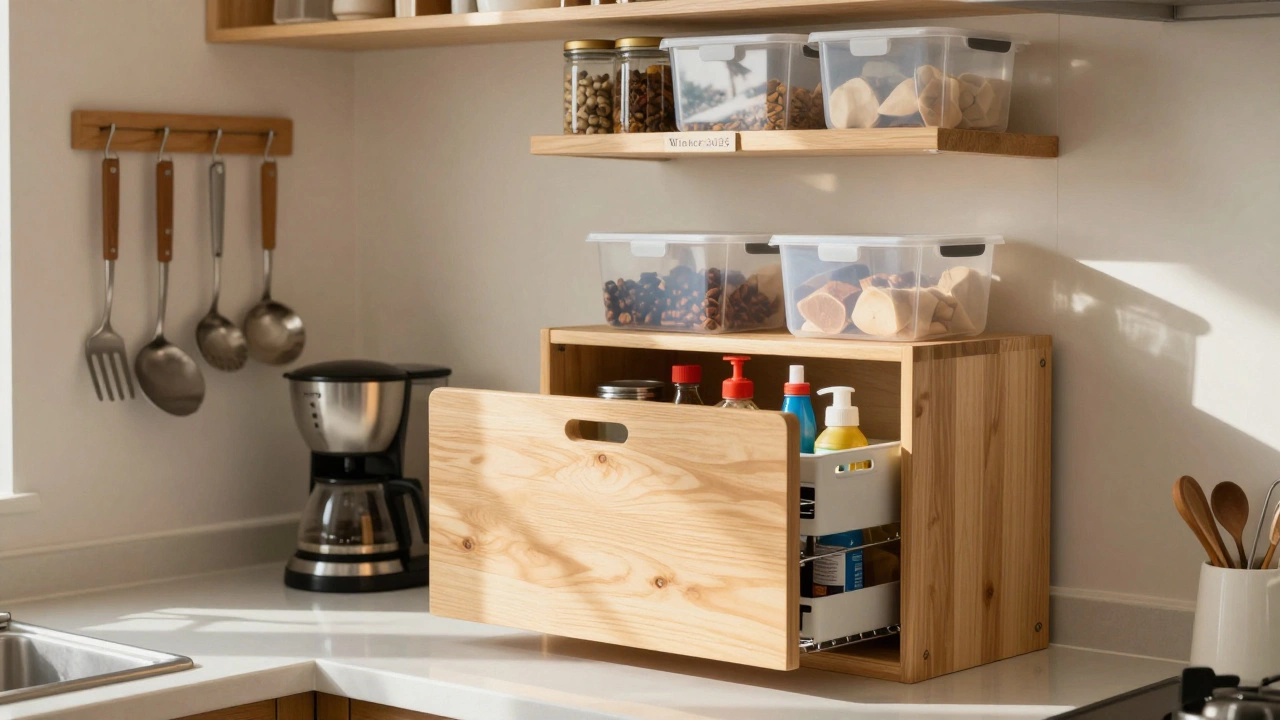
Use clear containers and label everything
Clutter hides in the dark. If you can’t see what’s inside a box, you’ll forget it’s there-and buy duplicates. Use clear plastic bins with snap lids for storage in closets, garages, or under beds. They’re cheap, stackable, and let you spot what you need at a glance.
Label every container. Not just with a marker. Use a label maker or printed tags. “Winter Sweaters - Top Shelf” is better than “Stuff.” When you know exactly where things are, you stop accumulating duplicates. You stop wasting time searching. You stop feeling overwhelmed.
Go ceiling-high with closet systems
Standard closets waste so much space. The top shelf? Usually unreachable. The hanging rods? Too low. Custom closet systems aren’t just for luxury homes. You can buy modular kits from IKEA or local suppliers for under $300. Add adjustable shelves, pull-down rods for tall items, and shoe racks on the bottom.
Use slim hangers to free up space. Velvet non-slip hangers take up 40% less room than plastic ones. In a small closet, that’s 10 extra hanging spots. Add a second rod at the bottom for shirts or pants-double the hanging space without adding width.
Store seasonally and rotate smartly
Do you really need your winter coats, snow boots, and heavy blankets in your closet all year? No. Store off-season items in vacuum-sealed bags or under-bed containers. Label them clearly: “Winter 2025,” “Summer 2025.” Rotate them twice a year. That alone frees up 30% of your storage space.
Use the top of your wardrobe or high shelves for these items. Keep frequently used things at eye level. The goal isn’t to store everything-it’s to store what matters now.
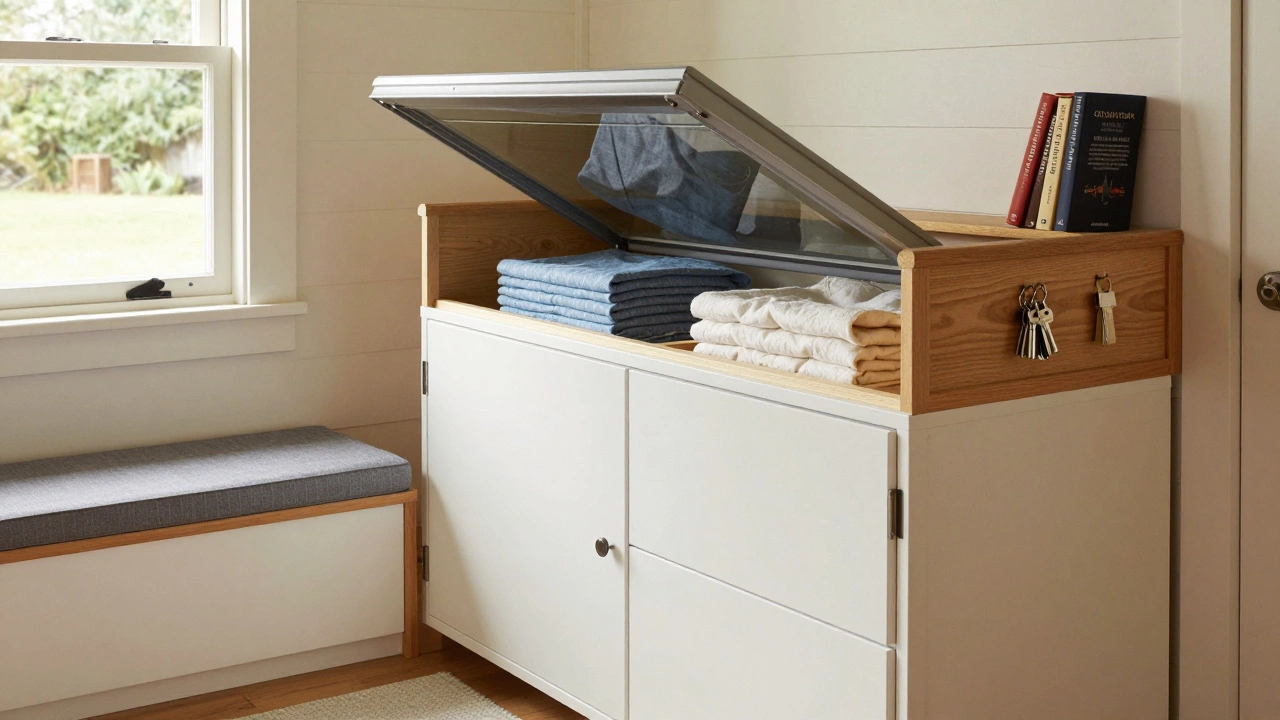
Think beyond the obvious: hidden storage everywhere
Stair treads can be lifted to reveal drawers. Window seats can hide bins underneath. Even the space behind kitchen cabinet doors can hold spice jars or measuring cups with magnetic strips. In the bathroom, mount a narrow cabinet behind the door for towels or toiletries.
Some of the best storage solutions are invisible. A bench with a lift-top lid in the entryway? Stores shoes, scarves, and umbrellas. A hollowed-out book on your shelf? Perfect for hiding keys or cash. These aren’t gimmicks-they’re practical fixes for real problems.
What doesn’t work in small spaces
Don’t buy bulky storage units that block light or airflow. Avoid deep cabinets you can’t reach into. Stay away from decorative baskets that look nice but hold nothing useful. Don’t install shelves that are too high-you’ll never use them.
Also, avoid buying “storage solutions” that just create more clutter. A fancy 10-piece organizer set might look great in a catalog, but if it doesn’t fit your actual items, it’s just another thing to move around.
Storage isn’t about buying more stuff. It’s about organizing what you already have.
Final tip: Keep a 1-in, 1-out rule
Every time you bring something new into the house, let something go. It could be an old shirt, a broken gadget, or a book you never finished. This rule keeps your space from creeping back into chaos.
It’s not about being minimalist. It’s about being intentional. You don’t need to live with less. You just need to keep only what you truly use, love, or need.
What’s the best way to store clothes in a small bedroom?
Use a slim, floor-to-ceiling closet system with adjustable shelves and a second hanging rod. Store off-season clothes in vacuum-sealed bins under the bed. Fold sweaters and jeans vertically in drawers so you can see everything at once. Use slim, velvet hangers to save space and prevent shoulder bumps.
Can I use under-bed storage in a small house?
Yes, and it’s one of the most effective solutions. Use low-profile, wheeled bins that slide easily under the bed. Ideal for storing off-season clothes, linens, shoes, or even small electronics. Make sure your bed has at least 10 inches of clearance. Avoid bulky storage boxes that are hard to pull out.
How do I organize a tiny kitchen?
Mount magnetic strips for knives and metal tools. Use wall-mounted shelves for spices and frequently used items. Install pull-out drawers inside cabinets instead of relying on deep, hard-to-reach shelves. Hang a pegboard behind the door for measuring cups and utensils. Keep countertops clear-only leave out what you use daily.
Is it worth buying custom storage solutions?
Only if you have a specific problem that off-the-shelf items can’t solve. For most people, modular systems from IKEA, Kmart, or local hardware stores work just as well and cost a fraction of custom builds. Save custom solutions for under-stair spaces, built-in wardrobes, or awkward corners that standard furniture can’t fit.
How often should I reorganize my small home storage?
Every season. As weather changes, so do your needs. Swap out winter and summer items, check for broken containers, and reassess what you’re holding onto. A quick 30-minute review every three months keeps clutter from creeping back in.