Garden Furniture Winter Survival Calculator
Assess Your Furniture's Winter Survival
Select your furniture type and cushions to get personalized winter care recommendations.
Your Furniture Type
Cushions
Winter Cover
Winter Survival Rating
Recommended Actions
- Remove cushions immediately
- Wipe down frames with damp cloth
- Store cushions in dry garage or shed
- Use breathable cover only for heavy furniture
Cost Savings Estimate
Storing properly can save you $450+ over 5 years by preventing premature replacement
Without proper care, you could lose $100+ annually on repairs or replacements.
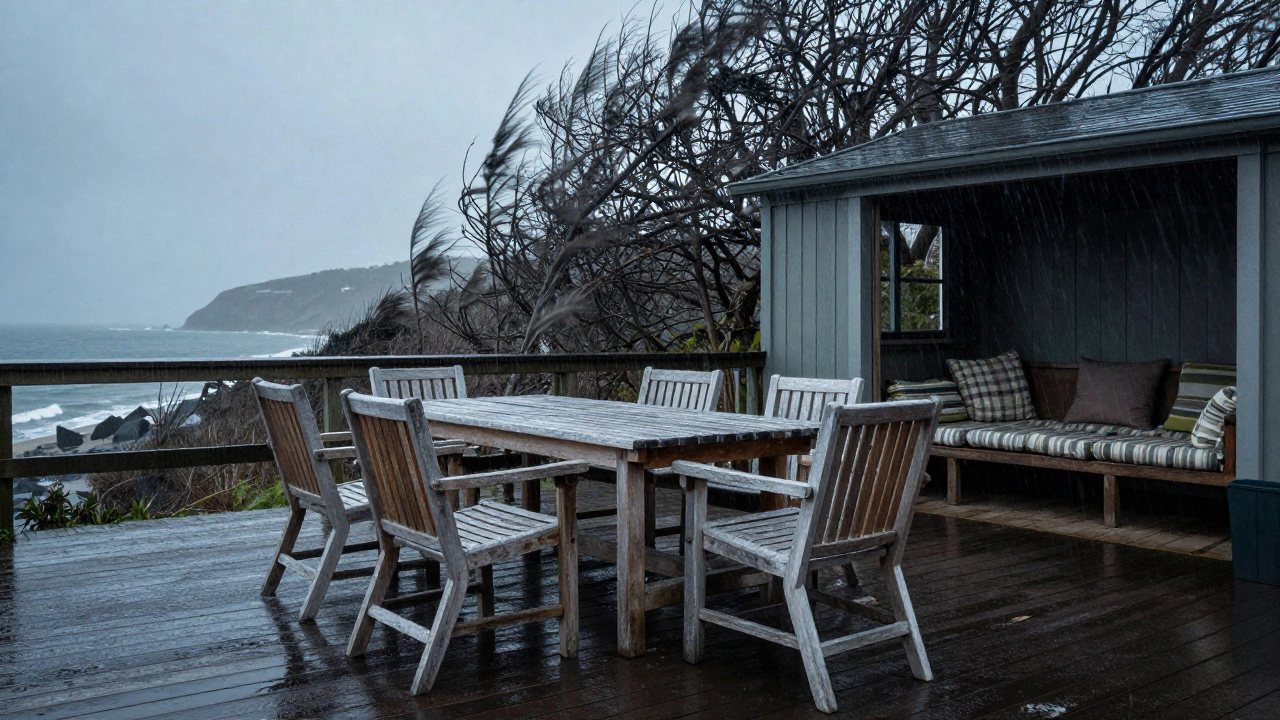
It’s early June in Wellington. The wind’s howling off the harbor, rain’s sideways, and your patio set is sitting right in it. You’ve been wondering: can I leave garden furniture outside in winter? The answer isn’t yes or no-it’s "it depends." But if you want your chairs, tables, and loungers to last beyond the next season, you need to know exactly what "it depends" means.
Not All Garden Furniture Is Made the Same
You can’t treat a cheap metal bistro set the same way you treat a teak dining set. The material makes all the difference. Here’s what actually holds up-and what doesn’t.- Teak: This is the gold standard. Natural oils in the wood repel moisture, resist rot, and handle freezing temps without cracking. You’ll see it on seaside decks in New Zealand and Scandinavia. It weathers to a soft silver-gray. No finish needed. Just clean it once a year.
- Aluminum: Lightweight, rust-proof, and low-maintenance. But don’t assume it’s invincible. If it’s got fabric cushions or powder-coated finishes, those can degrade. Check for chips in the coating-rust can creep in there.
- Wrought Iron: Looks classic, but it’s a trap. Unless it’s been powder-coated and sealed properly, moisture gets in. Rust forms fast in coastal areas like Wellington. If you’ve got it, inspect for flaking paint every spring.
- Plastic or Resin Wicker: Modern versions are surprisingly tough. High-density polyethylene (HDPE) won’t crack in cold. But cheap imitations? They get brittle. If it snaps when you move it, it’s not winter-ready.
- Wood (Pine, Cedar, Eucalyptus): These aren’t teak. They’ll warp, split, or rot if left out. Even cedar, which resists decay better than pine, needs annual oiling. Leave it outside unattended? You’ll be buying new next year.
Cushions Are the Weak Link
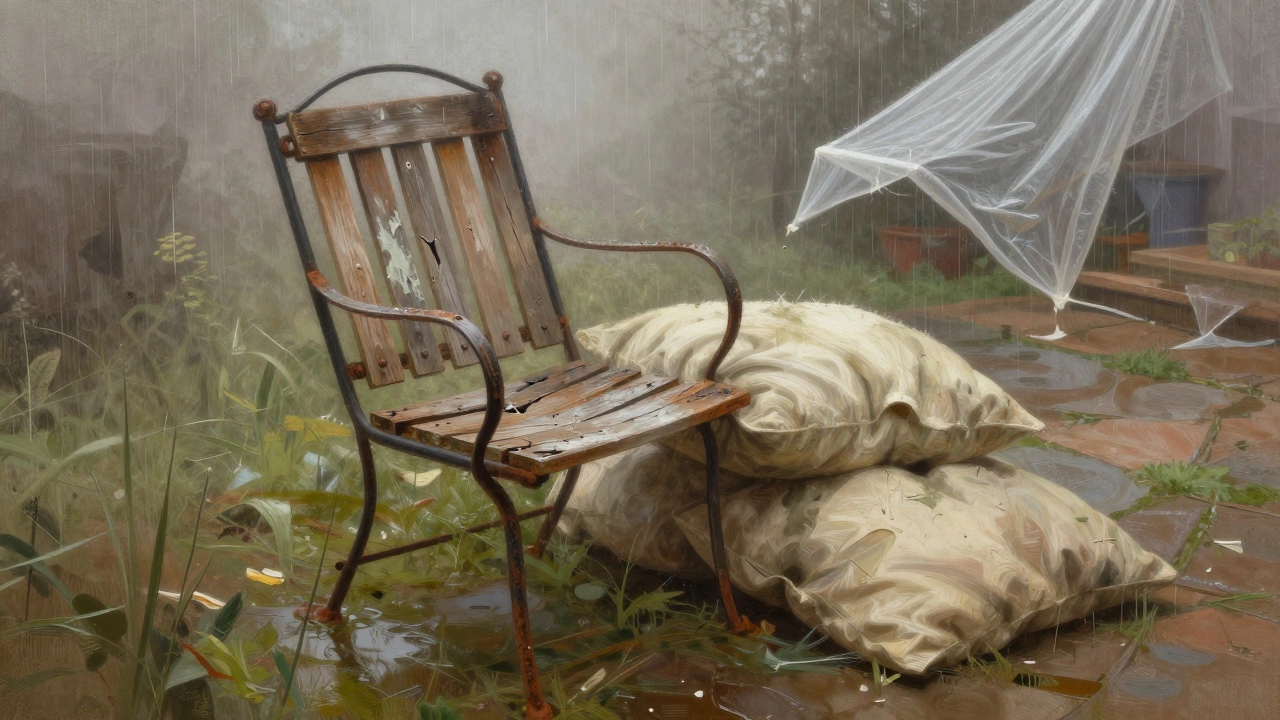
You can leave a solid teak table out all winter. But if you leave the cushions on it? You’re throwing money away.Cushions soak up moisture like a sponge. Even if they’re labeled "weather-resistant," that doesn’t mean waterproof. Rain, dew, snow melt-they all get inside. Mold grows. Zippers rust. Foam turns to mush.
Real talk: If your cushions aren’t made with solution-dyed acrylic fabric (like Sunbrella or Outdura) and quick-dry foam, they won’t survive. And even then, they need to be stored. Don’t just tuck them under a tarp. That traps moisture. Take them inside. A dry garage, shed, or even under your bed works.
What About Covers?
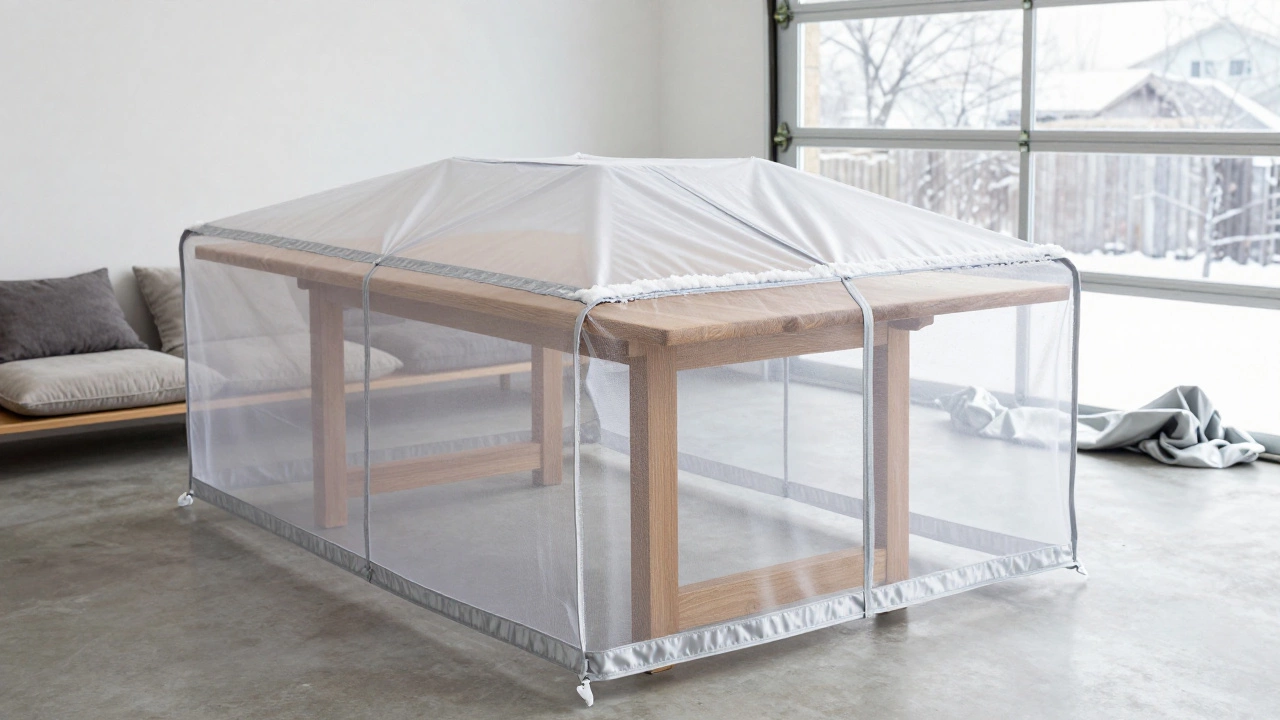
Covers seem like an easy fix. But most store-bought ones are useless.Here’s why: A cheap polyester cover doesn’t breathe. It traps condensation underneath. Your aluminum chair stays dry on the outside-but the moisture from the air? It gets stuck between the cover and the frame. That’s worse than leaving it bare.
Good covers have these features:
- Mesh ventilation panels on the sides
- Waterproof but breathable fabric (like polyester with a PU coating)
- Drawstrings or elastic hems to seal out wind
- Not tight enough to stretch or tear in high wind
And never use plastic sheeting or a tarp. Those are death sentences for furniture.
Wind and Snow Are Silent Killers
In Wellington, wind doesn’t just blow-it rips. A strong gust can flip a light chair, smash it into a wall, or send it tumbling down your deck steps. Snow? It’s rare here, but ice buildup on frames can cause stress cracks.Heavy furniture like stone-topped tables or thick teak sets? They’re fine. But anything with thin legs or a low center of gravity? Secure it. Use furniture straps anchored to a deck post. Or better yet-store it.
Even if your furniture survives the elements, wind-blown grit and salt spray from the sea will eat away at finishes over time. A quick rinse with a hose in spring helps, but prevention is better.
What to Do in Winter: A Simple Checklist
You don’t need to be a pro to protect your stuff. Just follow this:- Remove all cushions and store them indoors.
- Wipe down metal and wood frames with a damp cloth to remove salt and dirt.
- Apply teak oil to teak furniture if it’s looking dry (every 6-12 months).
- Use a proper breathable cover only if the furniture is too heavy to move.
- For lightweight chairs or side tables, bring them into a shed or garage.
- Check for standing water under furniture legs-elevate them on blocks if needed.
When It’s Better to Just Store It
If your furniture is worth more than $300, storing it indoors during winter is almost always the smart move. You’re not just protecting the item-you’re protecting your wallet.Think about it: A $500 teak set can last 20+ years if cared for. Leave it out unprotected? You might need to replace it in 5. That’s $500 every five years. Store it? You’re paying once. The math isn’t even close.
Even if you have a covered patio, that doesn’t mean it’s safe. Wind still gets under eaves. Rain still splashes up. Humidity builds. You’re not shielding it-you’re just slowing the damage.
What Happens If You Do Nothing?
You’ll see it next spring:- Wood furniture with cracks along the grain
- Metal frames with rust spots near joints
- Cushions that smell like mildew and won’t dry out
- Wicker that’s brittle and snaps when you sit on it
- Stains from water sitting on the surface for weeks
Some of this is fixable. Teak can be sanded. Rust can be scraped. But the foam in cushions? Once it’s broken down, it’s gone. And you can’t bring back the life of a chair that’s been warped by moisture.
What About Modern "All-Weather" Furniture?
You’ve seen the ads: "All-weather, all-year, zero maintenance!"Those claims are marketing, not science. Even the best synthetic wicker or resin sets benefit from being stored. The frames might survive, but the cushions won’t. The finish might fade faster. The hardware might corrode. No brand says that in their ad.
Real-world test: A 2023 study by the New Zealand Outdoor Living Association tracked 120 sets left outside through a harsh South Island winter. Only 18% of the cushioned sets remained usable without replacement. The rest needed new foam or fabric. The cushion-free sets? 87% were still in good shape.
Bottom line: If your furniture has cushions, assume they need to come inside. Everything else? Assess the material, the wind, and your patience.
Final Thought: It’s Not About Avoiding Winter-It’s About Respecting Your Stuff
Leaving garden furniture out in winter isn’t lazy. It’s a choice. And every choice has a cost.If you’re okay replacing your set every few years, go ahead. Leave it out. But if you want to enjoy your patio for the next decade, take five minutes in autumn to move the cushions inside, give the frames a wipe, and cover what you can’t move.
Winter doesn’t care if your furniture is expensive or cheap. It just waits. And when spring comes, it’ll show you what happens when you ignore it.
Can I leave my metal garden furniture outside in winter?
It depends on the type. Powder-coated aluminum is fine. Wrought iron? Only if it’s in perfect condition and sealed. Check for chips in the coating-rust starts there. Always remove cushions and wipe down the frames before winter.
Should I cover my garden furniture in winter?
Only if it’s high-quality and breathable. Cheap plastic or vinyl covers trap moisture and cause more damage. Look for covers with ventilation panels and a waterproof-but-breathable fabric. If your furniture is light enough to move, storing it indoors is better.
Do garden furniture cushions need to be stored indoors?
Yes. Always. Even if they’re labeled "weather-resistant," moisture gets inside the foam. Mold grows, zippers rust, and the foam breaks down. Store them in a dry place like a garage, shed, or under your bed. Don’t leave them on the furniture or under a tarp.
Is teak garden furniture safe in winter?
Yes. Teak has natural oils that protect it from moisture and cold. It will turn silver-gray over time-that’s normal. You don’t need to cover it. Just clean it once a year with soapy water. No oiling required unless it looks dry.
What’s the biggest mistake people make with winter garden furniture?
Leaving cushions outside. It’s the #1 reason people have to replace their sets early. Wind, rain, and snow don’t destroy the frame-they destroy the cushions. And replacing cushions costs almost as much as buying new furniture.