Space Storage Calculator
How Much Extra Storage Can You Fit?
Calculate your potential storage capacity using unused spaces mentioned in the article. Input your measurements to see how many storage bins or shelves you can add.
Enter your measurements to see how much storage you can add.
Most houses feel cramped not because they’re small, but because they’re full of stuff with nowhere to put it. You’ve got toys in the hallway, coats piled on the sofa, and kitchen gadgets buried in drawers. The fix isn’t buying a bigger house-it’s using the space you already have better. Extra storage isn’t about adding shelves everywhere. It’s about working with the architecture, not against it.
Look Up: Walls Are Your Best Friend
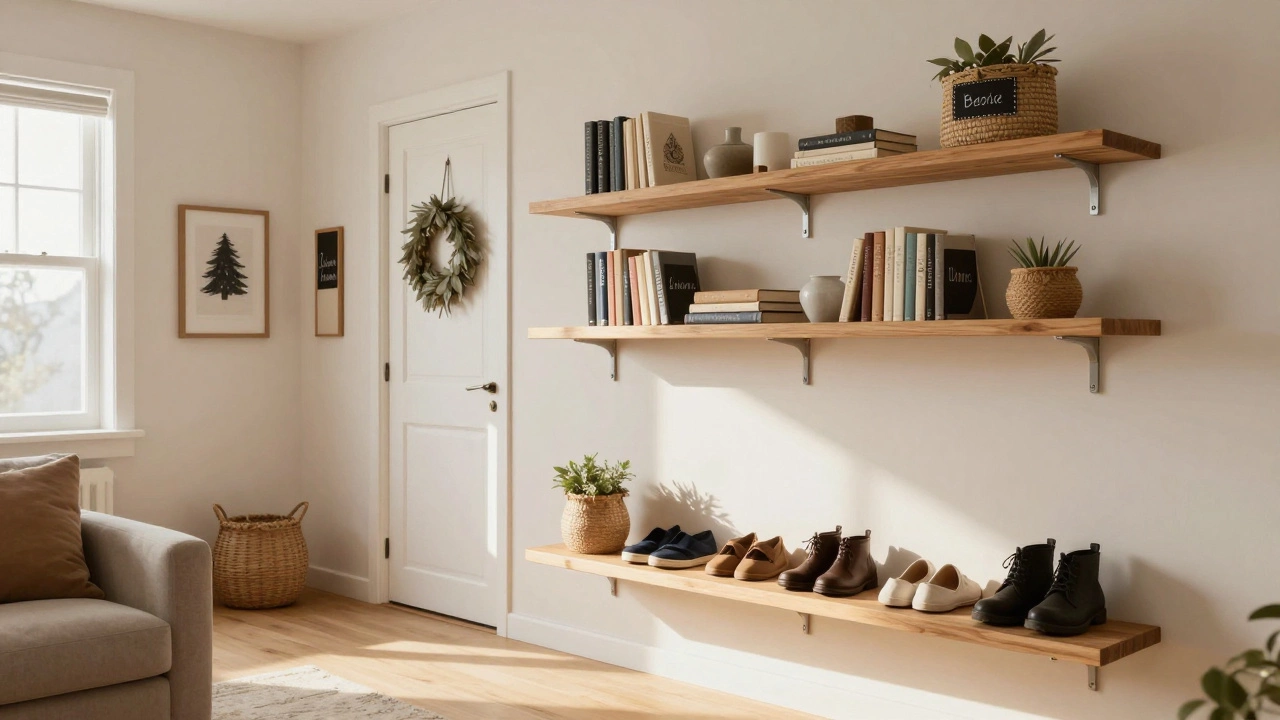
Your walls aren’t just for hanging pictures. They’re unused real estate. Install floating shelves in the living room for books and decor, or use narrow wall-mounted cabinets in the kitchen to hold spices and mugs. In the entryway, a wall unit with hooks and cubbies keeps backpacks, keys, and umbrellas off the floor. These don’t need to be custom-many ready-made options fit in tight spaces. A 12-inch deep shelf can hold 20+ pairs of shoes if you angle them properly.Don’t forget vertical space above doors. A slim cabinet mounted above an interior door can store seasonal items like holiday decorations or extra bedding. In bedrooms, a tall, narrow bookcase beside the closet can hold folded sweaters or linen bags. Use baskets on shelves to group similar items-socks in one, gloves in another. Label them with chalkboard tape so you don’t have to dig.
Under the Bed: The Forgotten Storage Zone
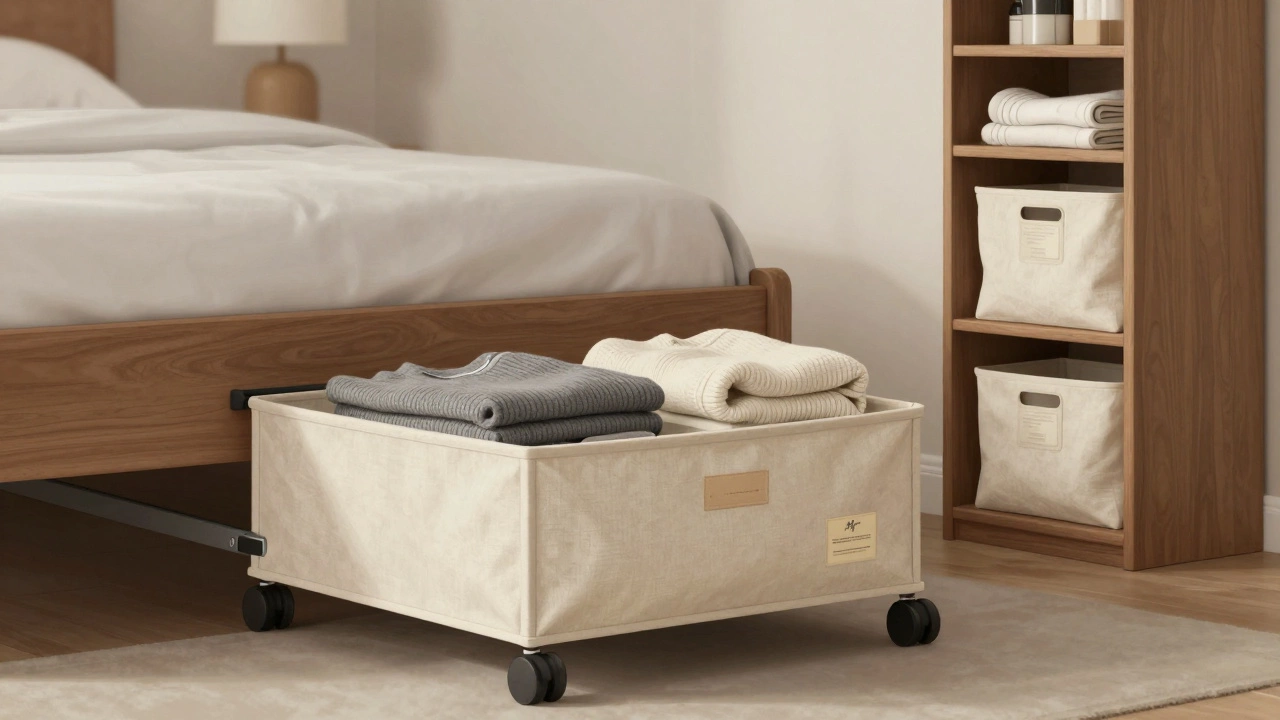
If your bed sits on legs, you’ve got 8 to 12 inches of empty space underneath. That’s enough for four to six deep storage bins. Look for low-profile, wheeled bins made of breathable fabric-they slide easily and don’t trap moisture. Store off-season clothes, extra towels, or even shoes here. In kids’ rooms, use under-bed bins for toys. A single bin can hold 15 stuffed animals or 20 LEGO sets.Some beds come with built-in drawers. If you’re buying a new one, prioritize those over ones with solid panels. A storage bed with four drawers gives you the equivalent of a small closet without taking up floor space. In Wellington’s damp climate, avoid plastic containers that trap humidity. Opt for cotton canvas or ventilated wood bins instead.
Turn Unused Corners Into Storage Nooks
Corners are where furniture goes to die. But they’re perfect for storage. A corner shelf unit in the living room can hold media gear, board games, or photo albums. In the bathroom, a corner cabinet fits where a regular cabinet won’t. Even a narrow corner between the fridge and the wall can hold a tall, slim pantry cabinet for canned goods or cleaning supplies.For irregular spaces, custom-fit solutions work better than generic ones. Measure the exact width and depth of the corner. Many local carpenters in Wellington offer affordable custom shelving using reclaimed timber. A simple 3-shelf unit can cost under $200 and turns dead space into usable storage.
Staircase Storage: Hidden Powerhouse
If your home has stairs, you’re sitting on a goldmine. The space under each step is a perfect spot for pull-out drawers. These can be built into new construction or retrofitted into existing stairs. Use them for seasonal items: winter boots, summer tires, or holiday lights. One set of 12 steps can hold 30+ bins if each drawer is 10 inches deep.Another option: turn the wall beside the stairs into a bookshelf. Install shelves that follow the slope of the stairs. It looks intentional, not like an afterthought. In smaller homes, this setup replaces a bookshelf in the living room and keeps things tidy.
Reimagine Furniture: Multi-Use Is Key
Your couch doesn’t have to just sit there. Choose a storage ottoman-it doubles as a footrest and a hidden compartment for blankets or board games. A bench with a lift-up lid at the end of the bed stores extra pillows or linens. Even a coffee table with drawers can hold remotes, chargers, and magazines.Look for furniture with hidden storage. A dining table with extendable leaves? Store the extra leaves inside the base. A bed frame with built-in drawers? Use them for pajamas, not just socks. The goal isn’t to buy more furniture-it’s to choose pieces that work harder.
Use the Back of Doors and Cabinets
The inside of a closet door? Perfect for hanging shoe organizers. Not just for shoes-use them for cleaning supplies, craft supplies, or first-aid kits. In the bathroom, a door-mounted rack holds towels, toilet paper, and toiletries. In the kitchen, hang a pegboard behind the door to store pots, pans, and utensils. It’s cheaper than installing new cabinets and way more flexible.Inside cabinet doors work too. Add adhesive hooks to the inside of pantry doors for measuring cups or spice jars. Use tension rods inside cabinets to create double-tier shelving for cans or boxes. This trick gives you 50% more shelf space without adding anything to the floor.
Declutter First, Then Store
Storage only works if you’re not storing junk. Before you buy bins or install shelves, go through everything. Ask: Have I used this in the last year? If not, donate it. If you’re unsure, put it in a box and label it with a date. If you haven’t opened it in six months, toss it.Clutter hides in plain sight. That box of old tax papers? Shred and recycle. The broken toaster? Recycle it. The five mugs you never use? Give them away. Storage solutions won’t fix a clutter problem-they’ll just make it look neater while it still takes up space.

Keep It Simple, Keep It Visible
The best storage is the kind you actually use. If something’s hard to reach, you won’t put it back. Keep frequently used items at eye level. Store rarely used things higher or lower. Use clear bins so you can see what’s inside. If you must use opaque bins, label them clearly with both the contents and the season.Color-code bins for kids’ rooms-blue for clothes, green for toys. It makes cleanup easier and teaches responsibility. In shared spaces, assign each person a labeled bin. It reduces conflict and keeps things from piling up.
What Not to Do
Don’t cram every inch of space. Overcrowded closets and cabinets make everything harder to find. Leave 20% of storage space empty-it’s not wasted space. It’s breathing room. It lets you rotate items in and out without chaos.Avoid storing heavy items up high. Keep books, tools, and canned goods at waist level. Store light, seasonal stuff like holiday decor on top shelves.
Don’t use storage as a way to avoid dealing with clutter. That’s just hiding the problem. Real storage is about making life easier, not just hiding messes.
Start Small, Build Momentum
You don’t need to redo your whole house in one weekend. Pick one area: the linen closet, the entryway, or the kitchen pantry. Spend 90 minutes there. Clear it out. Clean the shelves. Put back only what you use. Add one new storage solution-maybe a wall hook or a bin under the bed.Do one spot a week. In a month, you’ll have five areas organized. In three months, your whole house will feel bigger-even if the square footage hasn’t changed.