
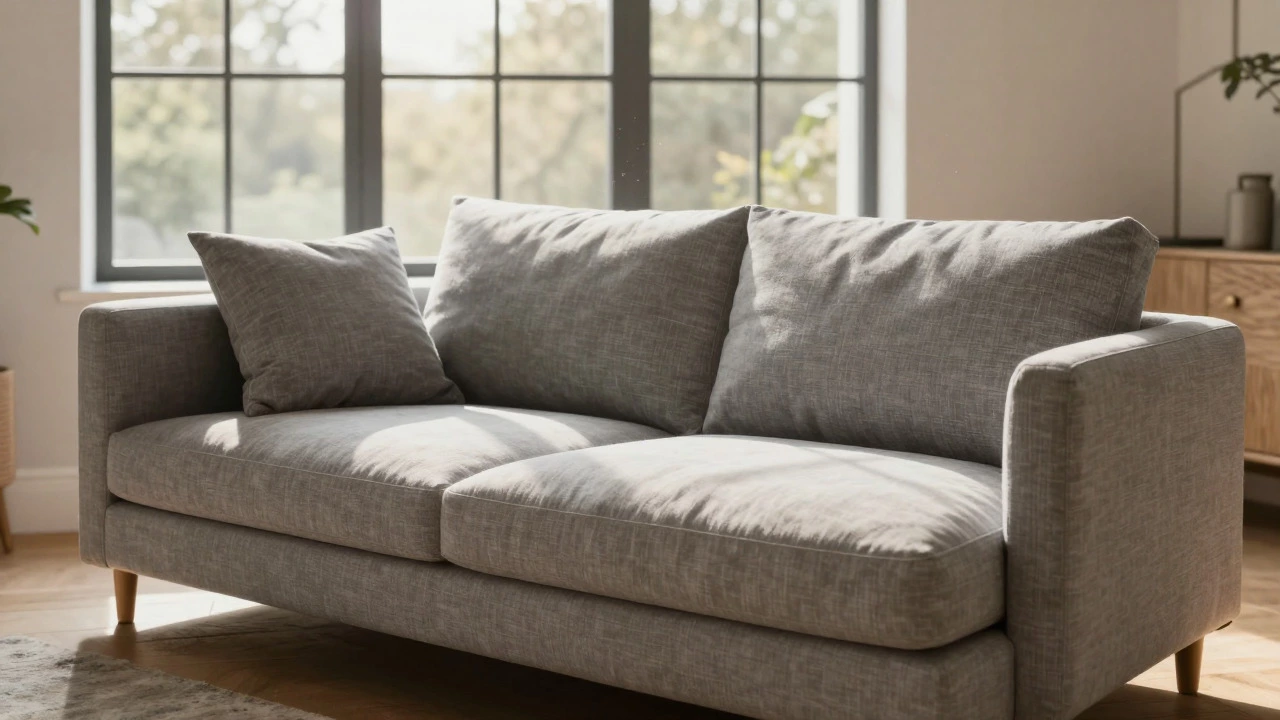
Sofa Bed Comfort & Quality Estimator
Answer the questions below to determine if a specific sofa bed model meets the criteria for long-term comfort and durability.
Ready to Evaluate
Select your options and click calculate to see how well this sofa bed fits the comfort criteria.
Key Takeaways:
You’ve probably been there. A friend crashes on your couch for the night, and by morning, they’re rubbing their back like they slept on a pile of bricks. You feel bad, but you also know your living room isn’t big enough for a guest room. That’s where a sofa bed comes in. It’s supposed to be the ultimate space-saver, doubling as a stylish seat during the day and a decent bed at night.
But here’s the problem: most sofa beds are terrible at one of those jobs. They’re either too stiff to sit on comfortably or too flimsy to sleep on without waking up with a sore neck. Choosing the right one feels like a gamble. Do you go for the cheap option and risk buyer’s regret? Or do you splurge on a high-end model that might still disappoint?
The good news is that comfort isn’t just luck. It’s engineering. By understanding how these mechanisms work, what materials actually hold up, and how to test them in person, you can find a piece of furniture that doesn’t force you to choose between style and sleep. Let’s break down exactly what makes a sofa bed comfortable, so you don’t have to guess.
Understanding the Mechanism: It’s Not Just About the Cushions
When people think about comfort, they usually look at the upholstery. But the real secret to a comfortable sleeper sofa is the internal mechanism that transforms it from seating to sleeping. If the frame doesn’t support the mattress evenly, no amount of plush fabric will save your back.
There are three main types of mechanisms you’ll encounter:
- Click-Clack (or Futon-style): These have a simple hinge. You pull a lever, and the backrest folds down flat. They are lightweight and easy to open, but because they often use thin foam mattresses, they rarely provide true bed-level support. Great for occasional naps, less ideal for overnight guests.
- Pull-Out Sleeper: This is the classic design. You pull the base out, and a metal frame extends with a folded mattress. Modern versions use zero-gap technology, which eliminates the annoying dip between the mattress sections. This offers the most substantial sleeping surface but requires more floor space to operate.
- Folding/Sectional Convertibles: These often involve rearranging cushions or unfolding sections of a sectional. They are great for large groups but can be tricky to set up correctly. If the cushions aren’t aligned perfectly, you’ll end up with lumpy spots.
- Thickness Matters: Avoid mattresses thinner than 4 inches. Anything less feels like sleeping on a board wrapped in fabric. Aim for 5 to 6 inches if possible. Thicker mattresses distribute weight better and prevent you from feeling the metal slats underneath.
- Innerspring vs. Foam: Older sofa beds used heavy innerspring coils. While supportive, they can be noisy and uncomfortable when folded. High-density polyurethane foam is now the standard. It’s quieter, lighter, and conforms better to your body. Look for "high-resilience" foam, which bounces back faster after being compressed.
- Memory Foam Toppers: Many modern sofa beds come with a built-in memory foam layer. This adds pressure relief, which is crucial for side sleepers. However, pure memory foam can get hot. If you sleep warm, look for gel-infused foam or breathable covers.
- Fabric: Durable options like linen blends, cotton twill, or performance fabrics (like Crypton) are great for households with pets or kids. They resist stains and wear. However, fabric can trap heat, making the sofa feel warmer in summer.
- Leather: Leather sofa beds look sleek and are easy to wipe clean. They cool down quickly, which is nice in warm climates. But leather can stretch over time, especially if the frame isn’t rigid. Also, sitting on leather for long periods can feel sticky in humid weather.
- Microfiber: This synthetic fabric mimics suede. It’s soft, durable, and stain-resistant. It’s a popular choice for sofa beds because it hides dirt well and feels cozy against the skin.
If you prioritize sleep quality, avoid basic click-clack models unless you plan to add a thick memory foam topper later. For daily use or frequent guests, a zero-gap pull-out sleeper is usually the safer bet.
Mattress Quality: The Heart of the Sleep Experience
Let’s talk about the part you actually touch: the mattress. In traditional sofas, the cushioning is separate from the structure. In a sofa bed, the mattress is structural. It has to fold, unfold, and compress repeatedly without losing its shape.
Here is what you need to look for regarding mattress thickness and material:
A pro tip: Don’t trust the salesperson’s description of "plush." Ask for the density rating of the foam. Higher density means longer lifespan and better support. Low-density foam will sag within a year.
Frame Construction: Durability Meets Stability
A comfortable sofa bed must also be stable. If the frame wobbles when you sit on it, it will creak and shift when you sleep on it. The frame is the skeleton of the piece, and it needs to be robust.
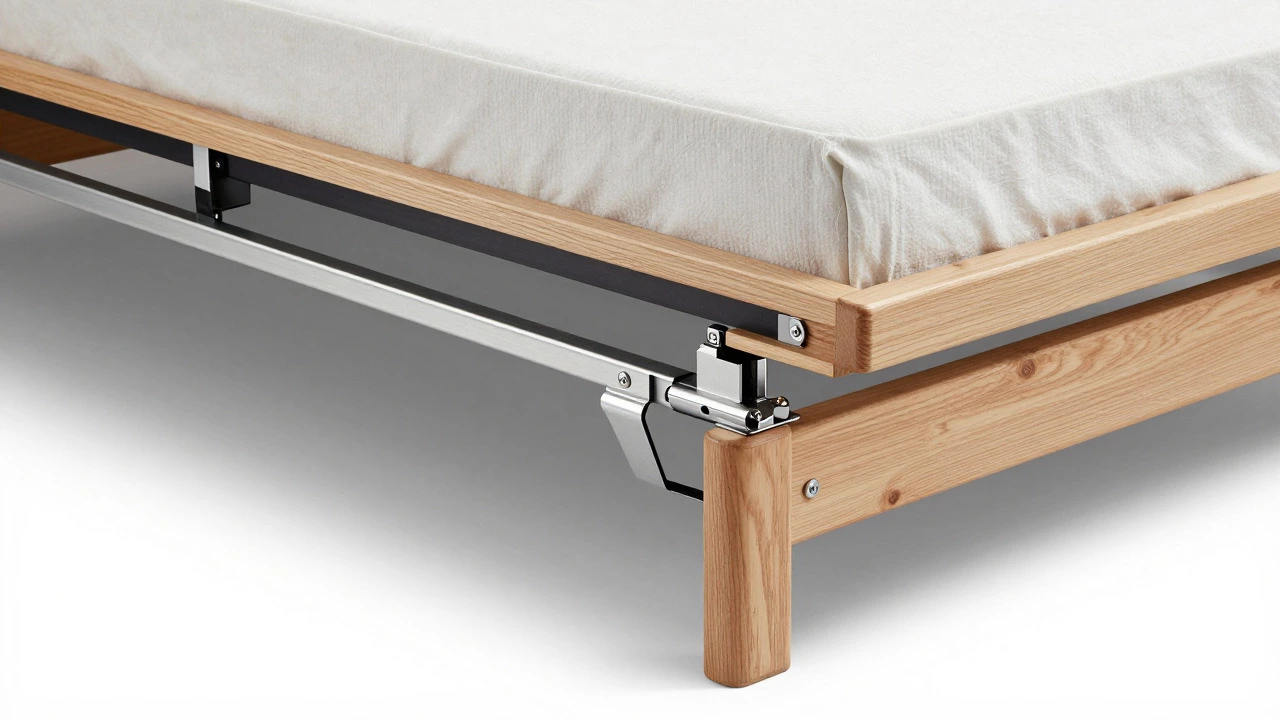
Most quality sofa beds use hardwood frames (like oak, maple, or birch) combined with metal reinforcement. Metal is essential for the moving parts-the hinges, the slide rails, and the locking mechanisms. Wood provides rigidity for the seat base. Avoid particleboard or MDF (medium-density fiberboard) for the primary load-bearing areas. These materials swell with humidity and crack under stress.
Check the joints. Dovetail joints or corner blocks screwed into place are signs of quality. Staples and glue alone are not enough to handle the constant tension of opening and closing the bed. When you’re in the store, try to lift the front corners of the sofa. If it feels light and hollow, it’s likely using cheaper materials. A well-built sofa bed should feel heavy and solid.
Sizing Your Space: It’s Bigger Than You Think
One of the biggest mistakes people make is buying a sofa bed based solely on the closed dimensions. You need to account for the open footprint. When a pull-out sleeper is extended, it takes up significantly more floor space.
Measure your room carefully. You need enough clearance around the sofa to pull the bed out fully without hitting walls, lamps, or other furniture. Generally, you’ll need at least 30 to 36 inches of clearance behind the sofa and on the sides where the bed extends.
Also, consider the height. Sofa beds are often taller than regular sofas because of the stored mattress. Make sure it fits under windows or mantels if that’s your plan. And don’t forget the doorway. Can you even get it into your apartment? Measure your stairs and hallways. Some full-size sofa beds are massive and require professional movers to navigate tight corners.
| Type | Comfort Level | Ease of Use | Space Required | Best For |
|---|---|---|---|---|
| Click-Clack | Low to Medium | Very Easy | Minimal | Small apartments, occasional naps |
| Pull-Out Sleeper | High | Medium | Large (when open) | Guest rooms, frequent overnights |
| Sectional Convertible | Medium to High | Complex | Variable | Large families, group sleeping |
Upholstery and Style: Don’t Sacrifice Looks
You want a sofa bed that looks good in your living room, not just in your bedroom. The upholstery plays a huge role in both comfort and aesthetics. Fabric choices affect durability, cleanability, and feel.
Think about your lifestyle. If you eat dinner on the couch, avoid light-colored fabrics unless you’re willing to deep-clean them regularly. Darker tones or patterned fabrics hide wear and tear better. Remember, the arms and backrest take the most abuse. Check if the armrests are padded. Hard wooden arms are stylish but uncomfortable if you lean on them while watching TV.
Testing in Person: The Sit-and-Sleep Test
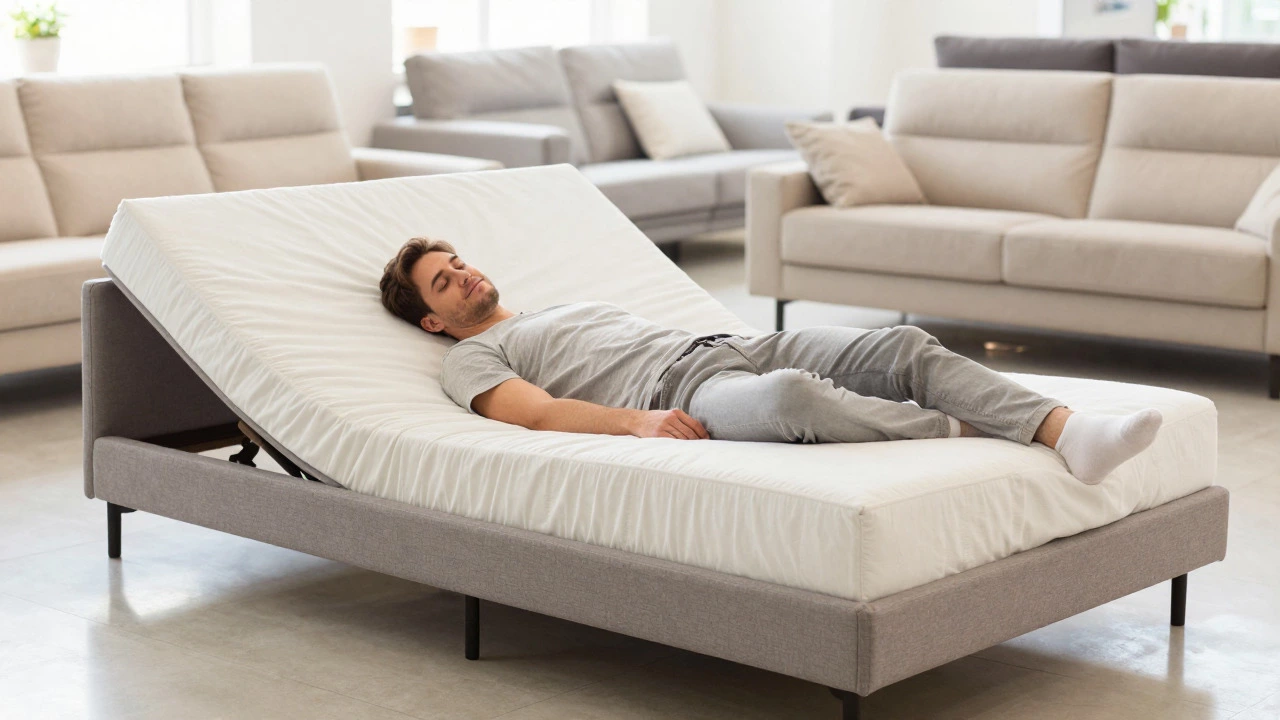
You can read all the specs online, but nothing beats testing the product yourself. When you visit a showroom, don’t just sit on the sofa. Lie down on it. Open the bed mechanism. Close it. Do this multiple times.
Pay attention to how much effort it takes to open the bed. If you struggle to pull it out, imagine doing it at midnight when you’re tired. Look for smooth glides and sturdy handles. Some models have gas-lift assists that make opening easier-these are worth the extra cost if you have limited strength.
Once the bed is open, lie on it in your preferred sleeping position. Side sleepers need softer surfaces to cushion hips and shoulders. Back sleepers need firmer support to keep the spine aligned. Does the mattress sag in the middle? Is there a noticeable gap between the sections? If you feel the metal frame through the mattress, it’s not going to get better with time.
Ask the sales associate about the warranty. A good manufacturer stands behind their mechanism. Look for warranties that cover the frame and the conversion mechanism for at least 5 years. Mattress warranties are usually shorter, around 1 to 3 years, due to normal wear and tear.
Budgeting for Comfort
Price is a strong indicator of quality in sofa beds. Cheap models under $500 often cut corners on the frame and mattress density. You might save money upfront, but you’ll replace it sooner. Mid-range options ($800-$1,500) offer a good balance of durability and comfort. High-end models ($2,000+) feature premium materials, thicker mattresses, and smoother mechanisms.
Don’t forget to factor in the cost of bedding. You’ll need sheets that fit a slightly thinner mattress than a standard bed. Deep-pocket sheets designed for sofa beds are available but can be pricey. Investing in a good quality mattress protector can extend the life of the built-in mattress by keeping it clean and dry.
Finally, consider delivery and setup fees. Sofa beds are heavy and bulky. Professional assembly ensures the mechanism is installed correctly, preventing future malfunctions. If you’re moving frequently, check if the sofa bed can be disassembled easily for transport.
What is the best type of mattress for a sofa bed?
High-density polyurethane foam is generally considered the best material for sofa bed mattresses. It offers a good balance of support, comfort, and durability. Unlike innerspring coils, foam doesn't make noise when folding and unfolds smoothly. Look for a thickness of at least 5 inches for optimal comfort.
Are sofa beds bad for your back?
Not necessarily. A low-quality sofa bed with a thin, sagging mattress can cause back pain. However, a well-made sofa bed with a firm, supportive mattress and a sturdy frame can be just as good for your back as a regular bed. The key is choosing a model with adequate support and avoiding overly soft cushions.
How often should I replace my sofa bed?
With proper care, a good quality sofa bed should last 7 to 10 years. Signs it’s time to replace include visible sagging in the mattress, difficulty opening or closing the mechanism, squeaking noises, or worn-out upholstery. Regular maintenance, like rotating the mattress if possible, can extend its life.
Can I use a regular bed sheet on a sofa bed?
Regular fitted sheets often don't fit sofa bed mattresses well because they are thinner than standard mattresses. The elastic may slip off. It's best to buy sheets specifically designed for sofa beds or use flat sheets secured with clips or straps to keep them in place.
Is a futon or a sofa bed more comfortable?
Sofa beds are generally more comfortable for sleeping because they have thicker, dedicated mattresses. Futons typically use thinner foam pads that fold directly onto the frame, offering less support and cushioning. Futons are better for casual lounging or very occasional guests, while sofa beds are better for regular overnight stays.