Recliner Sleep Suitability Checker
Check which safety adjustments you are currently making.
Assessment Result
What's Working Well
Areas for Improvement
Select your options and click "Analyze My Setup" to see your results.
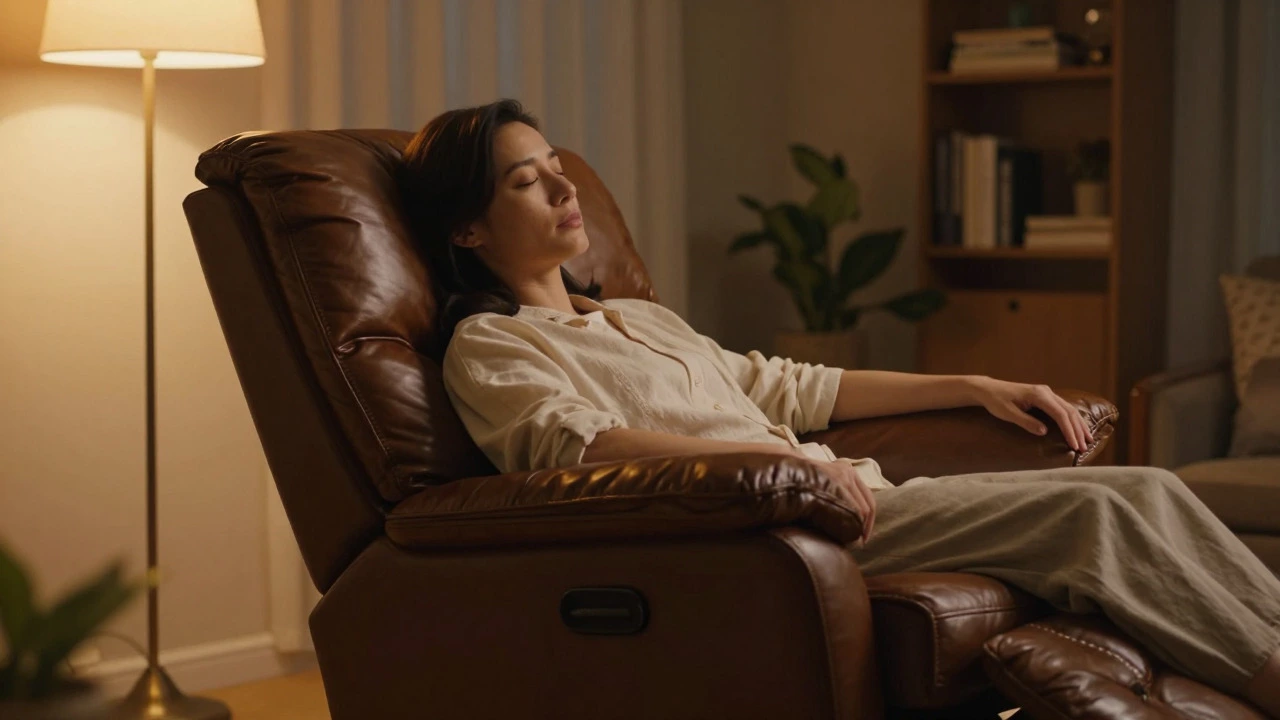
For many people, the pull of a recliner chair is stronger than any mattress. It’s warm, it’s supportive, and getting up to go to bed feels like extra work. But can you actually live this way? Can you sleep in a recliner every night without wrecking your back or neck?
The short answer is: yes, but with caveats. For some, it’s a lifesaver. For others, it’s a slow path to chronic pain. The difference usually comes down to your specific health conditions, the quality of your chair, and how you position yourself. If you’ve been waking up stiff or feeling more tired despite sleeping eight hours, the issue might not be *how long* you sleep, but *where*.
Why People Choose the Recliner Over the Bed
It’s not just laziness. There are legitimate physiological reasons why a reclined position feels better than lying flat.
- Reduced Acid Reflux: Gravity helps keep stomach acid down. If you suffer from GERD (Gastroesophageal Reflux Disease), a recliner keeps your upper body elevated, preventing that burning sensation in the chest.
- Better Airflow: For those with mild sleep apnea or congestion, propping the head up can open airways that get compressed when lying flat.
- Joint Pain Relief: If you have hip or knee issues, bending the legs slightly in a recliner reduces strain on the lumbar spine compared to extending them fully on a firm mattress.
However, comfort is subjective. What feels like a hug to one person feels like a trap to another. The key is understanding whether your body is adapting to the chair or being compromised by it.
The Risks of Long-Term Recliner Sleeping
If you make this your permanent habit, you’re changing your spinal alignment every single night. Here is what happens when you spend too much time in a fixed, semi-reclined position.
Spinal Compression and Muscle Imbalance
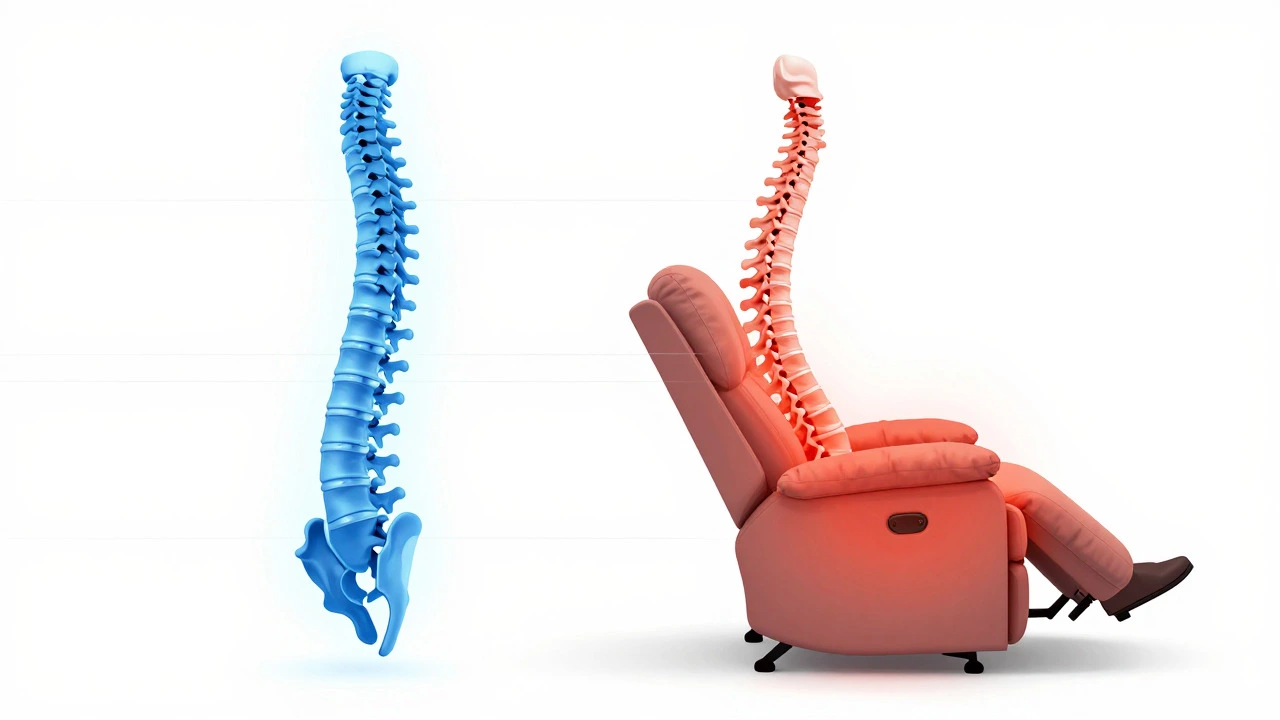
Your spine is designed to curve naturally. A standard bed allows for neutral alignment. A recliner forces your pelvis into a posterior tilt (rounding the lower back) while keeping the upper back rounded. Over weeks, this can lead to:
- Tightening of the hamstrings and hip flexors.
- Weakening of the core muscles that normally support the lower back.
- Chronic tension headaches from neck strain if the headrest doesn’t support your cervical curve properly.
Circulation Issues
Sitting for long periods slows blood flow in the legs. While less severe than sitting at a desk all day, sleeping in a recliner still poses a risk for edema (swelling) in the ankles and feet. If you notice puffy toes in the morning, your circulation is taking a hit.
The "Wedge" Effect on Shoulders
Most recliners have armrests. If your shoulders rest against them while you sleep, you’re compressing the brachial plexus nerves. This can cause tingling, numbness, or pain radiating down the arms-a condition often mistaken for simple stiffness.
Recliner vs. Bed: Which Is Better for Your Body?
To decide if the recliner is right for you, compare the two setups based on your specific needs. Neither is universally "better," but they serve different physiological functions.
| Feature | Recliner Chair | Standard Bed |
|---|---|---|
| Spinal Alignment | Curved (C-shape); may stress lumbar area | Neutral; supports natural S-curve |
| Acid Reflux (GERD) | Excellent; gravity assists digestion | Poor; requires elevation of head |
| Leg Circulation | Moderate; dependent on footrest height | Good; full extension aids flow |
| Movement Freedom | Limited; confined space | High; easy to roll over |
| Best For | Short-term recovery, severe reflux, hip pain | Long-term health, couples, general wellness |
If you fall into the "Best For" column on the left, the recliner might be a temporary necessity rather than a permanent home. Think of it as a medical aid, not a lifestyle choice, unless your doctor advises otherwise.
How to Make Recliner Sleeping Safer
If you’re committed to sleeping in your recliner, you can mitigate the risks with a few strategic adjustments. You don’t need to buy a new chair, but you do need to change how you use it.
- Adjust the Angle: Don’t kick it all the way back. Aim for a 100-110 degree angle between your torso and thighs. This is closer to a seated position than a horizontal one, reducing pelvic tilt.
- Support Your Neck: Use a small, firm pillow behind your head. Avoid letting your head flop forward or backward. The goal is to keep your ears aligned with your shoulders.
- Elevate Your Feet: Ensure the footrest supports your calves, not just your shins. This prevents pressure points on the popliteal artery behind the knee.
- Add Lumbar Support: Place a rolled-up towel or a specialized lumbar cushion in the small of your back. This fills the gap between your spine and the chair back, maintaining a neutral curve.
- Limit Duration: Try to limit continuous sleep in the recliner to 4-6 hours. Use the remaining time in a proper bed if possible, or switch positions frequently.
Also, check your chair’s durability. Cheap recliners lose their hydraulic integrity quickly. If the chair sags or makes loud noises, it’s not providing consistent support, which increases the risk of sudden jolts that wake you up or cause micro-trauma to your joints.

When to See a Doctor
Sometimes, the desire to sleep in a recliner is a symptom, not a preference. If you find that you *can’t* sleep in a bed because of pain, consult a healthcare professional. They can help determine if the root cause is:
- Sleep Apnea: Requires CPAP therapy, which is easier to manage in an upright position.
- Severe Sciatica: May require specific positioning to relieve nerve pressure.
- Anxiety or Insomnia: The familiar environment of the living room might provide psychological safety that the bedroom lacks.
A physical therapist can also assess your muscle imbalances. If you’ve been sleeping in a recliner for months, you may need targeted stretching exercises to reverse the tightening in your hips and back before switching back to a bed.
Frequently Asked Questions
Is sleeping in a recliner bad for your back?
It depends on your current back health. For people with acute lower back pain, a recliner can temporarily relieve pressure. However, for long-term use, it can weaken core muscles and tighten hip flexors, potentially leading to chronic stiffness if proper lumbar support isn't used.
Can I sleep in a recliner with sleep apnea?
Yes, many people with mild sleep apnea find relief in a recliner because the upright position keeps the airway open. However, it does not replace CPAP therapy. If you use CPAP, ensure the mask fits comfortably in the reclined position so you don't leak air during the night.
What is the best angle to sleep in a recliner?
Aim for approximately 100 to 110 degrees. This is slightly more upright than the fully reclined position (which is around 90-95 degrees). This angle reduces the rounding of the lower back while still providing enough elevation to assist with breathing and digestion.
Do I need a special pillow for my recliner?
You need a pillow that supports the cervical spine (neck). A standard flat pillow is often insufficient. Look for a contoured memory foam pillow or a small bolster that fills the gap between your head and the chair's headrest to prevent your neck from craning forward.
Will sleeping in a recliner cause wrinkles?
Possibly. If your face presses against the armrest or headrest fabric, it can create "sleep lines" that may become permanent over time. Using a silk pillowcase on your pillow and ensuring your face is not pressed firmly against the upholstery can help minimize this effect.