
White Sofa Color Complement Calculator
Find your perfect complement for white corner sofas by selecting your sofa's undertone and room lighting. Based on the article, we'll show colors that create intentional, cozy spaces rather than sterile environments.
Recommended Colors
Key Recommendations
- Warm Deep Navy creates grounding contrast without coldness
- Cool Earthy Olive provides warmth that doesn't clash
- Natural Soft Pastels add gentle depth in sunlit rooms
White corner sofas are a staple in modern homes. They clean up a room, make spaces feel bigger, and act like a blank canvas. But here’s the problem: once you bring one home, you start staring at it. What color actually works with it? Not just any shade. Not just what’s trendy. What color complements white the most-so it doesn’t look cold, sterile, or like a hospital waiting room?
White isn’t just white
First, stop thinking of white as one color. Your white sofa isn’t pure, blinding white. It’s probably warm white, cool white, or off-white. Warm white has a hint of beige, cream, or yellow. Cool white leans gray or blue. The undertone changes everything. If your sofa is cool white, pairing it with a cool gray sofa throw might make the whole space feel flat. But if you add a warm terracotta pillow, suddenly the room feels alive.Check your sofa under natural light. Hold up a plain white sheet next to it. If the sofa looks yellower, it’s warm. If it looks bluer, it’s cool. Match your accent colors to that undertone. It’s the single most overlooked step in getting white furniture to look intentional, not accidental.
Deep navy: the classic that never fails
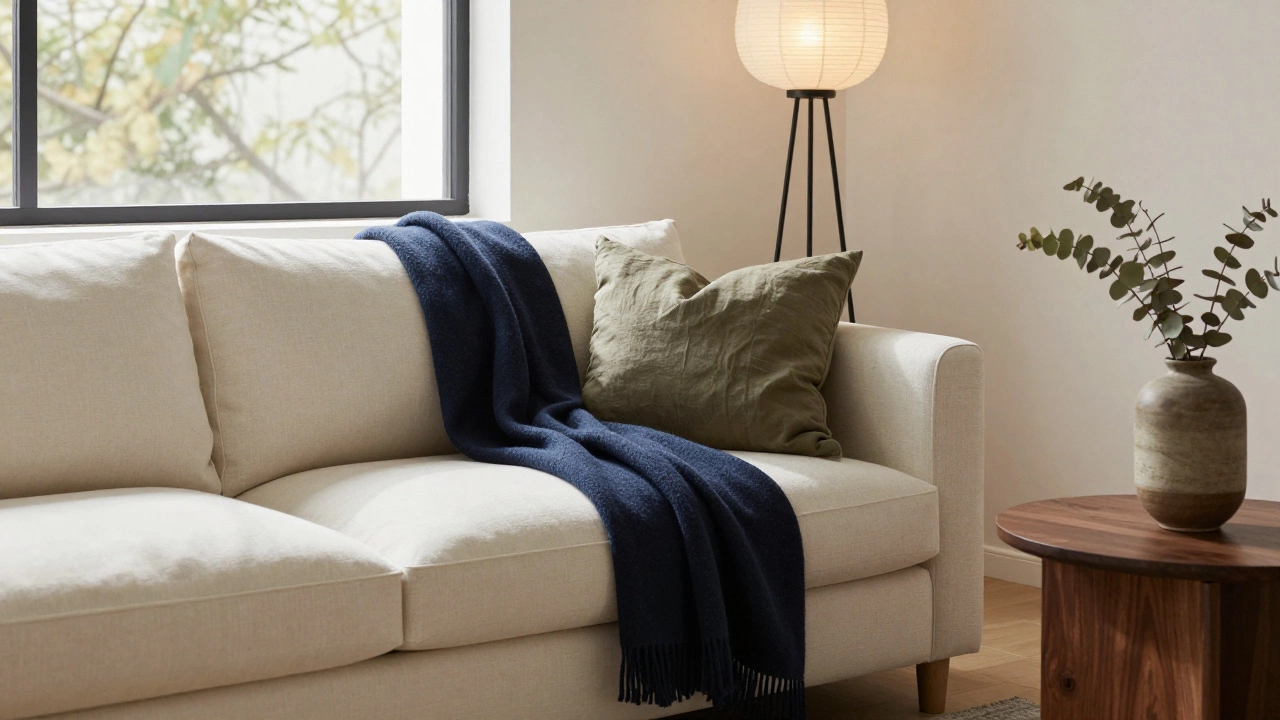
Navy blue is the most reliable color to pair with white. It’s not just popular-it’s proven. Think of classic coastal homes in Wellington, where white walls meet navy curtains and deep blue cushions. Navy doesn’t fight white. It grounds it. It gives the sofa something to lean into.Try a navy throw blanket draped over the arm of your white corner sofa. Add two navy pillows with subtle texture-herringbone or bouclé. The contrast is sharp but soft. It doesn’t scream. It whispers confidence. This combo works whether your room is small or large, modern or traditional. It’s the reason so many interior designers keep reaching for navy when they’re stuck.
Earthy tones: warmth you can feel
If navy feels too formal, go earthy. Olive green, warm brown, clay red, and charcoal gray are all natural partners for white. These colors come from the land, not a paint catalog. They feel honest. In a home with white corner sofas, they stop the space from feeling like a showroom.Look at New Zealand’s natural palette: moss on rocks, dried flax, clay cliffs. That’s the color story you want. An olive green accent pillow, a woven rattan basket in a warm brown, a ceramic lamp in burnt sienna. These aren’t bold statements-they’re quiet anchors. They make the white feel lived-in, not staged.
Pro tip: Choose textures over patterns. A chunky knit in oatmeal, a linen curtain in taupe, a leather ottoman in dark walnut. Texture adds depth without clashing. White surfaces reflect light. Textured neutrals absorb it. That balance is what makes the room feel cozy, not cold.
Black: risky but powerful
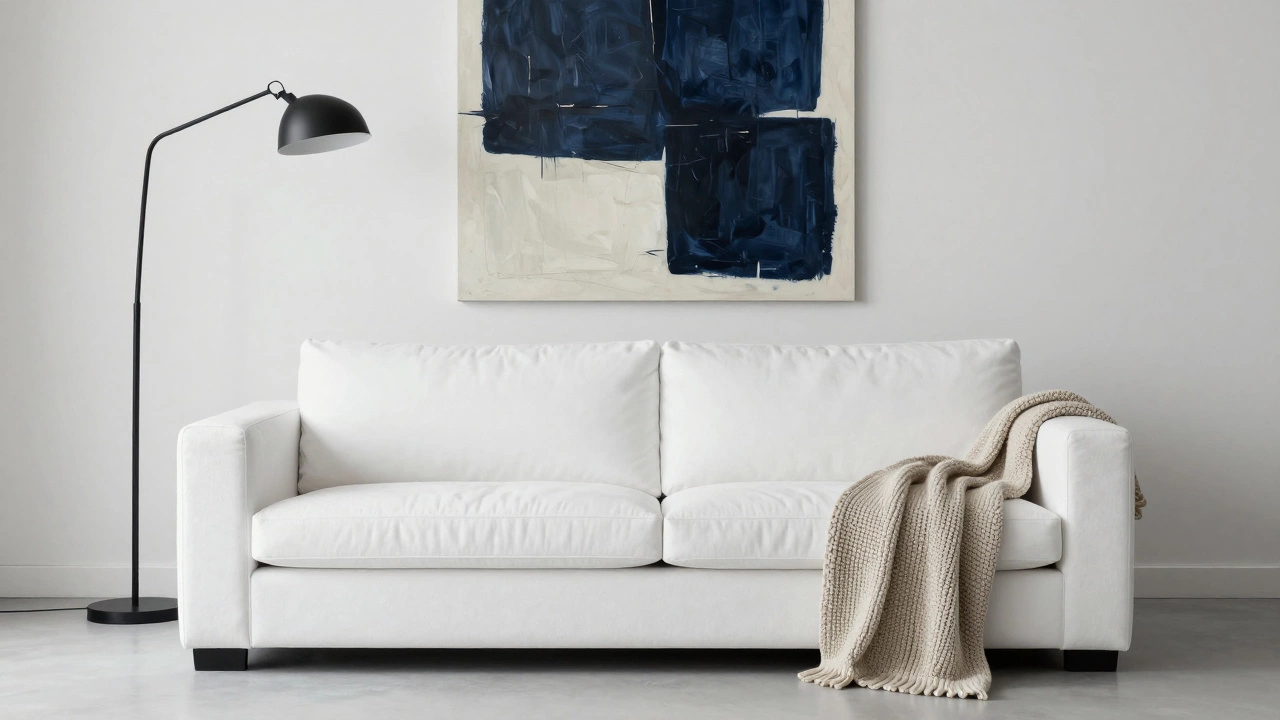
Black with white? It’s the ultimate contrast. Think of a Japanese tea house or a minimalist gallery. It’s clean. It’s dramatic. But it’s also easy to mess up.Black works best as an accent-not a dominant color. A black metal floor lamp. Black-framed art. A single black side table. Too much black turns the room into a funeral parlor. But just enough? It makes the white pop like snow on a winter morning.
Use matte black, not glossy. Glossy black reflects too much light and feels cheap next to soft white fabric. Matte black has depth. It’s quiet. It doesn’t compete. It frames the white. If you’re unsure, start with one black object. See how it feels. Then decide if you want more.
Soft pastels: gentle and fresh
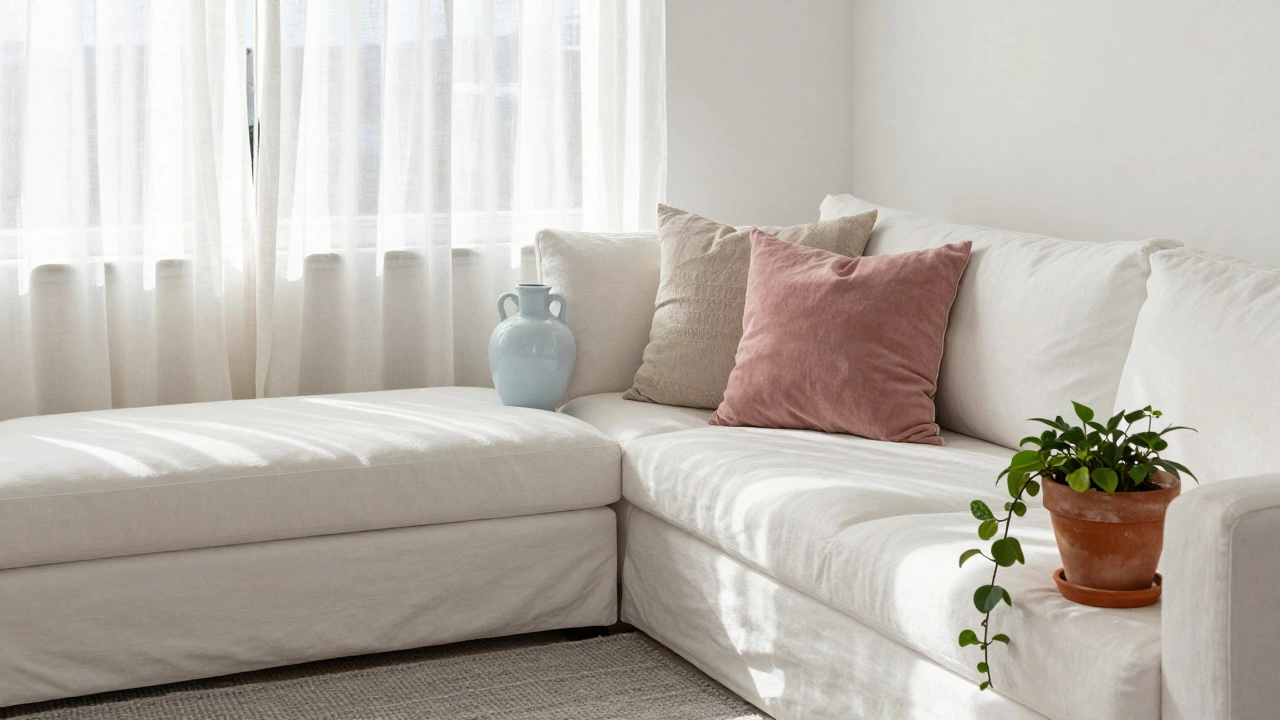
Pastels aren’t just for nurseries. Soft sage, dusty rose, and pale sky blue work beautifully with white corner sofas-especially in rooms with lots of natural light. These colors feel like morning air. They don’t overwhelm. They breathe.Try a dusty rose throw pillow with a white sofa in a sunlit living room. Add a pale blue ceramic vase with dried eucalyptus. The effect is calming, not childish. It’s the kind of palette you find in coastal cottages in Taranaki or the Bay of Islands. It’s romantic without being fussy.
Keep pastels muted. Avoid neon pinks or bright mint. Those scream "trend" and fade fast. Go for colors that look like they’ve been washed by the sun for years. That’s what makes them timeless.
What NOT to do
There are three big mistakes people make with white sofas.- Don’t match white to white. A white rug, white curtains, white cushions-it turns into a snow globe with no depth. Add at least one color that has weight.
- Don’t use bright primary colors. A bright red cushion might look fun in a magazine, but in real life, it fights the white. It’s exhausting to look at after a week.
- Don’t ignore lighting. White looks different at 8 a.m. vs. 8 p.m. Test colors at different times of day. What looks perfect in daylight might look dull under warm lamps.
Real-world examples
In a Wellington apartment I helped style last year, the client had a pure white corner sofa facing a north-facing window. The room felt empty. We added:- A navy wool throw (from a local weaver in Nelson)
- Two cushions in muted olive linen
- A black iron floor lamp with a paper shade
- A small side table in dark walnut
The result? The sofa didn’t disappear. It became the centerpiece. The room felt calm, intentional, and deeply comfortable. No one said, "Oh, your sofa is white." They said, "This room feels so good." That’s the goal.
Final tip: let your rug decide
Your rug is the foundation. If you haven’t picked one yet, start there. A white sofa with a gray jute rug? Go for warm accents. A white sofa with a blue-and-beige Persian rug? Lean into cool tones. The rug pulls the whole palette together. Don’t pick pillows first. Pick the floor.White corner sofas are a gift. They’re flexible, timeless, and easy to live with. But they need a partner. Not just any color. The right one. Navy, earth tones, soft pastels, or a whisper of black-they all work. But only if you match them to your light, your mood, and your life. Not just what’s on Pinterest.
Can I use a colorful patterned pillow with a white sofa?
Yes, but keep it balanced. One bold pattern is fine-like a geometric print with navy and cream-but don’t mix three different patterns. Stick to one standout piece and let the rest be solid colors or textures. This keeps the look calm and intentional.
Is a white sofa hard to keep clean?
It can be, but it’s manageable. Choose a performance fabric like Crypton or Sunbrella-they repel spills and stains. Vacuum weekly. Spot-clean with a mix of water and mild dish soap. Don’t wait for big messes. A little care every week keeps it looking fresh for years.
What’s the best way to add color without buying new pillows?
Use throws, rugs, and art. A wool blanket in olive or rust draped over the arm adds instant warmth. A large abstract painting with navy and cream tones pulls the whole room together. Even a single plant in a terracotta pot adds life. You don’t need to buy a full set of accessories to change the vibe.
Should I match my white sofa to my walls?
No. If your walls are the same white as your sofa, the sofa blends in too much. It loses its presence. Let the sofa stand out. Choose a slightly different shade of white for the walls-warmer or cooler-to create depth. Think of it like layering clothes: the base is white, but the accent piece is what catches the eye.
What if I want to change the color scheme later?
White sofas are the most flexible piece in a room. You can swap out cushions, throws, and rugs as trends change or your mood shifts. A navy-and-olive look this year can become a dusty-pink-and-gray look next season. You don’t need to replace the sofa. Just change the accents.