Interior Design Budget Calculator
People think you need a degree to become an interior designer. That’s not true. You don’t need a formal education to turn your love of spaces into a career-or even just a skill that transforms your own home and helps friends redesign theirs. Thousands of self-taught interior designers are working today, building portfolios, landing clients, and making real money without stepping into a classroom. The question isn’t whether you can do it. It’s whether you’re willing to do the work.
Start by studying what already works
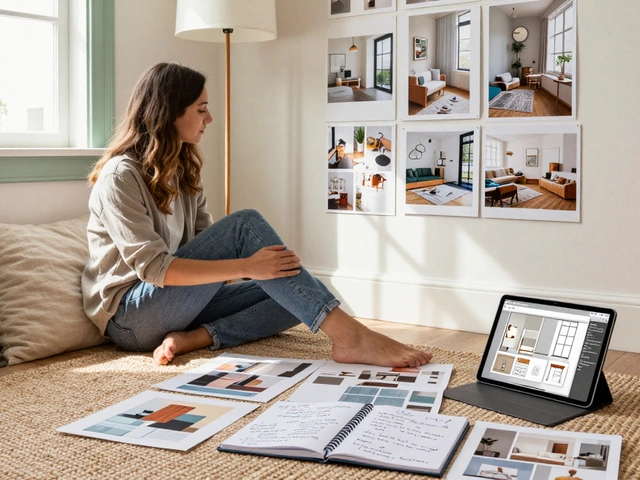
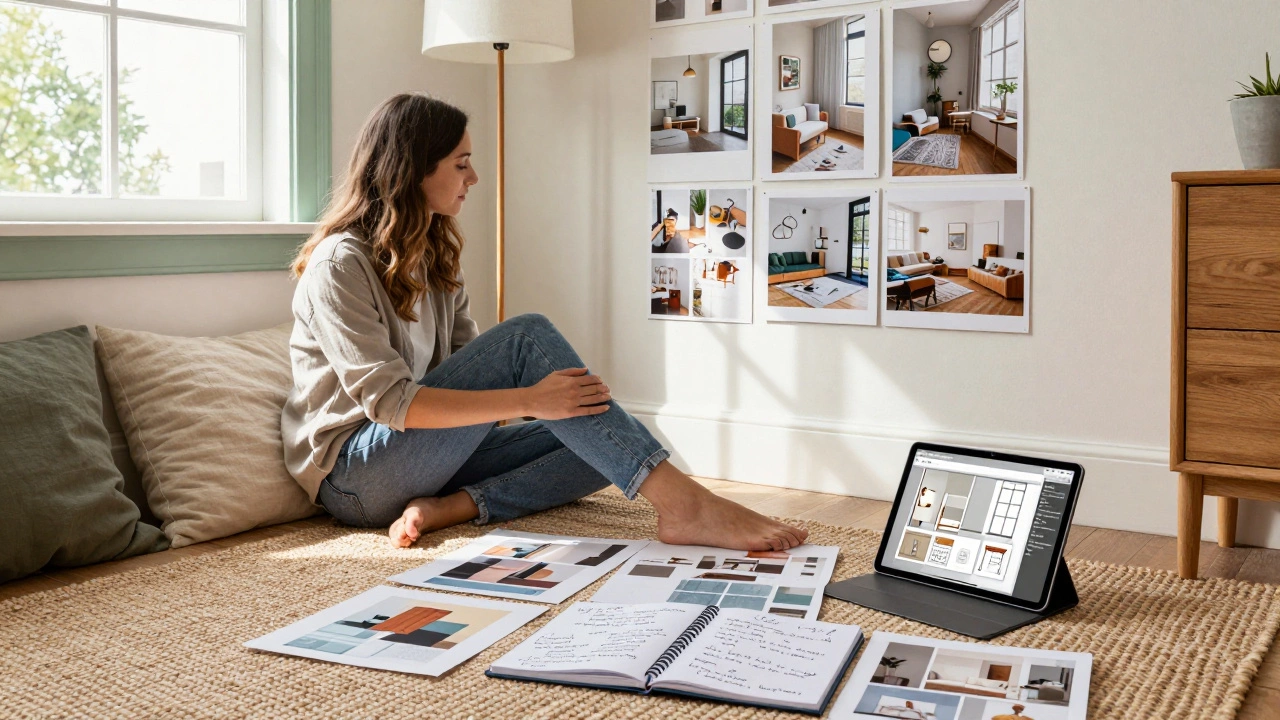
You don’t need to invent design from scratch. Start by looking at spaces that make you feel something. Save screenshots of rooms from Instagram, Pinterest, or magazines. Don’t just collect them-analyze them. Ask yourself: Why does this living room feel calm? What’s the color story here? How are the lights layered? What’s the scale of the furniture compared to the room?One designer from Minneapolis built her entire first portfolio using only photos she took of her own apartment and three rented Airbnb spaces she stayed in. She labeled each image with notes: "Used jute rug to soften hardwood," "Added floor lamp to create warmth in corner," "Painted trim same color as walls to make ceiling feel higher." Within six months, she had 12 before-and-after projects. No degree. Just observation and notes.
Learn the rules before you break them
There are real principles behind what makes a space work. You don’t need to memorize textbooks, but you do need to understand the basics:- Scale and proportion-A huge sofa in a small room feels crushing. A tiny coffee table under a large sectional looks lost.
- Balance-Symmetrical (mirror-image) or asymmetrical (visual weight evenly distributed) arrangements both work, but one side shouldn’t feel heavier than the other.
- Lighting layers-Ambient (overhead), task (reading lamp), and accent (spotlight on art) lighting create depth.
- Color theory-Warm tones (reds, oranges, yellows) feel cozy. Cool tones (blues, greens, grays) feel calm. Mixing them intentionally changes mood.
YouTube channels like Studio McGee and The Interior Edit break these down in under 10 minutes. Watch one video a week. Take notes. Then go into your own home and try applying one rule at a time. Change the lighting setup. Rearrange the furniture based on flow. Paint one wall. See what happens.
Build a portfolio with what you have
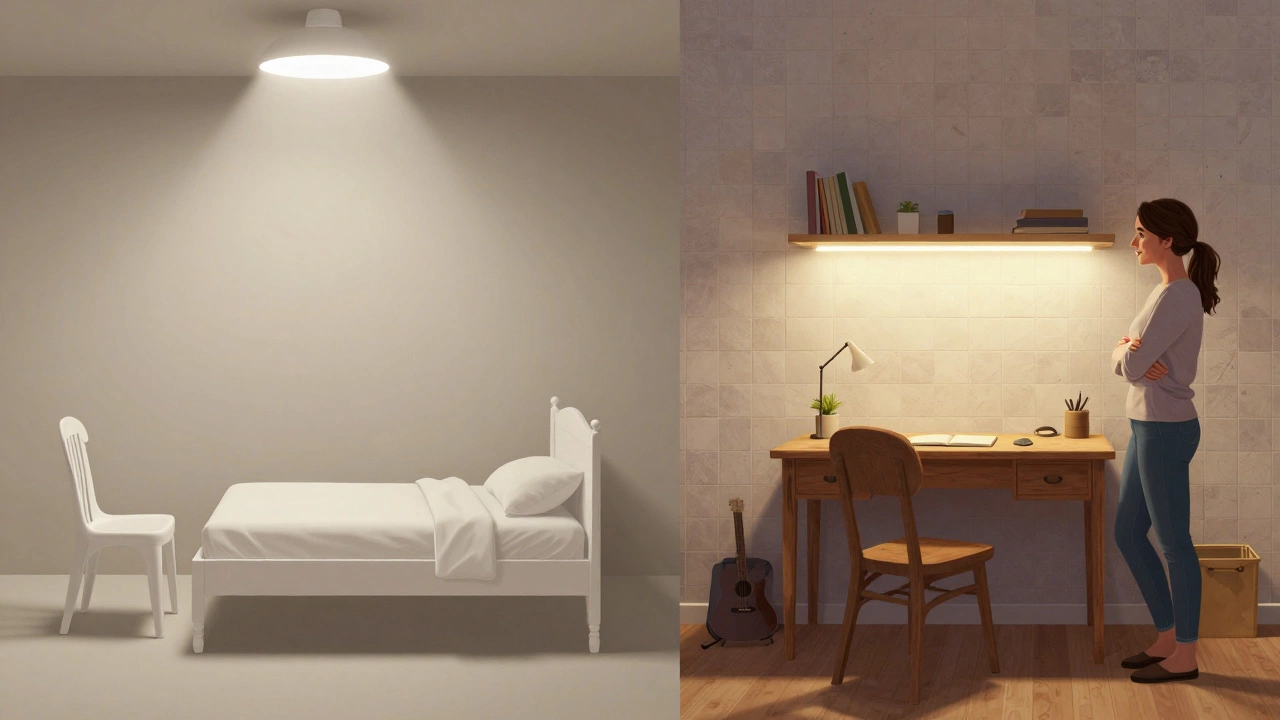
Your portfolio doesn’t need to be perfect. It just needs to show progress. Start with your own space. Then offer to redesign a friend’s closet, a home office, or a rental apartment (with permission). Don’t wait for a "perfect" project. Do a $50 project for a neighbor who needs help picking paint colors. Document it.One woman in Atlanta turned her sister’s messy teenage bedroom into a functional, calming space using thrifted furniture and a $300 budget. She took photos before and after, wrote a short caption for each: "Replaced plastic desk with vintage wooden one," "Added LED strip lights under shelf for nighttime reading," "Used removable wallpaper to mimic tile backsplash." She posted it on Instagram. Within two weeks, three people DM’d her asking for help.
Your portfolio should include:
- Before and after photos (natural light, no filters)
- Short descriptions of your choices and why they worked
- Budget range (even if it’s "under $200")
- One client quote if you can get it
Learn the tools-free ones first
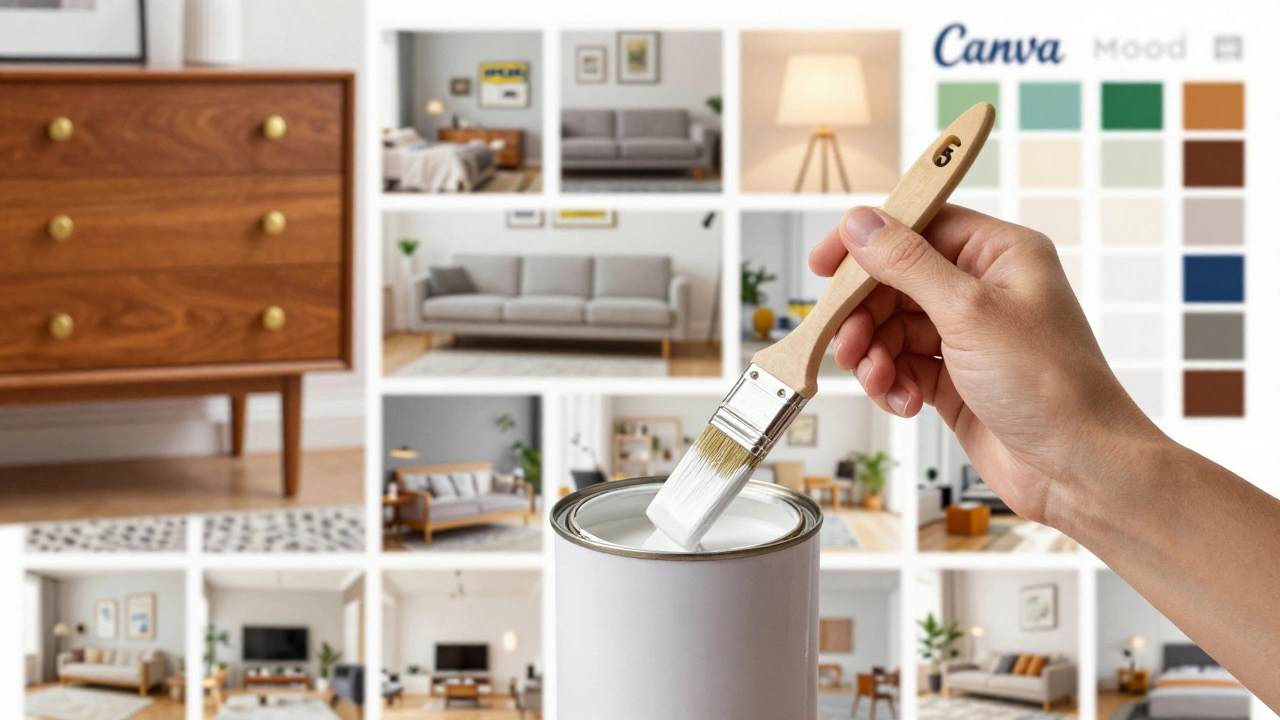
You don’t need to buy AutoCAD or SketchUp Pro. Start with free tools that real designers use:- Canva-Create mood boards, client presentations, and social media posts.
- Roomstyler-Drag and drop furniture into a room to test layouts. Great for visualizing scale.
- Pinterest-Use secret boards to organize ideas by room, color, style, or budget.
- Adobe Color-Generate color palettes from photos you like. Save them for future projects.
One designer in Portland taught himself Roomstyler in two weekends. He used it to redesign his mom’s kitchen on a $1,000 budget. He showed her 3 layouts before buying anything. She picked one. He bought the items online. He didn’t charge her-but he took screenshots and added it to his portfolio. Three months later, he got his first paid client from that post.
Know where to shop-without overspending
You don’t need to buy everything new. In fact, the best-looking spaces often mix high and low. Here’s where real self-taught designers shop:- Facebook Marketplace-Solid wood tables, lamps, and bookshelves for 1/4 the retail price.
- Thrift stores and estate sales-Look for frames, vases, and lighting. A $5 lamp can become a statement piece with a new shade.
- Wayfair, Overstock, and Amazon-Great for basics like rugs, curtains, and storage. Filter by "top rated" and read reviews carefully.
- Local artisans and Etsy-Support small makers for unique pieces. A hand-thrown ceramic vase adds soul.
One designer in Nashville built a whole living room around a $40 mid-century dresser she found at a flea market. She painted it white, added brass knobs, and paired it with a $70 IKEA sofa. The result looked like a $10,000 design. She charged $800 for that project.
Find your style-not someone else’s
Don’t try to copy Joanna Gaines or Nate Berkus. You’ll burn out. Instead, ask yourself: What spaces make you feel most at peace? What colors do you naturally gravitate toward? What textures do you love to touch?Some designers specialize in:
- Coastal clutter-free
- Industrial minimalism
- Eclectic vintage
- Warm modern
- Boho-functional
There’s no right answer. But once you find your lane, you’ll stand out. Clients don’t hire designers because they’re trendy. They hire them because they have a recognizable point of view.
Start small. Charge small. Build trust
Your first clients won’t pay $5,000. That’s fine. Start with:- $50 for a color consultation
- $150 for a room layout plan
- $300 for a shopping list with links
One man in Chicago started offering "1-Hour Design Hacks" on Instagram Live. He’d pick one room from a follower’s photo and give quick tips: "Move the sofa away from the wall," "Add a runner here," "Swap that lamp for a floor one." He didn’t charge at first. He just asked people to tag him in their results. After 12 sessions, he had 200 followers and three people paid him $200 each to do the same for their homes.
Track your progress like a pro
Keep a simple journal. Every time you finish a project, write down:- What worked
- What didn’t
- What you’d do differently
- How the client felt afterward
After six months, you’ll see patterns. Maybe you’re great at small-space solutions. Maybe clients always ask for more storage. Maybe you love working with bold colors but struggle with neutral palettes. That’s not failure-that’s data. Use it to refine your services.
It’s not about perfection. It’s about consistency
You won’t get it right every time. You’ll buy a rug that clashes. You’ll hang art too high. You’ll pick a paint color that looks different under natural light. That’s normal. Every designer has those moments.What separates the self-taught who succeed from the ones who quit? They keep going. They post their work. They ask for feedback. They learn from every mistake. They don’t wait for permission. They don’t wait for a degree. They just start.
There are no gatekeepers in interior design. No licensing exam. No test. Just your eye, your effort, and the spaces you’re willing to improve.
Do I need a degree to become an interior designer?
No. While a degree can help with certain corporate or commercial jobs, residential interior design doesn’t require formal education. Many successful designers learned through practice, online courses, and hands-on projects. Clients care more about results than diplomas.
How long does it take to become a self-taught interior designer?
You can start taking on small paid projects in as little as 3-6 months if you’re consistent. Building a full portfolio and steady client base usually takes 1-2 years. The key isn’t time-it’s action. Every project you finish adds to your credibility.
Can I make money as a self-taught interior designer?
Yes. Many self-taught designers charge $50-$300 per room for consultations, layout plans, or shopping lists. Full-service projects (design + sourcing + installation) can range from $1,500 to $10,000+. Income depends on your niche, location, and how you market yourself-not your degree.
What’s the easiest way to start learning interior design?
Start by redesigning one corner of your own home. Pick a space that feels off-maybe a cluttered entryway or a dull living room. Spend $50 or less to change one thing: a new rug, a different lamp, a fresh coat of paint. Take photos. Write down why you made each choice. That’s your first design project.
Is interior design a good side hustle?
Absolutely. Many designers start as side hustles. You can work evenings and weekends. Offer virtual consultations, mood boards, or shopping lists. It requires little upfront cost and scales well. One teacher in Ohio turned her side hustle into a full-time business in 14 months by posting weekly before-and-afters on Instagram.
Next steps: What to do today
If you’re reading this and thinking, "I could do this," here’s what to do before you close this page:- Open your phone gallery. Find three photos of rooms you love. Write down one thing you like about each.
- Go into one room in your home. Move one piece of furniture. Take a before and after photo.
- Download Canva and make your first mood board-just for yourself.
- Follow three self-taught designers on Instagram. Notice how they talk about their work.
You don’t need to wait for inspiration. You need to start. The best interior designers aren’t born with talent. They’re made by doing.