Coffee Table Calculator
Getting the right coffee table to match your couch isn’t just about size-it’s about rhythm, proportion, and how the two pieces talk to each other. Too small, and the space feels empty. Too big, and it chokes the room. The goal isn’t to match perfectly, but to create harmony. You want the pair to feel intentional, not accidental.
Start with the couch
Your couch is the anchor. Everything else flows from it. Measure its length first. A good rule of thumb: the coffee table should be about two-thirds the length of the sofa. If your couch is 84 inches long, aim for a table around 56 inches. That leaves enough breathing room on either side for walking and reaching. Anything shorter than half the couch’s length looks lost. Anything longer than 80% feels like it’s trying to take over.
Height matters too. Sit on your couch and check the distance from the seat to the floor. Your coffee table should be within 1 to 2 inches of that height. If your couch seat is 18 inches off the ground, your table should be 16 to 20 inches. Too high, and you’ll bump your knees. Too low, and you’ll have to lean over awkwardly to reach your coffee cup.
Shape and style: opposites attract
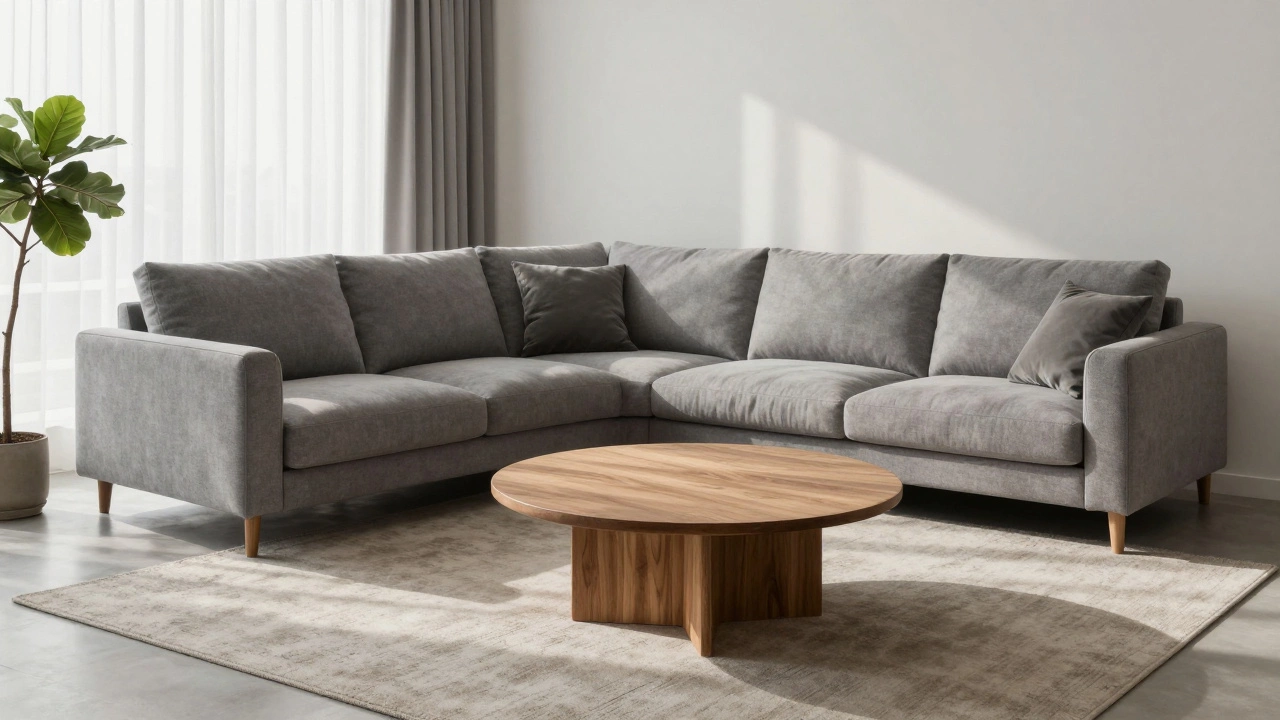
Don’t feel pressured to match shapes exactly. A rectangular couch doesn’t need a rectangle table. In fact, contrast often works better. A long, low sofa looks great with a round or oval table-it softens the lines and adds movement. If your couch has sharp, modern edges, try a table with curved legs or a organic shape. It creates visual balance.
On the flip side, if your couch is curvy and upholstered in soft fabric, a square or rectangular table with clean lines adds structure. Think of it like pairing a loose sweater with tailored jeans. One balances the other.
Style doesn’t mean you need to go full mid-century or farmhouse. It means matching the vibe. A leather sectional with metal legs? A blackened steel or marble table fits. A linen-covered sofa with wooden arms? A solid wood table with visible grain pulls it together. Don’t force a match-look for complementary materials.
Clearance is non-negotiable
You need space to move. At least 18 inches between the edge of the couch and the coffee table. That’s the minimum for someone to walk past without knocking over a lamp. If you have kids, pets, or frequent guests, aim for 20 to 24 inches. That extra foot makes a real difference when someone’s scrambling for the remote or a snack.
Also, consider the depth of the table. If it’s too deep-say, over 18 inches-it can feel like a barrier. A table that’s 14 to 16 inches deep gives you room for drinks and books without blocking the view of the sofa. It keeps the space open and inviting.
Function drives form
What do you actually use the table for? That should guide your choice. If you’re the type who eats dinner on the couch, gets work done, or has kids who draw on the table, go for something durable. A wood table with a sealed finish holds up better than glass or marble. If you rarely use it beyond holding a mug, a lighter, more decorative piece works fine.
Storage? If you need to hide remotes, blankets, or board games, look for tables with drawers, shelves, or lift-tops. A hidden compartment under a lift-top surface is a game-changer in small spaces. But if your living room is already cluttered, skip the extra features. Simplicity is calming.
Color and material: less is more
Don’t overthink color. The table doesn’t have to match the couch exactly. In fact, it often looks better if it contrasts subtly. A gray sofa? Try a warm walnut table. A white fabric couch? A dark oak or black metal base adds grounding. If your couch is patterned, go neutral on the table. If your couch is solid, the table can have more character-a live-edge wood top, a textured ceramic base, or a woven rattan frame.
Materials should feel connected, not copied. If your couch has metal legs, a table with metal accents ties it together. If your rug is wool, a wooden table feels natural. If your walls are painted in earth tones, a stone or concrete table fits right in. It’s not about matching-it’s about belonging.
Scale in small spaces
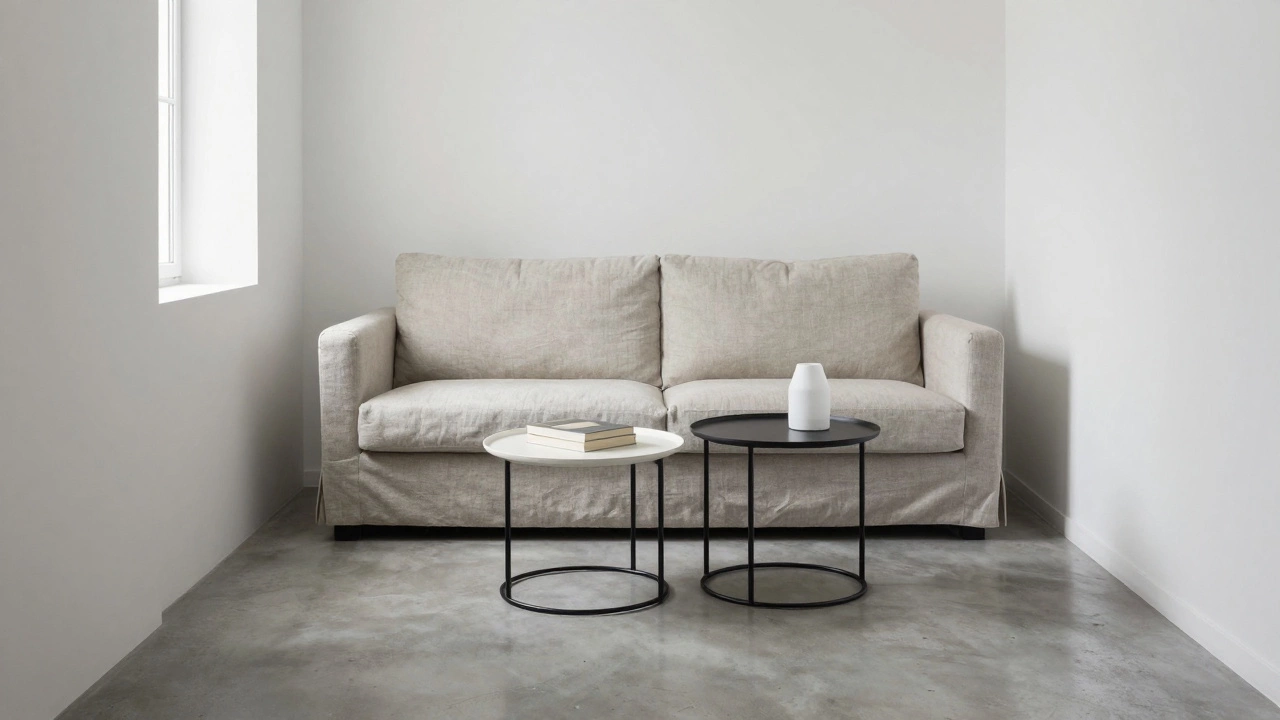
If your living room is tight, skip the single large table. Two smaller tables, placed side by side or at angles, create flexibility. A pair of round side tables, each 16 inches in diameter, can serve as coffee tables without overwhelming the space. They’re easier to move, and you can tuck them away when you need more floor room.
Or try a console table behind the couch. It doubles as a surface for lamps or decor, and you can still use the front space for a smaller, low table. This setup works especially well in L-shaped rooms or when the couch faces a wall instead of a window.
Real-world examples
Here’s what works in practice:
- Modern sectional + low glass table: Clean lines, minimal visual weight. Keeps the room feeling airy.
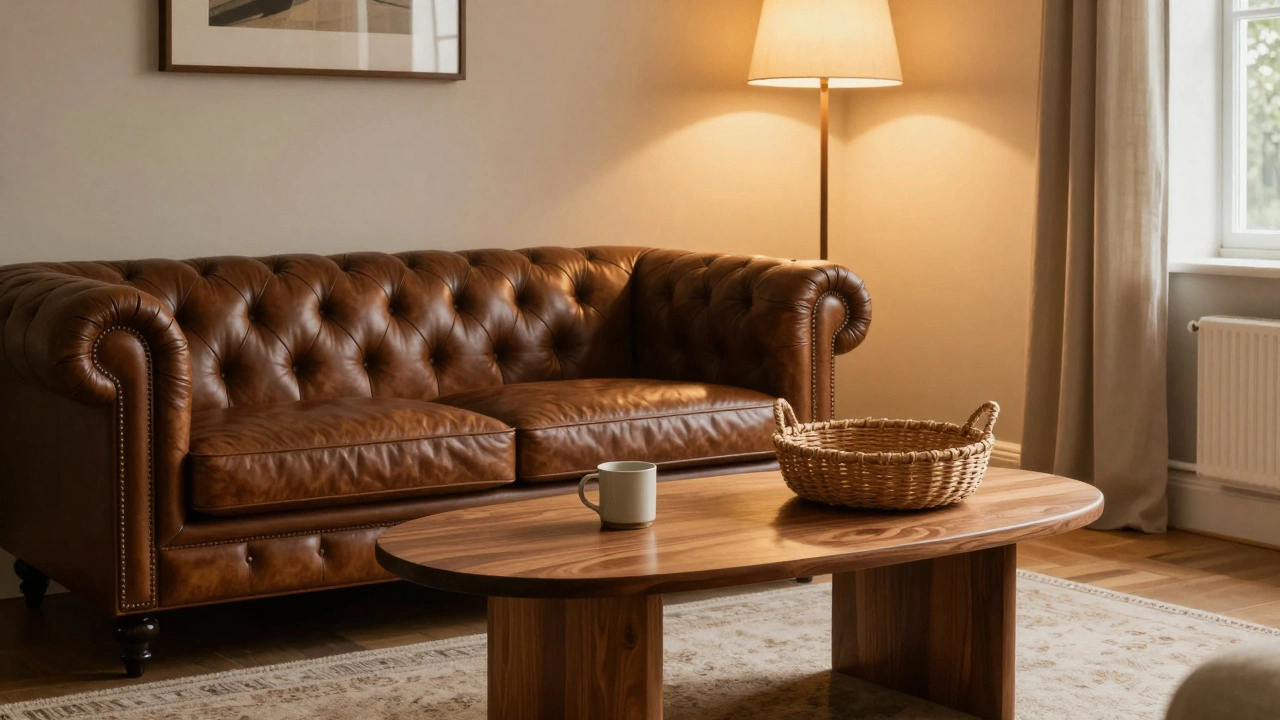
- Traditional Chesterfield + round wooden table: Softens the formality. Adds warmth and texture.
- Low-profile sleeper sofa + narrow console table: Perfect for narrow rooms. Maximizes walking space.
- Chunky linen sofa + woven rattan table: Brings in natural rhythm. Feels relaxed and inviting.
These aren’t rules-they’re starting points. The best pairing feels right when you sit down. If you can reach your coffee without stretching, if the table doesn’t block the view of your TV or fireplace, and if the whole setup feels calm instead of chaotic-you’ve nailed it.
What to avoid
- Table taller than your couch cushions
- Table wider than the couch
- Too many decorative items that turn the table into a clutter zone
- Matching sets from the same store-unless they’re intentionally styled
- Ignoring the flow of the room
One common mistake? Choosing a table because it looks good in the store, not in your space. Bring a tape measure. Sit on your couch. Picture where your feet, your drink, and your cat will land. Then decide.
Can I use a coffee table that’s longer than my couch?
No, a table longer than your couch usually looks unbalanced and can make the room feel cramped. It’s best to keep the table at about two-thirds the length of the sofa. If you have a very long couch, consider two smaller tables side by side instead.
Should the coffee table match the couch in color?
Not necessarily. Matching colors can feel too stiff. Instead, aim for complementary tones. A dark wood table with a light gray sofa creates contrast that feels intentional. If your couch has patterns, choose a neutral table to avoid visual noise.
Is glass or wood better for a coffee table?
It depends on your lifestyle. Glass looks sleek and keeps the room feeling open, but it shows fingerprints and dust. Wood is more forgiving, hides scratches better, and adds warmth. If you have kids or pets, wood or stone is usually the smarter choice.
How far should the coffee table be from the couch?
At least 18 inches, but 20 to 24 inches is ideal, especially if you move around a lot or have pets. This gives enough room to walk comfortably without bumping into the table or stretching too far to reach items.
Can I use two coffee tables instead of one?
Yes, especially in smaller rooms or L-shaped layouts. Two smaller tables-like side tables placed side by side-offer flexibility and reduce visual bulk. You can move them around as needed, and they’re easier to navigate around.
There’s no single perfect formula. But if you start with your couch, respect the space, and think about how you live in the room, you’ll end up with a pairing that feels right-not just seen.