Wallpaper didn’t just fade out-it got pushed out. By the late 1990s, if you walked into a new home, chances were the walls were painted white or off-white. No patterns. No florals. No damask. Just plain. And for over two decades, that stayed the norm. But why? When did wallpaper stop being popular? It wasn’t one moment. It was a mix of practical problems, shifting tastes, and a wave of cheap alternatives that made wallpaper feel like a relic.
The Golden Age of Wallpaper
Before the 1980s, wallpaper wasn’t just common-it was the default. In homes from the 1800s through the 1970s, patterned walls were the norm. In the 1950s and 60s, you’d see bold geometrics, metallic finishes, and even textured grasscloths. By the 1970s, it got even bolder: large floral prints, woodgrain mimics, and psychedelic swirls covered entire rooms. Wallpaper was seen as luxurious, permanent, and professional. It hid imperfect walls. It added character. It was the go-to for homeowners who wanted more than paint could offer.
The Shift Begins: Paint Gets Cheaper and Easier
By the 1980s, paint started changing. New latex formulas made it dry faster, clean easier, and stick better to uneven surfaces. Paint rollers became affordable, and DIY stores stocked every shade imaginable. Suddenly, painting wasn’t just a job for pros-it was something you could do on a Saturday afternoon. Wallpaper, on the other hand, required paste, precise cutting, smoothing out bubbles, and hours of patience. One misstep and you’d have a wrinkled mess. Paint didn’t care if your hands were shaky.
Then came the 1990s. Minimalism hit hard. Design magazines pushed clean lines, neutral tones, and open spaces. Wallpaper? It felt cluttered. Too busy. Too much like your aunt’s living room. Painted walls became a symbol of sophistication. A blank canvas. A modern statement. And as paint technology improved, it started mimicking wallpaper’s texture-stipple finishes, metallic glazes, even faux plaster. Why pay extra for wallpaper when paint could fake it?
The Rise of the Rental Culture
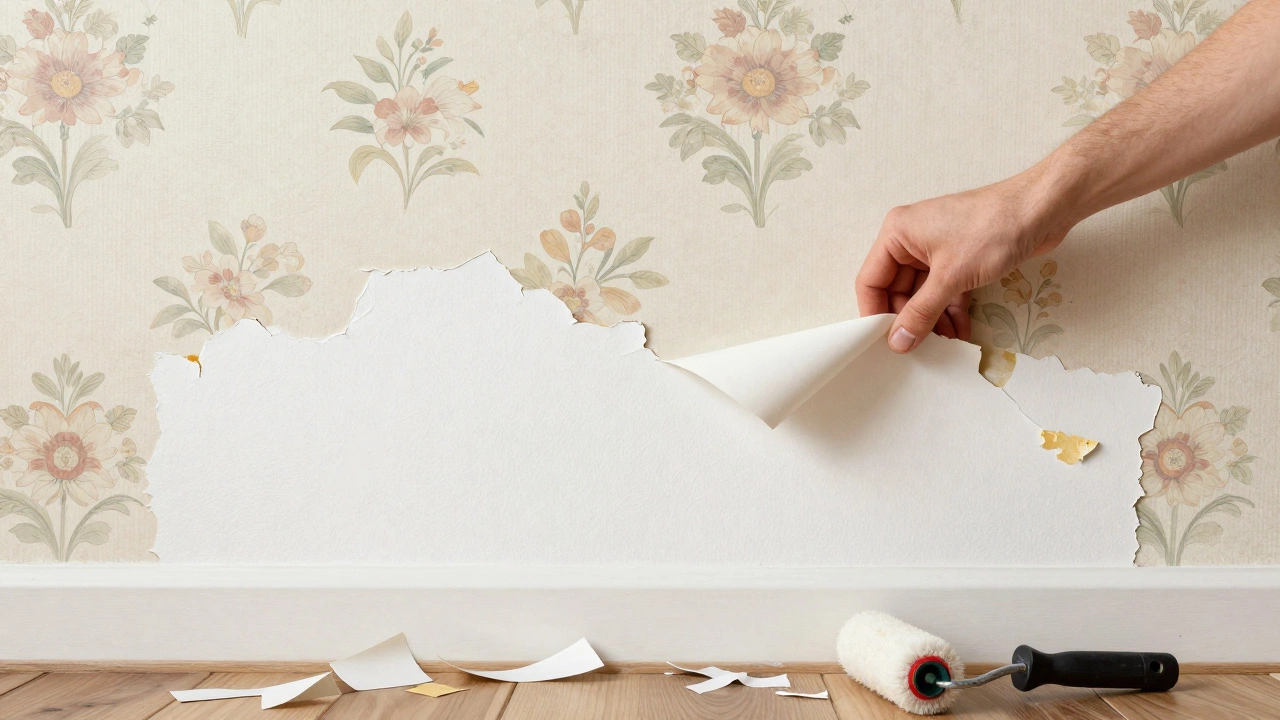
By the 2000s, more people were renting than ever before. Landlords didn’t want wallpaper. It was expensive to remove, often damaged the drywall underneath, and scared off future tenants. If you wanted to rent out a unit, you painted it white. Tenants didn’t want to be stuck with 1980s damask when they moved out. So they covered it with paint or peel-and-stick panels-temporary fixes that never lasted. Wallpaper became associated with old homes, bad taste, or landlords who didn’t care. It wasn’t just unpopular-it was seen as a problem.
The 2010s: The Last Gasp
Some tried to bring wallpaper back in the 2010s. Big brands like Graham & Brown and Cole & Son released modern, abstract designs. Instagram was full of #wallpaperinspo. But the market was fractured. High-end wallpaper cost $100 a roll. Installation? Another $50-$100 per room. Meanwhile, paint was under $40 a gallon and covered 400 square feet. Even peel-and-stick wallpaper-marketed as renter-friendly-often bubbled at the seams, peeled off in humidity, or left sticky residue. People tried. But most gave up after a year.
And here’s the real kicker: drywall got better. By the 2010s, most new homes had perfectly smooth, uniform walls. No need to hide flaws. No need for texture. The whole point of wallpaper-to mask imperfections-was gone. Paint looked better on a flawless surface. Wallpaper looked like a patch job.
Wallpaper Isn’t Dead-It’s Just Different
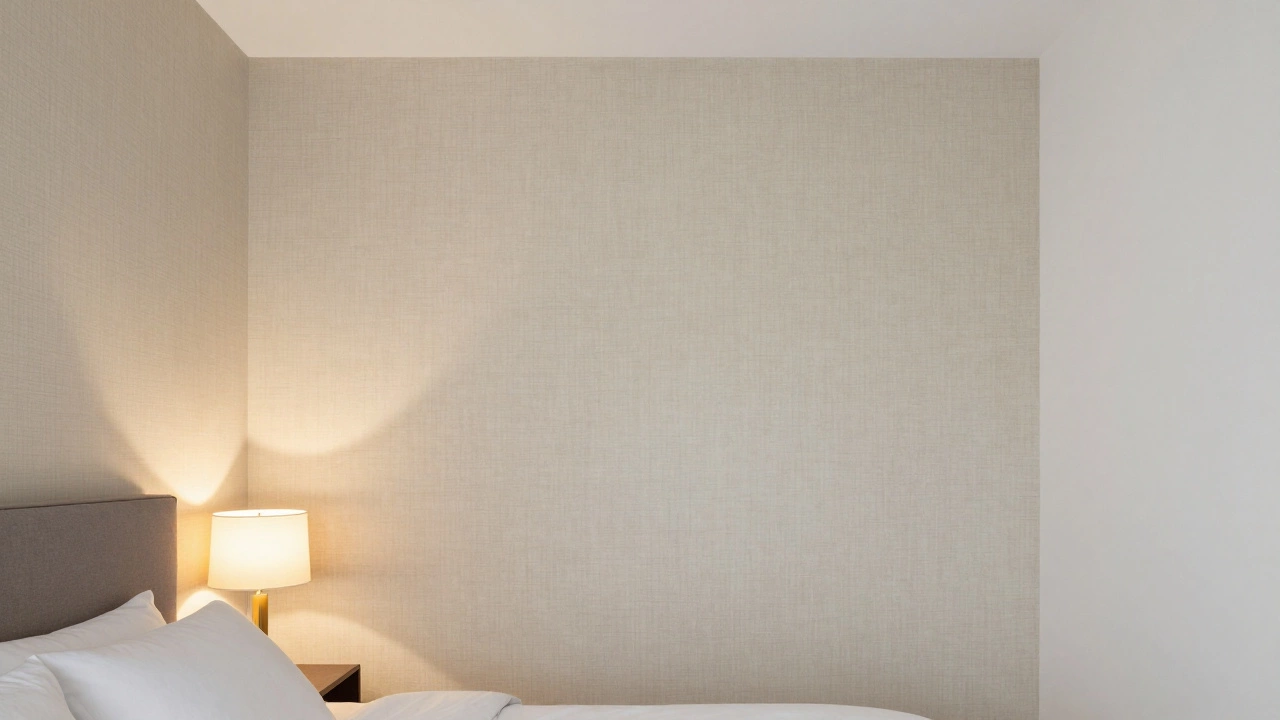
But don’t say wallpaper is dead. It’s just not for everyone anymore. In luxury homes, boutique hotels, and high-end restaurants, wallpaper is making a quiet comeback. Designers use it as an accent wall-behind a bed, in a powder room, above a fireplace. The patterns are subtle: tonal textures, hand-blocked linens, minimalist geometrics. No more 1970s paisley.
And it’s not about nostalgia. It’s about intention. Today’s wallpaper is treated like art. You don’t cover all four walls. You pick one. You frame it. You make it a focal point. It’s no longer the background-it’s the star. And it costs more because it’s meant to last, not just cover up.
Why It Still Fails for Most Homes
Here’s the truth: wallpaper still fails for most people because it’s not user-friendly. Even the best peel-and-stick options hate humidity. Bathrooms? Bad idea. Kitchens? Risky. Basements? Forget it. And if you ever want to change it? You’re in for hours of steaming, scraping, and patching drywall. Paint? You just roll over it.
Plus, modern homes are smaller. Open floor plans mean walls are visible from multiple angles. A bold pattern in the living room might clash with the dining area. Paint gives you consistency. Wallpaper doesn’t.
What Replaced Wallpaper?
Paint didn’t just replace wallpaper-it became smarter. Textured paint, metallic finishes, and even 3D wall panels now offer the depth and interest wallpaper once provided. Brands like Farrow & Ball and Benjamin Moore now offer finishes that look like fabric, stone, or plaster-all without the hassle of seams or paste.
And then there’s the rise of wall decals and removable art. People now buy large vinyl prints, framed tapestries, or even LED-lit panels. These are easier to install, easier to remove, and don’t require a professional. They’re the new wallpaper-without the downsides.
So When Did Wallpaper Stop Being Popular?
There’s no single year. But the tipping point was between 1995 and 2005. That’s when paint became reliable, rentals exploded, and minimalism took over. By 2010, wallpaper was seen as outdated in 80% of new homes. It didn’t disappear-it got boxed into niche spaces: historic restorations, luxury interiors, and a few brave millennials who wanted a statement wall.
Today, if you walk into a home built after 2015, you’ll rarely see wallpaper on all four walls. But if you see it on one? You’re looking at a design choice-not a relic.
Is Wallpaper Coming Back?
Not as a default. But as a statement? Absolutely. The new generation isn’t rejecting wallpaper-they’re redefining it. They don’t want to cover their whole house in roses. They want one wall with a subtle linen texture. Or a single panel with a hand-painted mural. It’s no longer about quantity. It’s about quality.
And the brands know it. Companies like de Gournay and Zoffany now sell wallpaper by the square foot, not the roll. They offer custom designs. They ship samples for $5. They make it feel like buying a piece of art, not a home improvement product.
So wallpaper didn’t die. It evolved. And if you’re thinking of using it today? Go ahead. But do it right. One wall. One moment. Not the whole room.
Why did wallpaper become unpopular in the 1990s?
Wallpaper became unpopular in the 1990s because paint got cheaper, easier to use, and more versatile. DIY culture grew, and minimalism in design made bold patterns feel outdated. Wallpaper was seen as messy, expensive to install, and hard to remove. Paint offered a clean, modern look that matched the era’s aesthetic.
Can you still buy wallpaper today?
Yes, you can still buy wallpaper today-and it’s better than ever. High-end brands offer non-woven, washable, and removable options. You can find everything from subtle textures to custom murals. But it’s no longer sold as a room-wide solution. It’s now used as an accent feature, often in small spaces like powder rooms, hallways, or behind beds.
Is peel-and-stick wallpaper a good alternative?
Peel-and-stick wallpaper works for renters or short-term use, but it’s not a long-term fix. It peels at seams in humid areas like bathrooms and kitchens. It can leave sticky residue. And over time, it fades or bubbles. It’s better than nothing, but real wallpaper lasts longer and looks more professional if installed correctly.
What’s the most popular wallpaper style today?
The most popular wallpaper styles today are tonal textures-linen, grasscloth, and subtle geometric patterns. Neutral tones like warm gray, oat, and soft beige dominate. Bold colors and florals are rare. The focus is on depth, not pattern. One accent wall with a quiet texture is the modern standard.
Do interior designers still use wallpaper?
Yes, but only in intentional ways. Designers use wallpaper to create focal points-behind a bed, in a dining nook, or above a fireplace. They avoid covering entire rooms. High-end brands like de Gournay and Schumacher are popular for custom murals. Wallpaper is now treated like fine art, not a budget wall covering.
Is wallpaper cheaper than paint?
No, wallpaper is almost always more expensive. A standard paint job costs $1-$3 per square foot. Wallpaper runs $5-$20 per square foot, not including labor. Premium wallpaper can cost $50+ per roll. Even with DIY installation, the material cost and potential damage to walls make paint the more economical choice for most homeowners.