Furniture Storage Cover Selector
Select Your Furniture
How to Store Safely
Choose your options to see the best storage solution for your furniture
Your Recommended Storage Cover
Best Option
Specialized moving blankets
Thick, quilted pads designed for moving and storage
Risk of Damage
LowWhy this works:
- Provides cushioning against bumps and scratches
- Breathable material prevents moisture buildup
- Protects from dust and light without trapping humidity
Additional recommendations:
Elevate your furniture
Use wooden pallets or plastic risers to keep furniture off the floor
Add moisture control
Place silica gel packs in drawers and cabinets
Check regularly
Inspect furniture every 2-3 months for signs of moisture or pests
Storing furniture isn’t just about tossing it into a garage or basement. If you don’t cover it properly, you risk warping, mold, dust buildup, scratches, and even pest damage. Whether you’re moving across town or downsizing for a smaller space, what you put over your furniture in storage makes all the difference.
Why Covering Furniture Matters
Uncovered furniture in storage doesn’t just collect dust. Moisture from concrete floors, temperature swings, and humidity can ruin wood, leather, and fabric over time. A couch left bare in a damp basement can grow mold in under six weeks. Wooden tables can crack if the air gets too dry. Even metal frames can rust if they’re exposed to condensation.
People often think, “It’s just sitting there - it’ll be fine.” But storage isn’t passive. It’s an environment. And without the right cover, your furniture is sitting ducks.
Best Materials to Use Over Furniture
Not all covers are created equal. Here’s what actually works:
- Breathable cotton or canvas drop cloths - These let air flow while blocking dust and light. They’re perfect for wood, upholstered pieces, and antiques. Avoid plastic here - it traps moisture.
- Specialized furniture moving blankets - Thick, quilted pads designed for moving. They cushion against bumps and scratches during transport and long-term storage. Use them over sofas, dressers, and dining tables.
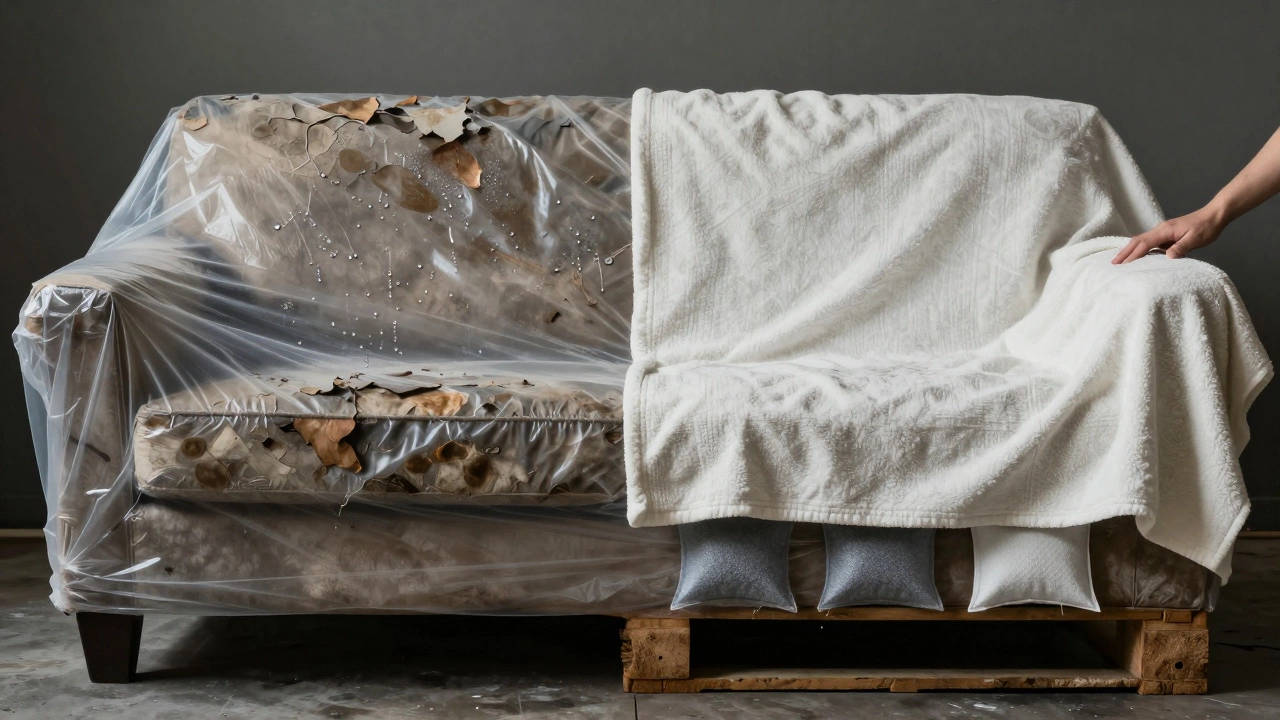
- Plastic sheeting (only for short-term or dry spaces) - Use clear polyethylene plastic only if the storage unit is climate-controlled and completely dry. Never use it directly on fabric or leather - it creates a greenhouse effect that breeds mildew.
- Microfiber sheets or pillowcases - Great for small items like lamps, picture frames, or end tables. They’re soft, washable, and won’t snag delicate finishes.
For upholstered furniture like sofas and armchairs, never use trash bags or cheap plastic tarps. They’re not breathable. Moisture gets trapped, and you’ll end up with a musty, stained mess.
How to Cover Different Types of Furniture
Each piece needs a slightly different approach.
Wood Furniture
Wood needs to breathe. Use cotton drop cloths or moving blankets. Before covering, wipe down surfaces with a dry, lint-free cloth. Apply a thin coat of furniture wax if it’s finished wood - this adds a barrier against humidity. Don’t seal it in plastic. If you’re storing it in a garage or non-climate-controlled unit, elevate it off the floor with pallets or wooden blocks. Moisture rises, and wood absorbs it like a sponge.
Upholstered Furniture (Sofas, Chairs, Ottomans)
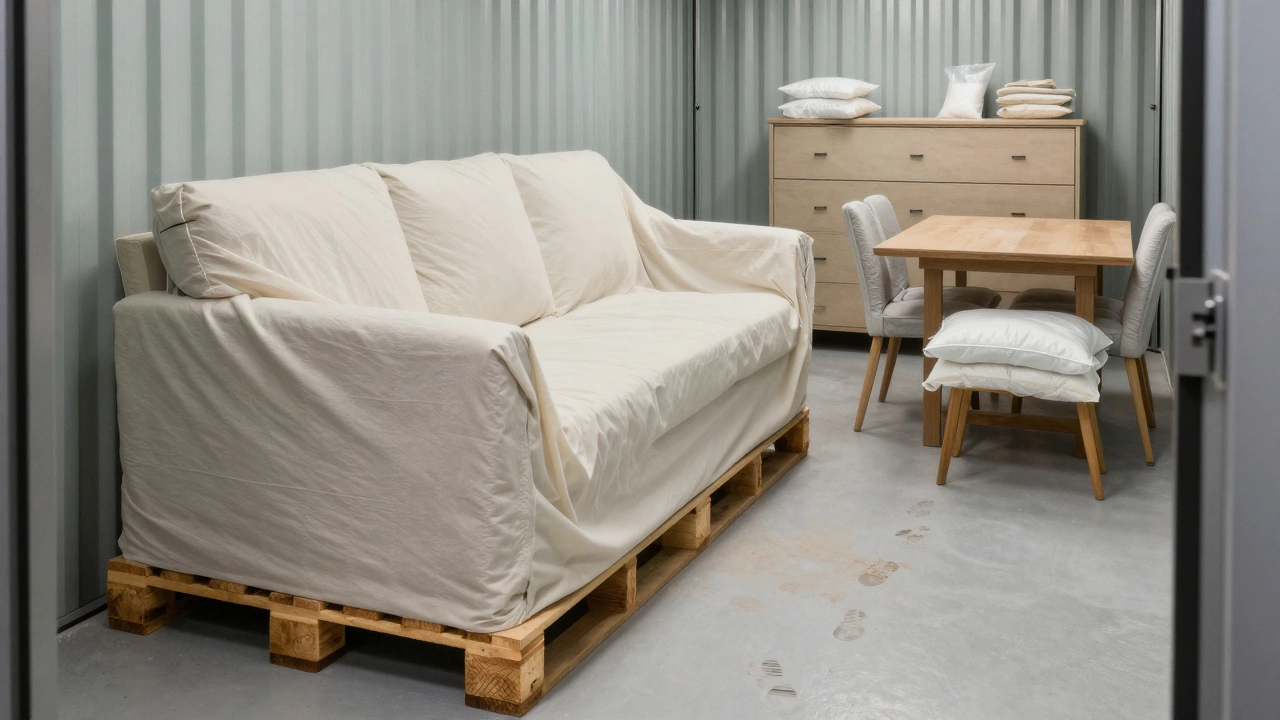
Start by vacuuming thoroughly. Remove any removable cushions and store them separately in breathable cotton bags. Cover the entire piece with a moving blanket, then wrap a second layer of cotton sheeting over it. Secure with tape or ties - but never staple. Staples leave holes that let in moisture and pests. For extra protection, place silica gel packs inside the cushions or under the seat.
Leather Furniture
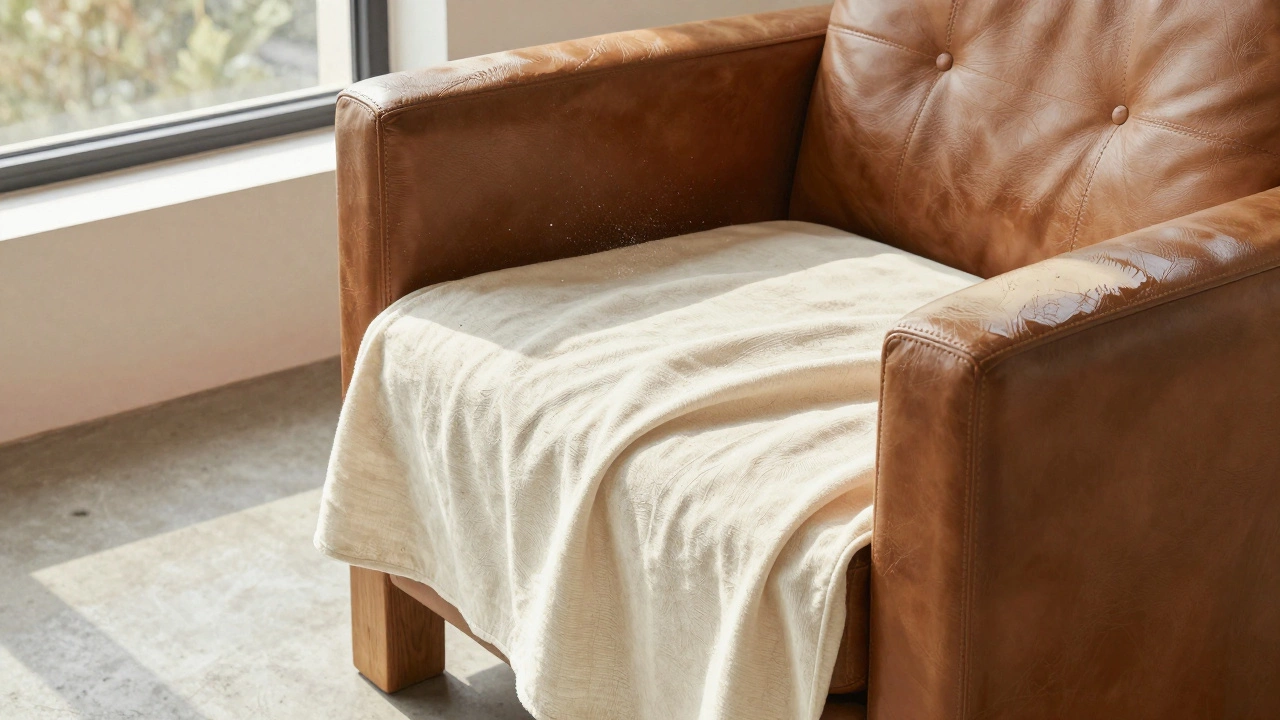
Leather dries out. Never cover it with plastic. Use a cotton sheet or a specialized leather storage cover. Before storing, clean it with a damp cloth and a pH-balanced leather cleaner. Then apply a leather conditioner. This keeps it supple. Store it upright, not folded. Folding creates permanent creases.
Metal Furniture
Wipe down with a dry cloth and apply a light coat of automotive wax or rust inhibitor. Cover with a cotton cloth. Avoid storing metal pieces near concrete walls - condensation collects there. Use a dehumidifier in the storage unit if possible.
Glass and Mirrored Surfaces
Wrap each pane in bubble wrap first, then cover with a moving blanket. Tape the edges to keep the wrap in place. Never use tape directly on glass - it can leave residue or pull off coatings. Label the corners with “FRAGILE” and store them vertically, not flat.
What NOT to Use
Some common household items are terrible for furniture storage:
- Trash bags - Trap moisture, cause mold, and make furniture smell bad.
- Sheets from your bed - They’re thin, often dirty, and can snag on rough edges.
- Old curtains or towels - They shed lint and can stain finishes.
- Plastic wrap (like cling film) - Used for food, not furniture. It melts in heat and sticks to surfaces.
One common mistake: people cover their furniture with plastic because they think it’s waterproof. But waterproof doesn’t mean safe. It means trapped moisture has nowhere to go - and that’s worse than a little dampness.
Storage Unit Tips
Where you store it matters as much as what you cover it with.
- Choose a climate-controlled unit if you’re storing for more than three months. Temperature swings cause wood to expand and contract. Humidity above 50% invites mold.
- Keep furniture off the floor. Use wooden pallets, plastic risers, or even old bricks. Concrete pulls moisture up like a sponge.
- Leave space between pieces. Air needs to circulate. Don’t stack heavy items on top of upholstered furniture.
- Place silica gel packs in drawers and cabinets. They absorb excess moisture without chemicals.
- Check on your items every 2-3 months. Look for damp spots, odors, or pests. A quick inspection can save you from a costly repair or replacement.
Long-Term Storage: What to Do Before You Walk Away
If you’re storing furniture for a year or more, do this before sealing it up:
- Disassemble what you can - remove legs from tables, detach shelves from bookcases.
- Label every part with masking tape and a marker. Take a photo of how it looked assembled.
- Store small hardware (screws, bolts) in labeled zip-top bags taped to the main piece.
- Use furniture sliders or dollies to move pieces - never drag them. Scratches start here.
- Don’t store anything damp. Even a slightly wet rug or cushion can ruin everything around it.
People forget that storage isn’t a set-it-and-forget-it task. It’s maintenance with a delay. The more you do upfront, the less you’ll regret later.
What to Do When You Unpack
When you bring your furniture back into your home, don’t rush to unwrap it.
- Let it acclimate for 24-48 hours in the room where it’ll live. Cold or damp furniture can sweat when brought into a warm space.
- Check for mold, mildew, or pests before bringing it inside.
- Wipe everything down with a dry cloth. Vacuum upholstery again.
- Recondition leather, re-wax wood, and fluff cushions. Treat it like you’re welcoming an old friend back home.
Some people skip this step and wonder why their couch smells funny or their table feels sticky. It’s not magic - it’s moisture. Give it time to breathe.
Final Tip: Think Like a Pro
Moving companies and storage experts don’t guess. They use breathable covers, climate control, and elevation. You don’t need to spend a fortune - just be smart. A $15 cotton drop cloth from Home Depot will protect your $500 sofa better than a $5 plastic tarp from the dollar store.
Protecting your furniture isn’t about perfection. It’s about preventing the slow, silent damage that creeps in when you’re not looking. Do the basics right, and your furniture will last longer, look better, and save you money in the long run.
Can I use plastic wrap to cover furniture in storage?
No, plastic wrap traps moisture and can cause mold, mildew, and sticky residue on wood and fabric. Use breathable materials like cotton drop cloths or moving blankets instead.
Should I cover furniture in a climate-controlled storage unit?
Yes. Even in climate-controlled units, dust, light, and minor humidity changes can affect furniture. A breathable cover adds an extra layer of protection without risking moisture buildup.
Is it okay to store furniture on the floor?
No. Concrete floors pull moisture up, which can warp wood, rust metal, and ruin upholstery. Always elevate furniture using wooden pallets, plastic risers, or bricks.
How often should I check on stored furniture?
Check every 2-3 months. Look for signs of dampness, odors, pests, or discoloration. A quick inspection can prevent major damage.
What’s the best way to store a leather sofa?
Clean it with a pH-balanced leather cleaner, apply conditioner, and cover with a cotton sheet. Store it upright, never folded. Keep it away from direct sunlight and never use plastic.