Find Your Perfect Calming Curtain Color
Room Details
Recommended Palette
Primary Choice
Alternative
Select your room details to see which color will create the calmest atmosphere.
Walk into a room that feels like a heavy blanket of stress. Now walk into one that breathes. The difference often isn't the furniture or the lighting alone-it’s the walls and the windows. Specifically, it’s the color of your curtains. You might think fabric is just functional, but in interior design, window treatments are the largest single block of color you can change without painting a wall. Get the hue wrong, and your sanctuary feels chaotic. Get it right, and your nervous system actually downshifts.
We aren't talking about trends here. We are talking about psychology. Which specific shades signal "safe" and "rest" to your brain? Let's break down the science of color and how to apply it to your windows for maximum relaxation.
The Science Behind Calming Colors
Before we pick a swatch, you need to understand why certain colors work. It comes down to light wavelengths and human biology. Shorter wavelengths, like blues and violets, have lower energy levels. Longer wavelengths, like reds and oranges, have higher energy. When you look at a deep red curtain, your body perceives urgency. When you look at a soft blue, your heart rate tends to slow.
This is known as the psychological effect of color. In a study published by the University of Sussex, participants who spent four0 minutes looking at nature scenes reported a 60% reduction in stress. But what if you don't have a view of a forest? You simulate it with color. Nature uses greens and blues as its primary palette for rest. Mimicking this in your home triggers a primal sense of safety.
- Blue: Lowers blood pressure and promotes tranquility.
- Green: Associated with balance and restoration; easiest on the eyes.
- Neutral Beige/Grey: Provides visual silence, reducing cognitive load.
Avoid high-saturation colors in bedrooms or meditation spaces. Bright yellow might be cheerful in a kitchen, but it can feel anxious in a place meant for sleep.
Soft Blues: The Gold Standard for Relaxation
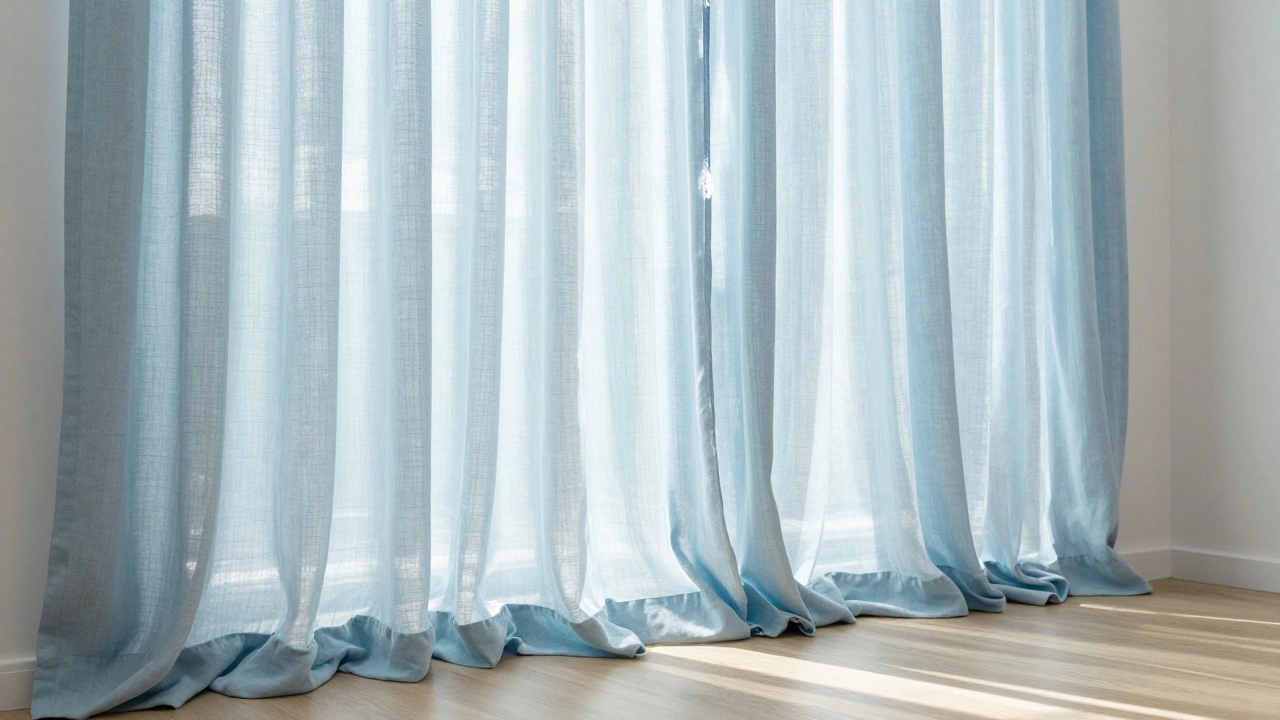
If there is one color that consistently wins the title of "most relaxing," it is blue. But not just any blue. Navy can feel heavy and somber if the room lacks light. Electric blue is too stimulating. You want soft blue curtains, specifically shades like sky blue, powder blue, or dusty azure.
Think of the ocean on a calm day or a clear winter sky. These hues create an airy feeling. They reflect light well, which keeps the room bright even when the curtains are drawn. This is crucial because darkness can sometimes induce claustrophobia rather than relaxation.
| Shade Name | Vibe | Best For |
|---|---|---|
| Sky Blue | Airy, open, fresh | Small rooms, north-facing windows |
| Dusty Blue | Muted, sophisticated, cozy | Bedrooms, living rooms |
| Slate Blue | Grounded, modern, serious | Home offices, dens |
Pair soft blue curtains with white trim or light wood floors to enhance the crisp, clean feeling. If you have dark hardwood floors, add a light rug to bridge the gap between the floor and the window treatment.
Sage Green: Bringing the Outdoors In
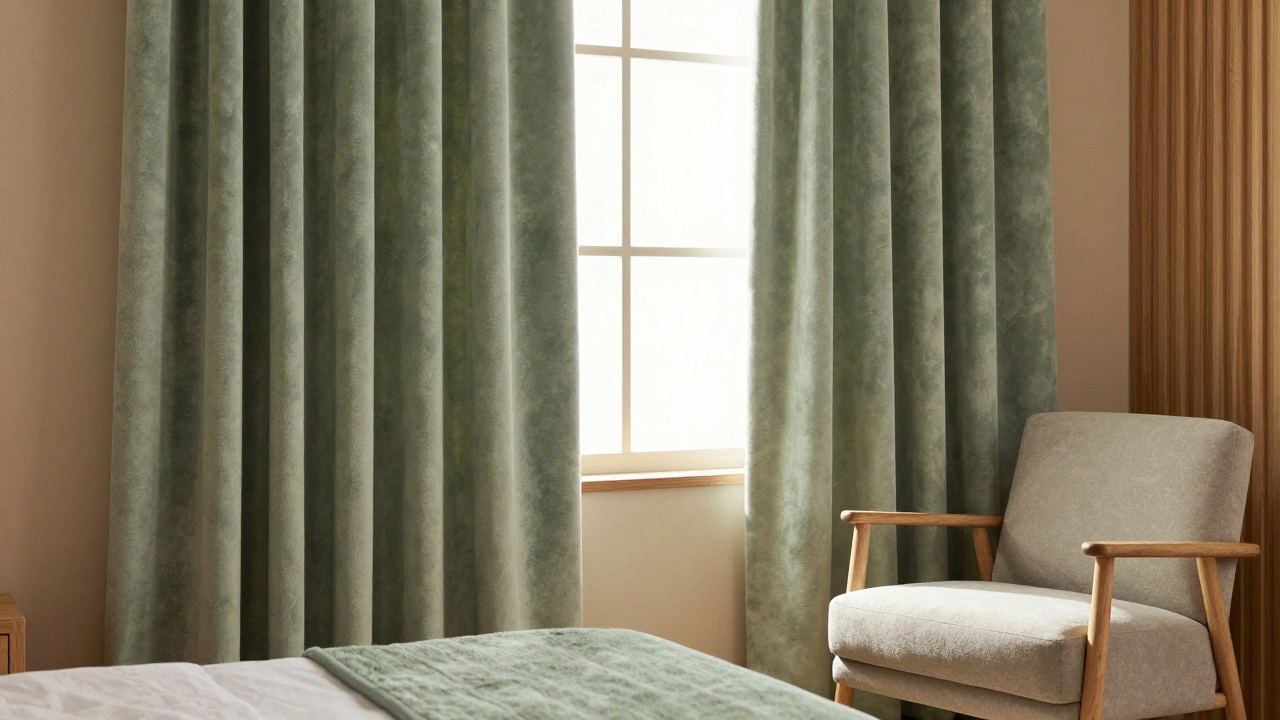
Green is the color of life, growth, and recovery. Your eyes literally rest when looking at green because it sits right in the middle of the visible spectrum. Unlike blue, which recedes visually, green feels present and nurturing. Sage green curtains are currently a top choice for creating a spa-like atmosphere.
Sage is not a bright lime or a deep forest green. It is a grey-green mix. This muted quality makes it incredibly versatile. It works with warm woods, cool metals, and almost every other color in the rainbow. It brings the concept of "biophilic design"-connecting people to nature-into your home without needing a garden.
Imagine sitting in your armchair with a cup of tea, looking out through sheer sage green panels. The light filters through in a gentle, earthy tone. It feels grounded. If you struggle with anxiety, green is often cited as the most stabilizing color. It doesn't excite you like orange or depress you like black. It simply holds space.
Warm Neutrals: The Power of Visual Silence
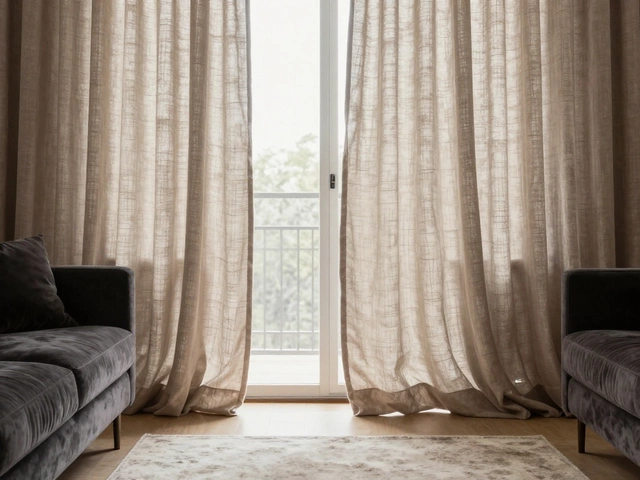
Sometimes, the most relaxing thing you can do is remove color entirely. This doesn't mean stark white, which can feel clinical and harsh. We are talking about warm neutral tones: cream, oatmeal, taupe, and soft greige (a mix of grey and beige).
Neutrals provide "visual silence." When your brain isn't processing complex patterns or intense hues, it relaxes. This is especially important in bedrooms where clutter competes for your attention. A solid, textured neutral curtain acts as a blank canvas that allows your mind to wander without distraction.
Texture becomes key here. Since the color is subtle, the material matters more. Linen, cotton blends, or velvet in a cream color adds depth without adding visual noise. Velvet, in particular, absorbs sound, making the room quieter and thus more relaxing. If you live in a noisy city, heavy velvet curtains in a neutral tone can significantly improve sleep quality by dampening street noise.
Lighting Matters More Than You Think
You cannot choose a relaxing color in a vacuum. The light in your room changes the color completely. A soft blue curtain looks icy in a north-facing room with little sunlight. It looks vibrant and welcoming in a south-facing room with abundant light.
- North-Facing Rooms: Lean toward warmer neutrals or slightly warmer greens. Avoid cool greys and blues, which can make the room feel cold and uninviting.
- South-Facing Rooms: You can handle cooler tones like soft blues and crisp whites. The natural warmth of the sun balances them out.
- East/West-Facing Rooms: These rooms have dramatic light shifts. Muted tones like sage or taupe work best because they adapt to both the morning brightness and evening shadows.
Always buy samples. Hang them up for three days. Watch how they look at 8 AM, noon, and 9 PM. What looks relaxing in the store under fluorescent lights might look dull or jarring in your home under incandescent bulbs.
Material and Opacity: The Texture of Calm
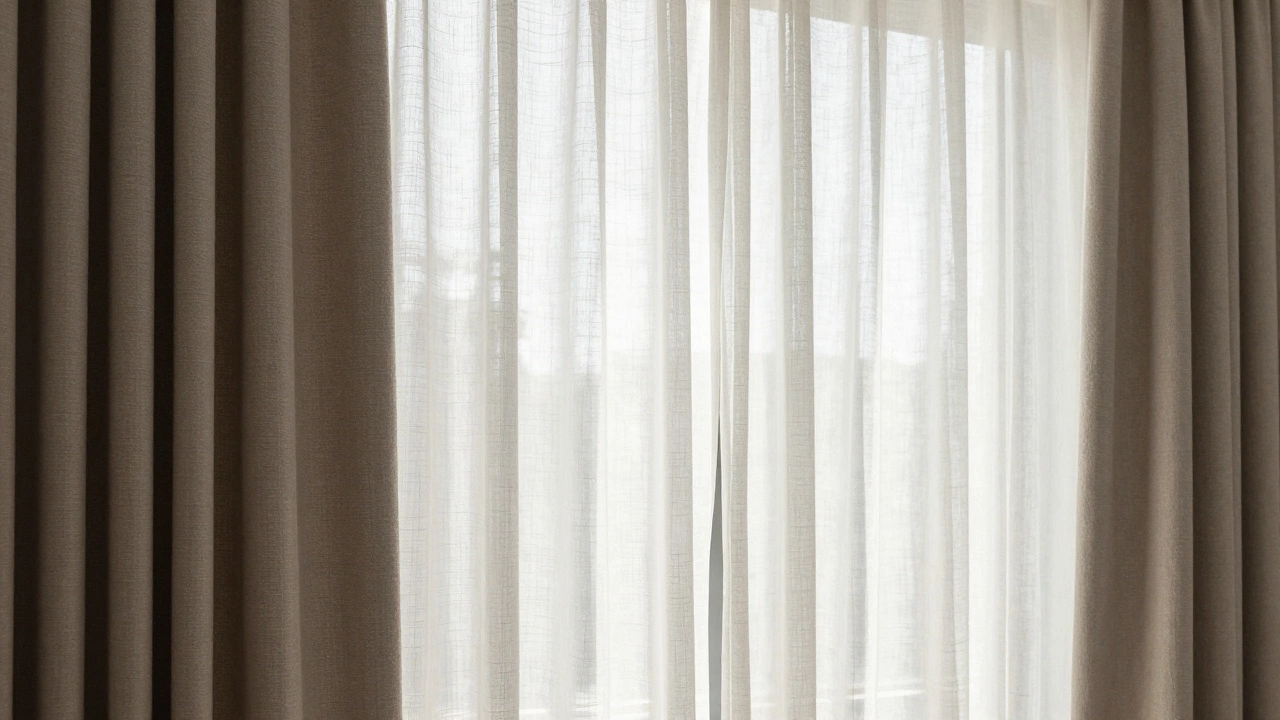
Color is only half the equation. The way light interacts with the fabric defines the mood. Sheer curtains diffuse light, creating a soft, dreamy glow. Blackout curtains create total privacy and darkness, essential for deep sleep.
For maximum relaxation, consider a layered approach. Use sheer linen curtains in a soft white or pale grey for daytime. They filter the harsh sun while maintaining a connection to the outside world. At night, layer heavier blackout curtains in a complementary relaxing color, like a deeper sage or navy. This gives you control over your environment throughout the day.
Avoid shiny synthetic fabrics like polyester satin. They reflect light sharply, creating glare that can be irritating to the eyes. Matte finishes absorb light softly, contributing to a calmer atmosphere. Natural fibers like cotton, linen, and wool also breathe better, improving air quality and comfort.
Common Mistakes to Avoid
In the quest for relaxation, many people make simple errors that backfire.
- Too Dark: While dark colors can feel cozy, they can also feel oppressive in small rooms. If you love dark curtains, keep the rest of the room very light to maintain balance.
- Too Busy: Complex patterns engage the brain's pattern-recognition systems. For relaxation, simplicity is superior. Solid colors or very subtle textures are best.
- Ignoring Scale: Tiny prints can look cluttered from a distance. Large prints can dominate the room. Solids avoid this issue entirely.
- Cold Greys: Grey is popular, but cool-toned greys can feel sterile. Look for greys with a hint of brown or blue to keep them warm and inviting.
Putting It All Together
Choosing the most relaxing curtain color is personal, but the principles are universal. Start with the function of the room. Is it for sleep? Go for dark-absorbing blues or greens. Is it for reading? Choose warm neutrals that reduce eye strain. Is it for socializing? Soft greens invite conversation without raising energy levels too high.
Remember, your home should be a refuge. Every element, including the fabric hanging by your window, should contribute to that goal. Don't rush the decision. Live with the sample. Feel the light. Trust your instincts. When you walk into the room, you should feel your shoulders drop. That’s the sign you’ve got it right.
What is the best color for bedroom curtains to help with sleep?
Dark, rich colors like navy blue, deep charcoal, or forest green are best for bedrooms because they promote darkness and signal to your brain that it is time to rest. However, ensure they are blackout-lined to block external light effectively.
Are white curtains relaxing?
Yes, but only if they are off-white or cream. Stark white can reflect too much light and feel clinical. Off-white linens create a soft, diffused light that feels airy and peaceful, similar to a cloud-covered sky.
Can patterned curtains be relaxing?
Generally, no. Patterns require cognitive effort to process. For true relaxation, solid colors are superior. If you must have a pattern, choose a very subtle, tonal texture rather than a distinct graphic print.
How does room orientation affect curtain color choice?
North-facing rooms lack direct sunlight, so warm neutrals or soft greens prevent them from feeling cold. South-facing rooms get lots of sun, allowing for cooler tones like blues and greys without feeling chilly.
Is grey a relaxing color for curtains?
It depends on the undertone. Cool greys can feel sterile. Warm greys (greige) with hints of brown or beige are much more relaxing and inviting, providing a neutral backdrop that reduces visual stress.