Vinyl vs Laminate Flooring Decision Tool
Which Flooring Is Right for Your Home?
Answer these questions to get personalized recommendations based on the article's real-world testing.
1. Water Exposure Risk
2. Household Traffic Level
3. Budget Constraints
4. Climate Conditions
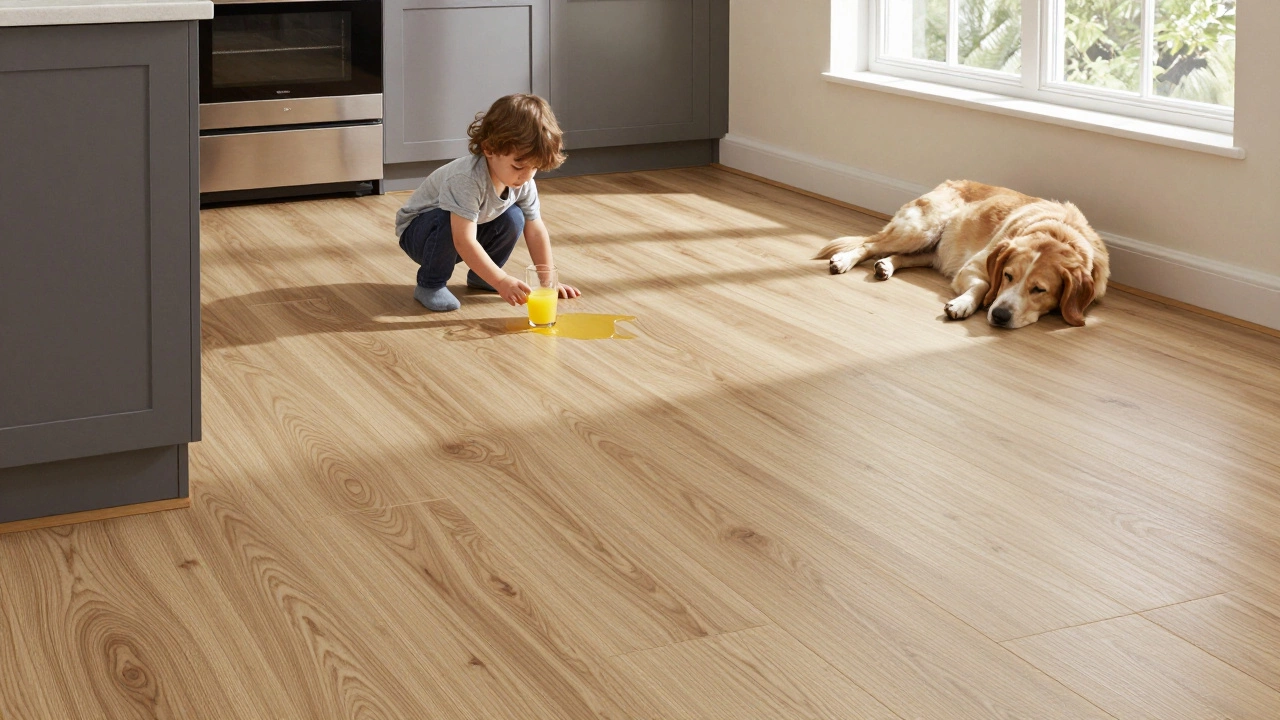
Choosing between vinyl and laminate flooring isn’t just about looks-it’s about your lifestyle, your budget, and how much wear and tear your floors will face. Both are popular, affordable alternatives to hardwood, but they perform very differently in real life. If you’ve got kids, pets, or a busy household, one of these options will save you a lot of headaches. Let’s cut through the marketing hype and show you what actually matters.
What You’re Really Buying
Vinyl flooring is made from polyvinyl chloride (PVC), a synthetic material that’s layered to mimic wood, stone, or tile. Modern vinyl has a wear layer that resists scratches and stains, and it’s completely waterproof. That means spills don’t soak in-no warping, no swelling, no mold. You can install it in bathrooms, basements, or kitchens without worrying.
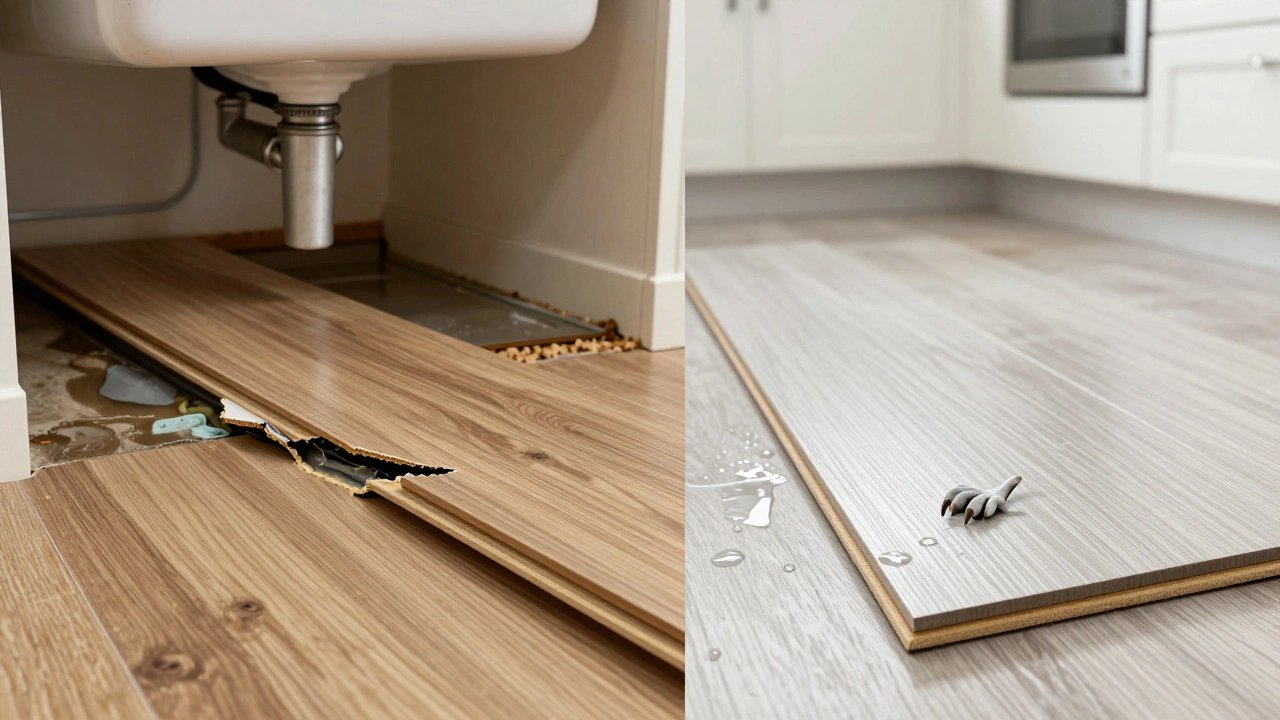
Laminate flooring is a composite of high-density fiberboard (HDF) topped with a printed image of wood or stone, then sealed under a clear protective layer. It looks great, especially in lighter tones, and it’s easy to install with a click-lock system. But here’s the catch: it’s water-resistant, not waterproof. A spilled glass of water left overnight? That’s a problem. Moisture seeps into the edges, swells the core, and ruins the whole plank.
Real-World Durability
In a Wellington home with two dogs, a toddler, and winter rain tracked in from the porch, durability isn’t theoretical-it’s daily. I’ve seen both vinyl and laminate in homes here. Vinyl wins here. A pet’s claw scratching across the floor? No mark. A dropped pot of soup? Wipe it up, no damage. Vinyl’s top layer is designed to handle abrasion, chemicals, and impact. Many brands offer 20+ year warranties for residential use.
Laminate holds up fine under light traffic. But if you’ve got heavy furniture being moved, or kids dragging toys across it, the surface can chip or dent. Once the protective layer is compromised, the fiberboard underneath absorbs moisture. I’ve seen laminate floors in rental properties warp after just three years because of a slow leak under the sink. Vinyl? Nothing happened.
Comfort and Feel
Walk barefoot on laminate, and it feels hard. Cold. Like walking on a table. Even with underlayment, it doesn’t give. Vinyl, especially luxury vinyl plank (LVP), has a slight cushion. It’s warmer underfoot, quieter when you walk, and feels more like real wood. That matters in colder climates like ours. You’ll notice it in the morning, when you’re hopping out of bed.
Some high-end laminates now come with cork underlayment to soften the step. But that adds cost and still doesn’t fix the core vulnerability to water. Vinyl’s built-in padding (often called an attached underlayment) is part of the product. No extra steps. No extra cost.
Installation: DIY or Pro?
Both are sold as DIY-friendly. Laminate clicks together like puzzle pieces. It floats over the subfloor-no glue, no nails. Easy for a weekend project. But if your subfloor isn’t perfectly level, laminate will creak, shift, or pop loose. I’ve seen people install it over slightly uneven concrete, and within months, the planks were buckling.
Vinyl can be installed the same way-click-lock planks or tiles. But you can also glue it down. Glued vinyl sticks to uneven surfaces better. It’s more forgiving on older floors. In Wellington homes with original timber subfloors that have settled over 80 years, glued vinyl is the smarter move. It doesn’t move. It doesn’t squeak. It just stays put.
Cost: Upfront vs Long-Term
At first glance, laminate looks cheaper. You can find basic laminate for $1.50 per square foot. Vinyl starts around $2.50. But here’s what no one tells you: laminate often needs a separate underlayment, which adds $0.50-$1.00 per square foot. Vinyl usually includes it. That narrows the gap.
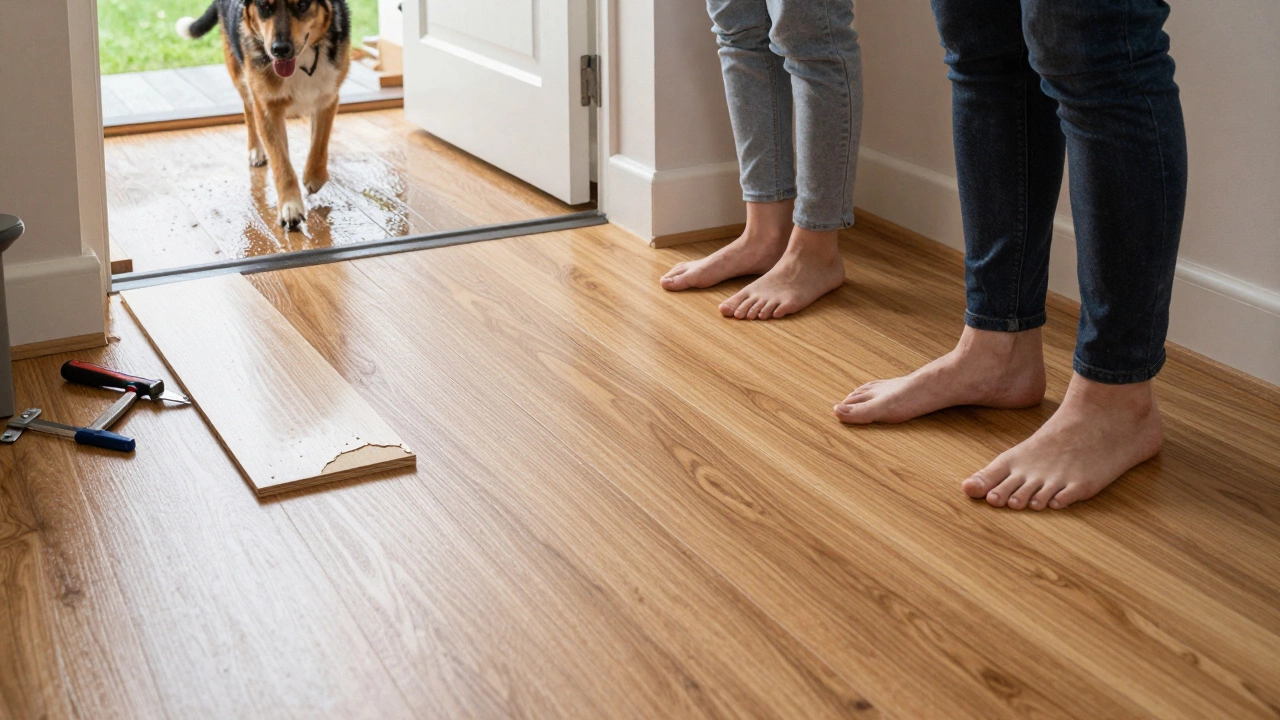
And then there’s replacement. If one plank in laminate gets damaged, you have to pull up half the floor to replace it. Vinyl planks can be individually replaced. Just peel up the old one, stick in the new. No tools needed. That’s a game-changer if you’ve got a high-traffic entryway or a pet that scratches.
Over five years, the cost of replacing laminate planks, fixing water damage, or refinishing edges adds up. Vinyl? You install it once. It lasts. No hidden costs.
Design and Style
Laminate has improved. You can find realistic wood grains, even textured finishes that mimic hand-scraped oak. But it still looks flat. Like a photo glued on. Vinyl, especially LVP, uses high-definition imaging and embossing that matches the grain exactly. You can see the knots, the grain lines, the variations in color. Some vinyl even has beveled edges that look like real planks installed with gaps.
Vinyl also comes in stone and tile looks that laminate can’t match. If you want a bathroom that looks like slate tile, vinyl can do it without the grout lines. Laminate? It’s wood or wood-look only.
Where Each Falls Short
Vinyl isn’t perfect. It can be damaged by sharp objects-like high heels or dropped metal tools. It can also fade in direct sunlight if it’s a lower-quality product. Look for UV-stabilized vinyl if you’ve got big windows. Also, some vinyl has a slight plastic smell when new. It fades in a few days, but if you’re sensitive to odors, ventilate well.
Laminate’s biggest flaw? Water. Even the best-rated water-resistant laminate will fail if exposed to standing water. Don’t install it in bathrooms. Don’t install it in basements. Don’t install it where spills are common. If you’re not 100% sure your kitchen won’t flood during a storm, skip it.
Final Verdict
If you want a floor that lasts, handles messes, feels comfortable, and looks real-go with vinyl. It’s the smarter choice for 9 out of 10 households.
If you’re on a tight budget, your space is dry and low-traffic (like a bedroom or home office), and you don’t mind replacing planks every few years, laminate is fine. But don’t pretend it’s as durable as vinyl. It’s not.
In Wellington’s damp climate, with unpredictable weather and homes that aren’t always perfectly sealed, vinyl is the only flooring I’d recommend for kitchens, bathrooms, and entryways. Laminate? Save it for the upstairs bedroom where spills are rare and pets don’t run.
Is vinyl flooring really waterproof?
Yes, modern vinyl flooring is 100% waterproof. It’s made from PVC with a sealed core that doesn’t absorb water. Spills, leaks, or flooding won’t damage it. That’s why it’s the top choice for kitchens, bathrooms, and basements. Laminate, by contrast, is only water-resistant-meaning it can handle a quick spill, but not prolonged exposure.
Can I install vinyl over existing flooring?
Yes, you can install vinyl over most existing floors-tile, wood, concrete, even old laminate-as long as the surface is clean, dry, and level. Glued vinyl sticks well to uneven surfaces, while click-lock vinyl needs a smoother base. Always check the manufacturer’s guidelines. Some vinyl products require a specific underlayment, especially over concrete.
Does laminate flooring scratch easily?
Laminate has a tough wear layer that resists everyday scratches from pets and furniture. But it can chip or dent from heavy impacts-like dropping a cast-iron pan or dragging a metal chair. Once the top layer is damaged, moisture can get in, causing the fiberboard core to swell. Vinyl handles impacts better and doesn’t swell.
Which is better for pets?
Vinyl is far better for pets. It doesn’t scratch easily, doesn’t absorb urine or moisture, and is easy to clean. If your dog has an accident, you can mop it up without risking warping or odor buildup. Laminate can trap moisture under the planks, leading to swelling and smells over time. Vinyl is the only choice for homes with active pets.
How long does vinyl flooring last?
High-quality vinyl flooring lasts 20 to 30 years in residential settings. Many brands offer 25-year warranties. Lower-end vinyl may last 10 to 15 years. Laminate typically lasts 10 to 20 years, but only if kept dry and undamaged. In damp or high-traffic areas, laminate often fails before 10 years.
Is vinyl flooring eco-friendly?
Vinyl is made from petroleum, so it’s not biodegradable. But many brands now use recycled materials and have recycling programs. Some vinyl products are certified by FloorScore or GREENGUARD for low emissions. Laminate uses wood fibers and adhesives, which can emit VOCs. Both have environmental trade-offs. For the lowest impact, look for vinyl with recycled content and local manufacturing.
If you’re replacing old flooring in a home that sees rain, pets, or kids, vinyl is the only choice that won’t let you down. Laminate has its place-but it’s not the floor you want for life.