What Color Complements White the Most for Corner Sofas
Discover the best colors to pair with a white corner sofa for a balanced, inviting living space. From navy to earth tones, learn how to avoid common mistakes and create a timeless look.
When you hear complementary colors, pairs of colors directly opposite each other on the color wheel that create high contrast and visual energy when used together. Also known as opposite colors, they’re not just for art class—they’re a core tool in making interiors feel alive without being chaotic. Think red and green, blue and orange, purple and yellow. These aren’t random combos you see in holiday decor. Used wisely, they bring depth, focus, and personality to a room.
Most people think using complementary colors means slapping two bold hues on the wall and calling it done. That’s where it goes wrong. The real trick is balance. One color should dominate—say, a soft blue on the walls—while the other acts as an accent, like orange throw pillows or a single amber lamp. This is how you get contrast without chaos. It’s the same principle behind why a black t-shirt looks sharp with white sneakers: one anchors, the other energizes. In interior design, this isn’t just about looks—it’s about how the space makes you feel. A room with too much contrast can feel jarring. Too little, and it feels flat. The sweet spot? Let one color breathe, and let the other speak up just enough to catch your eye.
Related to this are color harmony, the principle of combining colors in a way that feels visually pleasing and emotionally balanced. Also known as color scheme, it’s the reason a navy sofa with mustard cushions works better than navy with lime green. You’ll find this in posts about the 3 color rule, a design method using one main color, one supporting tone, and one bold accent to create depth without overload. Also known as color triad, it’s the practical cousin of complementary color theory. And you’ll see it in action when designers pick warm greige walls to pair with deep forest green trim—because even neutrals have undertones that can be complementary. The same goes for why beige is replacing gray: it’s not just about being trendy. Beige has warm undertones that naturally complement cooler blues and greens, making rooms feel cozier without trying.
What you’ll find in the posts below aren’t abstract theories. They’re real, tested approaches from homes that actually work. From how floral wallpaper uses complementary tones to avoid looking dated, to why deep navy bathrooms feel so calming when paired with brass fixtures, every example here is grounded in what happens when color theory meets real life. No guesswork. No fluff. Just what happens when you stop following trends and start understanding how colors really interact.
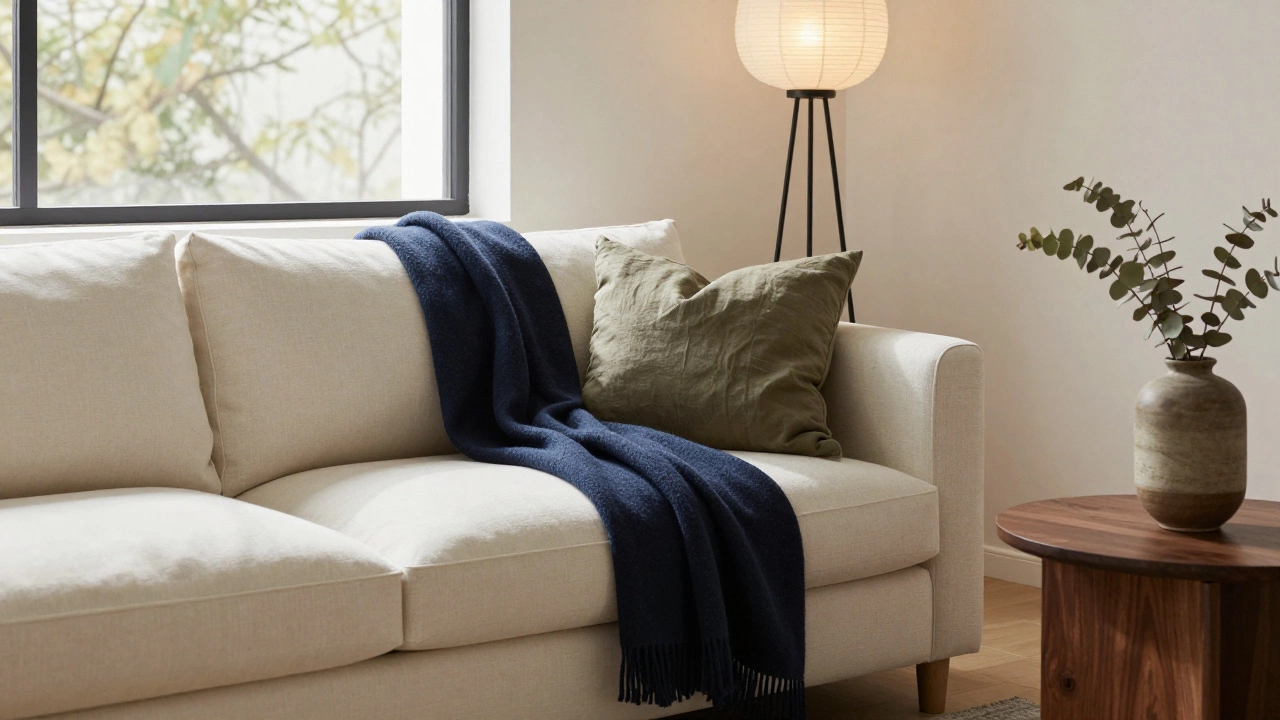
Discover the best colors to pair with a white corner sofa for a balanced, inviting living space. From navy to earth tones, learn how to avoid common mistakes and create a timeless look.