

Couch Storage Protection Planner
Your Situation
Your Custom Plan
Select your options and click "Generate Protection Plan" to see your customized wrapping strategy.
Picture this: you’ve just finished packing boxes of clothes and dishes, but then you look at the massive sectional in the living room. It’s bulky, expensive, and definitely doesn’t fit in your car. You’re about to move into a new place or maybe you’re renovating, and that couch needs to sit in a garage or basement for a few months. Do you just throw a plastic sheet over it and call it a day? Or do you spend an hour wrapping it properly?
The short answer is yes, you should absolutely wrap a couch for storage-but not with standard trash bags or cling film alone. Doing it wrong can trap moisture, leading to mold that destroys your upholstery faster than any scratch ever could. Doing it right keeps your furniture looking brand new when you finally unpack it.
Why Wrapping Matters More Than You Think
It might seem like overkill to wrap a sturdy piece of furniture, but sofas are surprisingly vulnerable during storage. The biggest enemy isn’t dust; it’s humidity and pests. When you store a couch in a non-climate-controlled space like a garage or attic, temperature swings cause condensation. If that moisture gets trapped against the fabric or leather, you create a perfect breeding ground for mildew.
Mold doesn’t just smell bad-it eats fabric fibers and stains leather permanently. Once those black spots appear, no amount of cleaning will fully remove them. Then there’s the issue of pests. Mice love soft, warm places to nest. A wrapped couch denies them access to the comfortable cushions they crave. Finally, physical damage happens easily. Boxes get dropped, walls get bumped, and without a protective layer, your couch absorbs every impact.
What NOT to Use: Common Mistakes That Ruin Sofas
Before we get to the right way, let’s talk about what to avoid. Many people reach for heavy-duty garbage bags or clear plastic shrink wrap because it’s cheap and available. Here’s why that’s a bad idea:
- Plastic traps moisture: Standard plastic is not breathable. As mentioned, condensation forms on the inside of the plastic, soaking your upholstery from the inside out.
- Adhesives leave residue: Some tape used with plastic wraps leaves sticky glue on fabric or leather, which is a nightmare to clean off later.
- Poor coverage: Plastic sheets often slip or tear, leaving parts of the couch exposed to dust and scratches.
If you’ve ever tried to peel old plastic off a dark-colored sofa only to find white discoloration underneath, you know the pain. That’s called "plastic burn" or off-gassing, where chemicals in the plastic react with the fabric dyes under heat.
The Right Way to Wrap a Couch for Short-Term vs. Long-Term Storage
Your approach depends heavily on how long the couch will be sitting idle. Let’s break down the two main scenarios.
Short-Term Storage (1-3 Months)
If you’re moving houses and the couch will be in storage for less than three months, you don’t need industrial-grade protection. However, you still need to prevent dust accumulation and minor scuffs.
- Clean it first: Vacuum all crevices. Wipe down leather with a damp cloth. Food crumbs attract ants and mice, so make sure it’s spotless.
- Use a breathable cover: An old bedsheet works wonders here. Cotton allows air circulation while blocking dust. Secure it with rubber bands or twine around the legs.
- Protect the legs: Wrap the bottom of each leg in bubble wrap or old socks to prevent scratching floors or damaging the wood finish if moved slightly.
This method is quick, free, and effective for temporary moves. Just ensure the storage area is relatively dry and cool.
Long-Term Storage (3+ Months)
For anything longer than a quarter, you need a more robust strategy. This is where professional-grade materials come into play. The goal is to create a barrier against moisture, pests, and physical damage while allowing some breathability.
- Deep Clean: Consider hiring a professional cleaner or using a steam cleaner. Deep-seated dirt can become acidic over time, breaking down fibers.
- Remove Cushions: Take off all removable cushions. Store them separately in vacuum-sealed bags if possible, as they absorb moisture quickly.
- Layer 1: Fabric Cover: Start with a breathable cotton drop cloth or a specialized furniture cover. This layer wicks away any minor moisture.
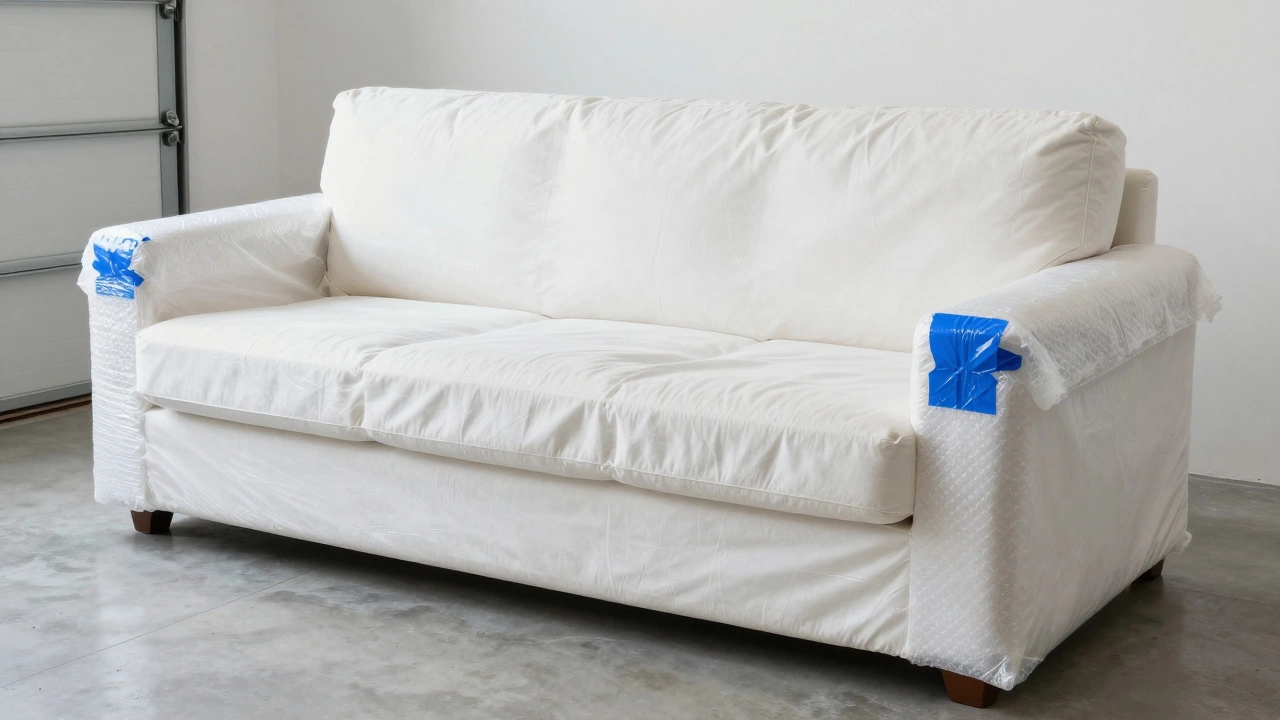
- Layer 2: Bubble Wrap: Wrap the frame, especially corners and arms, in bubble wrap. This protects against dents and scratches. Use painter’s tape to secure it-never duct tape directly on the fabric.
- Layer 3: Moisture-Barrier Plastic (Optional): If the storage unit is extremely humid, use a perforated plastic wrap designed for furniture. Perforations allow air exchange, preventing condensation buildup.
Pro tip: Place silica gel packets inside the cushion compartments or tuck them into the seams before wrapping. These little packets absorb ambient moisture and can save your sofa from mold in damp basements.
Choosing the Right Storage Location
Even the best wrapping won’t save a couch stored in the wrong environment. Where you put the couch matters just as much as how you wrap it.
| Location | Pros | Cons | Best For |
|---|---|---|---|
| Climate-Controlled Unit | Stable temp/humidity, pest-free | Higher cost | Leather, antique, high-value sofas |
| Garage | Convenient, free/cheap | Temp fluctuations, potential leaks | Short-term, synthetic fabrics |
| Basement | Out of sight, stable temp | High humidity risk, flooding | Avoid unless dehumidifier is used |
| Attic | Dry, elevated | Extreme heat, rodent access | Only if well-insulated and sealed |
If you must use a garage or basement, invest in a good dehumidifier. Running one continuously keeps relative humidity below 50%, which significantly reduces mold risk. Also, elevate the couch off the concrete floor using pallets or wooden boards. Concrete radiates cold and moisture, which can seep into the couch legs and frame.
Special Considerations for Different Materials
Not all couches are created equal. The material dictates your wrapping strategy.
Leather Sofas are sensitive to both heat and cold. Direct contact with plastic can cause cracking or discoloration. Always use a cotton barrier between the leather and any plastic wrap. Keep leather away from direct sunlight, even through windows, as UV rays fade and dry out the hide.
Fabric Sofas, especially natural fibers like linen or cotton, absorb moisture readily. They are also prone to staining. Ensure the fabric is completely dry before wrapping. Synthetic fabrics like polyester are more resistant to moisture but can still suffer from odors if stored in dirty conditions.
Wooden Frames expand and contract with humidity changes. Rapid shifts can cause joints to loosen or wood to warp. Climate control is critical here. Wrap the wood parts in acid-free paper to prevent chemical reactions.
Step-by-Step Wrapping Process
Ready to wrap? Here’s a foolproof checklist to follow:
- Gather Supplies: You’ll need cotton sheets or drop cloths, bubble wrap, painter’s tape, rubber bands, and optionally, perforated plastic wrap and silica gel packets.
- Disassemble if Possible: Remove legs, armrests, or cushions. Smaller pieces are easier to wrap and store efficiently.
- Clean Thoroughly: Vacuum, wipe, and deodorize. Use baking soda on fabric to neutralize odors before vacuuming again.
- Wrap Legs and Frame: Start with the structural elements. Bubble wrap the legs and secure with tape. This prevents scratches and dents.
- Cover the Upholstery: Drape a cotton sheet over the entire couch. Tuck it in tightly around the base. Secure with rubber bands around the legs or frame.
- Add Protective Layer: If using plastic, choose perforated variety. Wrap loosely over the cotton layer, ensuring no tight seals that trap air. Tape only the plastic to itself, not to the fabric.
- Label Clearly: Write “FRAGILE” and “UPHOLSTERY” on the outside. Include instructions like “Do Not Stack” if applicable.
When to Hire Professionals
Sometimes, DIY isn’t worth the risk. Consider hiring movers or storage specialists if:
- The couch is an antique or high-end designer piece worth thousands.
- You lack the space or tools to disassemble and wrap it safely.
- You’re storing it for more than six months in a harsh environment.
- You have mobility issues that make handling heavy furniture difficult.
Professional movers often use custom-fitted blankets and shrink wrap applied with heat guns for a tighter, safer seal. They also carry insurance, giving you peace of mind if something goes wrong.
Can I use regular plastic wrap for my couch?
No, regular plastic wrap is not recommended for long-term storage. It traps moisture and can cause mold growth or discoloration. Use breathable cotton covers or perforated plastic instead.
How long can a couch stay in storage without damage?
With proper wrapping and climate control, a couch can remain in storage for several years. Without these precautions, damage from mold or pests can occur within weeks.
Should I remove the cushions before wrapping?
Yes, removing cushions allows for better airflow and individual protection. It also prevents them from absorbing moisture from the frame or other parts of the couch.
Is it safe to store a couch in a garage?
It can be safe for short periods if the garage is clean and dry. For long-term storage, use a dehumidifier and elevate the couch off the concrete floor to prevent moisture damage.
What is the best way to protect leather couches in storage?
Clean and condition the leather first. Cover it with a breathable cotton cloth, avoiding direct contact with plastic. Store in a climate-controlled environment to prevent cracking.