
Coffee Table Size Calculator
Recommended Dimensions
Enter your sofa details to see the recommended table sizes.
Key Takeaways for Choosing a Table
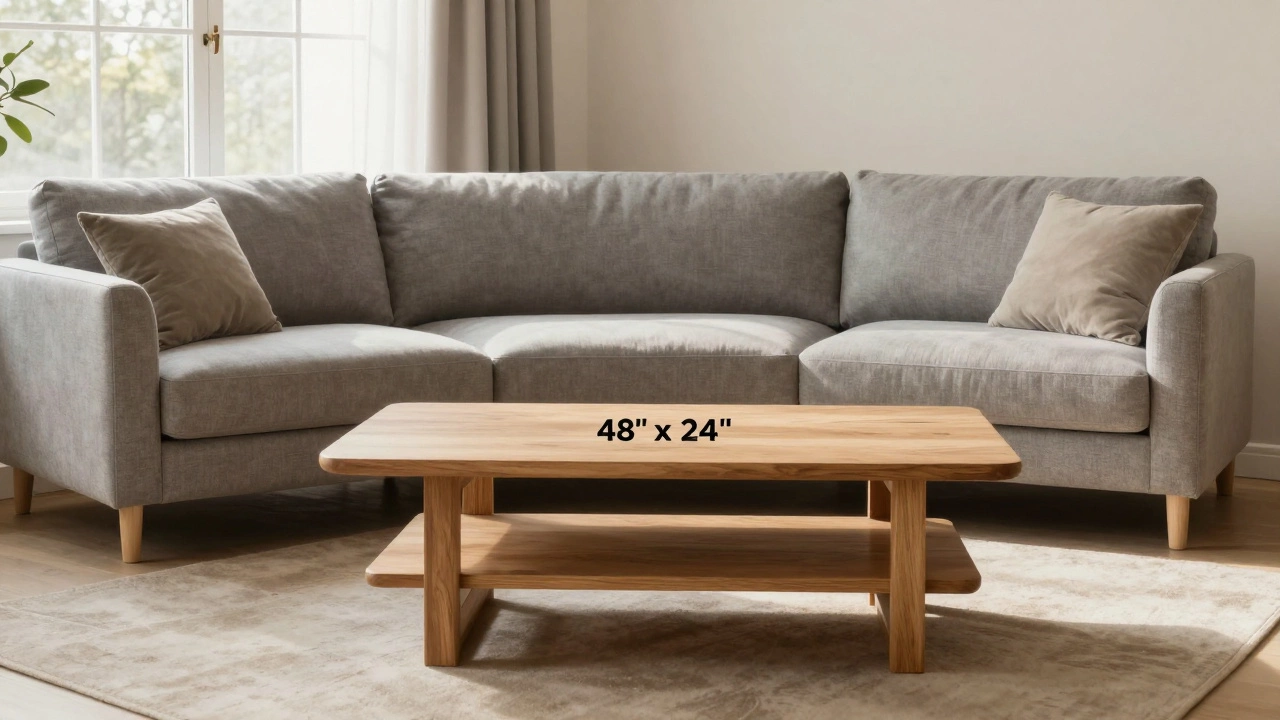
- The most common rectangular size is roughly 48" L x 24" W x 18" H.
- Standard height usually mirrors the height of your sofa cushions (around 16-18 inches).
- Leave 14 to 18 inches of legroom between the table and the sofa.
- Round tables (30-36" diameter) are best for tight spaces or high-traffic areas.
The Gold Standard: Most Common Dimensions
If you look at the best-selling models from major retailers, there is a clear winner for the average home. For most people, a rectangular table measuring Rectangular Coffee Table is the most versatile shape, typically spanning 36 to 48 inches in length and 18 to 24 inches in width. Why? Because it mimics the shape of the most common sofa, the Standard Sofa, which usually sits between 72 and 96 inches long.
The height is where most people mess up. The industry standard is usually 16 to 18 inches. If you go higher, it starts feeling like a dining table; lower, and it becomes a hurdle for your shins. The goal is a seamless transition from your seat to the surface. If your couch has extra-deep cushions, you might want to lean toward that 18-inch mark to avoid a steep drop.
| Shape | Average Length/Diameter | Average Width | Standard Height |
|---|---|---|---|
| Rectangular | 36" - 48" | 18" - 24" | 16" - 18" |
| Square | 30" - 36" | 30" - 36" | 16" - 18" |
| Round | 30" - 36" (Diam) | N/A | 16" - 18" |
| Oval | 42" - 60" | 20" - 28" | 16" - 18" |
Matching Your Table to Your Sofa
You can't pick a table in a vacuum. The Sofa is the anchor of the room, and the table is the supporting actor. A professional rule of thumb is that your table should be about two-thirds the length of your sofa. Imagine you have an 84-inch three-seater. A 56-inch table would be the theoretical peak, but in reality, 48 inches feels more natural and leaves room for end tables.
Then there's the "reach factor." You don't want to stand up every time you need your remote. The ideal gap between the edge of the sofa and the table is between 14 and 18 inches. Any closer and you can't walk through the gap; any further and you're stretching. If you're dealing with a Sectional Sofa, the rules change. You often need a square or round table that can be reached from multiple angles, or even a pair of smaller tables pushed together to fill the larger L-shaped void.
When to Go Round Instead of Rectangular
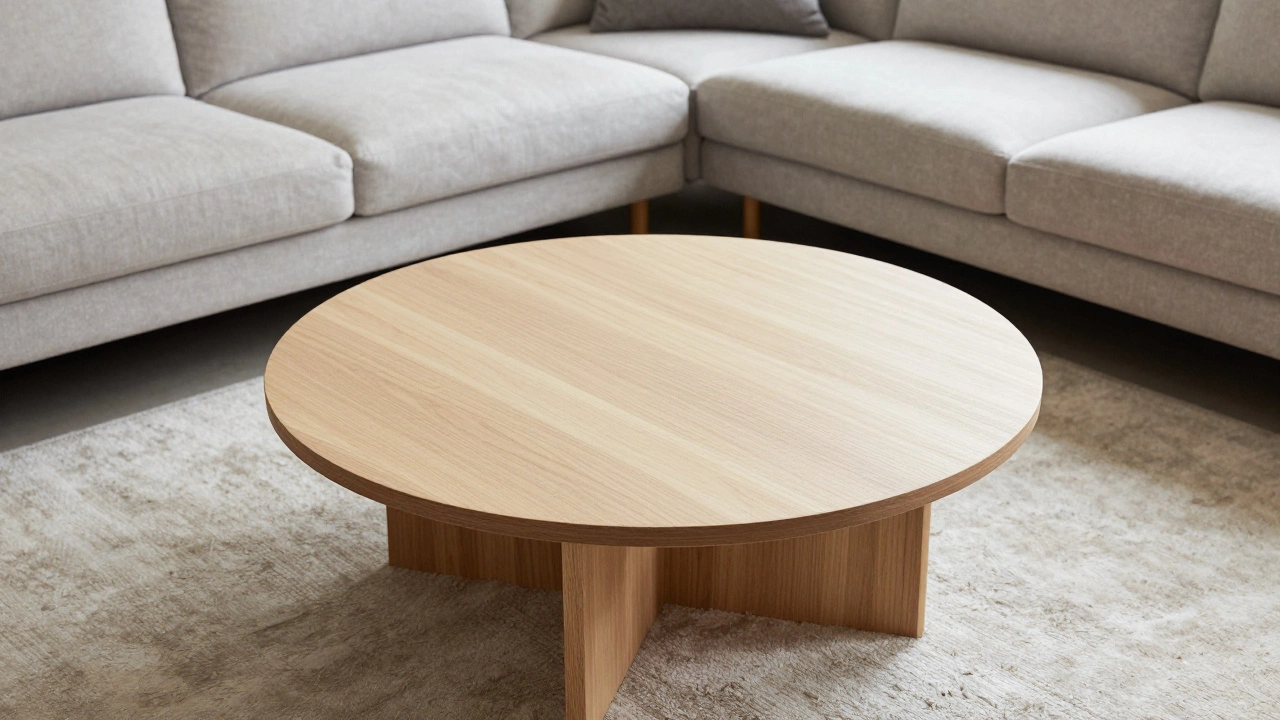
Rectangles are popular, but they aren't always the right choice. If you have kids or a room with a narrow walkway, a Round Coffee Table is a lifesaver. Not only do you get rid of sharp corners (meaning fewer bruised knees), but the circular flow makes the room feel more open. A 30-inch or 36-inch diameter table is the sweet spot here.
Round tables also break up the "boxiness" of a room. If your sofa, your rug, and your TV stand are all rectangles, a round table adds visual contrast. It's a simple trick used by interior designers to make a room feel less like a showroom and more like a home. Just keep in mind that round tables offer less usable surface area for things like laptops or large board games compared to their rectangular cousins.
The Rise of the Nested Table Trend
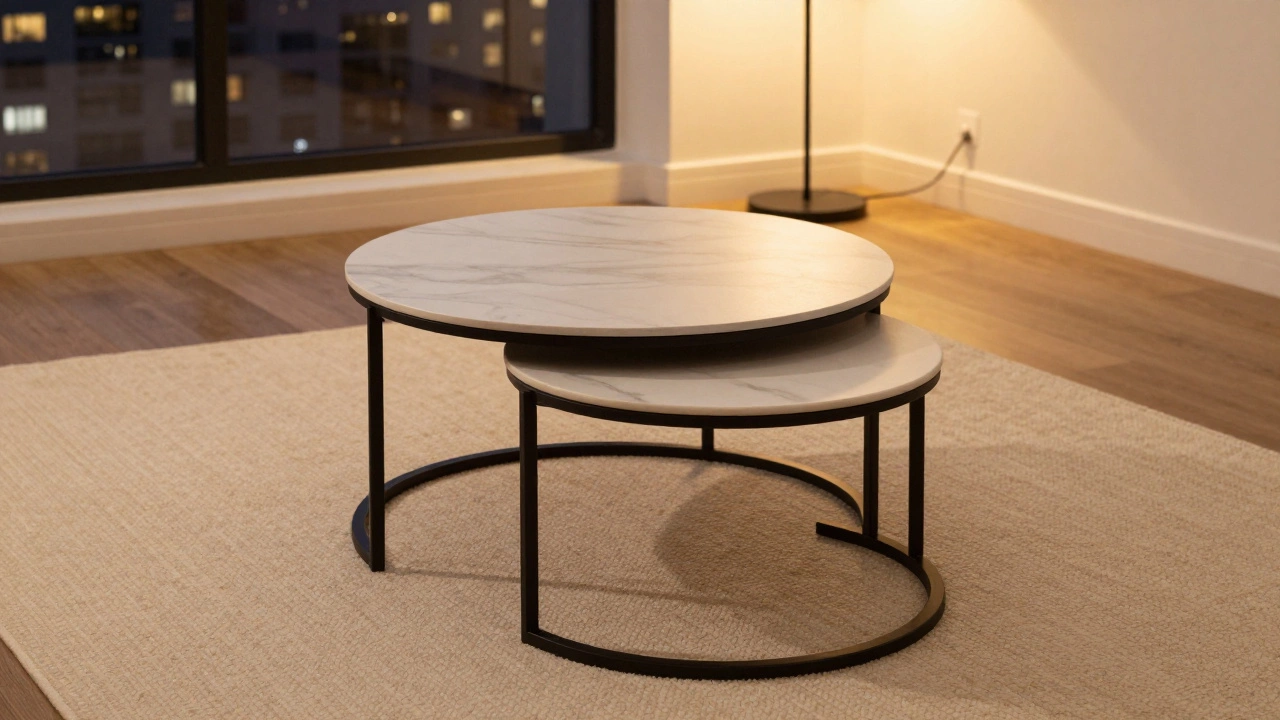
Lately, people are moving away from one giant piece of furniture in favor of Nesting Tables. These are a set of two or three tables of graduated sizes that slide under one another. They solve the "what if I need more space?" problem. You keep them tucked away for daily use and pull the smaller ones out when you have guests over for drinks and appetizers.
This setup is particularly great for small apartments. You get the flexibility of a large table without the permanent footprint. When shopping for these, look for sets where the primary table is about 30 inches wide and the secondary table is about 20 inches. This provides enough variety in scale to look intentional rather than accidental.
Common Mistakes to Avoid
One of the biggest errors is ignoring the Area Rug. Your coffee table should almost always sit on the rug. If the table is too small for the rug, it looks like a lonely island in the middle of the room. Ideally, the rug should extend at least 8-12 inches beyond the sides of the table. If you're placing a table directly on hardwood, it can often look disconnected from the rest of the seating group.
Another pitfall is choosing a table that's too high. A common mistake is buying a table that's 20-22 inches high because it "looks' better in the store. Once you get it home and sit on your sofa, you realize you're basically eating dinner off the table instead of using it for coffee. Always check your sofa's seat height before you buy. If your cushions are 17 inches high, your table should be exactly 17 inches or slightly lower.
Pro Tips for the Perfect Layout
- The Tape Method: Before buying, use blue painter's tape to outline the table's dimensions on your floor. Walk around it for a day. If you catch your toe on the tape, the table is too big.
- The Proportion Check: If you have a massive, overstuffed sofa, a tiny 24-inch table will look like a toy. Go for a larger rectangular piece or a chunky square.
- Traffic Flow: Ensure there's at least 30 inches of space between the table and other furniture (like a TV console) to allow for easy walking.
What is the best coffee table size for a small living room?
For small spaces, a round table with a 30-inch diameter or a narrow rectangular table (around 36" x 18") works best. Round tables are especially helpful because they lack sharp corners, making it easier to navigate tight walkways without bumping into furniture.
How high should a coffee table be compared to the sofa?
The ideal height is equal to or slightly lower than the seat of your sofa. Most standard sofas have a seat height of 16 to 18 inches, which is why most popular coffee tables fall within that same range. This ensures you don't have to reach up or down too far to set things down.
Does a square coffee table work for every room?
Not necessarily. Square tables are fantastic for large rooms with sectional sofas or two sofas facing each other, as they provide a central hub. However, in a narrow room, a square table can block the flow of traffic and make the space feel cramped. In those cases, an oval or rectangular table is a better bet.
How much space should be between the sofa and the coffee table?
You should aim for 14 to 18 inches. This is the "goldilocks" zone-it's close enough that you can reach your drink without standing up, but wide enough that you can walk between the sofa and the table without having to shuffle sideways.
Are oval coffee tables better than rectangular ones?
Oval tables offer the best of both worlds. They provide the length and surface area of a rectangular table but the softer edges of a round table. This makes them a great choice for families with small children or for rooms where the walkway is a bit tight.
Next Steps for Your Living Room
Now that you know the numbers, the next step is to measure your actual space. Start by measuring the length of your sofa and the distance from the sofa to the opposite wall. If you're still unsure, try the tape method mentioned above. If you have a complex layout with a sectional and a recliner, prioritize a round or square table to ensure everyone in the room has a place to set their glass. Finally, consider the material-glass tables make a small room feel larger, while wood brings a sense of warmth and stability to a large open-concept area.