
Bedroom TV Sleep Impact Calculator
Your Sleep Habits
Sleep Impact Summary
Estimated Melatonin Suppression
37% reduction
Sleep Onset Delay
20 minutes
Potential Nightly Wake-ups
2.3 times
Your Results
Your Sleep Impact Level
Moderate
This is based on the scientific evidence presented in the article about how TV usage affects sleep quality.
Sleep Improvement Tips
Try these alternatives from the article:
- Read a physical book instead of watching TV
- Listen to calming music or sleep podcast at low volume
- Practice 5-minute breathing exercises before bed
- Dim lights 30 minutes before sleep
Most people put a TV in their bedroom because it feels like the easiest way to unwind. You crawl into bed, flip it on, and let the glow of the screen lull you into relaxation. But what if that comfort is quietly stealing your sleep? And not just a little - we’re talking about deep, restorative sleep that your body actually needs.
Let’s cut through the noise. There’s no universal rule that says TVs belong in bedrooms. But there’s plenty of science that says they shouldn’t be there - especially if you care about how rested you feel in the morning.
Why your brain hates a TV in the bedroom
Your bedroom should be a sanctuary for sleep. Not a mini entertainment center. The moment you bring a TV into the space, you start training your brain to associate your bed with more than rest. You’re telling it: this is where I watch Netflix, scroll through TikTok, and binge the latest reality show.
That’s a problem. Sleep experts call this stimulus control. Your brain needs clear cues: bed = sleep. If you’re working, scrolling, or watching TV in bed, that cue gets muddy. Over time, your brain stops recognizing your bed as a place to shut down. You lie there wide awake, wondering why you can’t fall asleep - even though you’re exhausted.
And it’s not just about conditioning. The light from the screen is doing real damage.
The blue light trap
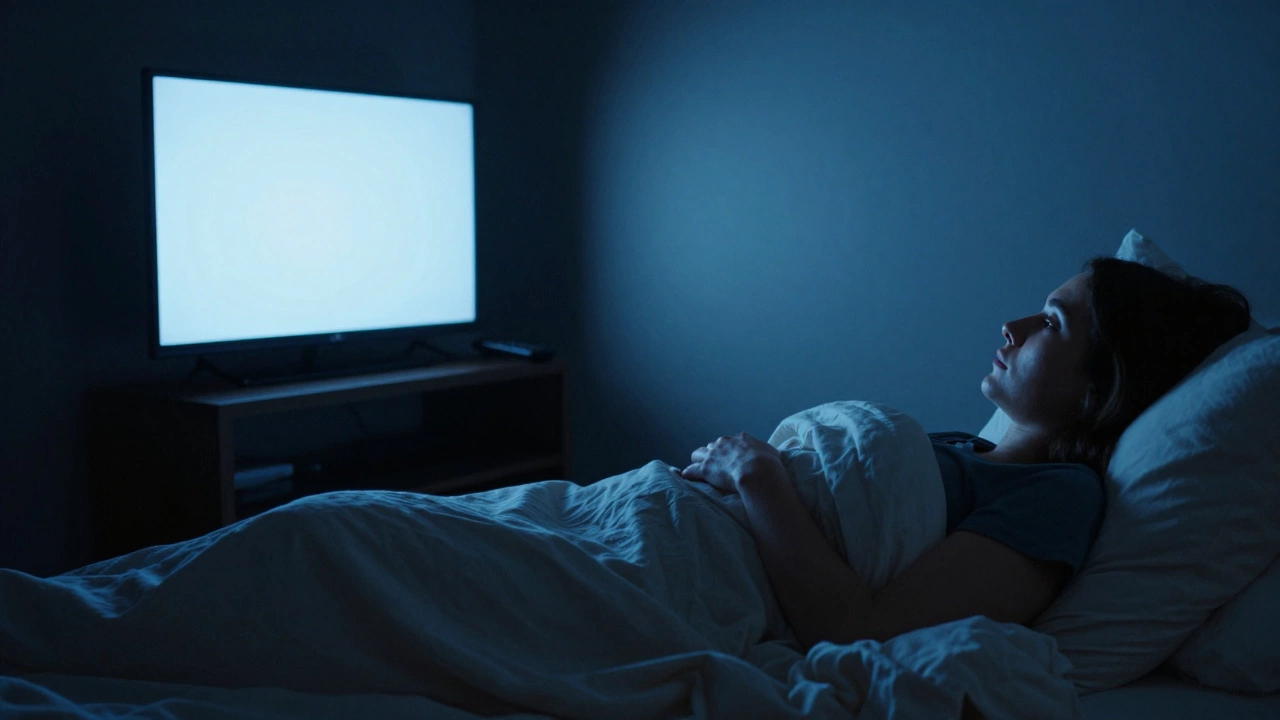
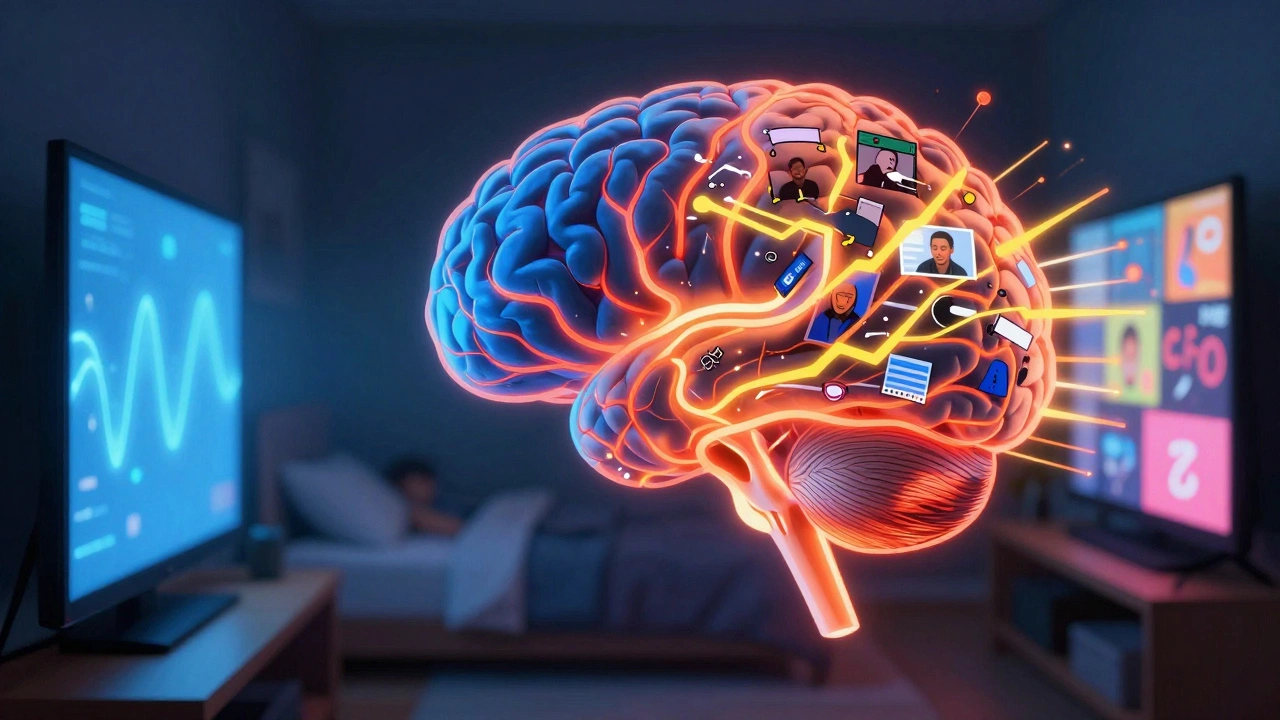
TVs, even the newer LED models, pump out blue light. That’s not harmless. Blue light suppresses melatonin - the hormone your body makes to tell you it’s time to sleep. A 2023 study from the University of Auckland tracked 850 adults over six months. Those who watched TV in bed for more than 30 minutes before sleep had 37% lower melatonin levels at bedtime compared to those who didn’t.
That’s not a small dip. That’s enough to delay sleep onset by 20 to 40 minutes on average. And if you’re already struggling to get 7 hours? You’re losing ground every night.
Worse, the content matters. A calm nature documentary? Maybe fine. A tense thriller? A heated debate show? Your heart rate spikes. Your mind races. You’re not winding down - you’re revving up.
What about the noise?
Some people swear by background TV noise. White noise, they call it. But TV isn’t white noise. It’s unpredictable. A laugh track. A sudden scream. A commercial break with a jingle that hits like a clap of thunder.
Sleep isn’t just about falling asleep. It’s about staying asleep. And your brain never fully shuts off. Even during deep sleep, it’s still listening. A 2024 sleep study from Wellington’s Sleep Research Lab found that people with TVs in their bedrooms woke up 2.3 times more often per night than those without - even if they didn’t remember it.
They thought they were sleeping fine. Their sleep trackers said otherwise.
The hidden cost: screen time creep
It starts with “just one episode.” Then it’s two. Then it’s midnight, and you’re still scrolling through recommendations because the show ended and you don’t want to turn it off. Before you know it, you’re losing an hour of sleep every night.
A 2025 survey of 1,200 New Zealanders found that 68% of people with TVs in their bedrooms admitted to staying up later than planned because of it. Nearly half said they felt groggy most mornings - not because of stress, not because of caffeine - but because they were watching TV instead of sleeping.
And here’s the kicker: you don’t even enjoy it as much as you think. That “relaxing” show you’re watching? You’re half-asleep by episode three. You’re not really watching. You’re just staring.
What works better?
If you miss the wind-down ritual, replace it with something that actually helps you sleep.
- Read a physical book - paper, not a tablet. The act of turning pages signals your brain to slow down.
- Listen to calming music or a sleep podcast - but keep the volume low and the device out of bed.
- Try a 5-minute breathing exercise. Inhale for four counts, hold for four, exhale for six. Do it three times. It’s science-backed and takes less time than a commercial break.
- Dim the lights 30 minutes before bed. Use warm, low-watt bulbs. Your body responds to light like a sunset.
These aren’t just “good habits.” They’re sleep hygiene. And they work better than any TV ever could.
What if I really need the TV there?
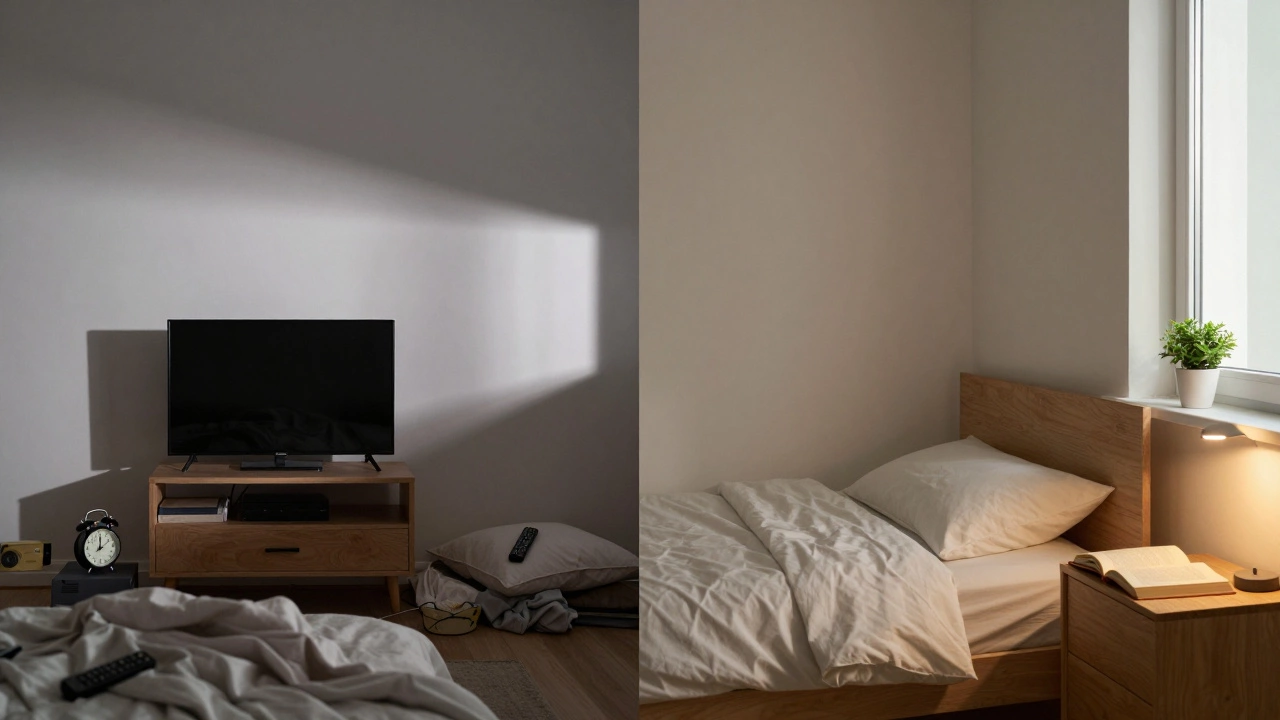
Some people have medical reasons. Chronic pain. Anxiety. A partner who watches late-night news. If you’re one of them, you can still reduce the damage.
- Set a hard cutoff: no TV after 10:30 p.m. Use a timer on the power strip.
- Turn off autoplay. If you have to manually press play for the next episode, you’ll be less likely to keep going.
- Use a blue light filter. Most modern TVs have a “night mode.” Turn it on. It helps - but doesn’t fix everything.
- Move the TV away from the bed. If it’s across the room, you’re less tempted to use it. Distance creates friction - and friction stops bad habits.
- Keep the volume low. If you can’t hear it clearly from the bed, you’re less likely to be mentally engaged.
It’s not about perfection. It’s about reducing the harm.
Real-life test: what happened when people removed their TV
In a small but telling experiment in Wellington, 40 people removed their bedroom TVs for four weeks. They didn’t replace them with anything fancy - just books, quiet, and darkness.
After four weeks:
- 85% fell asleep 20+ minutes faster.
- 78% reported deeper, more restful sleep.
- 62% said they woke up feeling more refreshed - even if they didn’t sleep more hours.
- Only 3 people went back to having the TV in bed. They said it felt “too tempting.”
That’s not magic. That’s biology.
Final verdict: Is it OK?
Technically? Yes. You can put a TV in your bedroom. No law says you can’t.
But is it a good idea? For most people? No.
Your bedroom is the one place in your home that should be sacred. It’s where your body repairs itself. Where your mind resets. Where you recover from the day. A TV doesn’t help with that. It competes with it.
If you’re serious about sleep - about waking up without that heavy, foggy feeling - then the answer is simple: take it out. Not tomorrow. Not next week. Tonight.
Turn it off. Unplug it. Put it somewhere else. Your future self - the one who wakes up alert, calm, and actually rested - will thank you.
Is it bad to watch TV in bed every night?
Yes - especially if you’re doing it right before sleep. Watching TV in bed every night trains your brain to associate your bed with stimulation, not rest. Over time, this makes it harder to fall asleep and reduces sleep quality. Studies show people who do this regularly have lower melatonin levels, take longer to fall asleep, and wake up more often during the night.
Does blue light from a TV really affect sleep?
Absolutely. Blue light suppresses melatonin, the hormone your body produces to signal sleep. A 2023 study from the University of Auckland found that people who watched TV in bed for 30+ minutes before sleep had 37% less melatonin than those who didn’t. Even with night mode enabled, the effect is still measurable. The longer you’re exposed, the worse the impact.
Can I keep the TV if I use a blue light filter?
A blue light filter helps - but it doesn’t solve everything. Even with night mode, the mental stimulation from content, the sound, and the habit of using your bed for entertainment still interfere with sleep. Filters reduce blue light, but they don’t turn your bedroom into a sleep sanctuary. For better sleep, removing the TV entirely is still the most effective step.
What should I do instead of watching TV before bed?
Try reading a physical book, listening to calm music or a sleep podcast, or doing a short breathing exercise. Dim the lights 30 minutes before bed. These activities signal your brain that it’s time to wind down - without the stimulation of screens. Even 10 minutes of quiet can make a noticeable difference in how quickly you fall asleep.
Is it okay to have a TV in the bedroom if I don’t watch it often?
If you rarely turn it on, the risk is lower - but the presence of the TV still creates temptation. Your brain knows it’s there. And if you ever use it, even once a week, it can still disrupt your sleep routine. For optimal sleep hygiene, the cleanest solution is to keep it out of the bedroom entirely.