
Smart Chair Selector & Value Calculator
Find Your Needs
True Cost Analysis
Then, use the calculator below to see the real cost per year of your future purchase.
Why Your Current Chair Might Be Costing You
You spend eight hours a day sitting. Maybe more. A bad office chair isn't just uncomfortable; it ruins your posture and drains your energy. By the end of the workday, you shouldn't be shifting positions every five minutes just to find relief. A high-quality Office Chairis an essential piece of furniture designed to support the human spine and reduce physical strain during prolonged sitting acts like an extension of your body.
Too many people buy based on looks alone. They pick something that matches the wall color but gives them lower back pain after three months. We can fix that. This guide cuts through the marketing jargon and focuses on what actually keeps you healthy while working. If you sit daily, your investment needs to match the intensity of your usage.
Understanding True Ergonomic Design
Everyone throws around the term "ergonomic," but few understand what it actually means. An Ergonomic Designrefers to engineering products that fit the user's body mechanics to maximize comfort and efficiency simply means the chair adapts to you, not the other way around. Look for chairs with independent adjustments.
- Lumbar Support: Your lower back has a natural curve. The chair should fill that gap without poking you too hard.
- Armrests: They should move up, down, and in. If they stay fixed, your shoulders will hike up toward your ears over time.
- Seat Tilt: Locking the backrest is useful, but being able to recline slightly helps blood circulation.
Most budget models offer a single lever that controls height and tilt together. That is annoying when you want to recline without rising. Premium options let you adjust these separately. If you have back issues, look for adjustable Lumbar Supporta mechanism built into the chair back that contours to the natural inward curve of the spine. Some systems allow you to move the support up or down to hit the exact spot on your vertebrae.
Choosing the Right Material for Your Climate
The surface you sit on affects temperature regulation. Living in hot climates means breathability matters more than plush padding. In cooler environments, soft cushions feel better.
The Mesh Debate
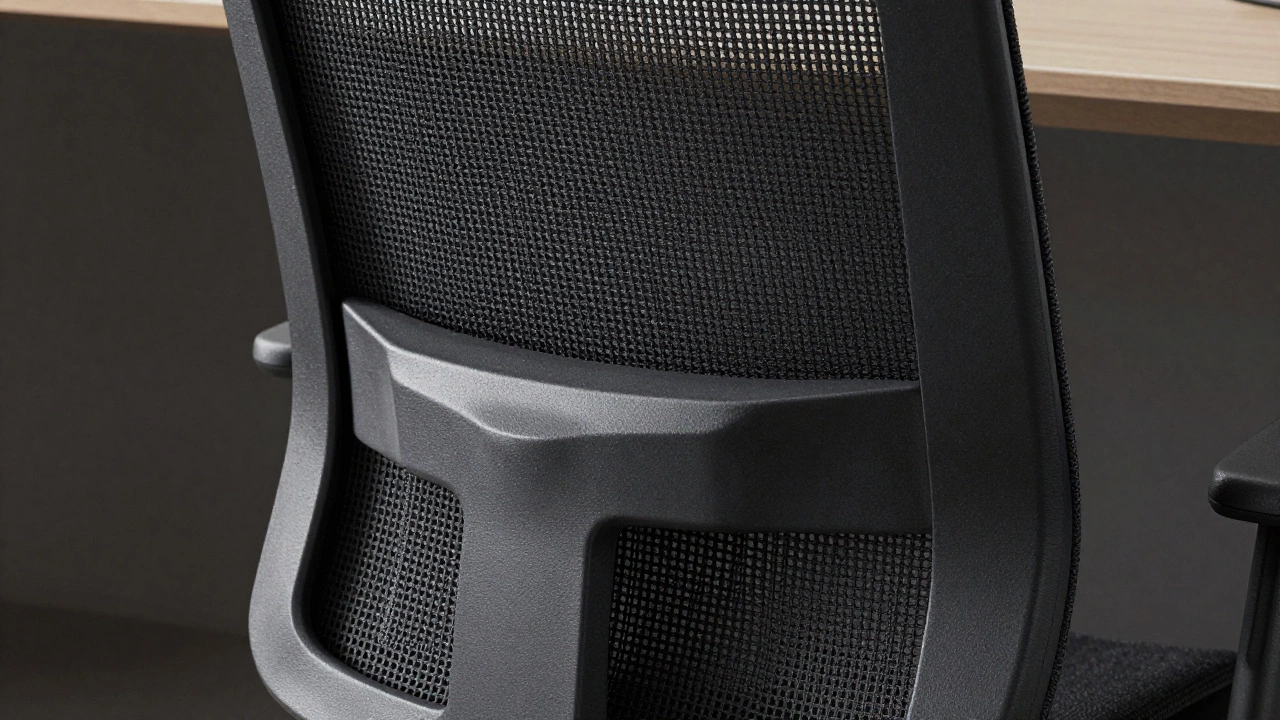
Mesh Backa breathable fabric material commonly used in office chairs to promote airflow and heat dissipation is the gold standard for air circulation. It stops sweat buildup during long meetings. However, mesh bottoms can sometimes cause pressure points on the thighs if the tension is too tight. High-end mesh feels like drum skin; low-end mesh feels like a cheap trampoline. Test the bounce. It should hold firm.
Fabric and Leather Options
Upholstered seats provide cushioning. Memory foam molds to your shape, but it traps heat. Synthetic leather looks sleek but gets sticky when you slide in and out constantly. Genuine leather lasts longer but requires conditioning. If you work in a dry environment like Wellington in winter, synthetic fabrics might crack faster than woven textiles.
Getting the Dimensions Right
Sizing is critical. Buying online without measurements is risky. You cannot guess this part. Measure yourself before browsing.
- Thigh Length: Sit on a dining chair. Put feet flat. There should be two fingers space between your knee crease and the seat edge. If the seat pushes under your knees, your leg circulation shuts off.
- Back Height: You need enough space above the chair back so your head moves freely.
- Weight Capacity: Manufacturers list limits. Choose a chair rated higher than your current weight for longevity.
The Gas Lift Cylindera pneumatic device used to control the height adjustment mechanism of swivel chairs class is another technical detail worth noting. Class 4 cylinders support heavier loads safely. Don't settle for Class 2 mechanisms if you plan to rock back frequently.
| Feature | Budget Option | Premium Option |
|---|---|---|
| Material | Basic fabric or vinyl | High-tensile mesh or bonded leather |
| Warranty | 1 year | 5 to 10 years |
| Adjustments | Height only | Full ergonomics (armrests, tilt, lumbar) |
Navigating Price vs. Longevity
Cheap chairs break. They wobble, leak gas, and sag. Spending $500 upfront saves you replacing a $100 chair every six months. Consider cost per year of use. A thousand-dollar chair that lasts ten years costs one hundred dollars annually. A cheap one that dies in two years costs four hundred dollars annually.
Look for certifications. BIFMA Standardsindustry safety and performance benchmarks established by the Business and Institutional Furniture Manufacturers Association test chairs for stability, strength, and flammability. A chair meeting these standards passes rigorous stress tests. In the US market, this is common. Elsewhere, look for ISO equivalencies or local safety approvals.

Testing Before Committing
If possible, visit a showroom. You don't need to walk through the door to find a salesperson. Just sit. Put your feet flat. Relax your shoulders. Does your back feel supported? Can you see where the controls are?
If buying online, check the return policy. Many brands offer thirty-day trials. Some go as high as a hundred days. Shipping large items can be expensive, so factor that into the risk calculation. Read reviews from people who have owned the model for more than a year. Day-one excitement fades quickly when parts fail.
Maintenance and Care
A chair needs attention. Dust accumulates in moving parts and jams mechanisms. Vacuum crevices monthly. Tighten bolts every six months as vibration loosens them over time. Keep lubricants away from plastic parts to avoid cracking.
Your Warranty Policya manufacturer guarantee covering defects in materials or workmanship for a specified period usually does not cover wear and tear from accidents. But it covers broken casters or leaking pistons. Keep the receipt in a safe place. Digital copies work best.
Frequently Asked Questions
How long does a good office chair last?
With daily use, a high-quality model typically lasts between 5 to 10 years. Cheaper versions may fail structurally within 2 to 3 years due to weak materials or failing gas lifts.
Is a mesh chair better than leather?
Mesh offers better cooling and airflow, making it superior for warm offices or hot weather. Leather provides more cushioning and support but retains heat and moisture.
Do I need adjustable armrests?
Adjustable armrests help prevent shoulder tension. If you type a lot or switch positions frequently, having arms that pivot and slide reduces muscle strain significantly.
What is the best wheel type for hard floors?
Soft rubber casters protect wood or tile surfaces from scratches. Harder plastic wheels work best on thick carpet but can gouge laminate flooring over time.
Can I assemble the chair myself?
Most chairs require basic assembly involving attaching the base, seat, and back. It usually takes 20 to 40 minutes. Complex reclining mechanisms might take longer, so watch for installation videos beforehand.
Investing in your workspace pays off instantly. Your posture improves, and focus returns. Stop treating seating as decoration. It is functional equipment. When you get the setup right, the work becomes easier.