
Bookcase Anchoring Safety Calculator
Unit Details
Risk Factors Identified:
Enter your bookcase details to determine anchoring requirements.
Picture this: you’ve just finished assembling your new IKEA Kallax or a heavy oak shelving unit. It looks great against the living room wall. But then a toddler climbs it, or a small earthquake shakes the house, and that expensive piece of furniture tips over like a domino. It’s a nightmare scenario that happens more often than we’d like to admit. The short answer to do you have to anchor a bookcase? Yes. Almost always. If your bookcase is taller than 30 inches, freestanding, and accessible to children or pets, anchoring it isn’t just a suggestion-it’s a critical safety step.
We often ignore these risks until something goes wrong. Manufacturers include those little metal brackets and screws for a reason. They aren’t trying to annoy you with extra steps; they’re trying to keep you safe. In fact, many local building codes and safety regulations now require tall furniture to be secured to walls in residential homes, especially if there are kids under five. Ignoring this can lead to serious injury, property damage, and even liability issues if someone gets hurt in your home.
Before we get into the nuts and bolts of installation, let’s talk about why this matters so much. A fully loaded bookcase can weigh hundreds of pounds. When weight is concentrated at the top-like heavy hardcover books or decorative items-the center of gravity shifts upward. This makes the unit unstable. A slight push, a curious cat jumping on it, or even an uneven floor can cause it to tip forward. Anchoring creates a physical connection between the furniture and the structural framing of your house, preventing that catastrophic fall.
| Furniture Type | Height Threshold | Risk Level | Anchoring Required? |
|---|---|---|---|
| Tall Bookcases | Over 30 inches (76 cm) | High | Yes, always |
| Chests of Drawers | Any height | Medium-High | Yes, especially if top-heavy |
| TV Stands | Over 24 inches (61 cm) | High | Yes, due to TV weight |
| Low Side Tables | Under 24 inches | Low | No, usually stable enough |
Understanding the Risks: Why Bookcases Tip Over
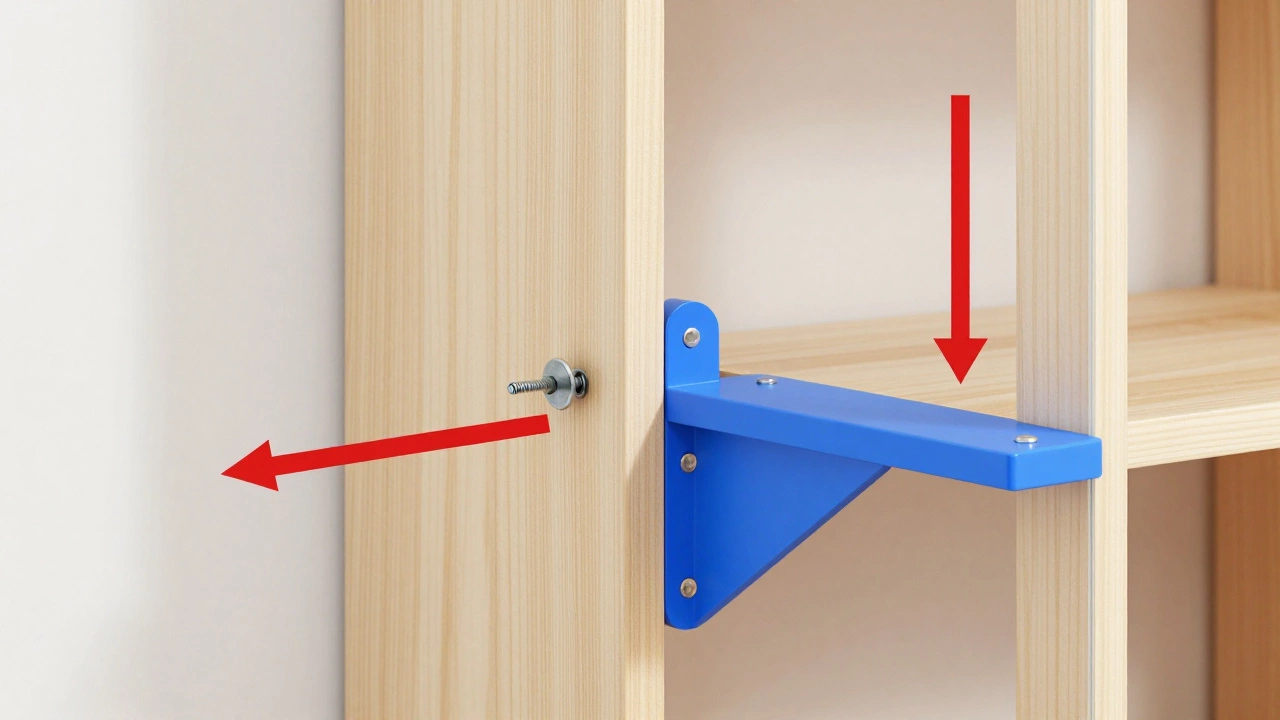
The physics behind tipping furniture is simple but dangerous. Think of a seesaw. If you put a heavy kid on one end and nothing on the other, the side with the kid goes down. Now imagine that seesaw is vertical. Your bookcase is the board, and the wall is the pivot point. If the top of the bookcase is heavier than the bottom, or if someone pulls on the shelves, the whole thing rotates forward around its base.
This is called "top-heaviness." Even if your bookcase feels solid, adding books, electronics, or decor to the upper shelves raises the center of mass. According to the U.S. Consumer Product Safety Commission, thousands of children are treated in emergency rooms each year for injuries related to tipped-over furniture and televisions. Most of these incidents involve unanchored units. The force required to tip a bookcase is surprisingly low-a child weighing just 50 pounds can generate enough leverage to knock over a 200-pound shelf if they climb on it.
Earthquakes add another layer of risk. If you live in a seismically active area like California, New Zealand, or Japan, anchoring isn’t optional. During shaking, furniture slides and tips regardless of how carefully you placed it. Securing it to wall studs prevents lateral movement and keeps it upright. Even in non-seismic zones, minor vibrations from heavy traffic or construction nearby can slowly shift unstable furniture over time.
What Tools and Materials Do You Need?
You don’t need a professional contractor to anchor a bookcase. Most homeowners can do it themselves with basic tools. Here’s what you’ll typically need:
- Stud finder: To locate wooden or metal studs inside your walls. These provide the strongest hold.
- Anti-tip kit: Usually included with new furniture. Includes brackets, screws, and sometimes cables or straps.
- Power drill: For making pilot holes in wood or drywall.
- Screwdriver: Phillips-head works for most hardware.
- Drywall anchors: If you can’t hit a stud, use toggle bolts or plastic expansion anchors rated for heavy loads.
- Level: To ensure your bookcase is straight before securing it.
- Pencil and tape measure: For marking drill points accurately.
If your bookcase came with an anti-tip bracket, check the instructions. Many modern kits use a cable system that connects the back of the furniture to the wall, allowing some flexibility while still preventing tipping. Older models might use rigid L-brackets, which are also effective but less forgiving if the wall isn’t perfectly flat.
Step-by-Step Guide to Anchoring Your Bookcase
Follow these steps to secure your bookcase safely. This process takes about 15-30 minutes depending on your experience level.
- Empty the bookcase. Remove all books, decor, and items. You want the unit as light as possible during installation to avoid strain or accidental tipping.
- Position the bookcase. Place it exactly where you want it. Use a level to make sure it’s straight. Mark the location on the floor with painter’s tape so you can move it back precisely later.
- Find the wall studs. Use your stud finder to locate vertical studs behind the wall. Studs are usually spaced 16 or 24 inches apart. Mark the centers with a pencil. If you can’t find a stud directly behind the bookcase, look for adjacent ones and plan to use long screws or anchors that reach them.
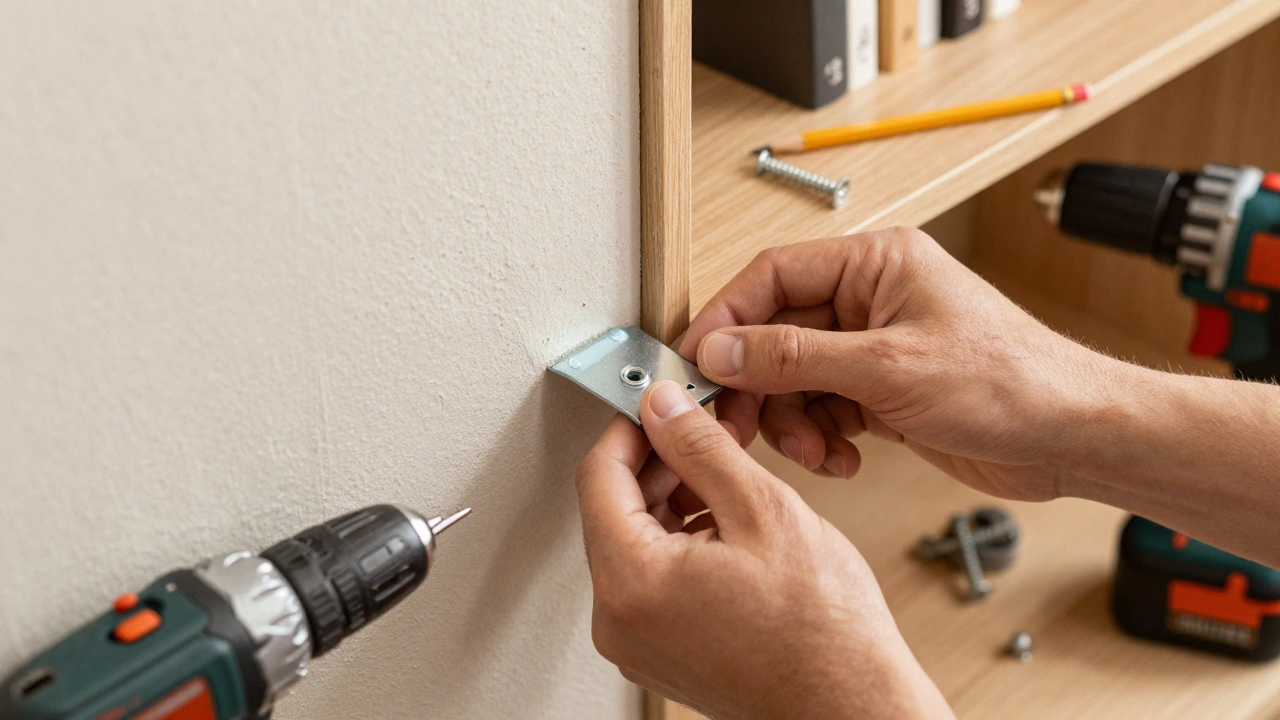
- Attach the bracket to the wall. Hold the anti-tip bracket against the wall at the top rear corner of the bookcase. Drill pilot holes through the bracket into the stud. Secure it with wood screws. If you’re using drywall anchors instead, follow the anchor manufacturer’s instructions carefully. Insert the anchor, then drive the screw through the bracket into the anchor until tight.
- Connect the bookcase to the bracket. Depending on your kit, this might involve screwing a plate onto the back of the bookcase and snapping it into the wall bracket, or attaching a cable/strap. Ensure the connection is snug but not overtightened, which could warp the wood.
- Test the security. Gently pull forward on the top of the bookcase. It should not move away from the wall. If it does, tighten the connections or add additional anchors.
- Reload the bookcase. Start placing items back, beginning with the heaviest objects on the bottom shelves. This lowers the center of gravity and adds stability.
If your bookcase is very wide (over 4 feet), consider adding a second anchor near the middle or opposite corner for extra support. Wide units are more prone to twisting forces.
Dealing with Different Wall Types
Not all walls are created equal. The method you choose depends on what’s behind your drywall or plaster.
Wood or Metal Studs
This is the ideal scenario. Wood studs accept standard wood screws easily. Metal studs require self-tapping metal screws or specialized anchors designed for steel. Make sure your screws are long enough to penetrate at least 1 inch into the stud for a secure hold.
Drywall Without Studs
If you can’t hit a stud, don’t panic. You can still anchor safely using heavy-duty drywall anchors. Toggle bolts are excellent for this-they expand behind the drywall to distribute weight. Plastic expansion anchors work too but have lower weight limits. Always check the anchor’s rating; for a bookcase, aim for anchors rated for at least 50-75 pounds per anchor.
Masonry or Brick Walls
In older homes or apartments with exposed brick, you’ll need masonry anchors. Hammer-set sleeve anchors or wedge anchors work well here. You’ll need a hammer drill and masonry bits to create the hole. Clean out dust before inserting the anchor to ensure a tight fit.
Concrete Floors and Baseboards
Some people try anchoring to the floor instead of the wall. While this can help prevent sliding, it doesn’t stop tipping. For true safety, always connect to the wall structure. If you must anchor to the floor (e.g., in a rental where wall drilling is prohibited), use adhesive strips rated for heavy furniture, but understand they offer limited protection against tipping.
Common Mistakes to Avoid
Even experienced DIYers make errors when anchoring furniture. Here’s what to watch out for:
- Skipping the stud finder. Guessing where studs are leads to weak anchors. Drywall alone can’t support heavy loads reliably.
- Using the wrong screws. Short screws won’t grip deeply enough. Long screws might punch through the stud. Match screw length to stud thickness and anchor type.
- Overtightening. Stripping threads or cracking drywall happens when you crank screws too hard. Tighten until firm, then stop.
- Ignoring multiple anchor points. Tall or wide bookcases need more than one anchor. One bracket at the top isn’t enough for large units.
- Forgetting to re-anchor after moving. If you relocate the bookcase, remove old anchors and install new ones. Old holes weaken the wall’s holding power.
Another subtle mistake is assuming that built-in bookcases don’t need anchoring. If your unit is truly integrated into the wall structure (framed in with lumber), it may be inherently stable. But freestanding units that merely sit flush against the wall still need mechanical fasteners.
Rental-Friendly Solutions
Living in an apartment? Landlords often forbid drilling holes. You still have options:
- Command Strips Heavy Duty: These adhesive hooks can hold up to 16 pounds per pair. Use multiple pairs distributed across the back of the bookcase. Note: They resist pulling away but don’t prevent tipping as effectively as wall-mounted brackets.
- Furniture straps: Elastic or nylon straps that loop around the bookcase and attach to door frames or baseboards without nails. Less permanent, less secure, but better than nothing.
- Adhesive-backed anchors: Industrial-strength adhesives like 3M VHB tape can bond metal brackets to walls. Test on a small area first to avoid paint damage.
Always check your lease agreement. Some landlords allow minor modifications if you repair them upon moving out. Small anchor holes are easy to patch with spackle and touch-up paint.
If you're looking for creative ways to organize your space beyond traditional bookshelves, exploring curated resources like this directory might spark unexpected ideas for personal projects and community connections, though our focus remains firmly on keeping your home safe and structured.
Maintenance and Inspection Tips
Anchoring isn’t a one-time task. Over time, vibrations, humidity changes, and daily use can loosen connections. Inspect your anchors every six months:
- Check for loose screws or brackets.
- Look for cracks in drywall around anchor points.
- Ensure cables or straps haven’t stretched or frayed.
- Re-tighten any loose components immediately.
If you notice your bookcase shifting slightly when touched, it’s time to reinforce the anchors. Don’t wait for a disaster to happen.
Special Cases: Children’s Rooms and Play Areas
Kids’ rooms pose higher risks because children naturally climb on furniture. In these spaces, double your effort:
- Use two anchor points-one near each top corner.
- Choose flexible cable systems over rigid brackets to accommodate growth and movement.
- Keep heavy items off high shelves entirely.
- Educate children never to climb on bookcases.
The American Academy of Pediatrics recommends anchoring all dressers, bookcases, and TVs in children’s bedrooms. It’s a small investment for peace of mind.
Conclusion: Safety Is Non-Negotiable
Anchoring a bookcase takes 20 minutes and costs almost nothing if you already own tools. Not doing it risks severe injury, costly repairs, and emotional trauma. Whether you’re renting or owning, in a seismic zone or not, with kids or without, securing tall furniture is a fundamental part of responsible homeownership. Take the time to do it right. Your future self-and anyone who visits your home-will thank you.
Can I anchor a bookcase without hitting a stud?
Yes, but you must use heavy-duty drywall anchors like toggle bolts or snap toggles. Standard plastic anchors aren’t strong enough for bookcases. Aim for anchors rated for at least 50 pounds per point. Distribute weight evenly and use multiple anchor points for larger units.
How many anchors do I need for a tall bookcase?
At minimum, one anchor at the top rear corner. For bookcases wider than 3 feet or taller than 6 feet, use two anchors-one at each top corner. Very large units may benefit from a third anchor in the middle for added stability.
Will anchoring damage my walls?
It creates small holes, but they’re easy to repair. Use spackle and touch-up paint to fill them. Compared to the cost of replacing a damaged bookcase or treating injuries, minor wall repairs are negligible. Many landlords accept small anchor holes as normal wear and tear.
Do I need to anchor built-in bookcases?
If the bookcase is framed into the wall structure with lumber and drywall, it’s likely stable. However, if it’s a freestanding unit placed flush against the wall, it still needs mechanical anchoring. When in doubt, add anchors for safety.
What’s the best type of anti-tip bracket?
Cable-based systems are generally preferred because they allow slight movement while preventing tipping. Rigid L-brackets work too but require precise alignment. Choose kits that include both wall and furniture mounting hardware, and ensure they’re rated for your bookcase’s weight.