Mite Prevention Planner
Assess Your Patio Risk
Personalized Prevention Plan
Risk Level:
Your Action Plan
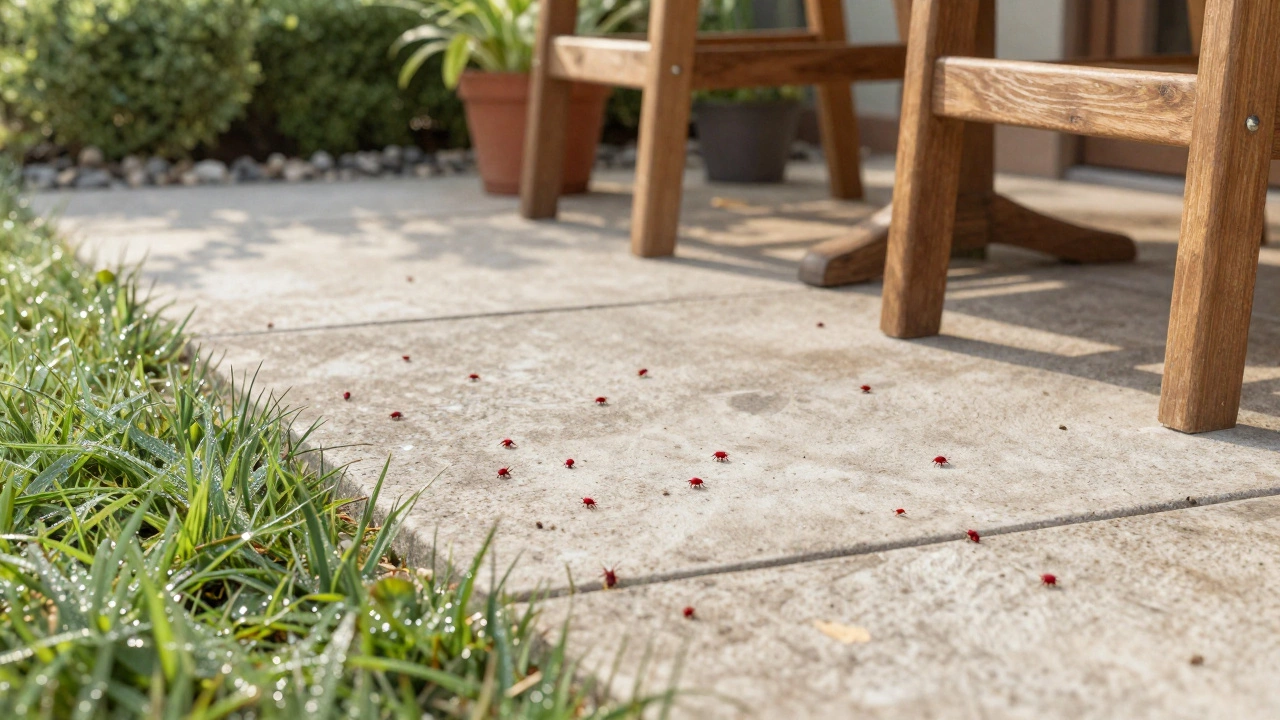
Those tiny red mites on your patio aren’t just an eyesore-they’re a sign something’s off in your outdoor space. You notice them crawling on your chairs, clustering near the cushions, or even hopping onto your legs when you sit down. They’re not dangerous like ticks, but they’re annoying, messy, and if left alone, they multiply fast. You didn’t plant them. You didn’t invite them. So how do you get rid of them for good?
What Are These Tiny Red Mites?
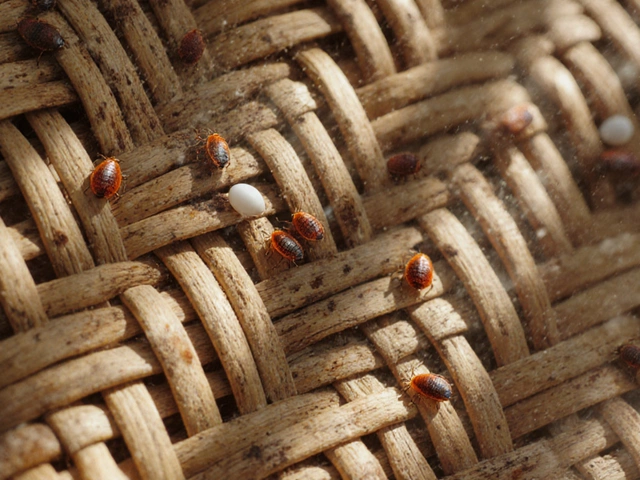
These are usually clover mites or chigger mites, both common in outdoor areas with grass, mulch, or potted plants. Clover mites are bright red, about the size of a pinhead, and move in quick bursts. They don’t bite humans, but they leave behind red stains when crushed-hence the mess on your white cushions or light-colored concrete. Chigger mites are more likely to cause itching if they latch onto skin, but they’re less common on patios unless you’ve got tall grass or dense shrubs nearby.
They thrive in moist, shaded areas with organic debris. If your patio has potted plants, wood mulch, or a corner where leaves pile up, you’ve got the perfect breeding ground. They’re not pests because your patio is dirty-they’re pests because your patio looks *too* natural.
Step 1: Clean Everything First
You can’t kill mites if you don’t remove their hiding spots. Start by stripping your patio bare. Move all furniture, cushions, and planters. Sweep up every leaf, twig, and dead plant piece. Use a stiff brush to scrub the surface-concrete, stone, or wood-especially along seams and under furniture legs where mites hide.
Wash cushions with hot water and mild detergent. If they’re removable, dry them in direct sunlight for at least two hours. Sunlight kills mites on contact. Don’t just vacuum-vacuuming doesn’t kill them, it just moves them around. Wipe down metal and plastic furniture with a damp cloth soaked in soapy water. Let everything dry completely before putting it back.
Step 2: Kill What’s Left With a Natural Spray
Store-bought insecticides often overkill and leave toxic residue. You don’t need chemicals. A simple spray made from water, dish soap, and rubbing alcohol works wonders. Mix:
- 1 cup of isopropyl alcohol (70% or higher)
- 1 tablespoon of liquid dish soap
- 1 quart of water
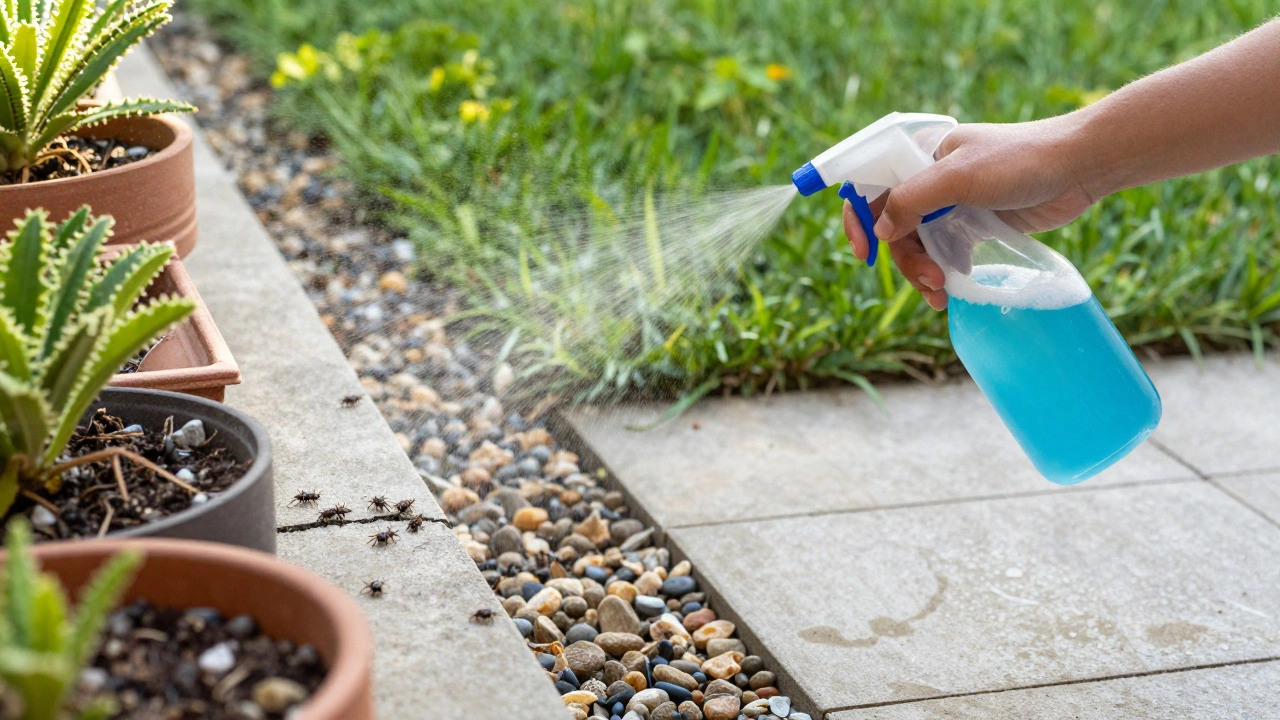
Pour it into a spray bottle. Spray it directly on mite clusters-under chairs, along baseboards, near planters. Don’t soak the surface; just mist it. The soap breaks down their outer shell. The alcohol dries them out. Within minutes, you’ll see them stop moving. Reapply every 2-3 days for a week to catch any newly hatched mites.
For potted plants nearby, drench the soil with this mix. Mites lay eggs in damp soil. You’re not killing the plant-you’re killing the mite eggs in the dirt.
Step 3: Block Their Entry Points
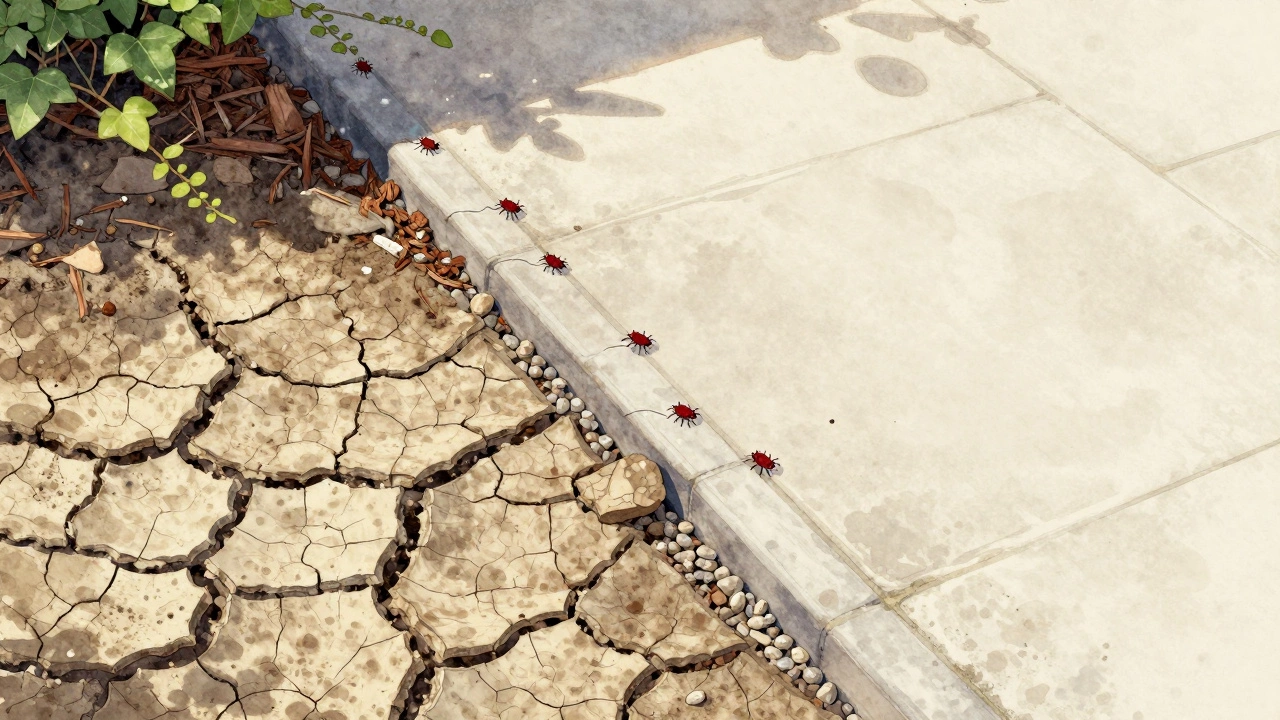
These mites don’t fly. They crawl. And they’ll climb up from the ground, through cracks, or from overgrown grass. Seal gaps between patio slabs with sand or concrete filler. If your patio borders a lawn or garden, create a 6-inch barrier of gravel or crushed stone between the grass and your seating area. Mites won’t cross dry, loose material.
Trim back any bushes, ivy, or tall grass within 3 feet of your patio. They’re not just for looks-they’re mite highways. Remove mulch near the patio edge. Switch to stone or rubber mulch if you need ground cover. It’s less inviting.
Step 4: Prevent Future Infestations
Once you’ve cleared the mites, don’t let them come back. Here’s how:
- Keep your patio dry. Use a cover or retractable awning to shield it from overnight dew.
- Don’t leave outdoor cushions out overnight. Store them in a shed or garage.
- Water plants in the morning, not evening. Wet soil at night = mite party.
- Check new plants before bringing them to the patio. Mites hitchhike on soil and leaves.
- Every few weeks, give your patio a quick rinse with a hose. It doesn’t have to be deep cleaning-just enough to wash away debris and discourage buildup.
Some people swear by diatomaceous earth (DE). It’s a fine powder made from fossilized algae. Sprinkle it along the patio edges and under furniture. It cuts through the mites’ exoskeletons and dehydrates them. Food-grade DE is safe around pets and plants, but wear a mask when applying-it’s dusty.
What Doesn’t Work
Don’t waste time on these myths:
- Vinegar spray: It doesn’t kill mites. It might mask odor, but mites don’t care about smell.
- Essential oils: Lavender or tea tree oil might repel them temporarily, but they don’t kill eggs or adults.
- Just waiting it out: Mites can lay hundreds of eggs in a week. They’ll come back stronger.
Also avoid heavy-duty pesticides. They don’t solve the root problem-moisture and debris-and they harm bees, ladybugs, and other helpful insects that naturally keep mite populations in check.
When to Call a Pro
If you’ve done all this and mites are still crawling after two weeks, something else might be going on. Are you seeing webbing? Are they clustered around a specific spot like a leaky pipe or cracked foundation? That could mean a different pest-like spider mites or even fungus gnats. In that case, take a clear photo and show it to a local garden center or pest control expert. They can identify it in seconds and tell you if it’s something more serious.
But 9 times out of 10, cleaning, spraying, and sealing gaps fixes it. No need for expensive treatments. Just consistency.
Quick Maintenance Checklist
- Weekly: Sweep patio surface
- Biweekly: Rinse furniture with hose
- Monthly: Check under cushions and planters
- Seasonal: Replace mulch near patio, trim vegetation
- After rain: Dry cushions and move planters
Patios aren’t meant to be sterile. But they shouldn’t be bug hotels either. A little routine keeps them clean, comfortable, and mite-free.
Are tiny red mites dangerous to humans?
Most tiny red mites on patios, like clover mites, don’t bite or transmit disease. They’re more of a nuisance-they stain fabrics and leave red smears when crushed. Chigger mites can bite and cause itchy bumps, but they’re rare on patios unless you’re sitting in tall grass. Either way, they’re not a health threat, just a mess.
Can I use bleach to kill mites on my patio?
Bleach can kill mites, but it’s too harsh for most patio surfaces. It can discolor stone, wood, or concrete, and damage plants nearby. It also breaks down sealants on furniture. Stick to soapy water or alcohol sprays-they’re just as effective and won’t ruin your patio’s look.
Why do mites appear only in spring?
Mites thrive in cool, damp conditions. In early spring, after winter rains, the soil warms up and moisture increases-perfect for egg hatching. They’re most active from late February to early May. That’s why you notice them suddenly. They’re not new pests-they’re just seasonal.
Do I need to treat my entire yard?
No. Mites on your patio usually come from the immediate 3-5 foot zone around it. Focus on sealing the edge between grass and patio, trimming nearby plants, and keeping the patio dry. You don’t need to spray your whole lawn. Over-treating makes the problem worse by killing off natural predators like spiders and ground beetles.
Can I prevent mites with a patio cover or awning?
Yes. A cover that sheds rain and reduces morning dew cuts mite survival by over 80%. Mites need moisture to live. If your patio stays dry, they won’t stick around. Combine a cover with regular cleaning, and you’ll rarely see them again.