Recliner Pain Relief Matchmaker
Find the right support for your body. Answer these questions to see which recliner type aligns best with your needs.
Your Mobility & Pain Profile
Recommended Recliner Type:
--
Suitability Score
Key Features to Look For:
Select your preferences and click "Find My Match" to get personalized recommendations.
You wake up stiff. Your knees click when you stand. The lower back throbs after just thirty minutes on the sofa. If this sounds familiar, you aren't alone. For many people over sixty, chronic discomfort is a daily reality that limits mobility and mood. But here is the thing: you don't have to accept it as an inevitable part of aging. Often, the culprit isn't just biology-it's your furniture.
Most standard sofas force your spine into unnatural curves and leave your legs dangling or unsupported. This puts pressure on joints that are already vulnerable. Enter the recliner chair, a piece of furniture designed specifically to support the body in a state of rest. Unlike traditional seating, a high-quality recliner allows you to adjust your posture dynamically, reducing strain on the hips, knees, and spine. It’s not just about luxury; it’s about functional pain management.
Why Standard Seating Hurts Aging Bodies
Think about how you sit on a typical couch. Your feet might not touch the floor, cutting off circulation. Your back sinks into soft foam that offers no structural support. Or worse, the seat depth is too long, forcing you to slouch to keep your head upright. For younger bodies, muscles compensate for these flaws. For older adults, those compensations fail. The result? Increased load on the lumbar spine and restricted blood flow to the legs.
Arthritis, sciatica, and general wear-and-tear make joints less flexible. When you sit in a rigid position for hours, synovial fluid-the natural lubricant in your joints-stops circulating effectively. This leads to stiffness and increased pain upon movement. A proper recliner changes the geometry of sitting. By elevating the legs above the heart level (a position known as Zero Gravity), you reduce gravitational pull on the spine and encourage venous return from the legs. This simple mechanical change can significantly alleviate swelling and ache.
The Anatomy of Pain-Relieving Recliners
Not all recliners are created equal. Some are bulky, hard to get out of, and offer minimal support. To actually help with aches and pains, you need specific features. Here is what matters most:
- Lumbar Support: Look for chairs with adjustable lumbar pillows or built-in contouring. This maintains the natural inward curve of the lower back, preventing disc compression.
- Leg Rest Height: The footrest must extend fully to support the calves and knees. Partial support leaves the hamstrings tight, pulling on the pelvis and worsening back pain.
- Seat Depth: There should be two to four inches between the edge of the seat and the back of your knees. Too deep, and you slump; too shallow, and your thighs lack support.
- Recline Mechanism: Manual levers require upper body strength, which may be limited if you have shoulder arthritis. Power recliners with remote controls allow effortless adjustment, preserving energy for other activities.
| Feature | Manual Recliner | Power Recliner | Lift Chair |
|---|---|---|---|
| Best For | Active seniors with good upper body strength | Those with limited mobility or arthritis | Those who struggle to stand from seated positions |
| Pain Relief Focus | Postural alignment | Effortless position changes | Reduced knee/hip strain during transitions |
| Cost Range (NZD) | $800 - $1,500 | $1,500 - $3,000+ | $2,000 - $4,500+ |
| Maintenance | Low (mechanical parts) | Moderate (motor/battery care) | Moderate (motor/battery care) |
Targeting Specific Aches: Knees, Back, and Circulation
Let’s break down how recliners address specific complaints. If your primary issue is knee osteoarthritis, the key is avoiding deep flexion. Sitting in a low sofa bends the knee beyond 90 degrees, compressing the patella against the femur. A recliner keeps the knee at a neutral angle, reducing joint surface pressure. Many models also offer massage functions targeting the quadriceps, which helps relax muscles that tighten around painful joints.
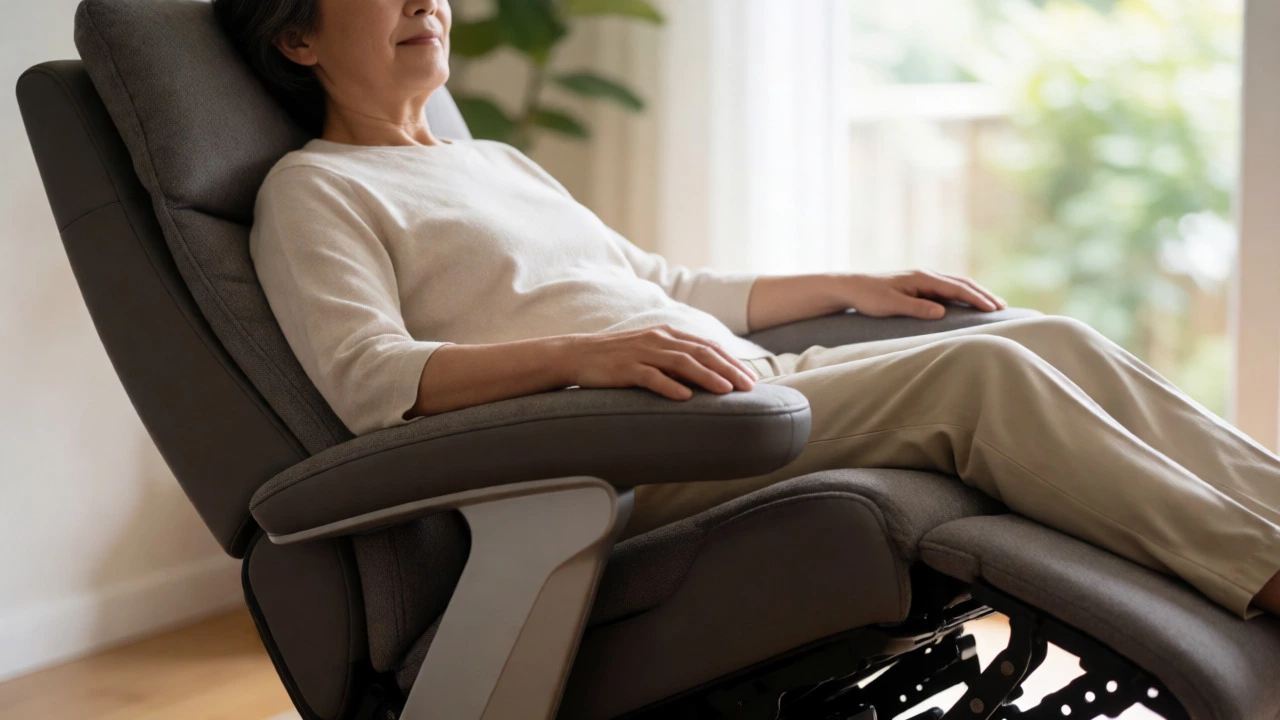
For lower back pain, particularly sciatica, the goal is decompression. Sciatica often flares when the piriformis muscle tightens or when discs bulge due to poor posture. A well-adjusted recliner opens up the hip angle to roughly 135 degrees. This "open" position reduces tension on the sciatic nerve pathway. Combine this with heat therapy settings available in some premium models, and you have a non-pharmaceutical approach to managing flare-ups.
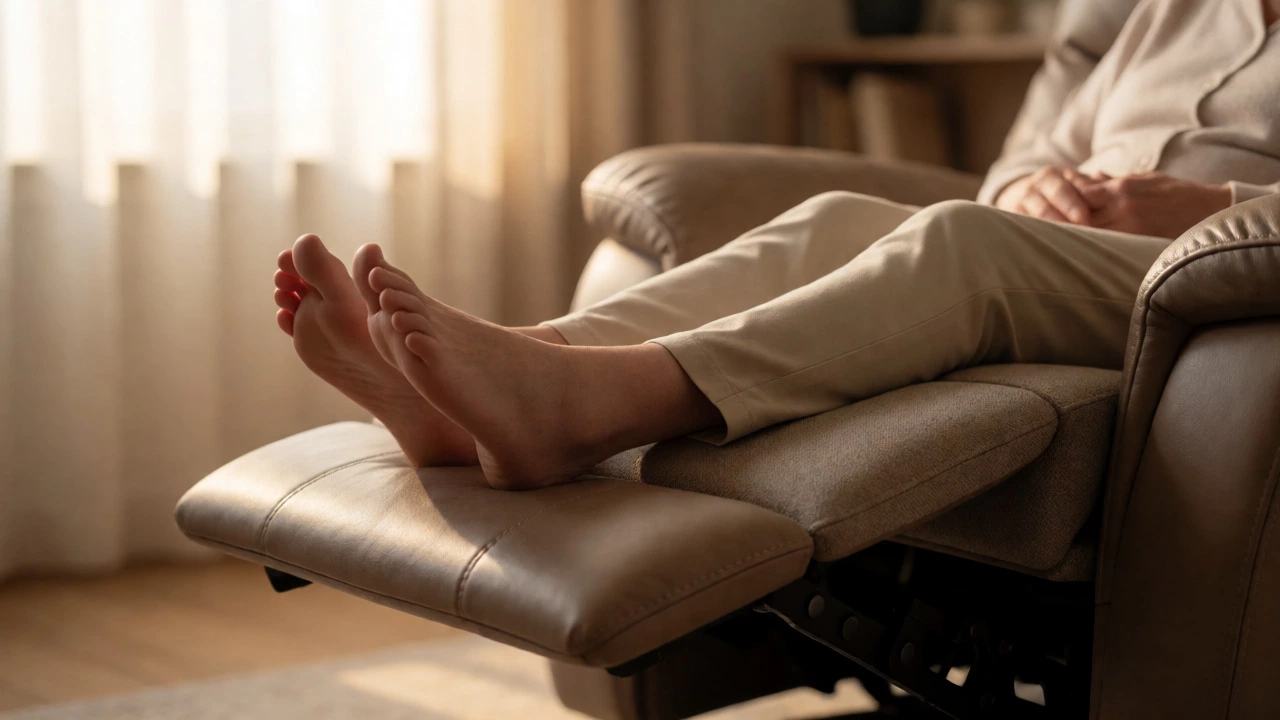
Circulatory issues like edema (swelling) in the ankles and feet are common in older age. Gravity pools blood in the lower extremities when you sit with legs down. Elevating your legs in a recliner uses gravity to assist lymphatic drainage. Doctors often recommend this position for patients with venous insufficiency. Doing this for just 20 minutes in the evening can visibly reduce shoe tightness by morning.
Choosing the Right Fit: A Practical Guide
Buying a recliner sight-unseen is a mistake, especially when dealing with pain. You need to test it. Visit a showroom in Wellington or your local area. Sit in the chair for at least ten minutes. Don’t just perch on the edge. Use it as you would at home: read a book, watch TV, close your eyes.
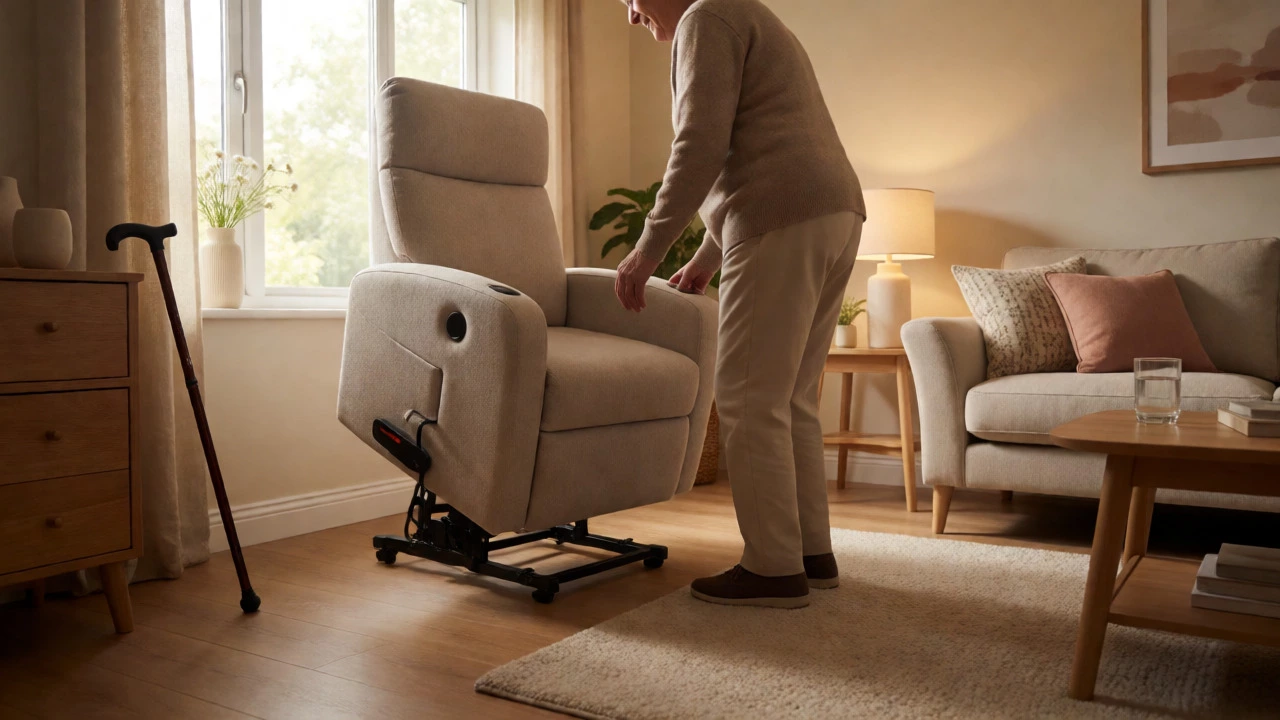
Pay attention to the transition. Can you get out of the chair easily without using your hands to push off armrests? If you struggle to rise, consider a lift chair. These use a motorized mechanism to tilt the entire seat forward, helping you stand with minimal knee effort. This is crucial if you have had knee replacements or suffer from severe hip arthritis.
Also, check the upholstery. Leather is durable and easy to clean but can feel cold initially. Fabric is warmer and more breathable but traps dust and allergens, which might aggravate respiratory issues common in older adults. Microfiber is a middle ground-soft, warm, and resistant to stains.
Beyond the Chair: Lifestyle Tweaks for Maximum Relief
A recliner is a tool, not a cure-all. To truly minimize aches, integrate it into a broader routine. Set a timer. Even in the best chair, staying static for more than an hour causes stiffness. Stand up, stretch, and walk around for five minutes every hour. This keeps synovial fluid moving and prevents muscles from shortening.
Hydration plays a surprising role. Discs in the spine rely on water content to maintain height and cushioning. Dehydration makes them brittle and less effective at shock absorption. Keep a glass of water nearby while you recline. Additionally, pair your seating time with gentle exercises. Ankle pumps while watching TV promote circulation. Neck rolls relieve tension from screen viewing.
Consider the environment around the chair. Is it near a window where sunlight fades the fabric? Is there enough space for a walker or cane if needed? In New Zealand homes, space can be tight. Measure your doorway and hallway before purchasing. Delivery teams often refuse to carry large items through narrow turns, leading to costly returns.
Long-Term Value: Investment vs. Expense
Some people hesitate because of the price tag. A quality power recliner can cost between $1,500 and $3,000 NZD. Compare this to ongoing costs of physiotherapy sessions, painkillers, or doctor visits for minor mobility issues. If the chair reduces your need for pain medication by half, or saves you two physio appointments a month, it pays for itself within a year.
Moreover, longevity matters. Cheap recliners often have weak motors or foam that collapses within two years. Look for brands offering warranties on mechanisms and frames. A solid hardwood frame lasts decades, whereas particleboard warps under weight. Investing in durability means you won’t face the physical stress of replacing a broken chair later.
Frequently Asked Questions
Are power recliners better than manual ones for arthritis?
Yes, generally. Power recliners eliminate the need to use upper body strength to lean back or lift the footrest. This is critical for individuals with shoulder, elbow, or hand arthritis. The remote control allows precise adjustments without physical strain, making frequent position changes easier and less painful.
How much time should I spend in a recliner daily?
There is no strict limit, but moderation is key. Aim for several shorter sessions rather than one long block. Spending 20-30 minutes in a reclined position multiple times a day is more beneficial for circulation and joint health than sleeping in the chair all night. Remember to move every hour to prevent stiffness.
Can a recliner help with sleep apnea?
It can help manage symptoms. Sleeping flat on your back often worsens sleep apnea because the tongue falls backward, blocking the airway. A recliner allows you to sleep at a slight incline (around 30-45 degrees), which keeps the airway open. Many users report fewer snoring episodes and better oxygen levels when napping in a reclined position.
What is the Zero Gravity position?
Zero Gravity is a reclining position where your legs are elevated slightly above your heart. Originally developed by NASA to reduce stress on astronauts' bodies during launch, it distributes body weight evenly across the chair. This minimizes pressure on the spine and improves blood flow, which can significantly reduce lower back pain and leg swelling.
Do I need professional help to set up a power recliner?
Usually, no. Most modern power recliners come pre-assembled or require minimal setup, such as attaching the backrest to the base. However, ensure you have access to a power outlet. If you choose a battery-operated model, you’ll need to charge it regularly. Always follow the manufacturer’s instructions for initial calibration to ensure the motor runs smoothly.