
Flooring Waste & Order Calculator
Estimation Result
Quick Summary: How Much Extra to Buy
- Standard Rooms: Add 10% for basic rectangular spaces.
- Complex Layouts: Add 15% for rooms with many corners, alcoves, or diagonal patterns.
- Herringbone or Chevron: Add 20% due to the high volume of precision cuts.
- Natural Stone or Tile: Add 10-15% to account for breakage during shipping or cutting.
- DIY Beginners: Add an extra 5% 'mistake tax' to your total.
Why You Can't Just Buy the Exact Square Footage
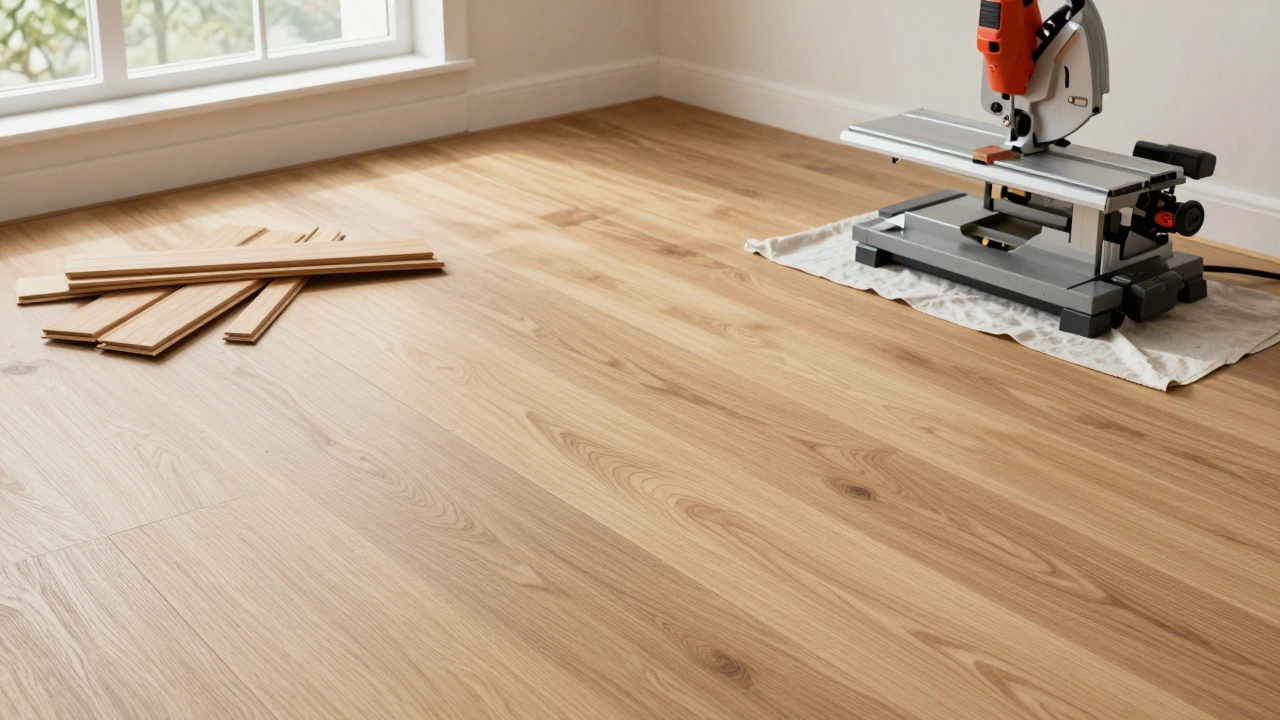
If your room is 100 square feet, you can't just buy 100 square feet of Hardwood Flooring. Why? Because floors aren't installed as one giant sheet. You're laying planks or tiles that have to be cut to fit the perimeter of your walls. Every time you reach a wall and cut a board to fit, the remaining scrap piece is often too short to be used anywhere else. That's a lost piece of material.
Beyond the cuts, there's the reality of human error. Maybe you mismeasure a doorway, or you accidentally split a tongue-and-groove joint while hammering. If you have exactly enough material, one bad cut ruins your entire timeline. Plus, you need a few spare boxes tucked away in the garage for the future. If a pipe leaks or you drop a heavy cast-iron skillet on your floor in three years, you'll want matching planks from the same production run.
Calculating Your Overage Based on Material
Different materials behave differently under a saw. Some are forgiving; others are a nightmare. Let's look at how the material affects your waste percentage.
| Material Type | Recommended Extra | Reasoning |
|---|---|---|
| Laminate / LVP | 10% | Easy to cut, high consistency. |
| Engineered Wood | 10-12% | Standard cuts, some board defects. |
| Solid Hardwood | 15% | Natural knots or splits in boards. |
| Ceramic/Porcelain Tile | 10-15% | High breakage risk during cutting. |
| Natural Stone | 15-20% | High variance and fragile edges. |
For instance, if you're using Luxury Vinyl Plank (LVP), the material is incredibly stable and easy to snap-cut. You can often use the off-cut from the end of one row to start the next row, which keeps waste low. However, if you're installing Natural Slate, you're dealing with a rock that can crack unpredictably. A single wrong move with the wet saw can cost you a large, expensive piece of stone.
The Impact of Room Shape and Pattern
The geometry of your room is often more important than the material itself. A perfectly square bedroom is a breeze. But what if you have a Victorian-style home with breakfast nooks, floating fireplaces, and odd-angled closets?
Every time the floor meets a wall at an angle other than 90 degrees, your waste increases. If you're laying boards in a standard horizontal pattern, 10% is fine. But if you decide to run your planks diagonally to make a small room look larger, you're cutting every single board at a 45-degree angle. This creates massive amounts of triangular scrap that cannot be reused. In these cases, jump to 15% or even 20% overage.
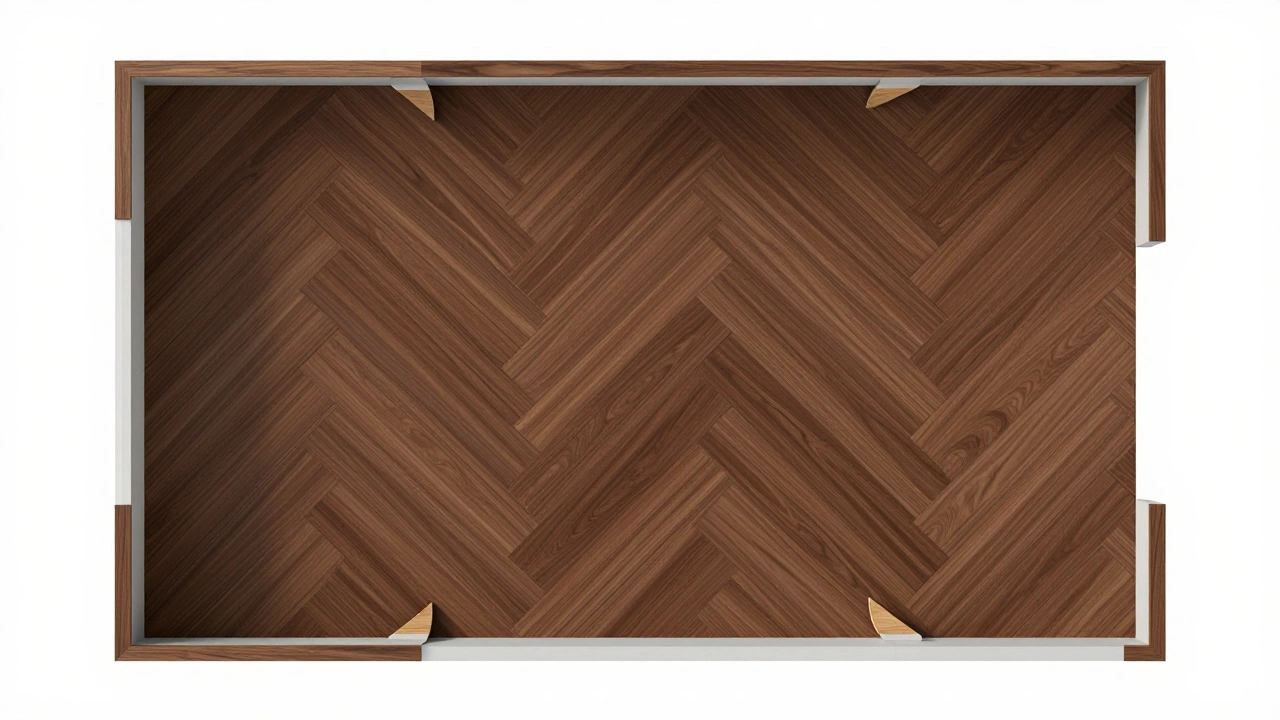
Then there are the high-fashion patterns. A Herringbone or Chevron pattern requires extremely precise cuts at the edges of the room to maintain the 'V' shape. Because you're cutting small pieces off the ends of almost every single board to maintain the pattern, your waste shoots up. For these installs, 20% is the gold standard to avoid running out mid-project.
Step-by-Step: How to Calculate Your Order
Don't guess. Use a simple formula to ensure you have enough. Here is the most reliable way to do it:
- Measure every room: Multiply the length by the width of each area. If you have an L-shaped room, break it into two rectangles and add them together.
- Sum the totals: Add all your room square footages together to get your Net Square Footage.
- Choose your waste factor: Pick a percentage based on the tables above (e.g., 0.10 for 10%, 0.15 for 15%).
- The Math: Multiply your Net Square Footage by (1 + your waste factor).
Example: 500 sq ft x 1.10 = 550 sq ft. - Round up to the box: Flooring is sold in boxes, not individual square feet. If your total is 550 sq ft, but boxes come in 22 sq ft each, you'll need 25 boxes (550 / 22). If it's 551 sq ft, you must buy 26 boxes.

Common Pitfalls to Avoid
One of the biggest mistakes homeowners make is forgetting about the dye lot. In the world of Flooring Manufacturing, a dye lot is a specific batch of material produced with the same color settings. Even if you buy the same product code six months later, the new batch might be slightly yellower or darker than the old one. This is why buying extra now is cheaper than trying to find a matching lot later.
Another trap is relying solely on a contractor's estimate without double-checking the math. While pros are generally accurate, they might estimate for a 'standard' install, but your house might have 'non-standard' quirks. If you're paying for the materials yourself, always verify the square footage and the waste percentage they've factored in.
Finally, don't be tempted to 'save money' by cutting the waste factor down to 5%. It sounds like a smart way to save $100, but if you run short, the cost of shipping a single box of flooring or the cost of a contractor's second trip to the site will far exceed those savings.
Managing Your Leftovers
Once the job is done, you'll likely have a few unopened boxes. Resist the urge to return them to the store immediately. Instead, store them in a climate-controlled area (like a hall closet or under a bed) rather than a damp garage. Humidity and temperature swings can warp the planks, making them useless for future repairs.
Label the boxes with the room they were intended for and the date of purchase. If you ever have a localized disaster-like a dishwasher leak that ruins three planks-you can simply pop those out and replace them with a perfect match from your attic. It turns a potential full-room replacement into a twenty-minute fix.
What happens if I have too much leftover flooring?
Most big-box retailers will allow you to return unopened boxes within a certain timeframe, provided you have the receipt. However, if the flooring was a special order or a custom dye lot, returns may not be possible. In that case, keeping a few boxes for future repairs is the best strategy.
Does the waste factor include the area under baseboards?
Yes. You should measure the room from wall to wall, even if the baseboards are already installed. Flooring typically slides under the baseboard or is covered by it, so you need to account for that small overlap in your total square footage before adding the waste percentage.
Is 10% always enough for a DIY project?
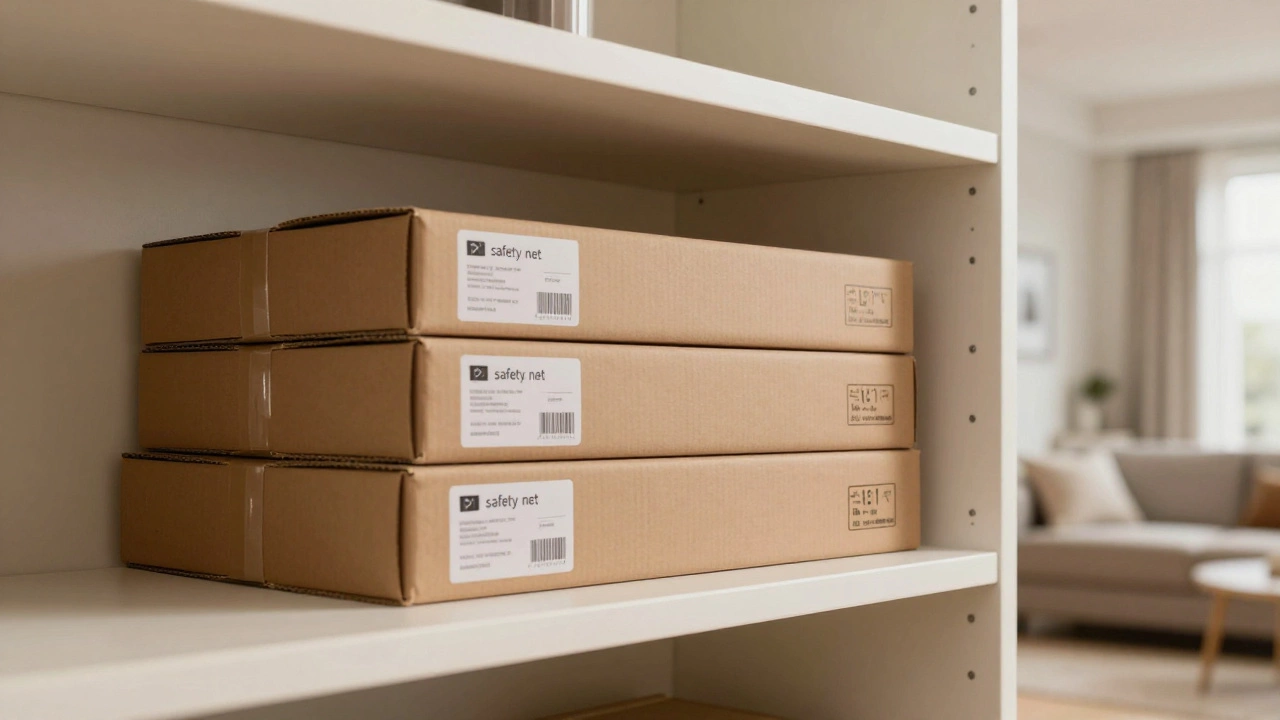
Not necessarily. If you've never used a miter saw or a flooring cutter, you're more likely to make a wrong cut. For first-timers, adding an extra 5% (totaling 15%) provides a safety net that prevents a mid-project panic run to the hardware store.
How does a diagonal layout affect the amount of material needed?
A diagonal layout significantly increases waste because every board hitting the wall must be cut at an angle. This creates many small, unusable triangular off-cuts. You should increase your waste factor to 15% for simple rooms and up to 20% for rooms with many corners when going diagonal.
Should I buy extra if I'm installing flooring in multiple rooms?
Yes, but you can sometimes be slightly more efficient. When moving from one room to another, you may be able to use larger off-cuts from the first room to start the second. Even so, it's safer to apply the waste factor to the total combined square footage of all rooms to ensure consistency across the whole house.