Sofa Durability Calculator
Sofa Durability Score Calculator
Find out if your sofa will last 20+ years with this simple calculator. Input key features and get a durability score based on industry standards.
Most people buy a sofa once every 5 to 10 years. But if you’re spending $2,000 or more, why settle for something that sags, squeaks, or unravels in three years? The truth is, lifetime sofa isn’t a marketing myth-it’s a reality if you know what to look for. You don’t need the most expensive brand. You need the right construction, the right materials, and the right expectations.
What Makes a Sofa Last?
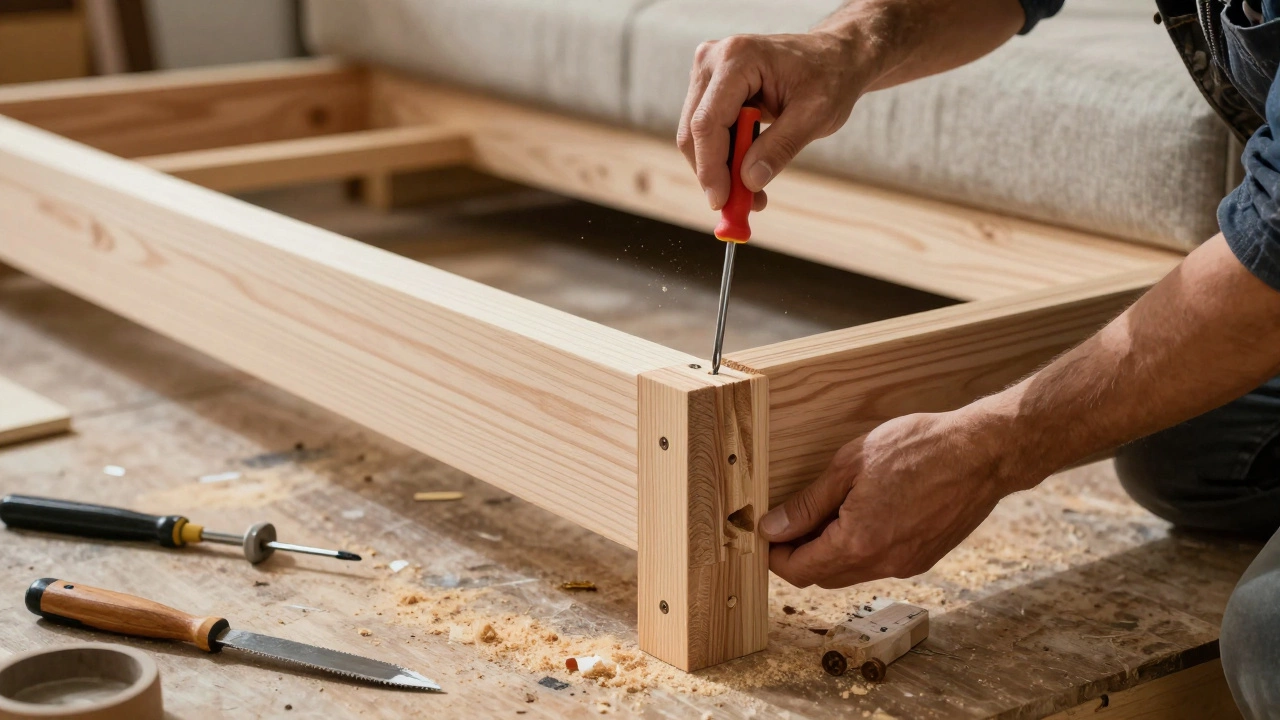
A sofa that lasts 20+ years isn’t made of magic. It’s built with a few non-negotiables: a solid frame, quality springs, durable fabric, and tight craftsmanship. Skip the ones with particleboard frames, glued joints, or cheap foam. Those are designed to fail. Look for kiln-dried hardwood like oak, maple, or beech. These woods shrink less, resist warping, and hold screws better than pine or plywood. Check under the sofa-if you see exposed wood joints with screws or dowels, that’s a good sign. If it’s all staples and glue, walk away.
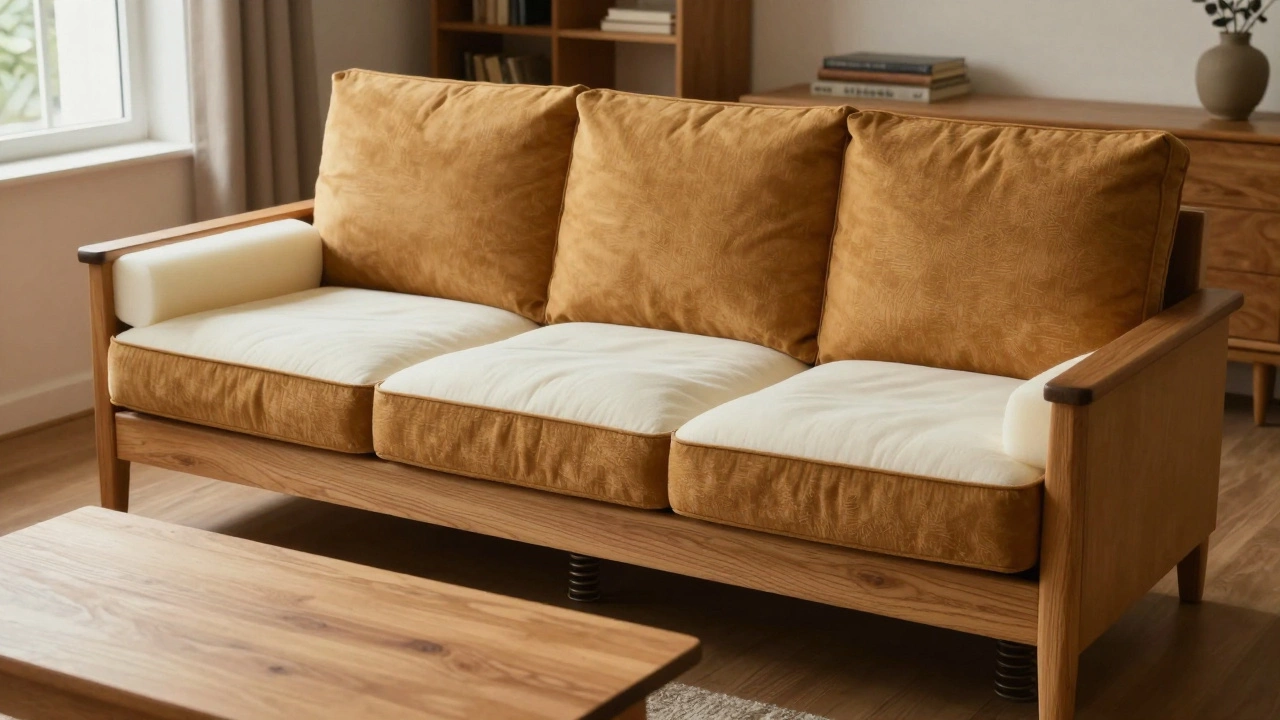
Spring systems matter just as much. Eight-way hand-tied springs are the gold standard. They flex independently, distribute weight evenly, and don’t lose their bounce over time. If you see sinuous S-shaped springs, they’re okay for mid-range sofas-but they sag faster under heavy use. Skip the foam-only seats. Even the best high-density foam breaks down after 5-7 years. Look for a combo: high-resilience foam over springs, or better yet, down-wrapped cushions with a foam core. That’s what you’ll find in sofas from brands like Stickley, Hancock & Moore, or even custom makers in the U.S. and Europe.
Frame: The Skeleton That Holds Everything Together
Frame quality separates the lifetime sofa from the disposable one. A sofa with a solid hardwood frame can outlive your kids’ college degrees. Particleboard and MDF? They swell with humidity, crack under weight, and can’t be repaired. If you lift the sofa and see a plywood bottom with visible layers, that’s a red flag. Genuine hardwood frames are heavier-often 80+ pounds for a standard three-seater. They’re also usually stained or finished on the inside, not just painted over. Some makers even use mortise-and-tenon joints, the same technique used in fine furniture for centuries. That’s not just tradition-it’s engineering.
Don’t be fooled by "reinforced" frames. Many brands add extra glue or metal brackets to compensate for weak wood. Ask: Is the frame made from solid wood, or is it veneered? If the salesperson can’t answer, assume it’s not solid. You can even ask to see the frame before buying. Reputable makers will let you inspect it. If they say no, that’s your answer.
Upholstery: Fabric That Won’t Fall Apart
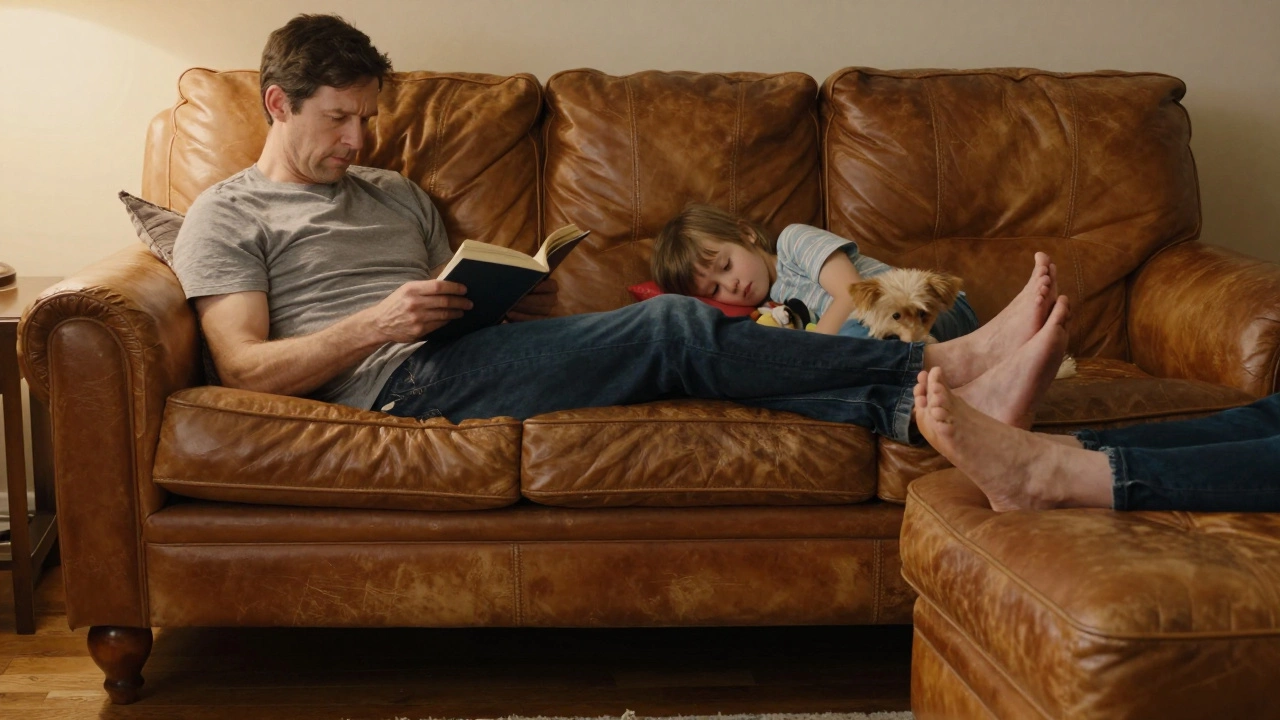
Leather and performance fabrics are the two top choices for longevity. Full-grain leather, if cared for, lasts 20-30 years. It develops a patina, not cracks. Avoid bonded leather-it’s just shredded scraps glued to a backing. It peels, fades, and feels plastic-y within a few years. Genuine leather should smell like leather, not chemicals. Run your hand over it: real leather has natural marks, slight variations in color, and a soft, supple feel.
If you have kids, pets, or spill coffee regularly, go with a high-performance fabric. Look for textiles with a double rub count of 30,000 or higher. That’s the industry standard for heavy use. Brands like Crypton, Sunbrella, and Revolution Fabrics are made for this. They’re stain-resistant, fade-resistant, and can be cleaned with soap and water. A sofa with these fabrics can survive a toddler’s juice box explosion and a dog’s muddy paws without looking worn out. Avoid cheap cotton blends-they pill, stretch, and lose shape fast.
Cushions: The Part That Feels Like Home
Your sofa’s comfort lasts only as long as its cushions. Foam density is the key. Anything below 1.8 lbs per cubic foot breaks down too fast. Aim for 2.5 lbs or higher. High-resilience (HR) foam is the sweet spot-it bounces back after sitting, doesn’t flatten into a hammock, and holds its shape for 10-15 years. Down-filled cushions feel luxurious but need fluffing daily. The best compromise? Down-wrapped foam. A foam core gives support; a layer of down or feather wrap adds softness. These cushions can last 15+ years with occasional flipping and rotating.
Some brands offer replaceable cushions. That’s a huge plus. If the foam wears out in 10 years, you don’t need to buy a whole new sofa. Just order new inserts. It’s cheaper than replacing the whole thing-and way more sustainable.
Brand Reputation vs. Custom Build
You don’t need to pay $10,000 for a sofa that lasts. But you also won’t find a lifetime sofa at a big-box store. The best value comes from American-made or European craftsmen who build to last. Brands like Bassett, Kincaid, and Ethan Allen offer solid hardwood frames and quality fabrics at mid-range prices. Custom makers like The Joinery or Rocking Horse Furniture let you choose every detail: wood type, spring system, fabric, cushion fill. You pay more upfront, but you get exactly what lasts.
Compare warranties. A 1-year warranty means they expect it to fail. A 10- or 20-year warranty on the frame? That’s confidence. Some even cover springs and cushions. Read the fine print-some warranties exclude stains or normal wear. But a strong warranty on the frame is a clear signal: they stand behind their build.
What to Avoid at All Costs
- Particleboard or MDF frames
- Glued or stapled joints
- Low-density foam (under 1.8 lbs)
- Bonded leather or faux leather
- Synthetic fabrics with low double-rub counts (under 15,000)
- Plastic or metal legs that wobble or scratch floors
If you see any of these, the sofa is designed for short-term use. Even if it’s on sale, it’s not a bargain. It’s a replacement waiting to happen.
Real-World Test: How to Check a Sofa Before You Buy
Don’t just sit on it. Test it like you’re going to live with it for 20 years.
- Press down on the arms and back-there should be no creaking or shifting.
- Push on the corners-no give or flexing. A solid frame won’t bend.
- Flip the cushions. Are the seams tight? Are the stitches even? Loose stitching means fraying soon.
- Ask to see the underside. Look for hardwood, screws, and springs-not staples or glue.
- Ask: "Can I replace the cushions in 10 years?" If they say no, walk away.
These aren’t fancy tricks. They’re the same checks professional interior designers use. If a sofa passes all five, you’re looking at a potential lifetime piece.
Why Most Sofas Fail-and How to Beat the Odds
The average sofa dies from neglect, not wear. People don’t rotate cushions. They don’t clean spills. They don’t protect from sunlight. A sofa in direct sun fades fast. A sofa with no cushion rotation flattens unevenly. A sofa with coffee stains left for weeks becomes a breeding ground for mold and odor.
Pro tip: Rotate cushions every 2-3 months. Vacuum the crevices monthly. Use a fabric protector spray on performance fabrics. Keep pets off the arms. Keep the sofa 6 inches from windows to avoid UV damage. These small habits double its life.
A lifetime sofa isn’t about price. It’s about choices. You can buy a $600 sofa that lasts 3 years-or a $2,500 one that lasts 25. The math is simple: $600 every 3 years is $5,000 over 25 years. The $2,500 sofa? One payment. And it still looks good.
Final Thought: It’s an Investment, Not a Purchase
Your sofa is the center of your home. You sit on it every day. You relax on it. You watch movies, read books, and hold your kids on it. It deserves more than a quick decision. Take your time. Ask questions. Test it. Look under the hood. A lifetime sofa isn’t about being fancy-it’s about being smart. And when you find one, you’ll know. It won’t just sit in your living room. It’ll become part of your story.
Can a sofa really last 20 years or more?
Yes, if it’s built with a solid hardwood frame, eight-way hand-tied springs, high-density foam (2.5+ lbs), and durable upholstery like full-grain leather or performance fabric. Many custom-made sofas from reputable American or European makers are designed to last 25-30 years with basic care.
Is leather better than fabric for longevity?
Full-grain leather lasts longer than most fabrics-up to 30 years with proper care. It develops a patina instead of wearing out. But high-performance fabrics like Crypton or Sunbrella can match or exceed leather in durability, especially for homes with kids or pets. Both are excellent choices if you avoid bonded leather and cheap cotton blends.
What’s the best cushion fill for a long-lasting sofa?
The best option is high-resilience foam (2.5+ lbs density) wrapped in down or feathers. This gives you the support of foam with the softness of down. Foam-only cushions sag after 5-7 years. Down-only cushions flatten and need daily fluffing. The combo lasts 15+ years and stays comfortable.
Should I buy a custom sofa or a brand-name one?
Custom sofas give you full control over materials and construction, making them ideal for long-term use. But many established brands like Bassett, Kincaid, and Ethan Allen offer high-quality, made-in-the-U.S. options at lower prices. If you can’t customize, choose a brand with a 10-20 year frame warranty and clear specs on foam density and fabric durability.
How do I know if a sofa’s frame is solid hardwood?
Lift the sofa-it should feel heavy (80+ lbs for a three-seater). Look under the base: the frame should be visible and made of solid wood with screws or dowels, not staples or glue. Ask the salesperson directly: "Is the frame made from solid hardwood?" If they hesitate or say "it’s reinforced," that’s a red flag.
Are expensive sofas always worth it?
Not always. Some luxury brands charge for branding, not build quality. A $5,000 sofa with a particleboard frame isn’t worth it. A $2,800 sofa with solid oak, hand-tied springs, and 30,000+ double-rub fabric is. Price doesn’t guarantee quality-construction does. Always ask for specs, not just price tags.
Can I repair a sofa instead of replacing it?
Yes, if the frame is solid. Reupholstering, replacing cushions, or re-tightening springs can extend a sofa’s life by another 10-15 years. Many local upholstery shops offer these services for 30-50% of the cost of a new sofa. It’s a smart, sustainable choice.
Next time you’re shopping for a sofa, skip the trends. Skip the flashy colors. Focus on what’s underneath. That’s where the real value lives.