
TV Stand Stability Calculator
Check TV Stability
Enter your TV and stand measurements to see if your setup is safe.
You bought a new 65-inch TV. It looks amazing. But when you pull out the old stand-meant for a 55-inch TV-you start wondering: Can I put a 65-inch TV on a 55-inch stand? It looks close. Maybe it’ll fit. Maybe it’ll be fine. But here’s the truth: it’s not just about whether it fits-it’s about whether it’s safe.
Size doesn’t mean stability
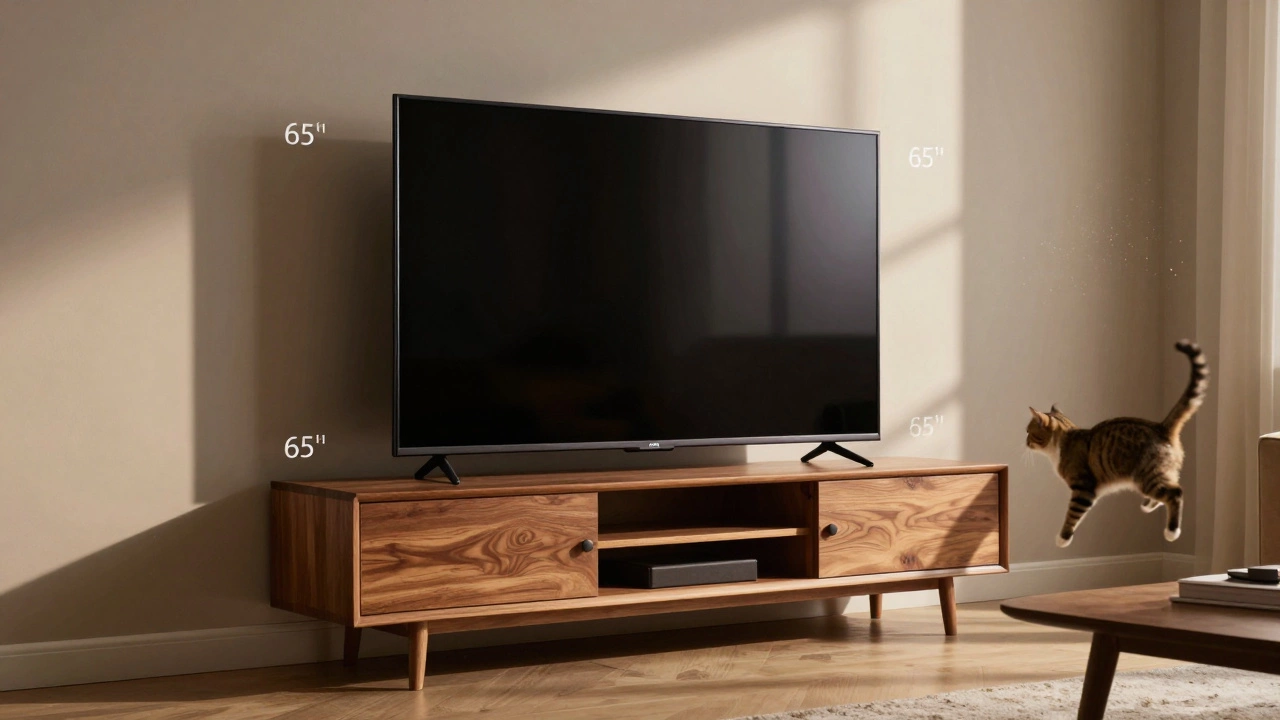
TV sizes are measured diagonally. A 65-inch TV isn’t 10 inches wider than a 55-inch one-it’s about 8 to 9 inches wider in width. A typical 55-inch TV is around 48 to 50 inches wide. A 65-inch model? It’s usually 57 to 58 inches wide. That’s a full 8 to 10 inches of overhang on each side if you put it on a 55-inch stand.
That overhang isn’t just ugly-it’s dangerous. The stand isn’t designed to support that much weight beyond its center of gravity. TVs get heavier as they get bigger. A 65-inch TV can weigh anywhere from 45 to 70 pounds, depending on the model. That’s a lot of weight hanging out past the edge of the stand.
Why overhang is a real risk
TV stands are built with a specific balance in mind. The base is sized to keep the TV centered and stable. When you put a TV that’s wider than the stand, you shift the center of gravity forward. Even a small bump-a dog jumping, a kid running by, or just someone brushing against the coffee table-can make the TV tip forward.
There’s no safety margin here. You’re not just risking damage to your TV. You’re risking injury. In 2023, the U.S. Consumer Product Safety Commission reported over 15,000 TV-related injuries annually, mostly from tipping. Most of those happened because TVs were mounted on stands that were too small or not anchored.
What the manufacturer says
Check the manual for your TV. Every major brand-Samsung, LG, Sony, TCL-includes a recommended stand width in the installation guide. For a 65-inch TV, they almost always recommend a stand that’s at least 58 inches wide. Some even say 60 inches. That’s not a suggestion-it’s a safety requirement.
Same goes for the stand. If your stand says it’s rated for TVs up to 55 inches, that’s the limit. It’s not a suggestion. It’s based on load testing, material strength, and center-of-mass calculations. Ignoring it voids any warranty and puts you at risk.
What about the weight rating?
You might think, “My stand holds up to 80 pounds. My TV only weighs 55. So it’s fine.” But weight isn’t the only factor. It’s about leverage. A TV with overhang acts like a seesaw. The farther the weight extends past the edge, the more force it puts on the front legs of the stand.
Imagine holding a 5-pound book right against your chest. Easy. Now hold it out at arm’s length. Suddenly it feels heavy. That’s torque. The same physics applies to your TV. A 65-inch TV on a 55-inch stand creates more torque than the stand was designed to handle.
Real-world example
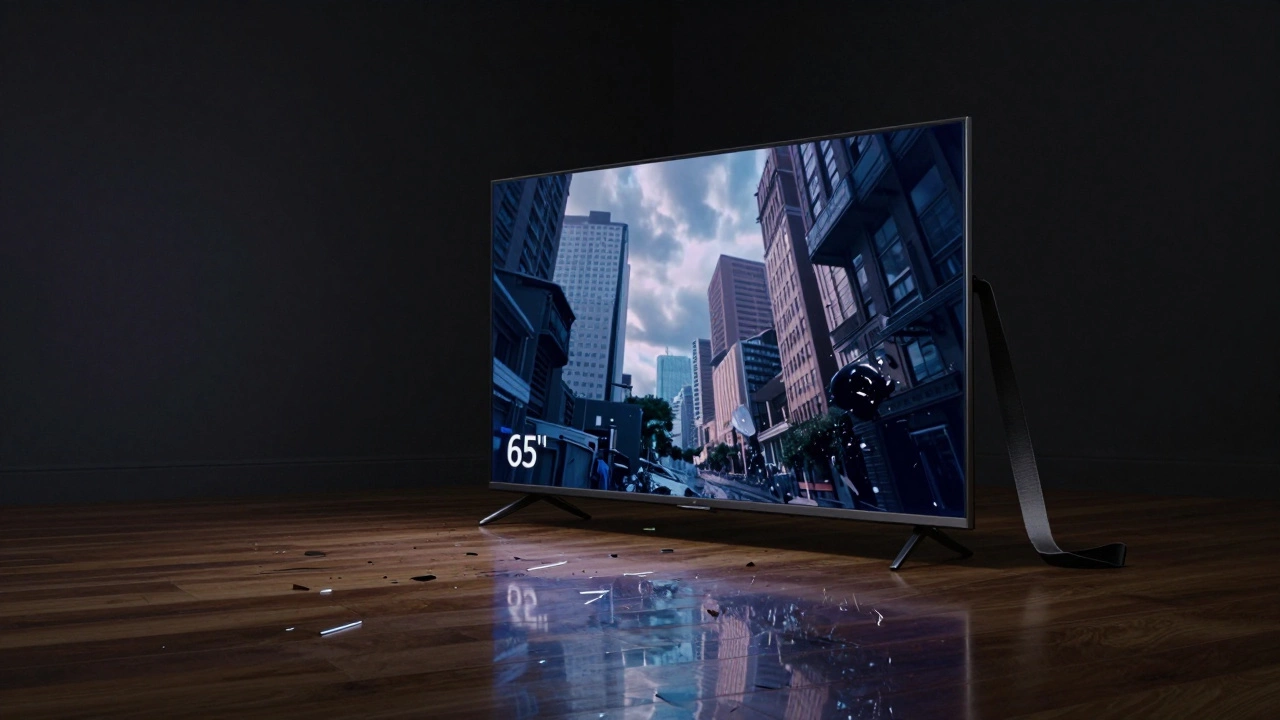
A friend in Wellington did this exact thing. Bought a 65-inch LG OLED, used his old 55-inch stand. Thought it looked fine. One evening, his cat jumped onto the coffee table next to the TV. The TV wobbled, then tipped. It landed on the floor with a crash. The screen cracked. The stand bent. He lost over $2,000 in one second.
He didn’t have insurance for accidental damage. He didn’t have a wall mount. He just assumed it would be okay because it “looked close.”
What should you do instead?
There are three safe options:
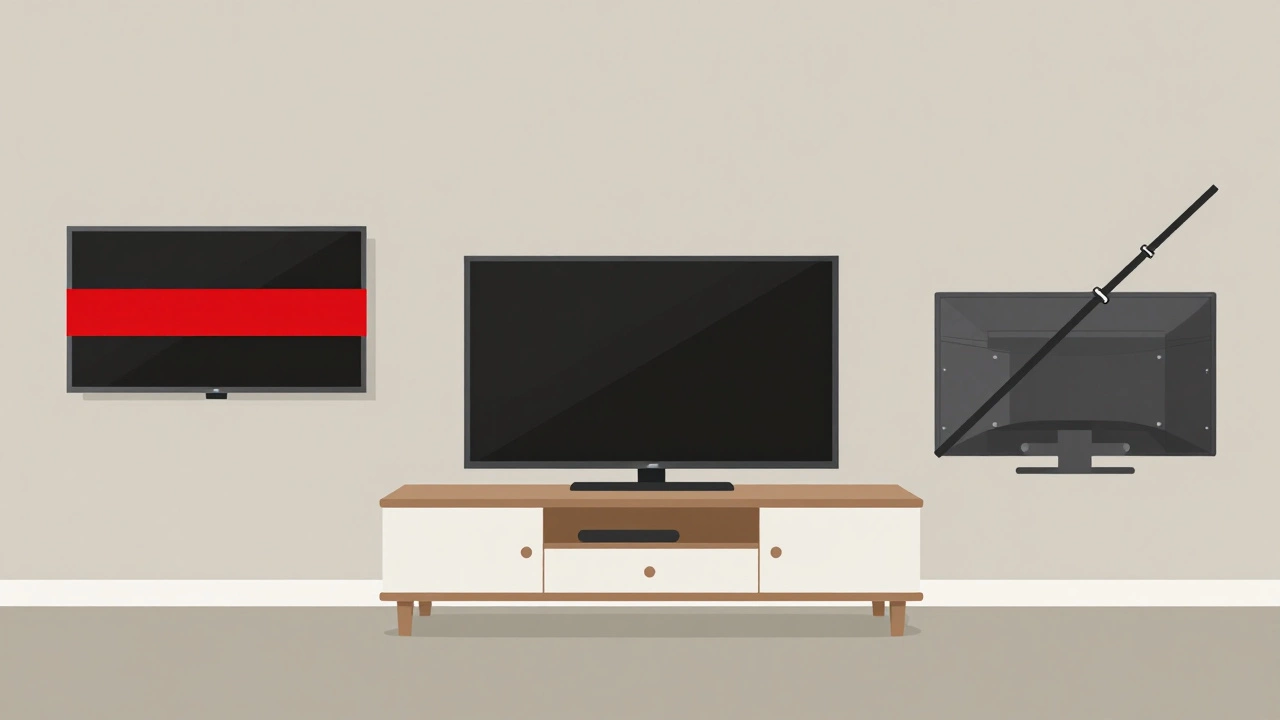
- Get a new stand-one rated for 65-inch TVs and at least 58 inches wide. Look for stands with a wide base and low center of gravity. Brands like Sauder, Bestar, and Ameriwood make solid options.
- Wall mount it-this is the safest choice. A properly installed wall mount eliminates tipping risk entirely. Make sure you use the right brackets and anchor into wall studs. A 65-inch TV on a wall mount looks sleek and frees up floor space.
- Use a TV safety strap-if you absolutely must use the current stand, attach a safety strap from the back of the TV to the wall. It won’t stop the TV from tipping, but it will catch it before it hits the floor. This is a last-resort fix, not a solution.
How to check if your stand is safe
Here’s a quick checklist:
- Is the TV’s width less than or equal to the stand’s width? (If not, don’t do it.)
- Does the stand have a weight rating higher than your TV’s weight? (Check the label or manual.)
- Is the stand low and wide? Narrow, tall stands are more prone to tipping.
- Are the feet of the stand flat on the floor? Uneven floors increase tipping risk.
- Is there any wobble when you gently push the TV? If yes, it’s not stable.
If even one answer is “no,” it’s not safe.
What about TV stands with extendable arms?
Some stands have adjustable arms or side extensions. These can be tempting. But unless the manufacturer specifically says the stand supports a 65-inch TV with those extensions, don’t assume it’s safe. The added arms might look like they help, but they often don’t add structural strength. They’re just for aesthetics.
Look for stands labeled “compatible with 65-inch TVs” or “max TV width: 60 inches.” Don’t trust generic claims like “fits most TVs.”
What if I already did it?
If you’ve already put your 65-inch TV on a 55-inch stand and it’s working fine so far, that doesn’t mean it’s safe. Stability isn’t about how long it’s been standing. It’s about physics. The longer you wait, the higher the chance something will happen-a pet, a draft, a clumsy moment.
Don’t wait for disaster. Take action now. Move the TV to a proper stand or wall mount. It’s not worth the risk.
Final thought: It’s not worth the gamble
A 65-inch TV is a big investment. So is a new stand or wall mount. But neither costs as much as a broken TV, a damaged floor, or a hospital bill. You wouldn’t put a 100-pound weight on a chair meant for 70 pounds. Don’t do it with your TV.
Stability isn’t optional. It’s non-negotiable. Your TV, your family, and your peace of mind are worth the extra step.
Can I use a 65-inch TV on a 55-inch stand if the weight is under the limit?
No. Weight limits alone don’t guarantee safety. A TV that’s wider than the stand creates dangerous leverage. Even if the TV weighs less than the stand’s limit, the overhang can cause it to tip. Always match the TV width to the stand width.
How wide should a TV stand be for a 65-inch TV?
A stand for a 65-inch TV should be at least 58 inches wide, and ideally 60 inches. Most 65-inch TVs are 57 to 58 inches wide, so you need extra room on each side for stability. Check your TV’s manual for the manufacturer’s recommended stand width.
Is it safe to use a wall mount instead of a stand?
Yes, a wall mount is the safest option. It removes the risk of tipping entirely and gives you more flexibility in placement. Just make sure you install it into wall studs using the correct bracket for your TV’s VESA pattern and weight.
What happens if my TV tips over?
A tipped TV can shatter the screen, damage the internal components, and cause serious injury-especially to children or pets. In 2023, over 15,000 TV-related injuries were reported in the U.S. alone. Most were preventable with proper mounting.
Can I use furniture straps to make it safer?
Furniture straps can help catch a tipping TV, but they’re not a fix. They reduce damage and injury risk, but they don’t prevent the TV from tipping in the first place. Always use a properly sized stand or wall mount as your primary safety measure.