Storage Bin Protection Calculator
Enter your bin dimensions to calculate volume automatically.
Recommended Dosage
Check your storage setup against these common pitfalls:
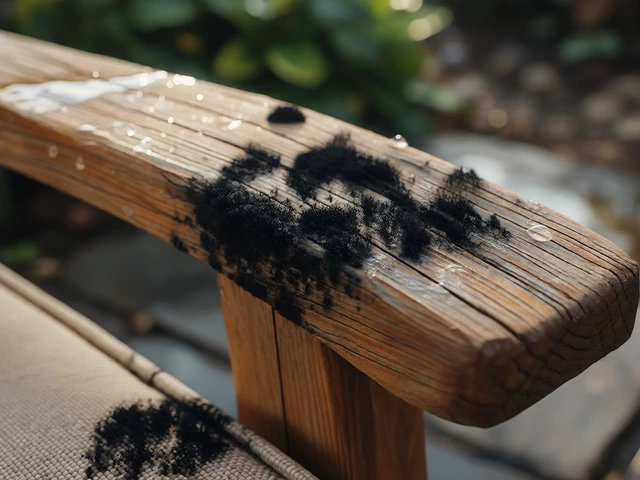
Imagine unpacking winter coats after summer, only to find fuzzy patches on the fabric. That smell of dampness sticks to your nose instantly. We've all been there. Storing seasonal items is necessary, but letting them sit in a dark corner often invites biological trouble. In my experience living here in Wellington, where the weather turns humid fast, keeping storage dry isn't optional; it's survival for your belongings. If you want to save money on ruined furniture or clothes, you need to stop looking at what goes into the bin and start thinking about what keeps the environment safe.
The Science Behind Mold in Closed Spaces
Mold loves three things: food, warmth, and water. Organic materials like cotton, wool, wood, and paper provide the food source. Your home provides warmth even in winter. That leaves water-or rather, moisture in the air-as the variable you can control. When you seal items in a container, you trap whatever air is currently inside. If that air has 70% humidity, the temperature drops at night, and condensation forms. This is why simply throwing clothes into a box causes rot.
To stop this, you need to understand the dew point. If the air inside your bin cools down below the dew point, liquid water appears on surfaces. This happens frequently in unheated garages or sheds. You cannot change the outside weather, but you can manipulate the interior micro-climate of your storage space. The goal is to keep relative humidity below 50%. Most standard bins do nothing to lower this number unless you actively put something inside to fight it.
Silica Gel: The Heavy Hitter
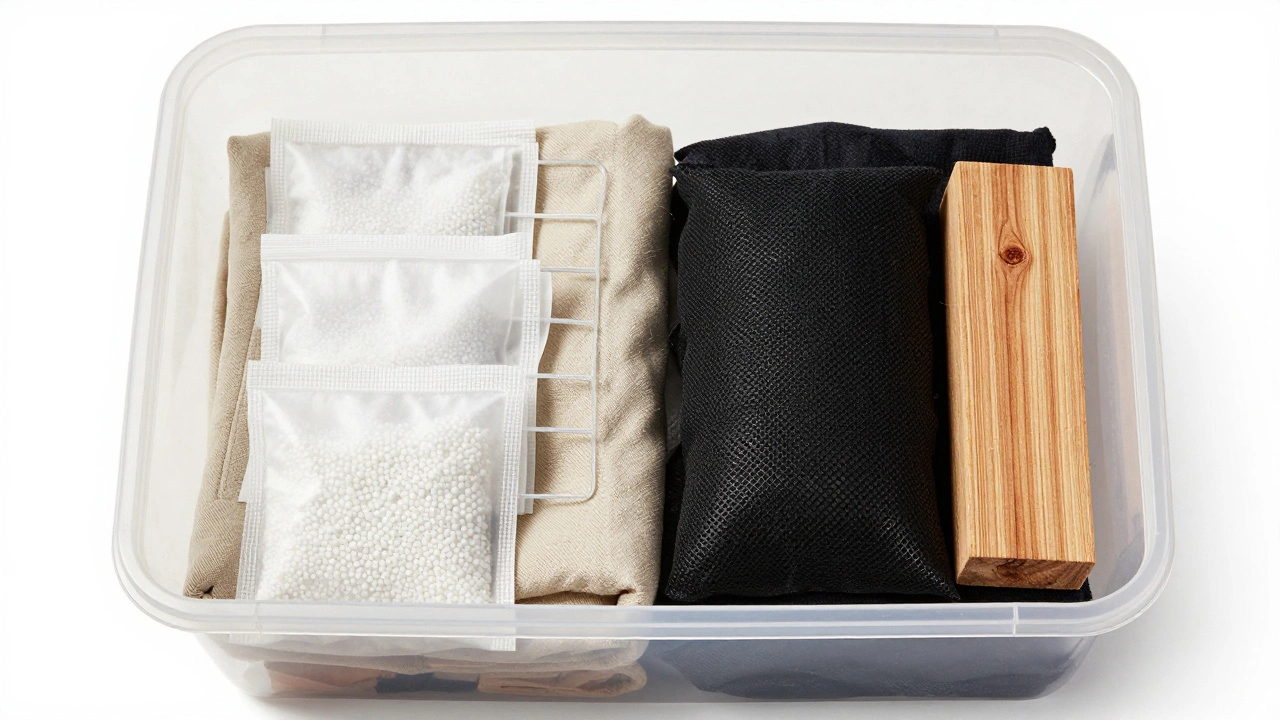
Silica Gel is a desiccant material made of silicon dioxide beads that absorbs moisture from the surrounding air. It is incredibly common because it is cheap, non-toxic, and reusable. You know those little packets found in shoe boxes or beef jerky bags? That is exactly what you need. However, standard single-use packets are weak for large storage units. For a standard 50-litre storage bin, you need at least five to ten grams of silica gel per cubic foot of space to maintain a dry environment effectively.
Using silica gel isn't just about dumping it in. Once it absorbs water, it stops working. Some packets contain a blue indicator that turns pink when saturated, but many consumer-grade packets have no visual warning. If you reuse them, you must place them in an oven at a low temperature to drive the water out before putting them back. This regeneration process allows one set of packets to last years. Without reactivating them, you might be storing wet items in a bin full of useless dust.
Activated Charcoal for Air Quality
While silica grabs liquid moisture, activated charcoal handles gases and odors. Old sweaters often hold smells from sweat, perfume, or cigarette smoke. These volatile organic compounds can feed certain types of bacteria or mold spores over time. Activated Charcoal is carbon processed to have small, low-volume pores that increase surface area for adsorption. Placing a small bag of loose charcoal at the bottom of your bin acts as an air filter.
This is particularly useful for boots or sports gear. A standard mesh bag filled with bamboo charcoal briquettes works well because it allows airflow through the carbon while preventing contact with your clothes. Unlike silica gel, charcoal does not require heating to refresh; simply hanging it out in fresh, breezy air for a day resets its capacity. Combine this with a dehumidifying agent for double protection against fungal growth.
Cedar Blocks and Natural Repellents
If you prefer natural options, cedar is the classic choice. Cedarwood contains natural oils like thujaplicin which act as insecticides and fungicides. Termites dislike it, and moths steer clear. More importantly for us, these oils create a barrier that makes the environment less hospitable for mold spores to germinate. You won't find chemicals leaking onto your clothes like you might with naphthalene balls.
| Material | Dryness Power | Odor Effect | Lifespan | Refresh Method |
|---|---|---|---|---|
| Silica Gel | Very High | None | Infinite | Oven Heat |
| Charcoal | Medium | Excellent | 6 Months | Fresh Air |
| Cedar Wood | Low | Pleasant Scent | Years | Sand Surface |
| Vacuum Bags | High (Physical) | Trapped Odor | One-time | N/A |
Remember, cedar loses potency over time as the oils evaporate. To keep it working, take your blocks outside and sand them lightly every spring. This exposes fresh oil-saturated wood cells to the air inside the closet or bin. It's a bit of work, but it saves the heartache of replacing expensive suits.
Choosing the Right Container Material
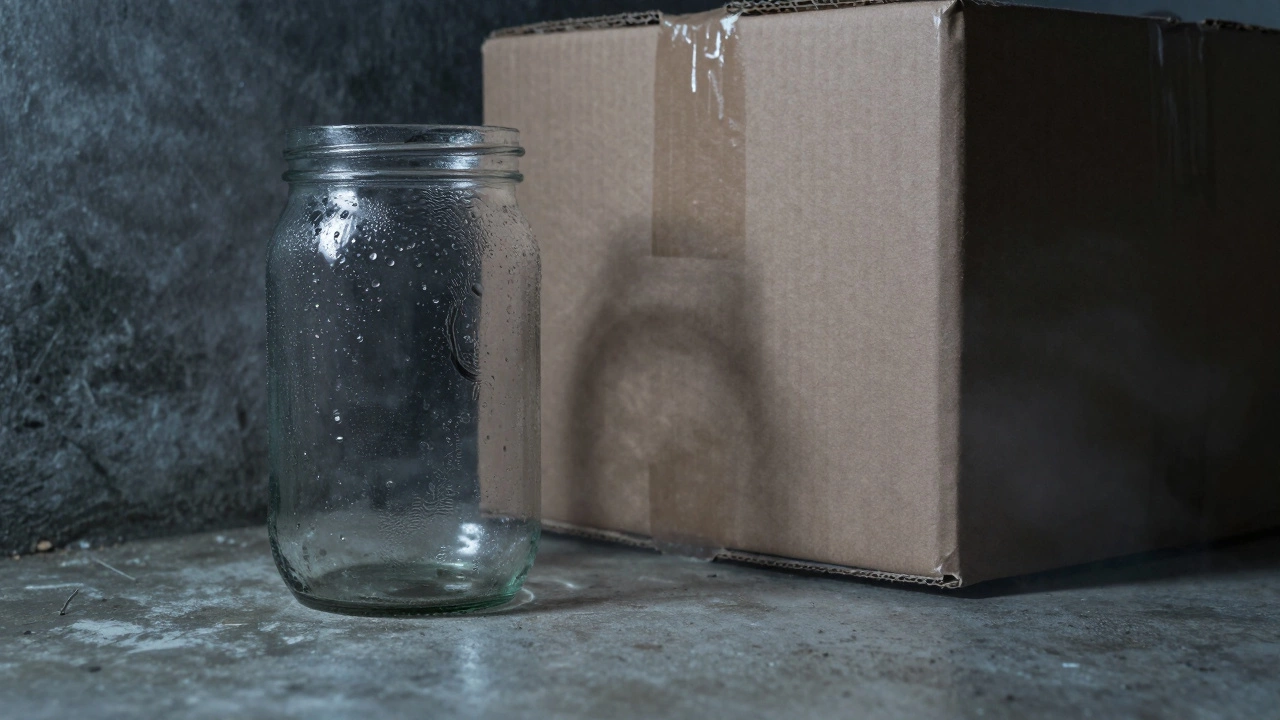
What you put inside matters less if the box itself leaks moisture. Many people default to cardboard boxes because they are free. This is a major mistake for long-term storage. Cardboard breathes, meaning it absorbs ambient humidity from the room, then releases it inside the box when temperatures drop. It also rots easily once mold finds it. Plastic Storage Bins are containers made of high-density polyethylene designed to protect contents from environmental damage.
Tight-sealing plastic lids are essential. Look for bins with rubber gaskets around the rim. These snap-shut lids create a mechanical barrier against external humidity spikes. Even if you live in a basement prone to dampness, a sealed plastic tub keeps the outside conditions out. Just remember to ensure your clothes are bone dry before you zip them up. Trapping a damp towel inside a hermetic seal creates a sauna effect.
Vacuum Sealing: Removing Oxygen
For soft goods like bedding or blankets, vacuum bags offer a different mechanism. By sucking the air out, you remove the oxygen mold needs to thrive. While some molds are anaerobic, most common household mold requires oxygen. Vacuum Seals is a storage method using thick plastic zippers and air pumps to compress items and remove atmosphere.
These bags work exceptionally well for bulky items that would otherwise take up half your shelf space. Compressing them also reduces the void space where cold spots can develop. Less air volume means less opportunity for condensation to form. However, never store leather or genuine wood products in a vacuum seal, as the pressure damages the structure. Stick to fibers and fabrics. Always check that the zipper is fully closed; a tiny leak negates the whole system.
Placement and Ventilation Strategies
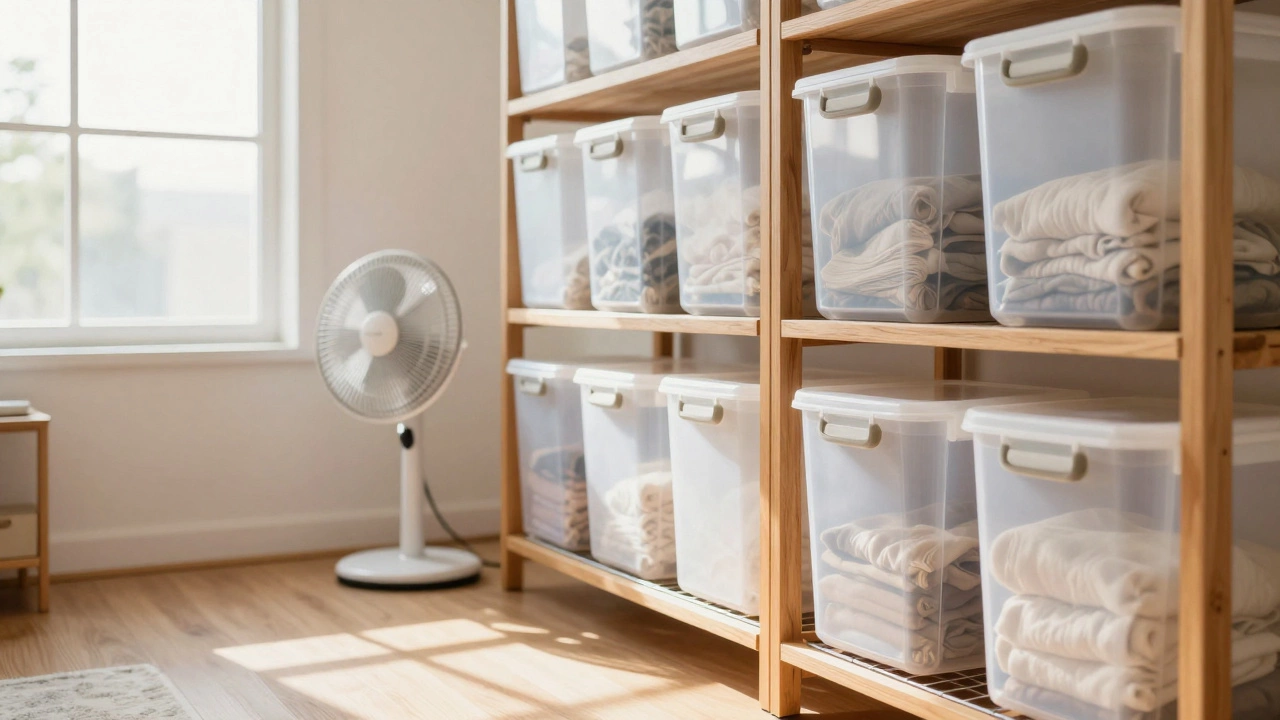
Even the best desiccant will fail if you bury the bin in a puddle of groundwater. Where you put the bins is just as critical as what you pack. Avoid direct floor contact. Concrete floors conduct cold from the earth. If the ground is 10°C colder than the room air, the floor becomes a radiator for condensation. Use pallets, wooden crates, or wire shelving to lift your bins off the ground by at least two inches.
Air circulation is vital. In Wellington, we get heavy winds, but indoors, stagnant air pockets are common. Leave a gap between your stacked bins and the walls. Ideally, run a small oscillating fan nearby. Moving air disrupts the boundary layer of warm, moist air sitting right next to the bin surface. This prevents localized hotspots where mold could incubate without the rest of the room getting damp.
Seasonal Maintenance Checks
Don't treat storage as "set and forget." The environment changes with seasons. Summer brings heat, which increases evaporation rates, potentially saturating your silica faster. Winter brings lower ventilation if windows are shut. Schedule a quarterly audit. Open one lid and sniff. If it smells musty, something is wrong. Replace your charcoal bags twice a year. Wash your desiccant refills. Rotate your clothes so no single item sits still for more than six months.
Prevention is infinitely cheaper than restoration. Getting rid of mold stains on antique wool usually ends in total loss. By investing a few dollars in silica or charcoal now, you preserve the value of everything stored away. Treat your storage area like a library-dry, cool, and organized.
Frequently Asked Questions
How much silica gel do I need for a storage bin?
You generally need about 10 grams of silica gel per cubic foot of space. For a standard 50-liter plastic bin, aim for roughly 25 to 30 grams distributed across multiple sachets. More is better than less, especially in damp climates.
Can I put food in the same bin with silica gel?
Only if the silica gel is food grade and sealed in a packet. Standard industrial silica might contain toxic indicators. If storing dry grains or beans, buy food-safe desiccant packets specifically labeled for pantry use.
Will mothballs stop mold growth?
No. Mothballs target insects like clothes moths, not fungus. They contain chemicals like naphthalene or paradichlorobenzene which can stain plastics and are toxic to humans. For mold, you need a desiccant to remove moisture.
Is cardboard safe for storing sentimental items?
Not recommended. Cardboard absorbs moisture rapidly and breaks down into acid over time, damaging photos and paper. Use acid-free archival boxes inside a sealed plastic outer bin to protect paper memories from yellowing and mold.
How often should I clean my storage bins?
At least once a year. Empty the bin, wipe it down with a mild detergent solution, let it dry completely outside, and then refill. This removes any dust or microscopic spores accumulated during previous storage cycles.