Sleeper Sofa Safety Calculator
How Safe Is Your Sleeper Sofa?
Answer these questions to calculate your risk of back pain from regular use
Your Risk Assessment
Recommended Improvements
Ever woken up from a night on a sleeper sofa feeling like you’d been run over by a truck? You’re not imagining it. That stiff neck, aching lower back, or numb butt aren’t just bad luck-they’re signs your sleeper sofa might be working against your spine.
Why most sleeper sofas hurt your back
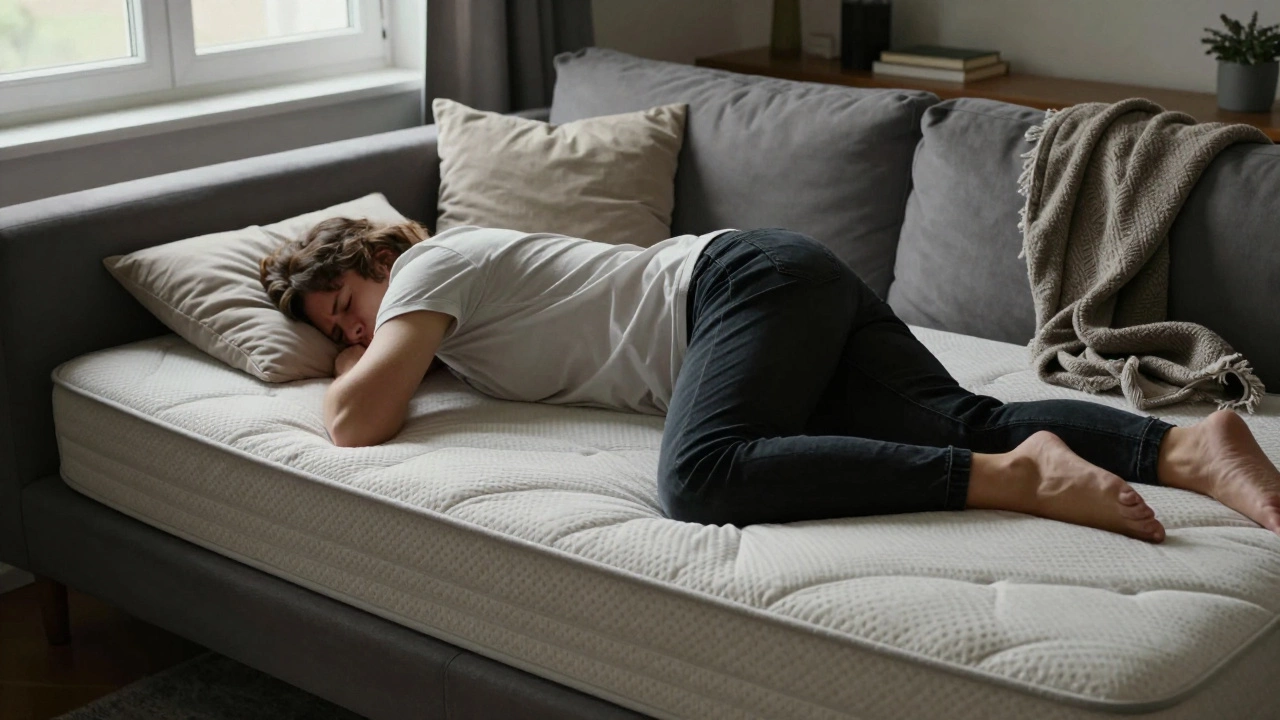
Most sleeper sofas aren’t built for sleeping. They’re built to look nice in a living room and fold out when guests show up. The mattress inside? Usually a thin foam layer, maybe 4 to 6 inches thick, sitting on a flimsy metal frame. That’s not enough support for your hips, shoulders, or spine.When you lie down, your pelvis sinks too far into the soft foam. Your spine bends unnaturally, especially in the lower back. That’s called lumbar flexion. Your muscles have to work overtime just to keep you from curling into a fetal position. By morning, you’re stiff, sore, and wondering why you ever thought this was a good idea.
Studies from the American Chiropractic Association show that people who regularly sleep on low-support surfaces like sofa beds report 3 times more lower back pain than those who sleep on proper mattresses. It’s not just anecdotal-it’s biomechanical.
What happens to your spine overnight
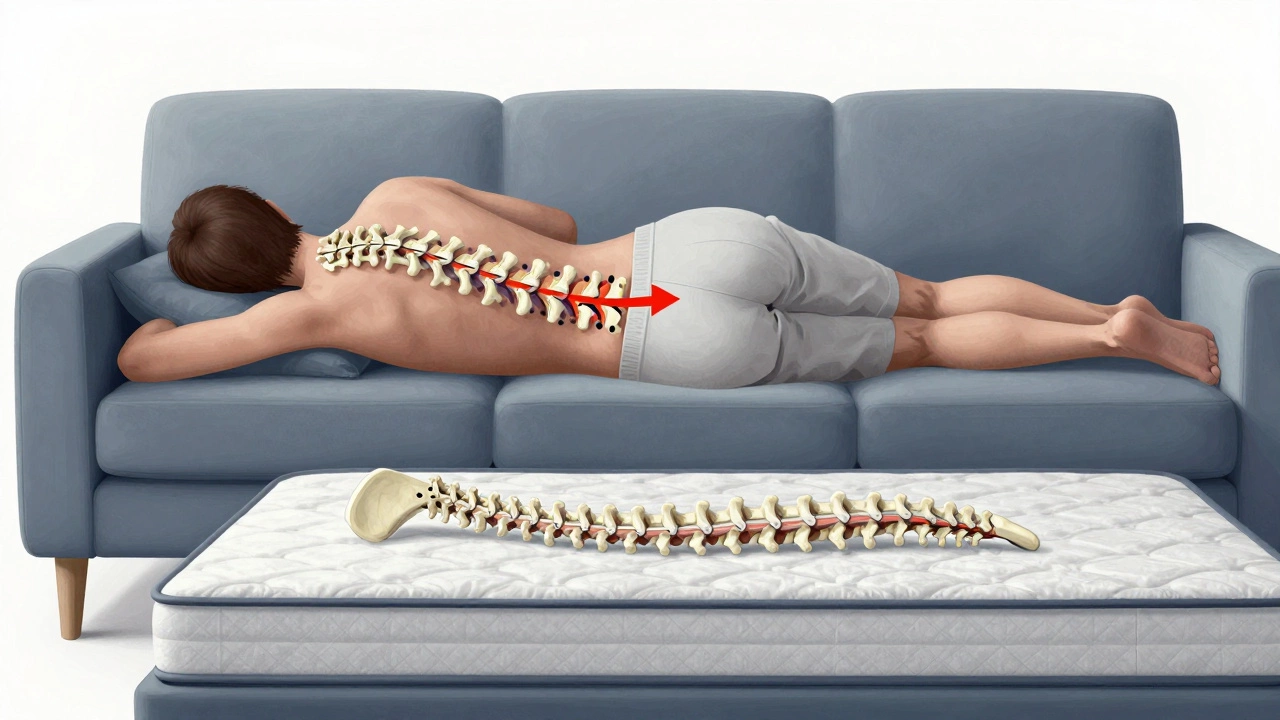
Your spine has three natural curves: neck, mid-back, and lower back. A good mattress keeps those curves aligned. A bad one doesn’t.On a sleeper sofa:
- Your hips drop lower than your shoulders, tilting your pelvis backward
- Your lower back flattens out instead of keeping its gentle curve
- Your neck twists or bends to one side because the headrest doesn’t match the mattress height
- Your shoulders compress into the thin padding, cutting off blood flow
That’s not rest-it’s strain. Over time, this forces your muscles to tighten, discs to compress, and nerves to get pinched. You might not feel it right away. But after months or years of weekend guests or emergency nights, that constant misalignment adds up.
Who’s most at risk
Not everyone will feel the pain. But some people are way more likely to:- People with existing back issues (herniated discs, sciatica, degenerative disc disease)
- Anyone over 40-spinal discs naturally lose fluid and cushioning with age
- Side sleepers-your shoulder and hip need deep cushioning to stay aligned, which sofa beds rarely provide
- People who weigh over 180 lbs-extra weight sinks you deeper into soft foam
If you’re one of these people, sleeping on a sleeper sofa isn’t just uncomfortable-it’s a risk. I’ve seen clients in Wellington who thought they were being practical by using their sofa bed for a few nights. After six months, they ended up with chronic pain and physical therapy bills.
Can you make a sleeper sofa better?
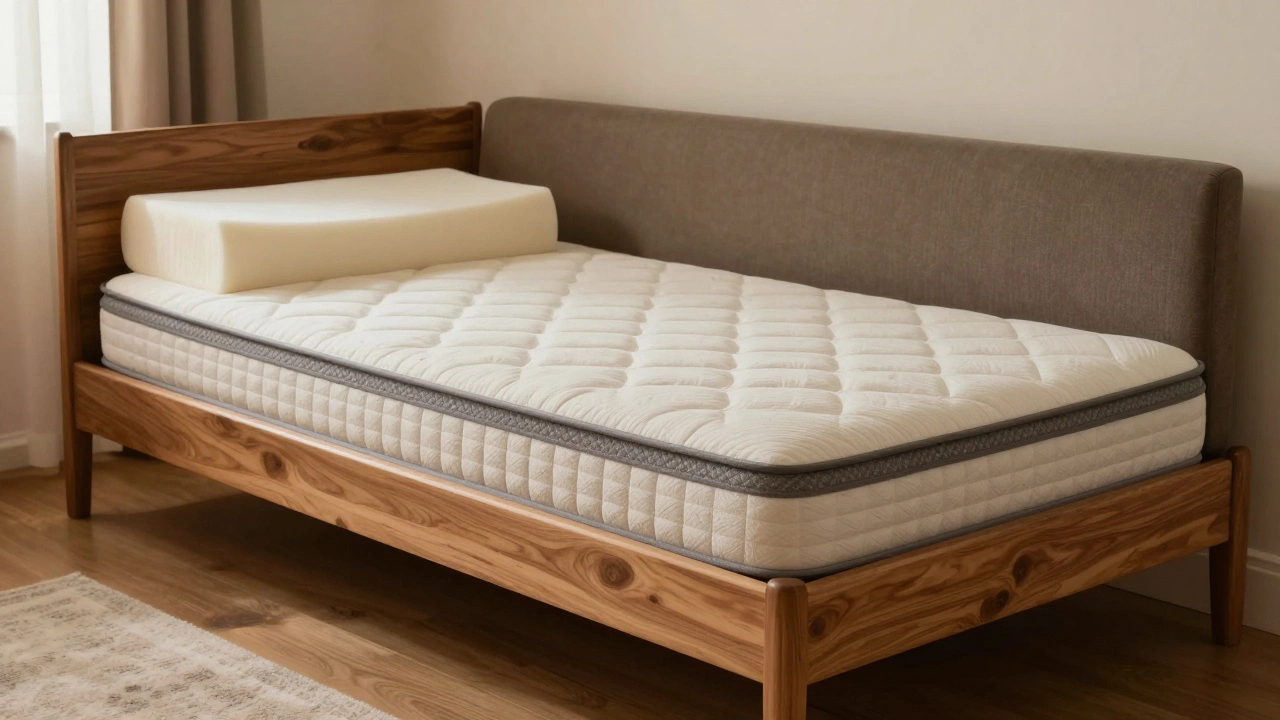
Yes-but only if you’re willing to upgrade it. A basic sofa bed won’t magically become ergonomic. But you can improve it:- Add a 2-inch memory foam topper-this adds pressure relief and helps keep your spine aligned. Look for one with a density of at least 3.5 lb/ft³.
- Use a lumbar roll-a small towel or foam cylinder under your lower back can restore your natural curve. Keep it handy.
- Replace the mattress entirely-some brands sell replacement mattresses designed for sleeper sofas. Look for ones with pocketed coils or high-density foam (at least 6 inches thick).
- Use a sturdy base-if the frame wobbles, add plywood underneath. A shaky frame means uneven support.
These fixes won’t turn your sofa bed into a Tempur-Pedic, but they can cut your pain in half. One client in Miramar swapped out her 4-inch foam mattress for a 6-inch hybrid model and went from waking up in pain every morning to sleeping through the night.
What to look for in a sleeper sofa that won’t wreck your back
If you’re buying a new one, don’t just pick the cheapest or prettiest. Look for these features:| Feature | Good | Bad |
|---|---|---|
| Mattress thickness | At least 6 inches | Under 4 inches |
| Mattress type | Hybrid (foam + coils) or high-density foam (≥3.5 lb/ft³) | Thin polyfoam or spring-only |
| Frame material | Hardwood or steel | Particleboard or thin metal |
| Support mechanism | Slatted base or reinforced metal bars | Flimsy fold-out wires |
| Testing | Try lying on it in-store for 10 minutes | Only sitting on it |
Brands like Dorel Living, Lane Venture, and Ashley have models with better support systems. But don’t just trust the label-ask for the mattress specs. If they can’t tell you the foam density or coil count, walk away.
When to avoid sleeper sofas entirely
If you’re using it as your primary bed-don’t. Not even for a month. Your spine needs consistent, proper support every night. A sleeper sofa is fine for occasional guests or a short-term emergency. But if you’re sleeping there more than twice a week, you’re asking for trouble.Think of it like driving a race car for your daily commute. It might look cool, but it’s not built for that kind of wear. Your back isn’t a temporary guest. It’s your core support system.
For long-term use, invest in a proper bed-even a basic platform bed with a mid-range mattress costs less than a year of chiropractor visits.
Alternatives that won’t hurt your back
If you need extra sleeping space but don’t want to sacrifice your spine:- Daybed with trundle-looks like a sofa, sleeps like a real bed. Often has a full-size mattress underneath.
- Pull-out futon-if it has a thick, firm mattress (not the flimsy ones), it’s better than most sofa beds.
- Fold-out air mattress-yes, really. A quality air mattress (like those from Intex or AeroBed) with a foam topper can outperform a cheap sleeper sofa.
- Portable bed frame-a simple metal frame with a mattress you already own can be stored in a closet and set up in minutes.
One family in Lower Hutt switched from their sleeper sofa to a daybed with a trundle. They now use it every weekend for their teenage kids. No back pain. No complaints.
Final verdict: Are sleeper sofas bad for your back?
Yes-most of them are. Not because they’re evil, but because they’re designed for convenience, not health. The thin mattress, weak frame, and poor alignment make them a recipe for back pain if used regularly.But here’s the good news: you don’t have to give up having guests. Just don’t sleep on it. Use it for sitting. Keep a real bed nearby for sleeping. Or upgrade your sleeper sofa with a proper mattress and support.
Your spine doesn’t ask for much. Just enough support to stay in its natural shape. If your sofa bed can’t give you that, it’s not worth the pain.
Can a sleeper sofa cause long-term back damage?
Yes, if used regularly over months or years. Chronic poor spinal alignment can lead to muscle imbalances, disc degeneration, and nerve irritation. It won’t happen overnight, but repeated stress adds up. People who use sleeper sofas as their main bed often develop chronic lower back pain that lasts long after they stop using it.
Is memory foam better for sleeper sofas?
It depends. Low-density memory foam (under 3 lb/ft³) will sink too much and still hurt your back. High-density memory foam (3.5 lb/ft³ or higher) offers better support and pressure relief. But memory foam alone isn’t enough-you need thickness (at least 6 inches) and a solid base. A hybrid mattress with coils and foam performs better for most people.
How often should I replace my sleeper sofa mattress?
Every 3 to 5 years, even if it still looks okay. Foam breaks down over time, losing support. You might not notice the difference right away, but your spine will. If you wake up more sore than usual, or if the mattress sags visibly in the middle, it’s time to replace it.
Can kids sleep on sleeper sofas safely?
Occasionally, yes. Kids’ spines are more flexible and resilient than adults’. But if they’re sleeping there more than once a week, it’s not ideal. Their growing bodies need proper spinal alignment during sleep for healthy development. A proper bed is always better.
What’s the cheapest way to fix a bad sleeper sofa?
Add a 2-inch high-density foam topper ($50-$80) and a lumbar roll ($10-$20). That’s cheaper than a new mattress and can make a big difference. Also, check if the frame is stable-tightening bolts or adding plywood underneath can help too.
Next steps if you’re in pain
If you’ve been sleeping on a sleeper sofa and now have back pain:- Stop sleeping on it immediately
- Use a heating pad or ice pack for 15 minutes twice a day
- Try gentle stretches-cat-cow, child’s pose, and pelvic tilts help relieve tension
- See a physiotherapist if pain lasts more than 5 days
- Invest in a proper mattress, even if it’s secondhand
Your back isn’t something you can ignore. It’s the foundation of your movement, posture, and daily comfort. Don’t treat it like an afterthought-especially when you’re lying down to rest.