Window Treatment Efficiency Calculator
Compare Energy Savings
See how different window treatments affect your energy bills based on your climate zone and window type. Based on U.S. Department of Energy data and California energy codes.
Your Energy Savings
Estimated Annual Savings
Key Insight: Based on U.S. Department of Energy data, proper window treatments can reduce cooling costs by up to 33% in summer months. Cellular shades and solar shades are designed to block heat transfer before it enters the home.
How This Compares
Walk into a typical American home and you might notice something missing: curtains. Not just a few, but whole rooms-living rooms, bedrooms, even bathrooms-with no fabric drapes hanging at the windows. Instead, you’ll see blinds, shades, shutters, or just bare glass. It’s not that Americans don’t care about privacy or style. It’s that their window solutions evolved differently.
History Shaped the Choice
In the 19th and early 20th centuries, American homes were built with practicality in mind. Wood was abundant, and window shutters made from pine or oak were easy to craft and install. They offered privacy, blocked sunlight, and could be locked for security. By the time fabric curtains became more common in Europe, Americans had already settled on a system that worked. Shutters stuck around, especially in suburban and rural areas, where durability mattered more than decoration.
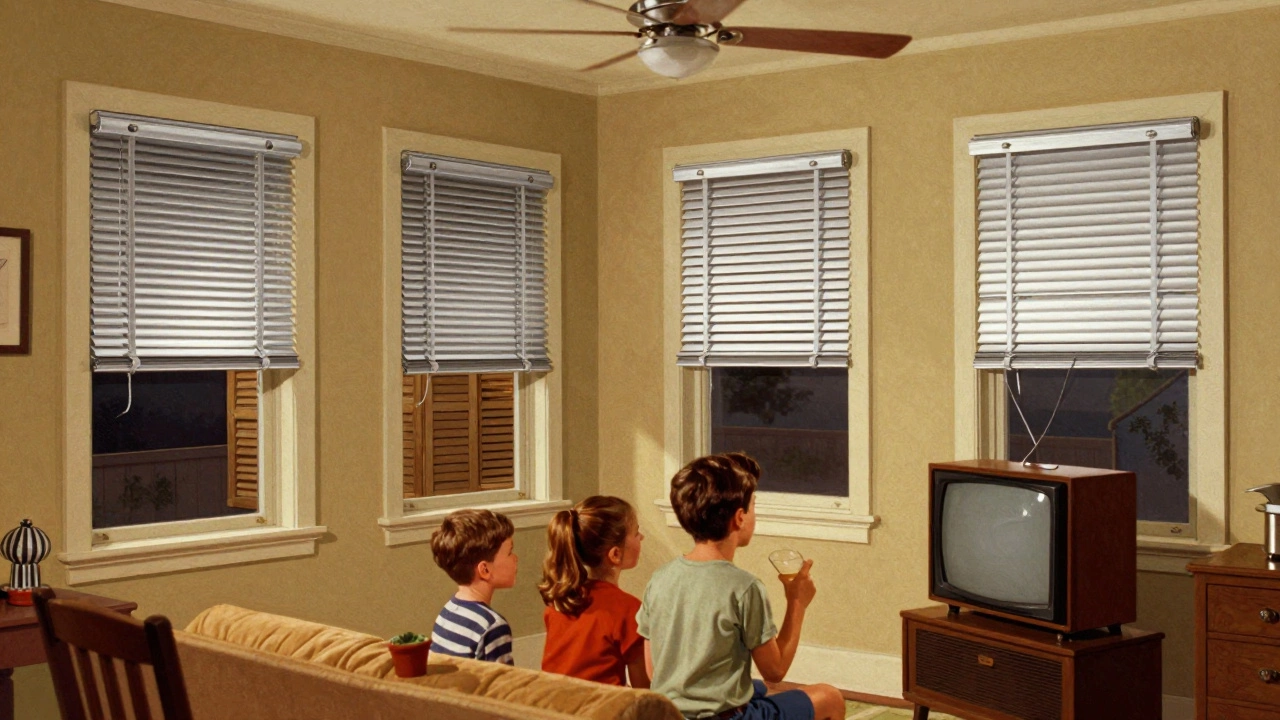
After World War II, mass production changed everything. Companies like Hunter Douglas and Levolor started making affordable aluminum blinds in huge quantities. These were cheaper than custom-made curtains, easier to clean, and didn’t require hardware like rods or tiebacks. Homebuilders began including them as standard in new homes. Why add cost for fabric when a $20 blind did the job?
Climate and Sun Control
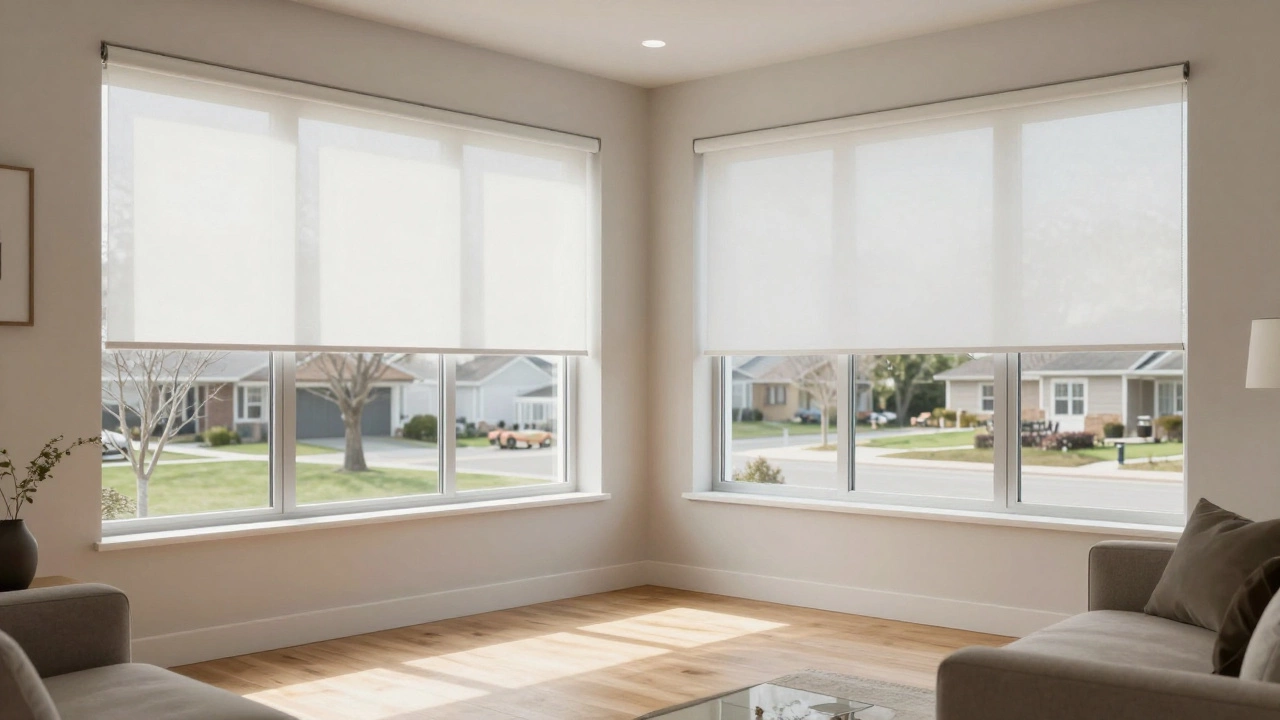
America’s climate varies wildly, but many regions get intense sun. Arizona, Texas, California, Florida-all have long, hot summers. Curtains block light but trap heat. Blinds and shades? You can tilt them to let in diffuse light while keeping direct rays out. Solar shades, especially, reflect heat before it even hits the glass. That’s why energy codes in places like California now require window treatments that meet certain solar heat gain coefficients. Curtains rarely meet those standards unless they’re specially lined.
Studies from the U.S. Department of Energy show that properly installed window shades can reduce cooling costs by up to 33% in summer. Curtains, unless they’re thermal-lined and sealed at the edges, don’t come close. For homeowners focused on utility, that’s a no-brainer.
Minimalism and Design Trends
The rise of modern and Scandinavian design in the 2000s pushed American interiors toward clean lines and open spaces. Curtains, with their folds, tassels, and pooling fabric, started to look busy. Blinds and roller shades? They disappear into the window frame. No visual clutter. No dust traps. No need to match them to pillows or rugs.
Interior designers in cities like Los Angeles, Chicago, and Portland now often recommend sheer roller shades or blackout cellular shades as the default. They’re sleek, functional, and cost-effective. Even in traditional homes, you’ll see a shift: curtains are reserved for accent windows or formal rooms, not the whole house.
Privacy Isn’t the Same
People assume curtains are for privacy. But in many American neighborhoods, houses are spaced farther apart. Suburban lots often have yards, fences, or landscaping that naturally block views from the street. In apartments, especially newer ones, windows are often placed high or behind balconies. You don’t need floor-to-ceiling drapes if your neighbor is 50 feet away and looking up at your roof.
Plus, Americans tend to use layered privacy solutions. Frosted window film on bathroom glass. Tinted glass in bedrooms. Motorized shades that auto-close at sunset. These are invisible, permanent, and low-maintenance. Why hang fabric when you can install a solution that never needs washing or replacing?
Curtains Are Still Used-Just Not Everywhere
Don’t get it wrong: curtains aren’t gone. They’re just not the default. You’ll find them in:
- Traditional homes in the Northeast, especially in historic districts
- Formal living rooms or dining rooms
- High-end homes where design is about texture and luxury
- Bedrooms where blackout fabric is needed for sleep
In fact, the curtain market in the U.S. is still worth over $1.5 billion a year, according to Statista. But it’s niche. Most sales are for bedroom blackout curtains or decorative sheers in living rooms. The average American home now has 1.2 window treatments total-most of them blinds or shades.
It’s About Maintenance
Curtains collect dust. They fade. They need washing. Dry cleaning a set of living room drapes can cost $80. And if you have kids or pets? They get torn, stained, or chewed. Blinds? A quick wipe with a damp cloth. No ironing. No lining replacement. No worrying about color matching after five years of sun exposure.
For busy families, this matters. A 2023 survey by the Home Innovation Research Labs found that 68% of U.S. homeowners ranked “low maintenance” as the top factor when choosing window treatments-beating out style, cost, and even energy efficiency.
What About Aesthetics?
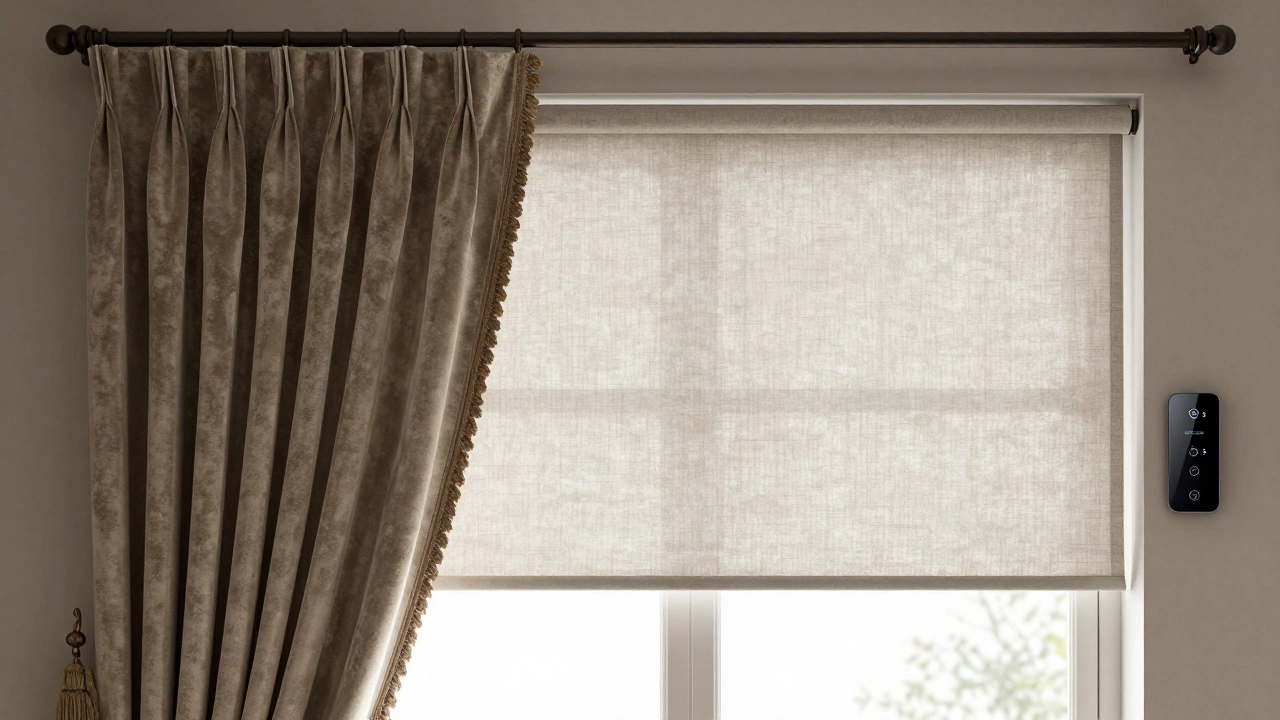
Some say blinds are cold, impersonal. That’s true-if you pick the wrong kind. But today’s options are far from the ugly plastic slats of the 90s. Wood venetians, woven bamboo shades, and motorized linen rollers bring warmth and texture. Brands like Lutron and Hunter Douglas offer customizable fabrics with subtle patterns, textures, and even smart integration with Alexa or Google Home.
The real difference? Americans treat window coverings as functional tools, not decorative accents. In Europe, curtains are part of the room’s soul. In the U.S., they’re part of the HVAC system.
It’s Not About Money-It’s About Systems
You might think Americans skip curtains because they’re cheaper. But that’s backwards. High-end curtains with custom linings and motorized tracks can cost $1,500 per window. A top-tier cellular shade? Around $600. And it lasts longer.
The real reason curtains aren’t common? The system is built around alternatives. Builders install blind brackets during framing. Electricians wire motorized systems into the walls. Retailers stock blinds on every aisle. There’s no cultural expectation to hang fabric. It’s not a design flaw-it’s a different path.
When you move to the U.S. from a country where curtains are standard, it feels strange. But it’s not wrong. It’s just different. The window still lets in light. The room still feels private. The temperature stays comfortable. And the cleaning? It’s faster.
What Should You Do?
If you’re living in an American home and miss curtains, go ahead and hang them. There’s no rule saying you can’t. But understand what you’re giving up: ease of use, energy efficiency, and low maintenance. If you want the look of curtains, try lightweight linen roller shades-they give the softness without the hassle.
Or, if you’re building or renovating, skip the curtain rod altogether. Install a smart shade that opens at sunrise and closes at sunset. It’s not about tradition. It’s about what works today.
Do Americans never use curtains at all?
No, Americans do use curtains-but not as the default. They’re common in bedrooms for blackout purposes, in formal rooms for decoration, or in older homes with traditional design. But in most new builds and modern interiors, blinds, shades, or shutters are the standard.
Are blinds more energy efficient than curtains?
Yes, especially when properly installed. Cellular shades and solar shades are designed to trap air and block heat transfer. A 2022 study by the Lawrence Berkeley National Laboratory found that top-quality cellular shades can reduce heat gain by up to 40% in summer and heat loss by 25% in winter. Standard curtains without thermal lining offer little to no insulation.
Why do new American homes have no curtain rods?
Because builders install window treatments during construction, and blinds or shades are the industry standard. Curtain rods add cost, require extra wall space, and aren’t needed for the most common window coverings. Many new homes skip them entirely to save on materials and labor.
Is it cheaper to install blinds or curtains?
For most homeowners, blinds are cheaper upfront and over time. A basic set of vinyl blinds costs $30-$80 per window. Custom curtains with lining and hardware can cost $150-$400 per window. Plus, blinds last longer and don’t need professional cleaning.
Can I add curtains to a home with blinds?
Absolutely. Many people layer sheer curtains over blinds for softness and style. Just make sure the curtain rod is mounted outside the window frame so it doesn’t interfere with the blinds’ operation. This combo gives you control over light, privacy, and aesthetics without sacrificing function.
Do curtains make a room look smaller?
Heavy, floor-length curtains with dark colors can make a small room feel cozier-but not necessarily smaller. The key is mounting them high and wide. If you hang them just above the window and extend the rod beyond the frame, they create the illusion of a larger window and more space. Light fabrics like linen or cotton work best in small rooms.