European Storage Space Calculator
Input Your Room Dimensions
Why This Matters
European homes typically avoid built-in closets due to historical construction practices and space constraints. Built-in closets require structural changes and take up valuable floor space, while freestanding wardrobes offer flexibility and portability.
In European cities where apartment sizes average just 9-12 square meters, every square meter counts. Freestanding wardrobes can be positioned anywhere in the room, allowing you to maximize usable space.
As the article explains, Europeans often own fewer clothing items than Americans, so a single well-designed freestanding wardrobe can provide ample storage without occupying precious space.
Results
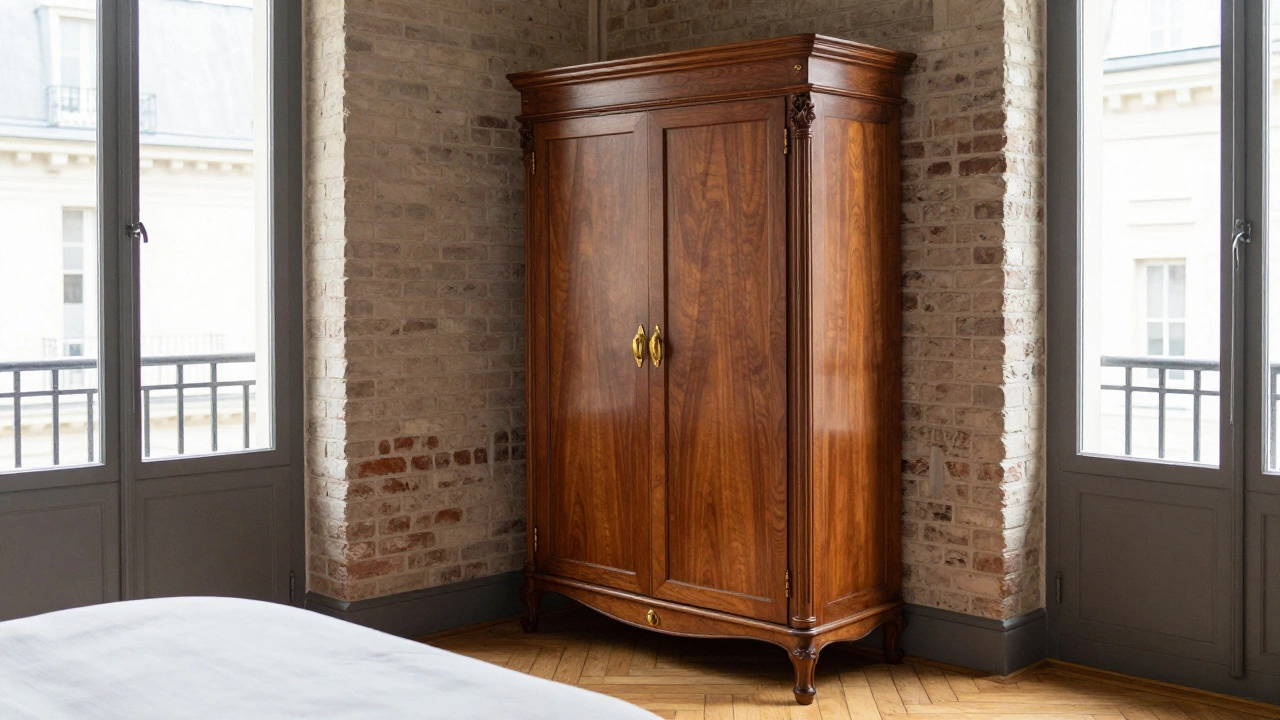
Walk into a typical European home-whether it’s a 17th-century apartment in Amsterdam or a modern flat in Berlin-and you’ll notice something missing: no walk-in closets. No fancy sliding doors. No mirrored wardrobes stretching from floor to ceiling. Instead, you’ll find a freestanding wardrobe, often tucked into a corner or tucked behind a door. It’s not a design flaw. It’s not an oversight. It’s history, space, and culture rolled into one.
It’s Not That They Don’t Have Storage-They Just Don’t Build It Into the Walls
Europeans don’t lack storage. They just store differently. In the U.S., built-in closets are standard in nearly every bedroom. In Europe, they’re rare. Instead, people use freestanding wardrobes-wooden cabinets on legs, sometimes with doors, sometimes open shelves. These aren’t afterthoughts. They’re intentional pieces of furniture, often passed down through generations or bought as statement items.
Why? Because European homes were built before modern construction techniques made built-ins easy. In cities like Paris, London, and Vienna, most apartments date back to the 1800s or earlier. Back then, walls were load-bearing brick or stone. Cutting into them to create a closet wasn’t just hard-it was expensive, risky, and often illegal. So people used what they had: furniture.
That habit stuck. Even when new buildings popped up after World War II, architects kept the tradition. Why rebuild the wheel when the old way worked fine? Freestanding wardrobes were easier to install, move, and replace. They didn’t require plumbing, electrical, or structural changes. And they gave homeowners flexibility.
Space Is Tight-So Storage Has to Be Portable
European cities are old. Really old. And they’re dense. In cities like Rome or Prague, apartments are small. The average bedroom in a Berlin apartment is around 9 square meters. In New York? Around 12. In Los Angeles? Often over 15.
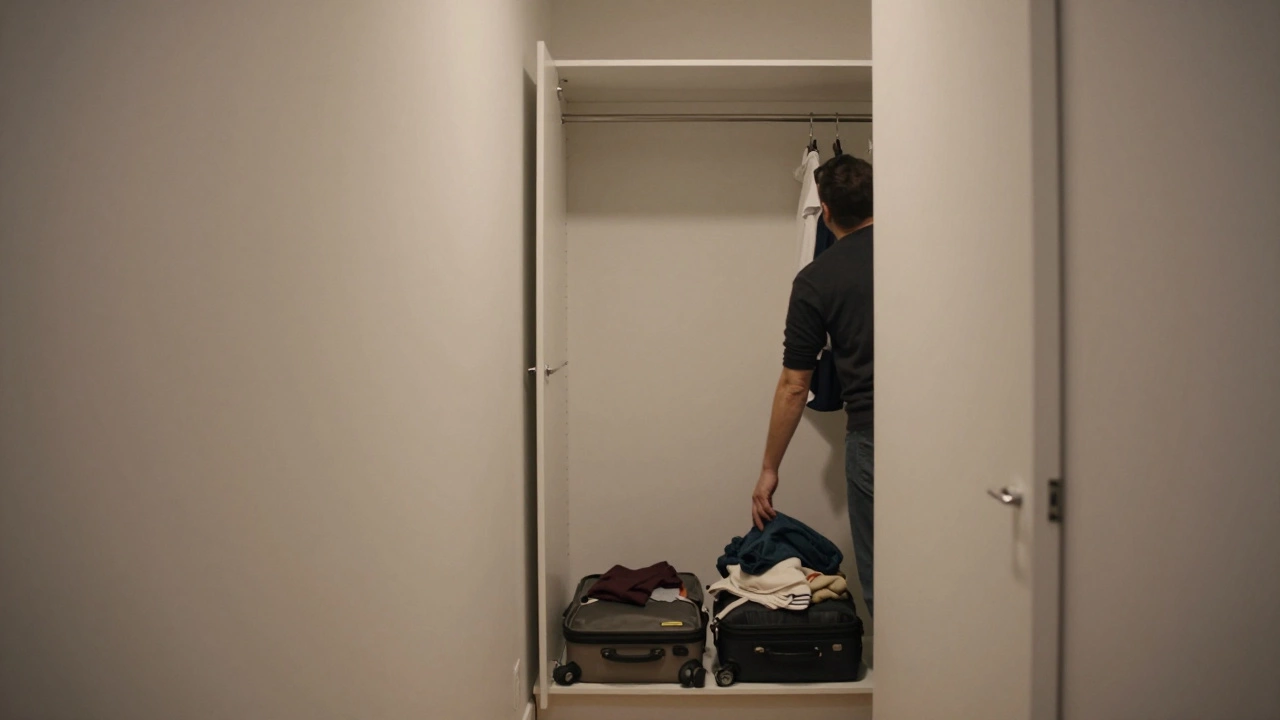
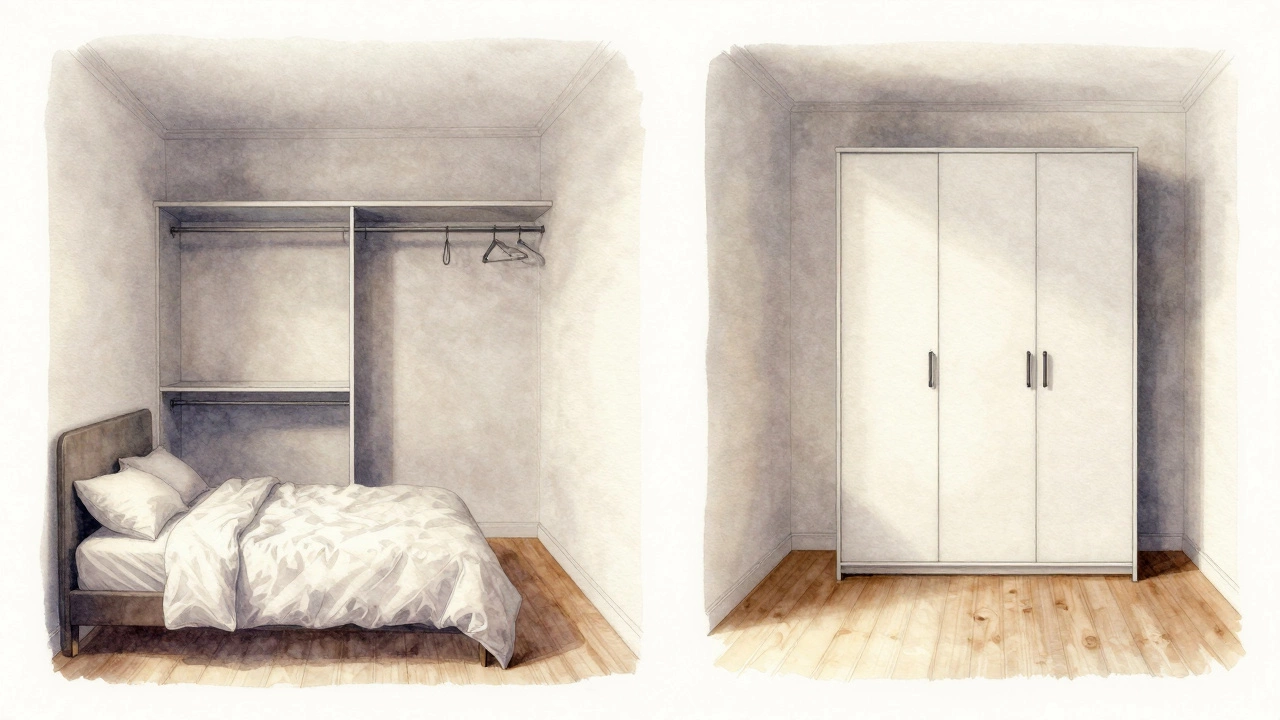
When you’re working with limited square footage, built-in closets eat up valuable wall space. A closet that’s 1.2 meters deep takes up nearly 10% of a small bedroom’s floor area. A freestanding wardrobe? You can tuck it into a corner, slide it against a wall, or even move it to another room if your needs change.
Plus, Europeans move more often. Renting is normal. In Germany, over 50% of people rent their homes. In France, it’s close to 60%. You don’t want to build something into a wall if you might be out in two years. A wardrobe? You take it with you. It’s part of your stuff, not the building’s.
Closets Are a 20th-Century American Invention
The walk-in closet as we know it didn’t exist until the 1920s-and even then, only in wealthy American homes. It became common in the 1950s, thanks to postwar suburban expansion and mass-produced housing. Developers like Levittown in New York built thousands of identical homes with closets as a selling point. It was a status symbol: “Look, I have a whole room just for clothes.”
Europe didn’t go through that boom. After the war, rebuilding was about survival, not luxury. Housing shortages meant efficiency, not expansion. Built-in storage wasn’t a priority. Furniture was.
Even today, American real estate listings brag about “walk-in closets.” European listings? They mention “plenty of storage space” or “large wardrobe included.” The difference isn’t in the amount of storage-it’s in how it’s delivered.
Style and Culture Shape What We Live With
There’s also a cultural layer. Europeans tend to own fewer clothes. The “fast fashion” boom hit later and harder in the U.S. In Sweden, the average person buys 26 new clothing items per year. In the U.S.? Around 68. Less stuff means less need for massive storage.
And Europeans treat clothing as objects, not just inventory. A well-made wool coat or leather jacket isn’t just worn-it’s cared for. Wardrobes with drawers, hanging rods, and shelves are designed to protect and display. They’re not just containers. They’re furniture.
Look at IKEA’s bestsellers in Europe: the PAX a modular wardrobe system designed for flexible, freestanding storage. It’s not built into the wall. It’s a system you assemble, customize, and rearrange. That’s the European way: adaptable, personal, and portable.
Modern European Homes Still Avoid Built-Ins
Even new builds in Europe rarely include closets. In a 2023 survey of new apartments in Berlin, only 12% had built-in wardrobes. The rest had either freestanding units or designated alcoves where you could place your own wardrobe.
Why? Because architects and builders still follow the old rules. Structural walls are expensive to alter. Insulation and soundproofing are harder to manage in recessed spaces. And tenants still prefer the freedom to choose their own storage.
Some luxury developments in London or Milan now include walk-in closets-but they’re the exception, not the norm. And they come at a premium. In Paris, a studio with a built-in closet can cost 15% more than one with a freestanding wardrobe. People still choose the cheaper, more flexible option.
What You Can Learn From European Storage
If you live in a place where closets are standard, there’s something to learn here. Freestanding wardrobes aren’t just for small European flats. They’re smart anywhere.
- You can reposition them if your room layout changes.
- You can upgrade them without tearing down walls.
- You can take them with you when you move.
- You can choose the material, finish, and style that matches your taste-not what the builder picked.
Many Americans are starting to notice. Companies like The Container Store and West Elm now sell “wardrobe systems” that mimic European designs. Modular, floor-to-ceiling, with customizable interiors. No construction needed.
Even in New Zealand, where homes are newer and larger, people are shifting. In Wellington, you’ll see more freestanding wardrobes in apartments and townhouses. Why? Because they’re practical. Because they’re stylish. Because they’re not stuck.
It’s Not About What’s Missing-It’s About What’s Better
There’s no magic reason Europe doesn’t have closets. No conspiracy. No building code ban. Just centuries of practical adaptation. Europeans built their homes around what worked, not what was trendy.
And maybe that’s the real lesson. Storage doesn’t have to be built into the walls to be good. It doesn’t have to be hidden to be efficient. Sometimes, the best solution is the one you can touch, move, and choose for yourself.
Next time you’re in a European home, don’t look for the closet. Look at the wardrobe. It’s not a compromise. It’s a design philosophy.
Why don’t European homes have walk-in closets like American homes?
European homes were mostly built before modern construction made built-in closets practical. Walls were load-bearing, renovations were expensive, and housing was small. Freestanding wardrobes were easier to install, move, and replace. The tradition stuck-even in new builds-because it works.
Are there any European countries that do have built-in closets?
Yes, but they’re rare. Some luxury apartments in London, Paris, or Zurich may include them, especially in new high-end developments. But even there, they’re the exception. Most homes, even modern ones, stick with freestanding wardrobes because they’re cheaper, more flexible, and preferred by tenants.
Do Europeans have less storage space than Americans?
No. Europeans just store differently. A single freestanding wardrobe can hold just as much as a built-in closet-sometimes more, if it’s well-designed. The difference isn’t in capacity, it’s in form. Europeans use furniture for storage; Americans use architecture.
Is it cheaper to have a freestanding wardrobe than a built-in closet?
Yes, by a lot. Installing a built-in closet requires carpentry, wall modifications, and sometimes electrical work. A freestanding wardrobe? You buy it, bring it home, and assemble it in an hour. No permits, no contractors, no mess. In rental markets, that’s a huge advantage.
Can I install a built-in closet in my European-style home?
Technically, yes-but it’s rarely worth it. In older buildings, you risk damaging load-bearing walls or insulation. In newer ones, it adds cost without much benefit. Most people find that a good freestanding wardrobe gives the same storage, with more flexibility and zero renovation headaches.