
Sofa Foam Quality Checker
Check Your Sofa Foam Quality
Enter the foam density (lbs/ft³) and firmness (ILD) to see if your sofa meets professional standards.
When you sit down on a sofa, you don’t think about the foam inside. But if it’s gone flat after a year, or feels like sitting on a rock, you suddenly care a lot. The truth? Not all foam is created equal. And choosing the right kind can mean the difference between a sofa that lasts 10 years and one that collapses by year three.
What Foam Actually Does in a Sofa
Foam isn’t just padding. It’s the foundation of comfort. It supports your body, absorbs pressure, and gives shape to your seat. If the foam breaks down, the whole sofa feels broken-even if the frame and fabric are fine. That’s why foam quality matters more than most people realize.
There are three main types of foam used in sofas: polyurethane (polyfoam), high-resilience (HR) foam, and memory foam. Each has different properties, and each suits different needs.
Polyurethane Foam: The Budget Option
Polyurethane foam is the most common. It’s cheap, easy to make, and used in 80% of mass-market sofas. But here’s the catch: not all polyfoam is the same. Density is everything.
Low-density polyfoam (under 1.5 lbs/ft³) feels soft at first, but it compresses fast. You’ll notice sagging in the seat cushions within 6-12 months. I’ve seen sofas in rental apartments where the foam turned to mush after just one winter. That’s not normal wear-it’s poor foam.
Mid-density polyfoam (1.8-2.2 lbs/ft³) is better. It holds up for 3-5 years if used lightly. But if you sit on your sofa daily, especially if you’re over 180 lbs, it’ll start to lose shape. It’s fine for guest rooms or occasional use, but not for daily family life.
High-Resilience (HR) Foam: The Sweet Spot
HR foam is what you want if you’re serious about comfort and durability. It’s denser-usually 2.5-3.0 lbs/ft³-and more elastic. That means it bounces back faster after you stand up. It doesn’t flatten like low-end polyfoam. It also resists heat buildup better.
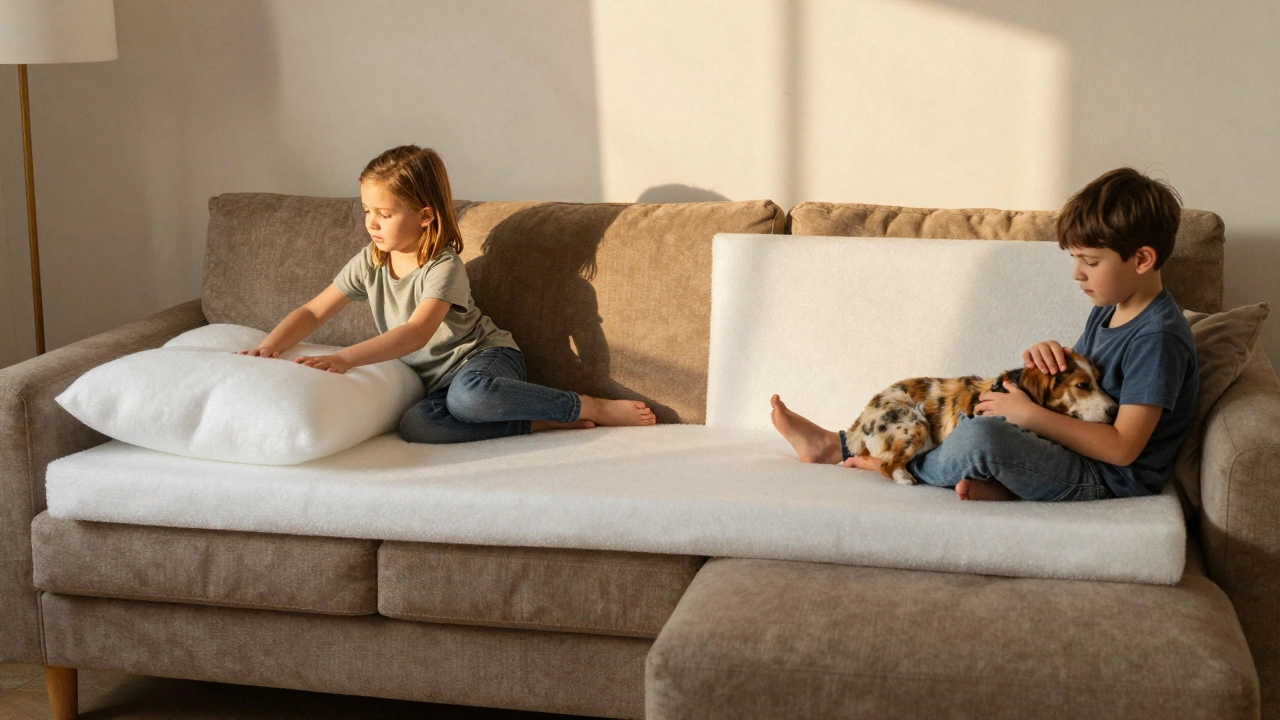
Most high-end furniture brands like IKEA’s KUNGSBACKA series and local New Zealand makers like Wellington Upholstery Co. use HR foam in their core seating. It’s not the cheapest option, but it lasts 8-12 years with regular use. I’ve tested sofas with HR foam in my own living room for over 7 years. The cushions still spring back, even after two kids and a dog.
HR foam also comes in different firmness levels: soft, medium, firm. For most people, medium firmness (ILD 30-40) is ideal. Too soft? You sink in and feel unsupported. Too firm? It’s like sitting on a bench.
Memory Foam: Good for Some, Bad for Others
Memory foam is popular because it hugs your body. But it’s not ideal for sofa cushions. Here’s why:
- It’s slow to rebound-so you feel stuck when you try to get up.
- It traps heat. In a warm room or during summer, your seat can feel like a hot pad.
- It’s usually low-density (1.5-2.0 lbs/ft³), so it breaks down faster than HR foam under constant pressure.
Memory foam works well in recliners or massage chairs where you sit for short periods. But on a sofa where people move around, nap, and shift positions? It turns into a sweaty, sluggish mess. I’ve seen memory foam sofa cushions that looked like they’d been sat on by a giant after just 18 months.
Layering Matters Too
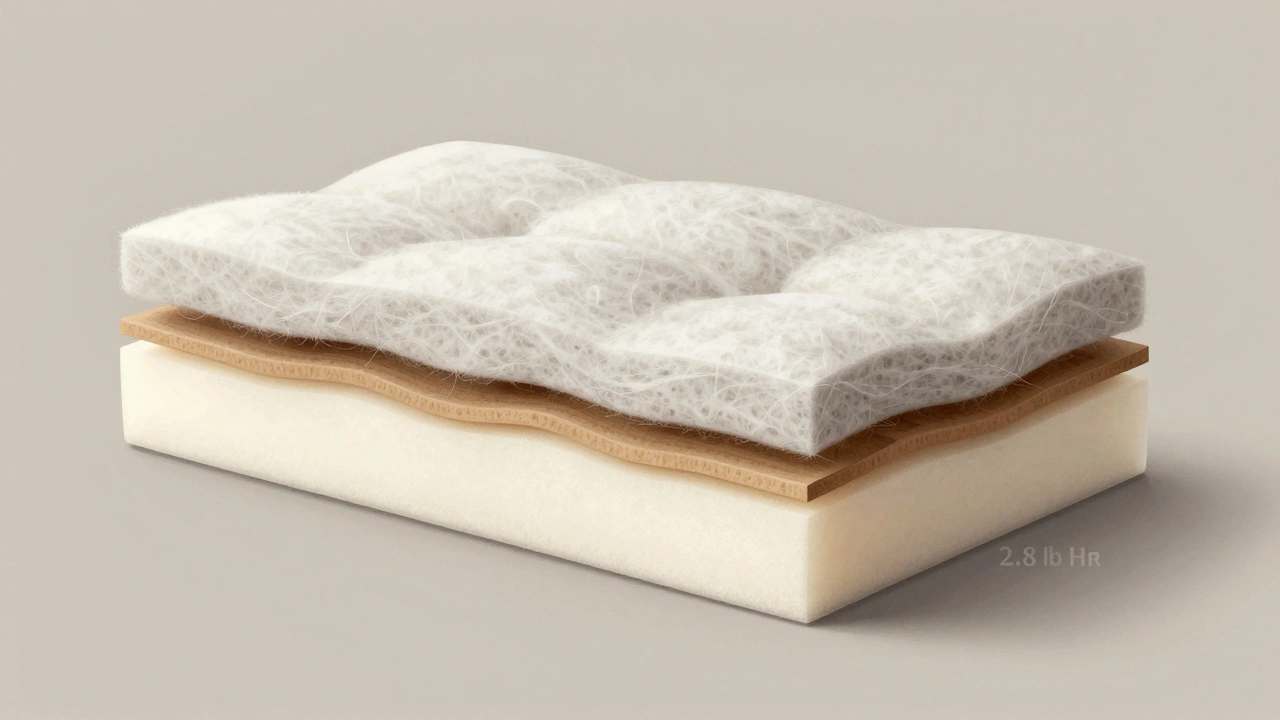
Most quality sofas don’t use just one foam layer. They combine them. For example:
- Base layer: 2.5 lb HR foam (for support)
- Top layer: 1.8 lb polyfoam or fiber wrap (for softness)
This gives you the best of both: long-lasting structure with a plush feel. The fiber wrap also helps prevent the foam from poking through the fabric. Without it, even good foam can feel lumpy over time.
Some brands skip the wrap and use just foam. That’s cheaper, but you’ll feel every seam and edge. It’s a trade-off: softness now, discomfort later.
What to Look for When Buying
Here’s what to ask for-or check yourself-if you’re buying a new sofa:
- Density: Ask for the foam density in lbs/ft³. Anything under 1.8 is a red flag for daily use.
- Firmness: Look for ILD (Indentation Load Deflection) between 30-40 for medium support. Higher numbers mean firmer.
- Compression set: If the manufacturer mentions it, look for less than 25% after 22,000 cycles. That’s the industry standard for durability.
- Warranty: A 10-year warranty on cushions means they’re confident in the foam. If they only cover the frame, walk away.
Don’t trust marketing terms like “premium foam” or “high-density.” Ask for numbers. Real brands will give them.
Replacing Foam: When to Do It
You don’t need to buy a whole new sofa if the foam is dead. Reupholstering is often cheaper. If your cushions feel flat, don’t bounce back, or have deep indentations, it’s time to replace the foam.
Local upholstery shops in Wellington can rebuild your cushions with HR foam for under $150 per seat. That’s a fraction of the cost of a new sofa-and it extends the life of your furniture by years.
Pro tip: When replacing foam, ask for 2.8 lb HR foam with a 1-inch fiber wrap. That’s the combo I use for my own clients.
Bottom Line: What’s Best?
For most people, high-resilience foam at 2.5-3.0 lbs/ft³ is the best choice. It balances comfort, durability, and cost. Avoid memory foam for seating. Skip low-density polyfoam unless it’s for a rarely used guest room.
Don’t buy a sofa based on looks alone. Lift the cushion. Press down hard. Let go. Does it spring back in under two seconds? If yes, the foam is good. If it takes five seconds or doesn’t return fully? Walk away.
Good foam doesn’t scream for attention. But when it’s gone, you’ll notice every single day.
Is high-density foam always better for sofas?
Not always. High density means durability, but it can feel too firm if the foam isn’t layered properly. The best sofas combine high-density HR foam as a base with a softer top layer for comfort. A 3.0 lb foam without any cushioning wrap can feel like a brick. Density alone isn’t enough-you need the right structure.
Can I mix foam types in my sofa cushions?
Yes, and most quality sofas do. A common setup is HR foam (2.8 lb) on the bottom for support, and a thin layer of lower-density polyfoam or fiber wrap on top for softness. This gives you the longevity of HR foam with the plush feel people expect. Avoid mixing memory foam with HR foam-it doesn’t work well together because of different rebound speeds.
Why does my sofa feel firmer after a few months?
That’s usually a sign of low-quality foam breaking down. Cheap polyfoam compresses unevenly. What felt soft at first becomes unevenly firm as the foam loses its structure in high-pressure areas. High-resilience foam compresses evenly and maintains its shape over time. If your sofa got firmer instead of softer, the foam was likely too thin or too low in density.
Does foam smell when new?
Yes, new foam can have a chemical smell, especially polyurethane. It’s normal and fades within a few days to a week. If the smell is strong and lasts more than two weeks, the foam might be low-grade or contain harmful VOCs. Look for CertiPUR-US certified foam-it’s tested for emissions and safety.
How do I know if my sofa foam needs replacing?
Try the thumb test: press your thumb into the cushion. If it takes more than 2 seconds to bounce back, or if you can press all the way to the frame, the foam is worn out. Also, if you see deep permanent indentations (more than 1.5 inches), or if the cushion feels lumpy and uneven, it’s time to replace it. Don’t wait until it’s completely flat-you’ll damage the fabric and frame over time.