
True Cost Calculator: What You Actually Pay
Enter Your Details
Estimated Total
Enter details and click calculate to see your breakdown.
You sit on your couch every single day. It’s where you watch movies, take calls, and probably nap more than you admit. So why does walking into a furniture store or scrolling through online listings feel like navigating a minefield of prices? One day you see a three-seater for $300; the next, an identical-looking one costs $3,000. The gap isn’t just marketing fluff-it’s materials, construction, and longevity.
Figuring out what constitutes a "good" price for a decent couch depends on knowing exactly what you are paying for. You aren't just buying fabric and foam; you are buying frame integrity, cushion density, and structural hardware. In this guide, we break down the real cost of quality so you can stop guessing and start buying with confidence.
The Three Tiers of Sofa Pricing
To understand value, you have to look at the market segments. Most couches fall into three distinct price brackets, each serving a different purpose and lifespan. Knowing which tier fits your life prevents you from overpaying for features you don't need or underpaying for a piece that will collapse in six months.
| Tier | Price Range (USD) | Lifespan Expectancy | Best For |
|---|---|---|---|
| Budget / Entry-Level | $400 - $800 | 1-3 years | Students, temporary housing, guest rooms |
| Mid-Range / "Decent" | $900 - $2,500 | 5-10 years | Families, primary living spaces, pet owners |
| Premium / High-End | $2,500 - $5,000+ | 10-20+ years | Heirloom pieces, heavy daily use, design enthusiasts |
The "decent" couch you are looking for lives squarely in the mid-range tier. This is the sweet spot where manufacturers switch from particle board to hardwood frames and from poly-fill to high-resilience foam. Below $900, you are often sacrificing structural integrity. Above $2,500, you start paying for brand prestige, exotic leathers, or custom tailoring rather than fundamental durability.
What Makes a Couch "Decent"? The Hidden Costs
A tag saying "solid wood" doesn't mean much if it's solid pine glued together with staples. To get a decent couch, you need to inspect the internal anatomy. Here is what drives the price up-and why it matters.
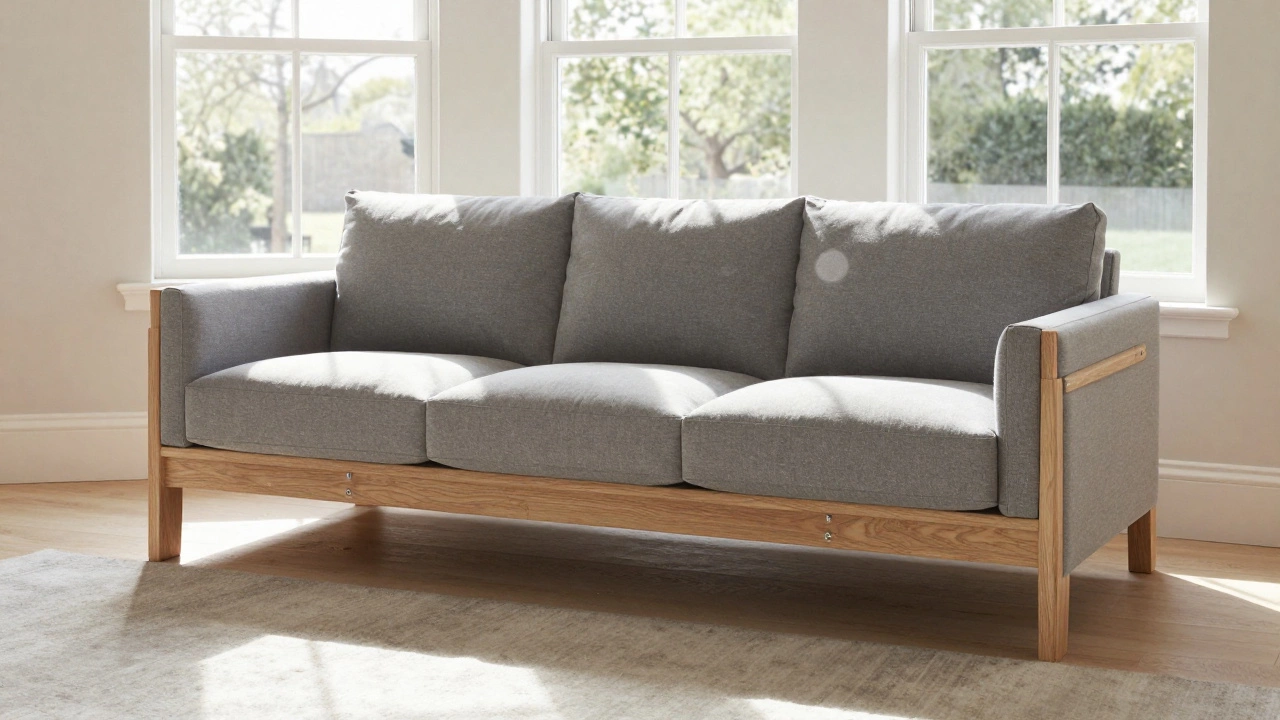
The Frame: This is the skeleton. A good frame uses kiln-dried hardwoods like oak, ash, or maple. Kiln drying removes moisture, preventing the wood from warping or shrinking as seasons change. If the frame is made of softwoods like pine or poplar, or worse, engineered wood like MDF, expect squeaks and wobbles within two years. Joinery also counts. Corner-blocked joints screwed and glued together last decades. Stapled corners do not.
The Suspension: Sit on the couch. Does it feel like you're sitting on a trampoline or a brick wall? You want balanced support. Eight-way hand-tied springs are the gold standard, offering individualized support for each part of your body. Sinuous springs (zig-zag metal wires) are common in mid-range sofas and work well if they are thick-gauge and properly spaced. Webbing suspension is cheaper but sags faster. A decent couch should use either sinuous or hand-tied springs, never just webbing alone for a main seating area.
The Cushions: Foam density is king here. Look for high-density foam (1.8 lbs per cubic foot or higher). Low-density foam feels plush initially but breaks down quickly, leaving you with flat, lumpy seats. Down-blend cushions offer luxury comfort but require frequent fluffing. Pure down is beautiful but impractical for most households. A hybrid approach-high-density foam wrapped in a layer of down alternative-gives you the best of both worlds: shape retention and softness.
Material Matters: Fabric vs. Leather
Your choice of upholstery significantly impacts the price tag and maintenance routine. Let’s compare the two most common options.
Fabric Sofas: These dominate the mid-range market. Synthetic fabrics like polyester and microfiber are durable, stain-resistant, and affordable. Natural fibers like cotton and linen look great but wrinkle easily and absorb spills. When buying fabric, check the rub count. A decent couch should have a fabric rated for at least 15,000 double rubs (Wyzenbeek test). For homes with kids or pets, look for performance fabrics like Sunbrella or Crypton, which repel liquids and resist odors. These add about 10-20% to the cost but save you money on cleaning or replacement later.
Leather Sofas: Real leather commands a premium. Full-grain and top-grain leather are breathable, develop a patina over time, and last forever if cared for. Bonded leather, however, is a trap. It’s made of shredded leather fibers bonded with plastic. It peels and cracks within a few years. If you see a leather couch under $1,500, it’s likely bonded or split leather. Avoid it. Genuine leather starts around $2,000 for a decent three-seater. It’s a higher upfront cost, but the longevity often makes it cheaper per year of use.

Where to Buy Without Getting Ripped Off
The retail landscape has shifted. You no longer need to visit a big-box store to find quality. Here’s how different retailers stack up in 2026.
Direct-to-Consumer (DTC) Brands: Companies like Article, Burrow, and AllModern cut out the middleman. They offer transparent pricing, modern designs, and often include white-glove delivery. Their prices usually land right in the $1,000-$2,500 range for solid quality. Because they sell online, their overhead is lower, passing savings to you. Just be sure to read return policies carefully, as shipping large furniture back can be a hassle.
Traditional Retailers: Stores like West Elm, CB2, and Pottery Barn carry recognizable brands. You pay for the showroom experience and brand name. Prices are higher, but sales events (like Black Friday or end-of-season clearances) can bring a $3,000 couch down to the $2,000 mark. Use these stores for testing comfort levels before buying similar styles online.
Outlet Malls and Overstock Sites: Websites like Wayfair Outlet or local furniture outlets sell discontinued models or slight imperfections. You can find high-end brands for 30-50% off. The catch? Limited stock and no customization. If you find a deal on a couch with a frame and suspension you trust, grab it. Don’t worry about minor fabric variations unless they affect aesthetics significantly.
Hidden Fees That Kill Your Budget
The sticker price is rarely the final price. Furniture shopping has become notorious for hidden costs. Watch out for these:
- Delivery Charges: Standard curbside delivery might be free, but bringing the couch into your living room and assembling it often costs $100-$300 extra. Always ask if "white glove" service is included.
- Assembly Fees: Some modular sofas come in multiple boxes. If you’re not handy, factor in professional assembly costs.
- Removal of Old Furniture: Many delivery services charge $50-$100 to haul away your old couch. Check if this is optional or mandatory.
- Sales Tax: Depending on your location, tax can add 7-10% to your total. Never forget to calculate this when comparing prices.
A $1,500 couch can easily become a $1,800 purchase once fees are added. Factor these into your budget from day one.

Is Buying Used a Smart Move?
In 2026, the secondhand furniture market is booming. Platforms like Facebook Marketplace, OfferUp, and specialized resale sites make it easy to find high-quality couches at half price. But there are risks.
Buying used is smart if you know what to inspect. Check the frame by lifting one side-if it wobbles, walk away. Inspect seams for unraveling thread. Smell the cushions for pet odors or mold, which are nearly impossible to remove completely. Avoid upholstered pieces from unknown sources if you have allergies, as dust mites thrive in old foam. However, if you find a solid hardwood-framed couch from a reputable brand with clean, intact upholstery, you can save thousands. Just remember that warranties are void, and you’re responsible for any repairs.
How to Test a Couch Before You Commit
If you’re buying in person, don’t just glance and leave. Spend at least 10 minutes on the couch. Here’s your checklist:
- Sit Deeply: Lean back fully. Does the armrest hit your elbows? Is the seat depth comfortable for your height? Shorter people need shallower seats (18-20 inches); taller people need deeper ones (22+ inches).
- Check the Arm Height: Rest your arms naturally. The arms should support them without forcing you to hunch or stretch.
- Inspect the Back Support: Does the back cushion stay upright, or does it flop forward? Floppy backs hurt your neck during long movie sessions.
- Look Underneath: Lift the skirt or peek under the seat. Do you see corner blocks? Are the springs evenly spaced? Is the base sturdy?
- Test the Mechanism: If it’s a sleeper or recliner, operate it five times. It should move smoothly without sticking or making grinding noises.
Maintaining Your Investment
A decent couch lasts longer if you treat it right. Vacuum weekly to prevent dirt from grinding into fibers. Rotate cushions monthly to ensure even wear. For leather, condition every six months to keep it supple. For fabric, use a protector spray immediately after purchase. Small habits extend the life of your investment by years, keeping your "decent" couch feeling new.
What is the average price of a decent couch in 2026?
A decent couch typically costs between $900 and $2,500. This range covers mid-range options with hardwood frames, quality suspension, and durable fabrics. Prices below $900 often compromise on materials, while those above $2,500 enter the premium or designer category.
Is IKEA furniture worth buying for a main living room couch?
IKEA offers good value for budget-conscious buyers, but their sofas generally fall into the entry-level tier. While stylish and affordable, many IKEA models use softer woods and lower-density foams that may sag within 3-5 years of heavy use. They are excellent for secondary spaces or short-term needs but less ideal for a primary family couch expected to last a decade.
How can I tell if a couch frame is strong?
Lift the front of the couch. If it feels light and wobbly, the frame is likely weak. Look for corner blocks-wooden squares screwed and glued into the frame corners. Also, check if the wood is kiln-dried hardwood (oak, ash, maple) rather than softwood or particle board. Solid joinery without excessive stapling indicates better construction.
Should I buy a sectional or a traditional sofa?
Sectionals offer more seating and flexibility for open-plan living rooms but are harder to move and often more expensive. Traditional sofas are easier to rearrange and fit smaller spaces better. Choose based on your room layout and household size. Sectionals are great for families and entertaining; traditional sofas suit couples or small apartments.
Does a warranty matter when buying a couch?
Yes, especially for structural issues. A good warranty covers frame defects and spring failures for at least 5-10 years. Fabric warranties usually cover fading and tearing for 1-3 years. Read the fine print: some warranties exclude normal wear and tear or require professional cleaning receipts. A strong warranty signals the manufacturer’s confidence in their product.