Wardrobe Word Choice Guide
Confused by terms like closet, armoire, or attire? Follow this guide to find the perfect word.
Are you talking about the furniture or the clothes?
Recommended Term
You’re writing a description for your new bedroom setup, or maybe you’re trying to sell that vintage piece on Facebook Marketplace. You type "wardrobe," but it feels stiff. Or maybe you live in the US and everyone looks at you funny when you say you bought a new wardrobe because they think you mean the entire collection of clothes hanging inside. It’s a common linguistic hiccup. The word wardrobe is tricky because it shifts meaning depending on where you are and who you’re talking to.
So, what word can replace wardrobe? The short answer depends entirely on context. If you mean the physical cabinet, use closet, armoire, or cupboard. If you mean the clothes themselves, use attire, ensemble, or collection. But picking the right synonym isn’t just about avoiding repetition; it’s about precision. Using the wrong term can make a built-in closet sound like a freestanding antique, or vice versa. Let’s break down exactly which words work when, so you never have to pause mid-sentence again.
The Geographic Divide: Closet vs. Wardrobe
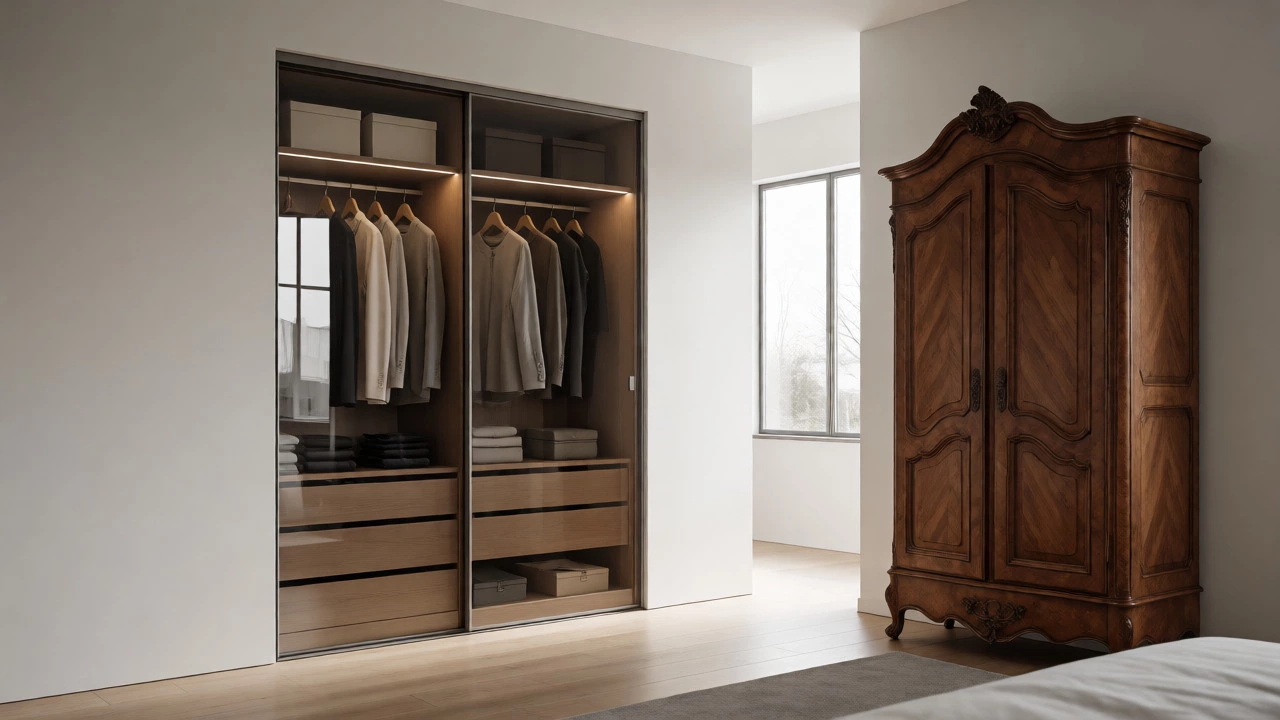
Here is the biggest source of confusion. In American English, a closet is a small room or recess in a wall used for storing clothes, typically built into the structure of the house. A wardrobe is a tall, free-standing cabinet with doors, shelves, and rails for hanging clothes. They are not interchangeable in the US. If you buy a standalone unit from IKEA, Americans call it a wardrobe or an armoire. If you have a door in your bedroom wall that opens to reveal hangers, that’s a closet.
In British English, however, wardrobe often covers both meanings. A UK resident might say, "I’m going to put my coat in the wardrobe," even if it’s a built-in closet. This regional difference trips up international sellers and writers constantly. If you are targeting a global audience, clarity is key. Use "built-in closet" for structural storage and "freestanding wardrobe" for furniture. This distinction saves customers from returning items because they expected a hole in the wall but got a wooden box.
Furniture-Specific Synonyms for the Cabinet
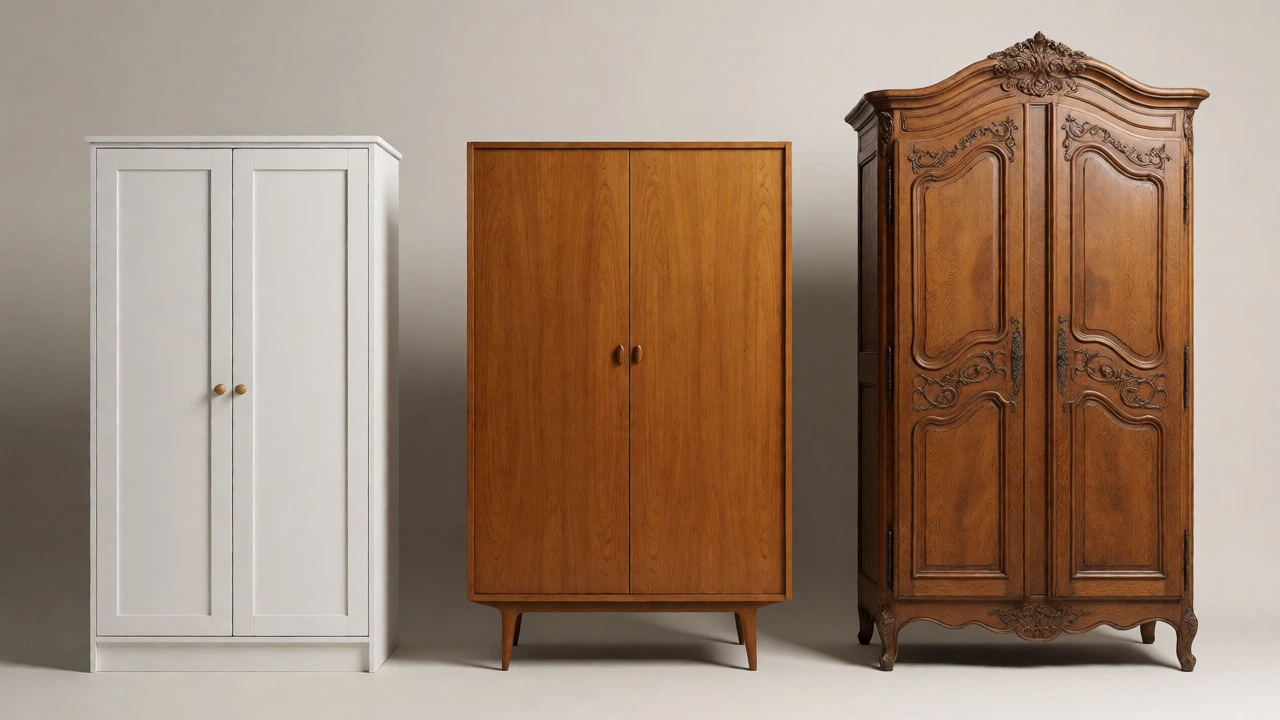
If you are describing the physical object-the furniture piece itself-you have several options beyond "wardrobe." Each carries specific connotations about style, size, and origin.
- Armoire: This is a French-derived term for a large, ornate, freestanding wardrobe. Armoires usually feature decorative carvings, curved tops, or antique finishes. If your piece has character, history, or heavy woodwork, call it an armoire. It sounds more upscale and intentional than "wardrobe."
- Cupboard: Common in the UK and Australia, this refers to any enclosed storage space with doors. While often associated with kitchens, a "bedroom cupboard" is a valid term for a simple, unadorned storage unit. It implies functionality over form.
- Cabinet: A broad term. A "storage cabinet" works if the unit is shorter or wider than standard wardrobes. However, calling a full-height hanging unit a "cabinet" can feel impersonal or industrial. Use this for modular systems or office-style storage.
- Press: An older, somewhat literary term (often seen in "linen press"). It refers to a shallow cupboard for storing linens or clothes. Unless you are writing historical fiction or describing a very specific antique, avoid this. It sounds dated.
- Vestiaire: Borrowed from French, this means a cloakroom or dressing room. In high-end interior design contexts, referring to a walk-in area as a vestiaire adds a touch of luxury. It’s rare in casual conversation but effective in marketing copy for luxury homes.

Synonyms for the Collection of Clothes
Sometimes, you don’t mean the furniture. You mean the stuff inside it. "My wardrobe is outdated" doesn’t mean the wood is old; it means your fashion sense needs updating. Here, "wardrobe" acts as a metonym for clothing inventory. Replacing it requires different vocabulary.
| Term | Best Used For | Tone/Context |
|---|---|---|
| Attire | Formal or professional dress codes | Professional, formal (e.g., "business attire") |
| Ensemble | A coordinated outfit worn together | Fashion blogs, styling advice |
| Collection | The total sum of owned garments | Neutral, descriptive (e.g., "curating a capsule collection") |
| Outfit | What you are wearing right now | Casual, daily conversation |
| Gear | Specialized equipment or casual wear | Informal, hobby-specific (e.g., "ski gear") |
Using "collection" is safer than "wardrobe" when discussing quantity. "I have too many clothes in my collection" sounds precise. "I have too many clothes in my wardrobe" is fine, but "wardrobe" here still risks ambiguity about whether you mean the shelf life of the clothes or the capacity of the furniture. If you are talking about decluttering, say "sorting through my clothing inventory." It removes all doubt.
When Not to Swap Words
There are times when sticking with "wardrobe" is actually the best choice. Why fix what isn’t broken? First, SEO. If people search for "wardrobe organization ideas," using "closet organization tips" might miss traffic from users specifically looking for furniture-based solutions. Second, brand consistency. If you sell a product called the "Urban Wardrobe," calling it a "Urban Closet" in the description dilutes the brand name. Third, emotional resonance. "Wardrobe" implies a curated selection. "Closet" implies hidden storage. Saying "she stepped out of her wardrobe" suggests she chose an outfit. Saying "she stepped out of her closet" sounds like she was physically trapped inside it.
Also, consider the industry. In theater and film, a "wardrobe department" handles costumes. You wouldn’t call it the "closet department." In retail, "wardrobe planning" is a service. Changing these terms confuses the consumer. Know your domain before swapping synonyms.
Practical Examples: Rewriting Sentences
Let’s look at how swapping these words changes the vibe of a sentence. Imagine you are selling a second-hand item online.
Original: "Selling my old wardrobe. It holds a lot of clothes."
Better: "Selling my solid oak armoire. Features ample hanging space and shelving."
Why? "Armoire" signals quality and style. "Solid oak" adds material value. "Ample hanging space" describes function better than "holds a lot."
Original: "I need to clean out my wardrobe before moving."
Better: "I need to declutter my clothing collection before packing."
Why? "Declutter" is an action verb. "Clothing collection" clarifies you are dealing with items, not the furniture unit itself, which might be sold separately.
Original: "The guest room has a small wardrobe."
Better: "The guest room features a built-in closet."
Why? In the US, "small wardrobe" might imply a tiny freestanding unit, which sounds inadequate. "Built-in closet" confirms there is dedicated, integrated storage space, which is a selling point.
Decision Tree: Which Word Should You Use?
Still stuck? Follow this quick logic flow to pick the perfect replacement.
- Are you talking about the furniture or the clothes?
- Furniture: Go to step 2.
- Clothes: Go to step 4.
- Is it attached to the wall (built-in)?
- Yes: Use closet (US) or cupboard (UK).
- No: Go to step 3.
- Is it ornate, antique, or expensive-looking?
- Yes: Use armoire.
- No: Use wardrobe or cabinet.
- Are you describing a single outfit or the whole stash?
- Single outfit: Use ensemble or outfit.
- Whole stash: Use collection or inventory.
- Specific context (work/formal): Use attire.
This approach prevents misuse. It forces you to define the object before labeling it. Most errors happen because we skip the definition step and grab the first word that comes to mind.
Is a closet the same as a wardrobe?
No, not always. In American English, a closet is typically built into the wall, while a wardrobe is a freestanding piece of furniture. In British English, the terms are often used interchangeably, though 'wardrobe' is preferred for freestanding units. Always check the regional dialect of your audience.
What is the difference between an armoire and a wardrobe?
An armoire is a specific type of wardrobe, usually larger, more ornate, and often antique or antique-styled. All armoires are wardrobes, but not all wardrobes are armoires. Use 'armoire' if the piece has decorative elements like carved wood, mirrored doors, or a distinct architectural top.
Can I use 'cupboard' instead of 'wardrobe'?
In the UK and Australia, yes, especially for simpler storage units. In the US, 'cupboard' usually refers to kitchen or bathroom storage. Calling a bedroom storage unit a 'cupboard' in America might confuse buyers who expect it to be small and shallow.
What is a 'capsule wardrobe'?
A capsule wardrobe is a limited selection of interchangeable clothing pieces that complement each other. Here, 'wardrobe' refers to the collection of clothes, not the furniture. Synonyms include 'capsule collection' or 'minimalist inventory.' This term is popular in sustainable fashion circles.
Which word is more formal: closet or wardrobe?
Neither is inherently more formal, but 'wardrobe' can sound slightly more sophisticated in real estate listings, particularly if it implies a freestanding, high-quality piece. 'Closet' is purely functional. 'Dressing room' or 'vestiaire' would be the most formal alternatives for larger spaces.