Why You Shouldn't Fall Asleep on the Couch
Falling asleep on the couch might feel cozy, but it disrupts your sleep, hurts your spine, and confuses your body’s natural rhythm. Here’s why your bed is the only place you should sleep.
When you fall asleep on couch, a common but often overlooked sleep behavior that disrupts rest quality and body alignment. Also known as couch sleeping, it’s not just a lazy habit—it’s a signal your body or environment is pushing you toward an easier, less supportive option than your bed. You didn’t wake up tired because you stayed up late. You stayed up late because your couch is more inviting than your bed.
Why does this keep happening? It’s rarely about willpower. More often, it’s because your couch offers warmth, softness, and the quiet hum of the TV—things your bedroom might be missing. Your sleep quality, how well your body cycles through rest stages without interruption gets broken when you’re not lying flat, your neck is at an odd angle, or your spine curves unnaturally. Studies on posture and sleep show that people who regularly nap on sofas report more morning stiffness and less deep sleep. And it’s not just discomfort—it’s a cycle. The more you fall asleep on the couch, the less your brain associates your bed with sleep.
Then there’s the sofa sleep, the act of using a sofa as a primary or frequent sleeping surface. It’s not the same as a proper bed. Sofa cushions compress unevenly, armrests dig into your ribs, and the lack of edge support means you roll toward the center. Over time, that’s bad for your back, your hips, and even your breathing. If you’re doing this often, your couch isn’t just a place to relax—it’s becoming a substitute for a real sleep system.
But here’s the good news: fixing this doesn’t mean buying a new bed. Start by making your bed more appealing. Is it too hot? Too cold? Too bright? Try a cooler room, blackout curtains, or a white noise machine. Is your couch too comfy? Move your TV out of the living room at night. Put your phone on charge in another room. Make your bed the easiest place to land when you’re tired.
Some people fall asleep on the couch because they’re avoiding stress. The living room feels safer than the bedroom—maybe because of clutter, a messy bed, or unresolved thoughts. If that’s you, try a five-minute wind-down ritual before bed: dim the lights, sip tea, write down three things that went well today. Small shifts reset your brain’s sleep trigger.
You’ll find posts here that dig into why your couch wins over your bed, what furniture materials make napping easier (or harder), how lighting affects your urge to drift off, and even how to choose a sofa that doesn’t sabotage your sleep. You’ll see how cushion density, room temperature, and even the color of your walls play a role. None of it’s magic. It’s all about matching your environment to your body’s needs.
Stop blaming yourself for falling asleep on the couch. Start fixing the setup. The right changes don’t cost much—they just need to be smart.
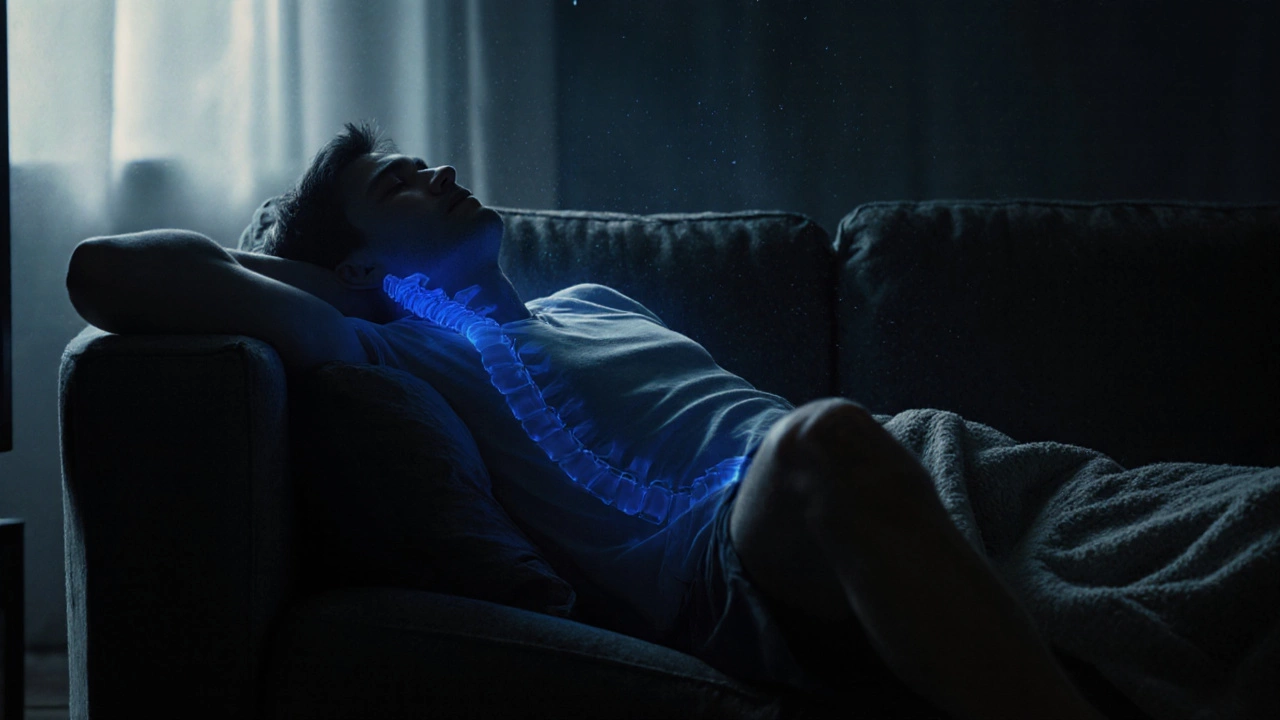
Falling asleep on the couch might feel cozy, but it disrupts your sleep, hurts your spine, and confuses your body’s natural rhythm. Here’s why your bed is the only place you should sleep.