
TV Stand Safety Calculator
Enter your TV size, stand width, and weight to determine if your TV will safely fit on the stand. Based on guidelines from the article, the maximum overhang should be 2-3 inches per side for safe operation.
You bought a new 65-inch TV. It looks amazing. But when you pull out the old stand-meant for a 55-inch TV-you start wondering: Can I put a 65 inch TV on a 55 inch stand? It seems like it might fit. After all, the TV’s base is only a little wider. But appearances can fool you. And this isn’t just about looks-it’s about safety, physics, and avoiding a very expensive mess.
TV stand width isn’t just about fitting the base
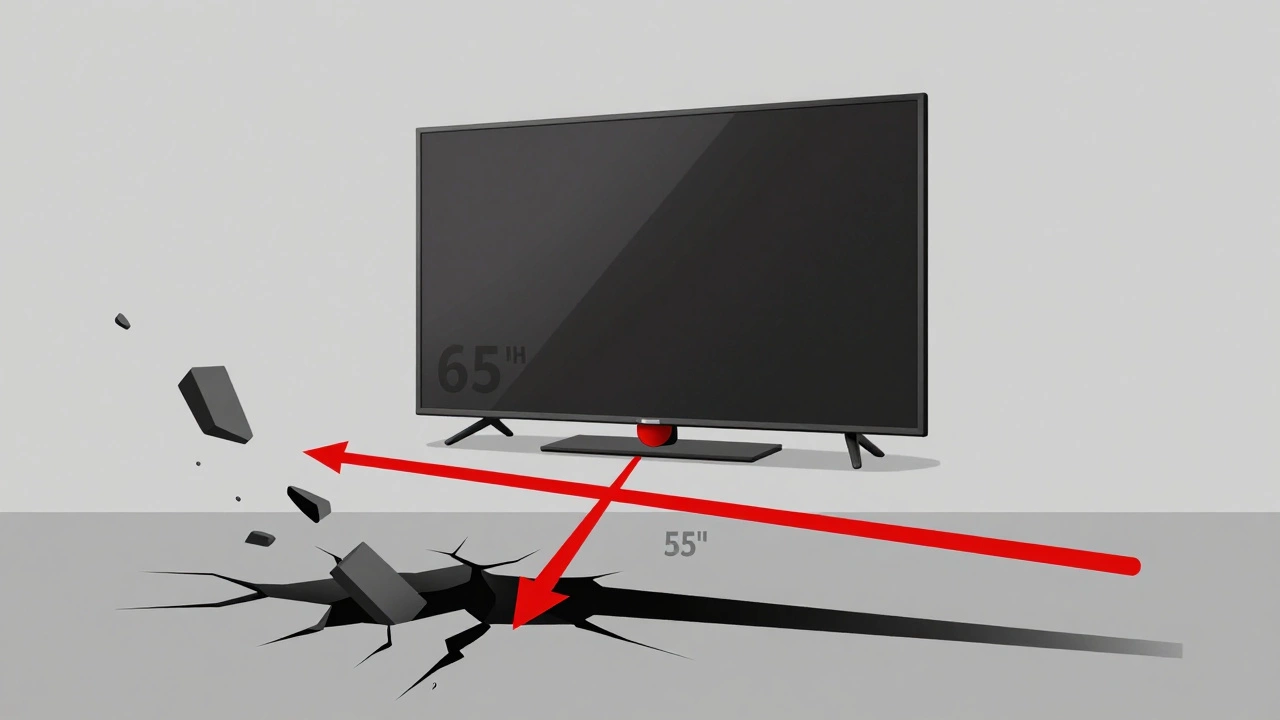
Most people assume if the TV’s bottom stand fits on the furniture, it’s fine. That’s not true. A 65-inch TV has a screen width of about 57 inches. The base of the TV, where it connects to the stand, is usually 45 to 50 inches wide. A 55-inch TV’s base is around 40 to 44 inches. So technically, the 65-inch TV’s base might sit on the 55-inch stand. But here’s the problem: the stand’s surface is designed to support a smaller, lighter load with a narrower footprint.The stand’s width-55 inches-is measured from edge to edge. But the actual surface area that supports the TV is often smaller. Many stands have rounded edges, decorative legs, or narrow platforms. If your TV’s base hangs over the edge by more than 2 to 3 inches on either side, you’re creating a serious tipping risk. Think of it like balancing a bowling ball on a narrow beam. The further the weight extends beyond the support, the more unstable it becomes.
Weight matters more than you think
A 65-inch TV weighs between 45 and 65 pounds. A 55-inch TV? Around 35 to 45 pounds. That’s a 20% to 40% increase in weight. But it’s not just about total weight-it’s about how that weight is distributed. Larger TVs have thicker panels, bigger speakers, and more internal hardware. They’re heavier at the back, near the base. If the stand wasn’t engineered for that kind of load, the frame can warp, the joints can loosen, or the legs can bend over time.Manufacturers test stands for specific TV sizes and weights. A stand labeled for 55-inch TVs isn’t just a suggestion-it’s a safety rating. Using it for a larger TV voids any warranty and puts you at risk. I’ve seen stands collapse under 65-inch TVs in homes here in Wellington. The damage isn’t just to the TV-it’s to the floor, the wall, and sometimes, the people nearby.
Overhang is the silent killer
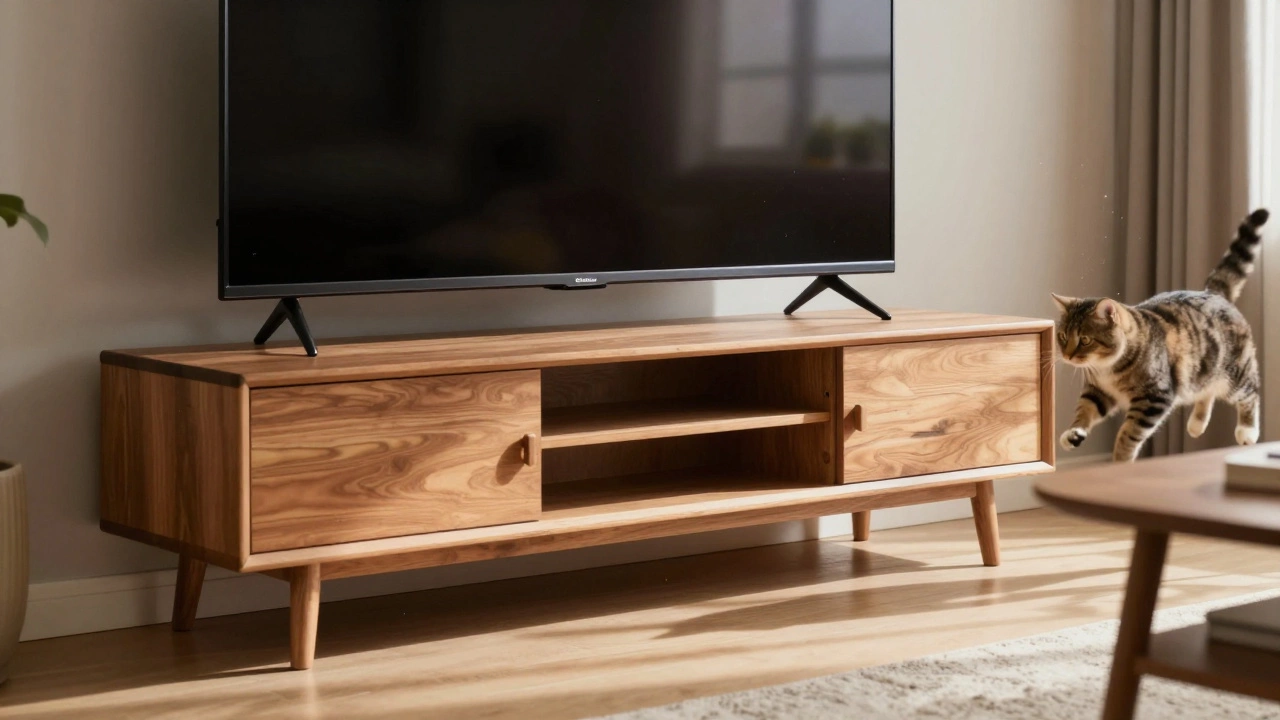
Measure this right now: take a tape measure and lay it across the top of your 55-inch stand. Now measure the width of your 65-inch TV’s base. If the TV’s base sticks out more than 2.5 inches on either side, don’t do it. That’s the rule of thumb used by professional installers. Even 1.5 inches of overhang can make the TV wobble when someone walks by, the dog jumps up, or a door slams shut.Here’s a real example: a client in Miramar had a 65-inch LG on a 55-inch IKEA stand. The base overhung by 3 inches on each side. One morning, their cat jumped onto the coffee table next to it. The vibration caused the TV to tilt forward-just a few degrees-but enough to snap the stand’s plastic support bracket. The TV crashed onto the floor. Screen was destroyed. Stand was ruined. Insurance didn’t cover it because the setup violated the manufacturer’s guidelines.
What about wall mounts? Are they safer?
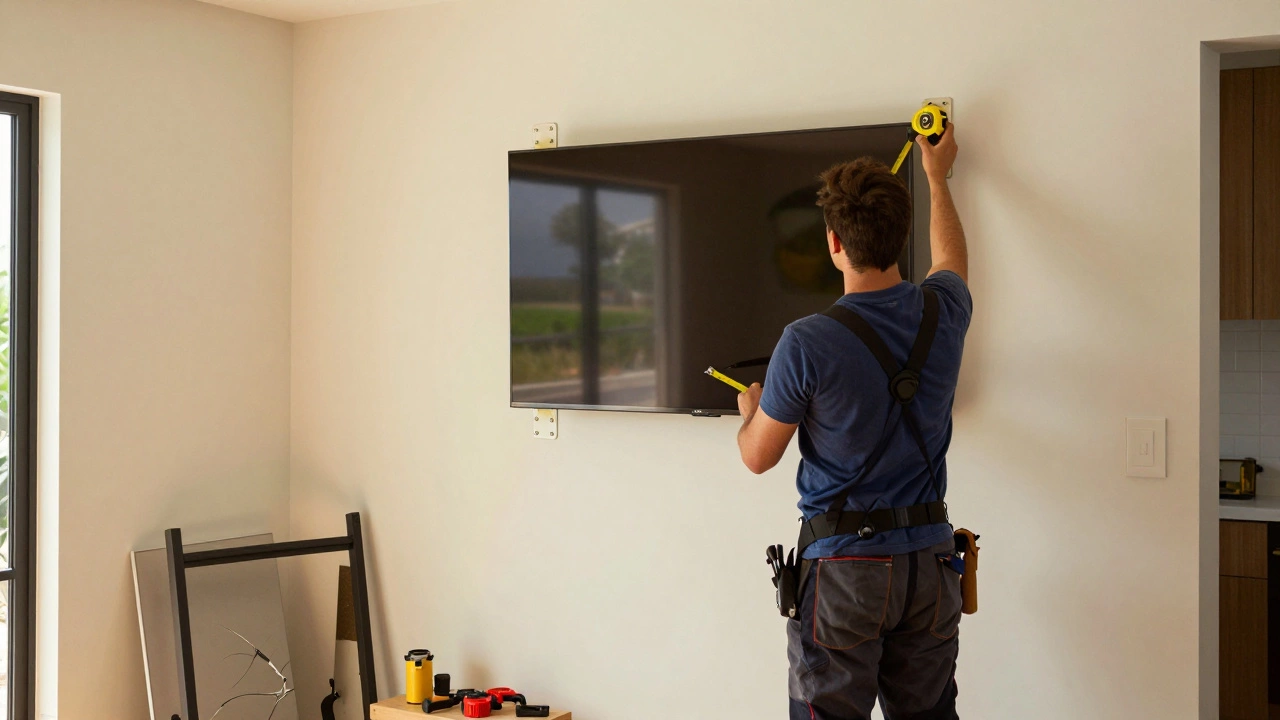
Yes. If you’re worried about stability, a wall mount is the smartest solution. Wall mounts are designed to handle TVs up to 80 inches and weights over 100 pounds. They distribute the load directly into your wall studs, not through furniture legs or weak frames. Plus, they eliminate tipping risk entirely.But here’s the catch: wall mounting requires drilling into studs, using the right hardware, and checking your wall type. Drywall alone won’t hold a 65-inch TV. You need to find at least two studs and use toggle bolts or lag screws rated for 100+ pounds. If you’re not comfortable doing it yourself, hire a local installer. It costs around $150-$250 in New Zealand, but it’s cheaper than replacing a broken TV.
What if I already did it? What now?
If you’ve already placed your 65-inch TV on the 55-inch stand and nothing’s fallen yet, that doesn’t mean it’s safe. Stability problems often show up slowly. Look for these warning signs:- The TV wobbles when you touch the remote or adjust the volume
- You hear creaking or popping from the stand
- The stand feels loose or moves slightly when you press on it
- There are cracks or warping on the stand’s surface
- The TV leans forward slightly
If you see any of these, stop using it immediately. Unplug the TV. Move it to the floor temporarily. Then either get a proper stand or install a wall mount. Don’t wait for it to fall.
What’s the right stand for a 65-inch TV?
Look for stands labeled for 55-75 inch TVs. The surface should be at least 58 inches wide. The base should be sturdy-steel or solid wood, not particleboard. Weight capacity should be 70 pounds or higher. Brands like Sanus, Vogel’s, and Flexson make reliable stands with safety features like anti-tip straps and non-slip pads.Also check the VESA pattern-the screw holes on the back of your TV. Make sure the stand supports your TV’s specific pattern. Most 65-inch TVs use 400x400 or 600x400 VESA. Don’t assume it’ll fit. Always double-check the manual.
Is there any way to make it work safely?
Only if you’re willing to modify the setup. One option: place a sturdy, wide plywood board (at least 3/4 inch thick, 60 inches wide) on top of your existing stand. Secure it with L-brackets to the stand’s frame. Then place the TV on the board. This spreads the weight and reduces overhang. But this is a temporary fix at best. It still doesn’t fix the stand’s weak legs or poor weight rating.Another option: use anti-tip straps. These are metal or nylon straps that connect the TV to the wall or a heavy piece of furniture. They’re required by law in California and recommended by the Consumer Product Safety Commission. They won’t stop the TV from falling if the stand breaks-but they’ll keep it from tipping forward onto someone.
But honestly? These are band-aids. The real fix is getting the right stand.
Bottom line: Don’t risk it
A 65-inch TV isn’t a decoration. It’s a heavy, expensive piece of electronics with glass and electronics inside. Putting it on a stand not designed for it is like putting a truck on a bicycle rack. It might seem okay for a while. But the risk isn’t worth the $50 you’d save on a new stand.Replace the stand. It’s the cheapest, safest, and smartest move you can make. A good 65-inch TV stand costs between $120 and $250. A new TV? $800 to $2,000. The math is simple.
If you’re unsure what to buy, look for stands with these features:
- Width: 58 inches or more
- Weight capacity: 70+ pounds
- Material: Steel frame or solid wood
- VESA compatibility: Matches your TV’s screw pattern
- Anti-tip kit included
And if you’re still unsure? Take a photo of your TV’s base and your stand. Bring it to a local electronics store. They’ll tell you in 30 seconds if it’s safe. Better yet, ask them to recommend a stand. They’ve seen this mistake happen too many times.